SpaceX launches 29 Starlink satellites

SpaceX early today successfully launched another 29 Starlink satellites, its Falcon 9 rocket lifting off from Cape Canaveral.

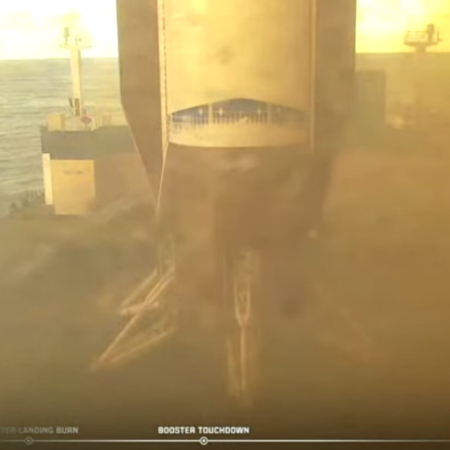
The first stage completed its 26th flight, landing on a drone ship in the Atlantic, within the territorial waters of the Bahamas for the second time.

The 2026 launch race:

20 SpaceX
8 China
2 Rocket Lab
2 Russia
1 ULA
1 Europe (Arianespace)

As it did in both ’24 and ’25, SpaceX in ’26 so far has more launches than the entire rest of the world combined.

0 comments

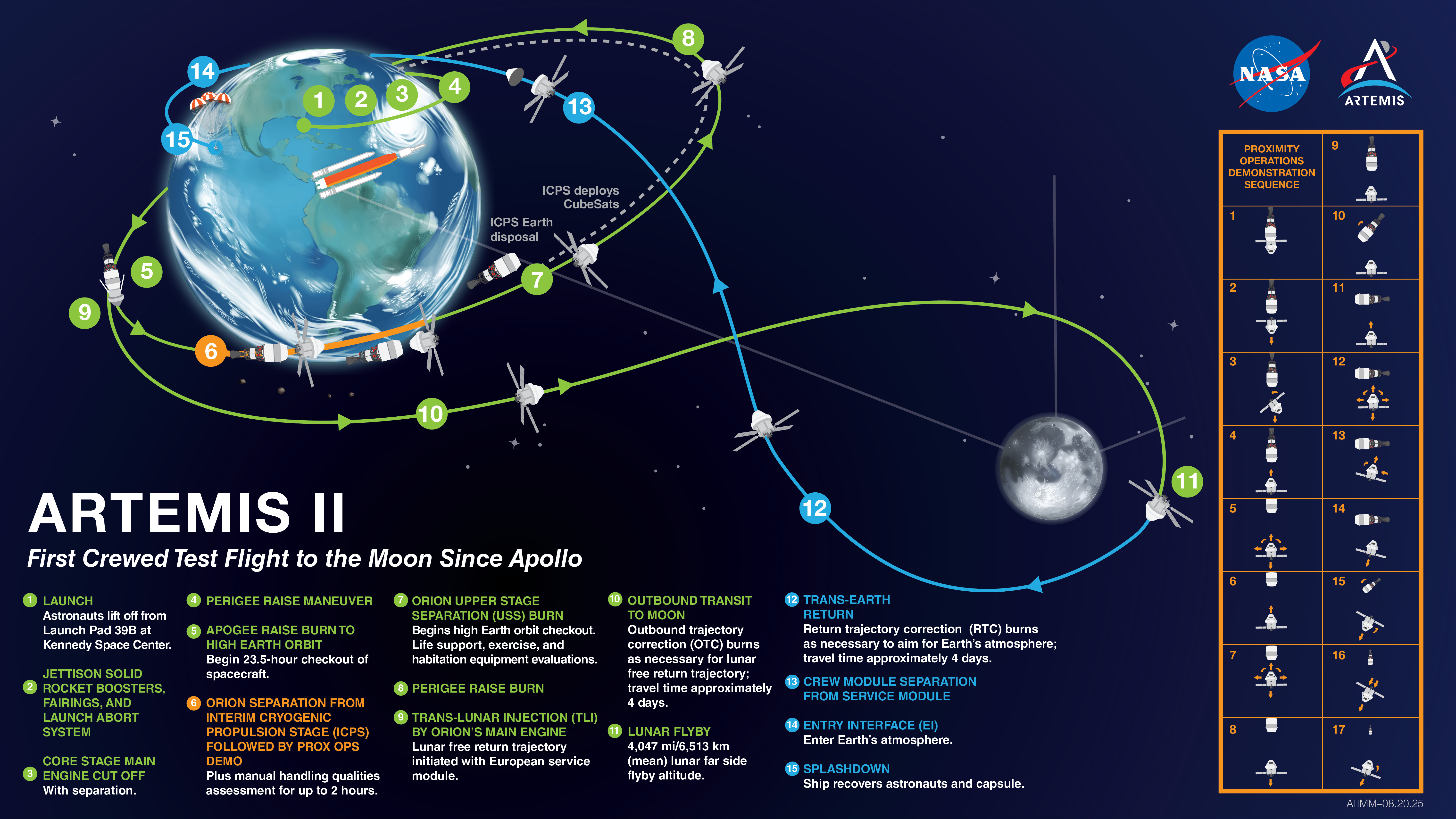
NASA today completes SLS wet dress rehearsal with few problems

NASA today successfully completed its SLS wet dress rehearsal countdown with few problems, fueling the rocket completely and then running the countdown down to T-33 seconds and then recycling back to T-10 minutes and running the countdown down again, this time to T-29 seconds.

During the day-long event there were only two minor issues, neither of significance. Early in the day there was “an issue with ground communications” that required mission control to shift to “backup communication methods” for about a half hour before the issue was resolved.

Then, during the first countdown to T-33 the count was paused and recycled once “due to a booster avionics system voltage anomaly.” This also appeared to be minor issue quickly resolved.

NASA will hold a press conference tomorrow at 11 am (Eastern) to discuss the results of the entire rehearsal.

NASA administrator Jared Isaacman had stated previously that he needed to see a perfect rehearsal before he would approve the launch of Artemis-2, carrying four astronauts on a ten-day mission around the Moon. While today’s rehearsal was not “perfect,” the issues were very minor. I suspect he will give the okay, with a tentative launch date of March 6, 2026 already being considered. The present launch window closes on April 6, 2026.

That mission, should it fly, still carries enormous risk. The Orion capsule will be using a life support system never tested in space before. It will also be using a heat shield that is questionable, having failed to behave as expected in the first Artemis mission in 2022.

3 comments

NASA on Starliner: Too much freedom caused the failure!

Starliner docked to ISS
Starliner docked to ISS in 2024.

NASA today released its final investigation report on the causes behind the Starliner thruster issues during that capsule’s only manned mission in ISS, issues that almost prevented the spacecraft from docking successfully and could have left it manned and out-of-control while still in orbit.

You can read the report here [pdf]. NASA administrator Jared Isaacman made it clear in his own statement that the Starliner incident was far more serious than originally let on.

“To undertake missions that change the world, we must be transparent about both our successes and our shortcomings. We have to own our mistakes and ensure they never happen again. Beyond technical issues, it is clear that NASA permitted overarching programmatic objectives of having two providers capable of transporting astronauts to-and-from orbit, influence engineering and operational decisions, especially during and immediately after the mission. We are correcting those mistakes. Today, we are formally declaring a Type A mishap and ensuring leadership accountability so situations like this never reoccur. We look forward to working with Boeing as both organizations implement corrective actions and return Starliner to flight only when ready.”

A Type A mishap is one in which a spacecraft could become entirely uncontrollable, leading to its loss and the death of all on board. Though Starliner was NOT lost, for a short while as it hung close to ISS that result was definitely possible. Its thrusters were not working. It couldn’t maneuver to dock, nor could it maneuver to do a proper and safe de-orbit. Fortunately, engineers were able to figure out a way to get the thursters operational again so a docking could occur, but until then, it was certainly a Type A situation.

The report outlines in great detail the background behind Starliner’s thruster issues, the management confusion between NASA and Boeing, and the overall confused management at Boeing itself, including its generally lax testing standards.

The report’s recommends that NASA impose greater control over future commercial contracts, noting that under the capitalism model that NASA has been following:
» Read more

50 comments

Pluto’s splotched surface

Pluto's splotched surface
For original images go here and here.

Cool image time! The panorama above was created using two photographs (found here and here) taken by New Horizons during its close fly-by of Pluto on July 14, 2015. It looks at Pluto’s western limb, well lit by the Sun, from a distance of approximately 60,000 miles.

I pulled these images from the New Horizons’ archive specifically because I don’t remember ever seeing them publicly released by the science team. More important, they show a surface far more alien than other more well-known New Horizon pictures. Are those round splotches impact craters or some alien type of volcanic caldera? Note also the vertical cracks that appear to divide this terrain near the center.

It would be a serious mistake to make any conclusions. In the emptiness of the outer solar system, the impact rates are going to be far less than in the inner solar system, so assuming impacts is dangerous. Pluto meanwhile has an alien surface of frozen nitrogen seas often filled with floating mountains of frozen water ice. For it to also produce weird volcanic eruptions of nitrogen, sublimating away like bubbling tomato sauce when it is simmering, is quite possible.

2 comments

Chinese pseudo-company Landspace targeting April-June for 2nd Zhuque-3 launch

Zhuque-3 at launch
Screen capture from China’s
state-run press of the first Zhuque-3
launch on December 2, 2025.

The Chinese pseudo-company Landspace now hopes to make its second orbital launch and recovery attempt of its Zhuque-3 rocket sometime in the April-June ’26 time frame.

The first launch in December ’25 was a success, getting its upper stage into its planned orbit. The attempt to vertically land the first stage however failed. The stage came down almost precisely on its target landing pad, but the engines failed and so it crashed instead of landing softly.

Officials say that they also hope to begin reusing the first stage quickly, if it should land successfully, with the first reuse planned for late this year. The rocket itself has about two-thirds the capacity of SpaceX’s Falcon 9, and is being marketed to launch the half-dozen giant satellite constellations China is presently attempting to place in orbit.

Since the beginning of this year there has been a decided pause of news from China’s pseudo-companies. I have speculated this dearth of the normal stream of PR announcements might be related to a power-play by the new government agency created last year to supervise these pseudo-companies. It also could simply be the government has told them to tone it down a bit. Better to sell actual achievement than empty plans.

0 comments

The dimmest galaxy yet found

The dimmest galaxy yet found
Click for original image.

The uncertainty of science: Using ground-based and orbiting telescopes, astronomers think they have identified what might be the dimmest galaxy yet discovered, revealed almost entirely not from its stars but from the four globular clusters that reside within or near it.

The image to the right, cropped and sharpened to post here, shows that galaxy, dubbed CDG-2, along with those four globular clusters. From the press release:

To confirm one of the dark galaxy candidates, astronomers employed a trio of observatories: the NASA/ESA Hubble Space Telescope, ESA’s Euclid space observatory, and the ground-based NAOJ Subaru Telescope in Hawaii. Hubble’s high-resolution imaging revealed a close collection of four globular clusters in the Perseus galaxy cluster, 300 million light-years away. Follow-up studies using Hubble, Euclid, and Subaru data then revealed a faint, diffuse glow surrounding the star clusters – strong evidence of an underlying galaxy.

“This is the first galaxy detected solely through its globular cluster population,” said David. “Under conservative assumptions, the four clusters represent the entire globular cluster population of CDG-2.”

Preliminary analysis suggests CDG-2 has the luminosity of roughly 1 million Sun-like stars, with the globular clusters accounting for 16% of its visible content.

The scientists next claim that 99% of the galaxy’s mass is made up of dark matter, a material no one has yet detected except for the gravitational influence its invisible mass imposes on visible objects. It appears the astronomers don’t believe the mass that has been detected is sufficient to hold this galaxy together, and thus they need dark matter to explain its existence.

I simply wonder if the distances involved simply make the matter hard to see.

No matter. This is a cool discovery, because it tells us there is much out there hidden in the darkness we will always find difficult if not impossible to detect.

3 comments

Engine problems for Japan’s lunar lander company Ispace

According to company officials, the Japanese lunar lander company Ispace is having issues with the engine is has been developing for its next (and third) lander mission — a joint project with the American company Draper — problems that have now delayed the mission from ’26 to ’27.

In an earnings call discussing its fiscal third-quarter financial results this month, ispace executives said issues with development of the new VoidRunner engine could delay the company’s next lander mission. VoidRunner is a joint project between ispace’s U.S. subsidiary and Agile Space Industries, a U.S. space propulsion company, announced in May 2025. It replaced an Agile Space engine originally planned for use on the Apex 1.0 lander that ispace U.S. is developing.

Changing the engine required modifications to the lander design, Ispace said at the time, delaying its use on a mission led by Draper for NASA’s Commercial Lunar Payload Services, or CLPS, program from 2026 to 2027. That mission to the lunar farside is designated Mission 3 by Ispace.

Ispace has made two attempts to land on the Moon. In both cases, the mission worked perfectly until the last moments, resulting in a crash rather than a soft landing. In the first case software had the engines shut down when the spacecraft was still about three miles above the ground, while in the second case the spacecraft’s laser range-finder provided incorrect altitude data.

It presently has contracts for three more missions, the one for NASA working with Draper, a second for Japan in ’28, and a third for Europe in ’29. That it has had to replace the engines on the first (and might have to do it on the second) is a very bad sign. Usually it is best practice to build and test the engine first, get it right, and then build the spacecraft or rocket around it. Replacing an engine usually signals larger design problems that are difficult if not impossible to fix.

1 comment

UAE extends mission of its Al-Amal Mars orbiter

Deimos with Mars in the background
Al-Amal’s 2023 image of Deimos, the first good
picture of the moon ever taken. Click for full movie.

The United Arab Emirates (UAE) yesterday announced it is extending the mission of its Al-Amal Mars orbiter (“Hope” in English) to 2028, significantly beyond its initial planned mission of two years.

Launched in July 2020, the Hope Probe successfully entered Mars orbit in February 2021 after a seven-month interplanetary journey, marking a historic achievement as the first Arab nation to reach the Red Planet. Originally designed as a two-year mission to observe and study Mars’ atmosphere, the probe has far exceeded expectations. Since reaching Mars, it has gathered around 10 terabytes of scientific data, shared through more than a dozen datasets with research institutions worldwide.

The probe itself was mostly built by American engineers and organizations, as part of a deal to train UAE students. Once in operation around Mars, the UAE and those students took over almost all operations. It orbits Mars in a very wide orbit, allowing it to study global weather and atmosphere conditions, such as dust storms.

6 comments

Bahamas allows SpaceX to resume Falcon 9 landings inside Bahamian waters

The Civil Aviation Authority of the Bahamas (CAAB) this week announced that it is allowing SpaceX to resume Falcon 9 landings inside Bahamian waters.

In a statement, CAAB said that one landing is scheduled for Wednesday night between 5:00 pm and 9:30 pm (local time). “All requisite regulatory and environmental reviews and clearances have been completed in accordance with established aerospace safety and operations protocols,” CAAB said, reminding the population that, depending on weather and atmospheric conditions, “one or more sound booms may be heard during the landing sequence”.

SpaceX had completed one landing in February 2025, but the CAAB then paused further landings two months later, claiming it wanted to do a full environmental review.

There was also the issue of a SpaceX $1 million donation to the University of the Bahamas. Maybe the CAAB wanted to wait until the check cleared.

As should be expected, a fringe of anti-Musk activists began screaming “environmental disaster” and getting the full support of the propaganda press. The claim is utterly stupid, considering SpaceX has landed hundreds of Falcon 9s in the past decade harmlessly.

7 comments

Pluto’s floating mountains of frozen ice

Pluto's floating mountains
Click for original image.

Cool image time! The picture to the right, rotated, cropped, and sharpened to post here, was taken by New Horizons on July 14, 2015 when it made its close fly-by of Pluto.

The picture looks at the part of Pluto that was close to sunset. Hence the mountain’s long dramatic shadow. The raw image webpage provides little information, including a scale of 0.0 meters, which means nothing. My guess is that these mountains could be several hundred to several thousand feet high based on data from other New Horizon mountain images, but that is a pure guess.

What we think we know is that these mountains are likely made of ice, which at Pluto’s eternally cold environment is as hard as granite. We also think we know that they float on a layer of frozen nitrogen, but because that nitrogen can sublimate into gas when Pluto’s climate warms as its orbit brings it closer to the Sun, the foundation of these mountains is quite unstable. They can roll and drift about, even if they are the size of the Appalachian mountains in the eastern U.S.

I continue to delve into the New Horizons’ archive, and have discovered a trove of quite amazing pictures that hadn’t been featured by the science team during the fly-by. Pluto really is an alien place. Stay tuned, there is more to come!

2 comments

NASA now targeting February 19, 2026 for 2nd SLS wet dress rehearsal countdown

According to an announcement yesterday afternoon, NASA is now targeting February 19, 2026 for the second SLS wet dress rehearsal countdown.

During the rehearsal, the team will execute a detailed countdown sequence. Operators will conduct two runs of the last ten minutes of the countdown, known as terminal count. They will pause at T-1 minute and 30 seconds for up to three minutes, then resume until T-33 seconds before launch and pause again. After that, they will recycle the clock back to T-10 minutes and conduct a second terminal countdown to just inside of T-30 seconds before ending the sequence. This process simulates real-world conditions, including scenarios where a launch might be scrubbed due to technical or weather issues.

If this dress rehearsal goes off perfectly, NASA is considering the possibility of an actual launch attempt on March 6, 2026, though it admits that date is very preliminary That launch will carry four astronauts on a ten-day mission slingshot around the Moon and back to Earth, using an Orion capsule with untested life support system and a questionable heat shield.

The present launch window for this mission closes on April 6th, so NASA’s margins will shrink considerably if this second dress rehearsal has any further problems.

2 comments

A realistic plan to send a spacecraft to interstellar Comet 3I/Atlas

Scientists have devised a mission profile that could actually get a spacecraft close to Comet 3I/Atlas sometime around 2085.

…the team found that an intercept could be achieved via a Solar Oberth maneuver, but the launch would have to occur in 2035 to achieve optimal alignment between Earth, Jupiter and 3I/ATLAS. The flight duration would be 50 years (though Hibberd notes that this could be reduced marginally). “2035 is optimal because the alignments of the celestial bodies involved (i.e. the Earth, Jupiter, Sun, and 3I/ATLAS) are the most propitious to reach 3I/ATLAS with a minimum Solar Oberth propulsion requirement from the probe, a minimum performance requirement for the launch vehicle, and a minimum flight time to the target,” he said.

The Solar Oberth maneuver has the spacecraft fire its engines at the moment it is zipping past the Sun at its closest and fastest, taking full advantage of that gravitational velocity.

You can read their paper here [pdf] As they note in their conclusion, this entire mission is based on using “a Starship Block 3 upper stage fully-refuelled in Low Earth Orbit.” It assumes that by 2035 Starship will be flying routinely and cheaply, and could be purchased at a reasonable cost for such a mission.

Or maybe donated in the name of science by some billionaire who happens to care about making the human race multi-planetary. Know anyone?

Personally, I wonder it this mission profile could be adapted to reach the first known interstellar object, Oumuamua. 3I/Atlas appears to simply be a comet. Though a visit would be of value it would not Earth-shaking. Oumuamua however was not a comet, but more importantly it was strange in every way. Though astronomers in 2019 declared based on the available data that it was definitely not an alien spaceship, that conclusion remains very uncertain. As I wrote at the time:

…for anyone to assume there is any certainty to this conclusion would be a grave mistake. It is merely the best guess, based on the available but somewhat limited data. The data however does not preclude more exotic explanations. Nothing is certain.

To me this object should get top priority.

Hat tip BtB’s stringer Jay.

11 comments
1 31 32 33 34 35 1,328