Angara’s status

The competition heats up: Work on the factories that will build and assembly Russia’s new Angara rocket appear to be nearing completion.

The article is an excellent overview of the entire Angara program. It also includes a number of interesting nuggets of information that might explain events of the past as well as Russia’s future success or failure of Angara.

For example, the repeated problems with Proton’s Briz-M upper station in 2012 could have been caused by the shift of much of its production from the Khrunichev factories near Moscow to a newly absorbed company located in Siberia. The move was made to take advantage of lower costs in Siberia while letting the company sell off land in Moscow.

Beginning in 2009, PO Polyot was to take responsibility for the production of the Briz-KM upper stage for the Rockot booster, as well as Rockot’s adapter rings and the payload fairings. Also, the manufacturing of all key elements for the Angara-1.2 version of the rocket would end up in Omsk as well. Additionally, the Ust-Katav Wagon-building Plant, UKVZ, would produce components for Angara and its KVTK upper stage, along with sections of the Proton rocket and the Briz-M upper stage.

As for Angara, the article suggests that Russia is struggling to make it as inexpensive to launch as Proton:
» Read more
2 comments

Iridium’s next generation constellation of satellites

The competition heats up: Iridium prepares the first 10 of a total of 81 new satellites for launch on SpaceX’s Falcon 9 in September.

The Iridium Next program is a $3 billion investment by Iridium, according to Matt Desch, Iridium’s chief executive officer. Iridium’s purchase of 81 satellites represents approximately $2.2 billion of that cost, Desch said, and the company’s launch contract with SpaceX for seven Falcon 9 flights was valued at $492 million when the parties signed it in 2010. That was the largest commercial launch contract in history until last year’s 21-launch order by satellite Internet provider OneWeb with Arianespace.

The first 10 Iridium Next satellites will fly on a Falcon 9 rocket in September, followed by a second launch as soon as December with the next batch. Iridium managers will give the go-ahead for the second launch once the first 10 satellites finish initial in-orbit tests, Desch said. The other five launches should occur about once every two months next year to fill out the Iridium Next fleet 485 miles (780 kilometers) above Earth. Iridium’s contract with SpaceX calls for all the missions to fly on newly-built Falcon 9s, a situation unlikely to change any time soon since insurance arrangements for the initial launches have been finalized.

But Desch said he is open to purchasing reused Falcon 9 boosters in the future “if they’re the right price.”

To meet this schedule SpaceX’s launch schedule will have to ramp up considerably from its present rate of one launch about every three weeks.

1 comment

Privately built smallsat designed deep space communications

The competition heats up: A partnership between two British space companies, a smallsat manufacturer and a space antenna operator, will team up to build and test a new smallsat communications satellite in lunar orbit.

The SSTL-GES Lunar Pathfinder team are already working on the initial baseline design, with technical assistance from the European Space Agency (ESA). SSTL are designing a series of lunar communication satellites and will be building on their heritage of small satellite platforms in Low Earth orbit and Medium Earth orbit to go beyond Earth’s orbit for the first time. GES are upgrading one of the famous antennas at their Goonhilly site in Cornwall, UK, into a deep space ground asset, which will be the first element in a commercial deep space network. In addition, GES will provide a dedicated mission operations centre situated in Cornwall.

What is interesting about this is that this is a private effort to develop a modern commercial deep space communications network for future planetary missions. It would be competitive with NASA’s Deep Space Network, which presently is the only game in town and is generally made up of upgraded 1960s based technology. This new network would also eventually include a dedicated network of smallsats scattered through the solar system to act as communications relays. This is something that NASA does not provide, depending instead on the communications instruments of the planetary missions themselves.

2 comments

ESA contract for hypersonic engine research

The competition heats up: The European Space Agency has signed a research contract for 10 million euros with Reaction Engines to build a ground-based prototype of its hypersonic rocket engine.

While ground testing is always necessary, I am not sure what they gain by building a solely ground-based prototype. Hypersonic engines use the oxygen in the atmosphere, much like jet engines. Their operation however is dependent on altitude as well as the speed in which they are traveling, neither of which is easily tested on the ground.

This project is also one part of the United Kingdom’s new space agency program.

1 comment

Rocket Lab gets new launch contract

The competition heats up: Rocket Lab has signed a three launch contract with the smallsat Earth resources satellite company Planet (formerly Planet Labs).

The contract covers three dedicated launches of Dove satellites built by San Francisco-based Planet, formerly known as Planet Labs, on Electron vehicles. The companies did not announce terms of the deal, although Rocket Lab quotes a list price of $4.9 million per Electron launch on its website.

Mike Safyan, director of launch and regulatory affairs for Planet, said in an interview during the International Space Station Research and Development Conference here that the number of satellites that each launch will carry is still being determined, but will likely be between 20 and 25. Each Dove is a three-unit cubesat with a mass of about five kilograms.

If this report as well as previous ones are correct, the first Electron rocket launch will happen before the end of this year.

0 comments

Toilet failure on U.S. segment of ISS

According to this report, the American-built toilet on the U.S. part of ISS has broken down.

The story has few details, and is based on anonymous sources. Nonetheless, I suspect it is true, as the American toilet has had problems in the past, was originally designed for easy transport up and down from ISS on the space shuttle, and is thus difficult to repair in space.

3 comments

The first Juno picture of Jupiter from orbit

Juno's first picture in orbit

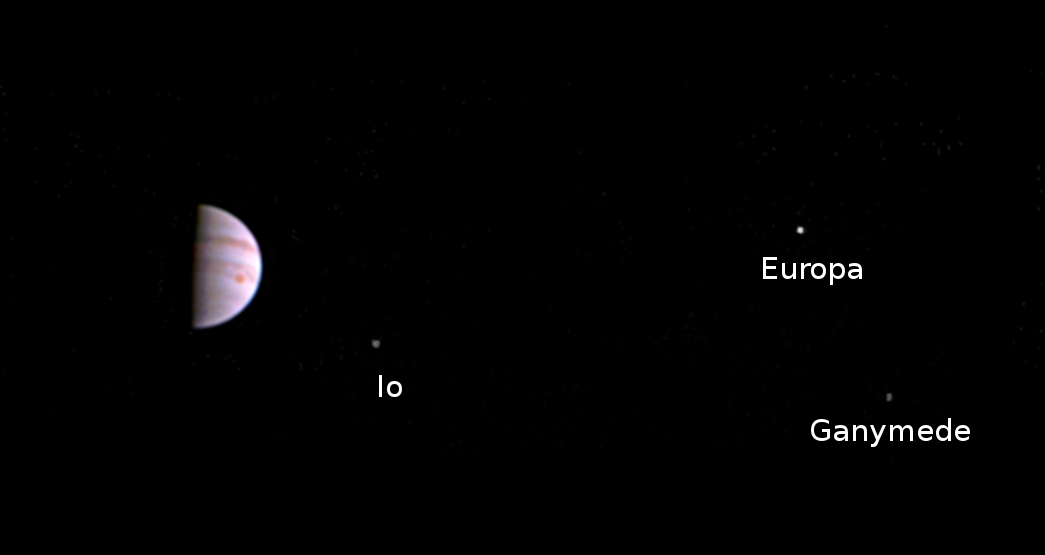
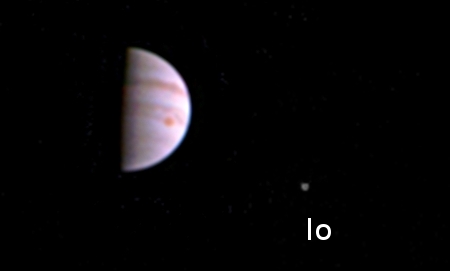
The Juno science team have released the first image since the spacecraft entered orbit around Jupiter. I have posted a cropped version on the right, showing only the moon Io. The full image shows Europa and Ganymede as well.

The image was taken from almost 3 million miles away, which accounts for its fuzziness. Expect much better pictures when the spacecraft dips down close in late August.

5 comments

Sierra Nevada completes first Dream Chaser milestone

The competition heats up: Even as it prepares to complete the last milestone in its NASA contract for developing a manned version of Dream Chaser, Sierra Nevada has just completed the first milestone on its contract to build a cargo version of the reusable lifting body spaceplane.

Though Sierra Nevada did not win a contract to build the manned Dream Chaser, it did have a development contract with NASA that called for one more glide flight test, a test the company had until now decided not to fly because the cost would exceed the milestone payment. This changed however after they won a cargo contract, as the flight will provide important test data for building the cargo version.

Meanwhile, the company’s plan for building the cargo vehicle has been approved by NASA, thus rewarding them their first milestone on that contract, with the following schedule:

Per current schedule goals, Mr. Olson added the inaugural Dream Chaser cargo flight to ISS is aiming for a launch – on the United Launch Alliance Atlas V – as early as October 2019, or as late as April 2020. The company is aiming to build two Dream Chasers, able to fly a total of 30 times over a 10 year lifetime.

Once built and successfully flying, they also plan to move forward on developing the manned version, both for NASA and for others.

0 comments

Vision problems from weightlessness

This article provides an excellent review of the vision problems caused by long term exposure to weightlessness, including the efforts to study the problem on Earth.

Bottom line:

Before a human trip to Mars — a journey of six-to-nine months that NASA says it wants to achieve by the 2030s — researchers agree that VIIP [the name given to this problem] must be understood much better. VIIP could be the first sign of greater dangers to the human body from microgravity. “We’re seeing the visual and neural, ophthalmic manifestations of it,” Barratt said. “I’m fairly certain this is a bit more global than that.”

Richard Williams, the chief health and medical officer at NASA, agrees that what we do not know about VIIP still poses the biggest threat. Ironically, one of the only ways to get more knowledge is spend more time in microgravity. “The longer we stay in space, the more we’re going to learn,” Williams said.

21 comments

New Navy communications satellite in trouble

A Navy communications satellite launched two weeks ago by a ULA Atlas 5 rocket is having trouble reaching its planned geosynchronous orbit.

From that highly elliptical preliminary orbit, the Lockheed Martin-built satellite would perform 7 firings of its Liquid Apogee Engine to raise the low point to circularize the orbit and reduce its orbital tilt closer to the equator.

But after an unspecified number of burns were completed, the trip to geosynchronous orbit was stopped, the Navy said in response to questions submitted by Spaceflight Now. “The satellite experienced an anomaly that required the transfer maneuver to be temporarily halted,” the Navy says. “The Navy’s Program Executive Office for Space Systems has reconfigured the satellite from orbital transfer into a stabilized, safe intermediate orbit to allow the MUOS team to evaluate the situation and determine options for proceeding.”

0 comments

A description of SLS’s first launch

This article provides a detailed look at the planned 2018 first launch of SLS, describing step-by-step the launch process that will send an unmanned Orion capsule toward the Moon.

As my readers know, I am not a fan of SLS. I consider it an incredible waste of money that will never accomplish anything. Nonetheless, that first launch will be a cool thing to watch, as the rocket will generate comparable energy as the Saturn 5.

6 comments

Juno turns on

The Juno engineering team has begun turning the spacecraft’s instruments back on following its Jupiter orbital insertion.

Everything looks fine. The next important engine burn on October 19 will shrink the orbit from 53 days to 14 days. In the meantime the present orbit will dip down close to Jupiter on August 27. Expect some news on September 1.

0 comments

Smallsat market to exceed $22 billion

The competition heats up: A new report estimates the market for small satellites will exceed $22 billion in the next decade.

According to Euroconsult’s latest report, Prospects for the Small Satellite Market, we are on the cusp of a major revolution for the space sector and overall space ecosystem, as more than 3,600 smallsats are expected to be launched over the next ten years, a significant increase from the previous decade. The total market value of these satellites is anticipated to be $22 billion (manufacture and launch), a 76% increase over that of 2006-2015. This rate of growth is unprecedented for the space sector and will bring about fundamental changes as both new and established industry players attempt to increase their capabilities in order to gain market share.

What I expect is a splitting of the space industry, with unmanned smallsats launched by smaller rockets on one hand and big spaceships and payloads launched by big rockets on the other hand. In both cases, the competition will likely force prices down, so that more customers will find space affordable.

0 comments

Balanced rock on Mars

Balanced rock on Mars

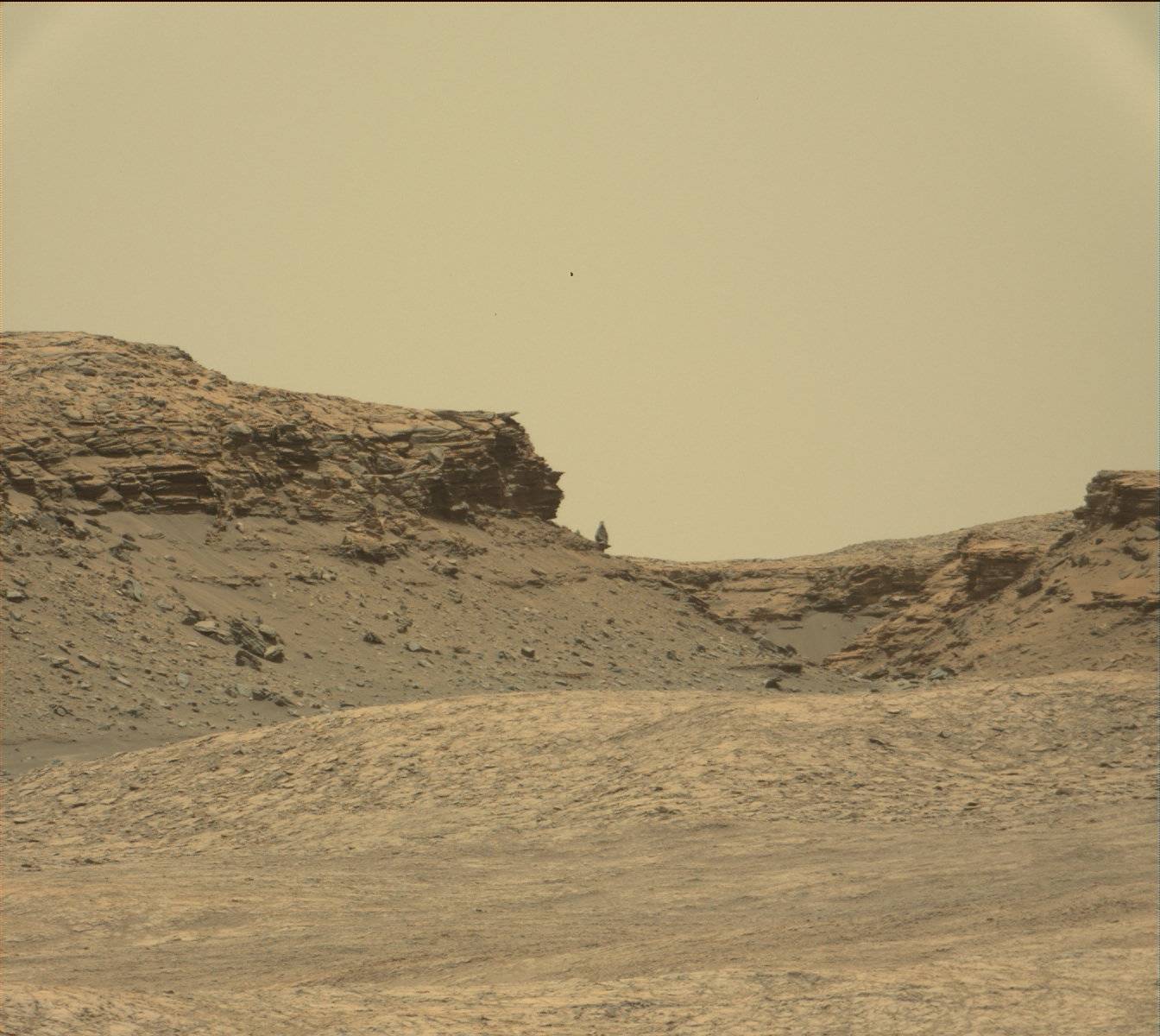
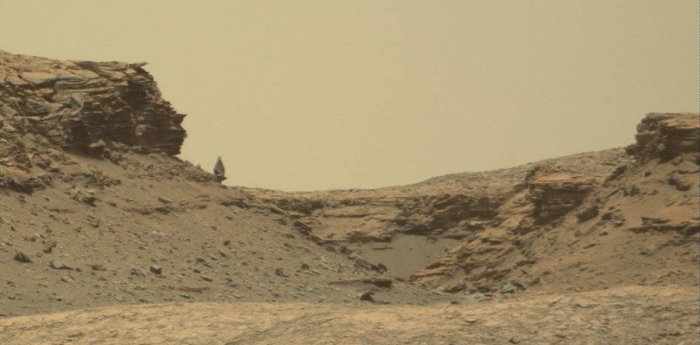
Cool image time! Prior to going into safe mode Curiosity’s mast camera took a series of images of its surroundings, as is routine as the rover travels. Among those images was the image above, though I have cropped it and reduced its resolution to show here. It reveals a balanced rock on the horizon. It also shows, as do the other survey images, how increasingly rough the terrain is becoming that Curiosity is traveling through.

The Curiosity science team has no intention of getting too close to this rough terrain, but they do hope to get better views of this rock as they continue the rover’s journey uphill.

1 comment
1 593 594 595 596 597 799