How to land on a carrier with a missing front wheel
An evening pause: With his front nose gear refusing to deploy, the pilot describes how he still safely landed his Harrier jet on an aircraft carrier.
Hat tip Phill Oltmann
An evening pause: With his front nose gear refusing to deploy, the pilot describes how he still safely landed his Harrier jet on an aircraft carrier.
Hat tip Phill Oltmann
The competition heats up: SpaceX’s next commercial launch of its Falcon 9 rocket, and its next attempt to land and recover the first stage, is now set for December 19.
They will also attempt to land the stage on land, not on a barge.

Curiosity has arrived at the first Martian dune ever observed up close and has begun its investigation.
The image above is a cropped version of a close up image showing the sand ripples on the surface of the dune. The press release also includes an amazing very very very close-up image of the pock-marked grain-covered surface. [link fixed]
An evening pause: A lovely pleasant piece of music, arranged by her from a piece written by Lukas Graham.
Finding out what’s in it: A new Congressional Budget Office study has found that Obamacare will shrink the economy over the next ten years.
Not that this conclusion should surprise anyone. Tea party politicians (as well as Republicans) have been pointing out this consequence of adding new unneeded or unwanted regulations to businesses since the day Obamacare was proposed by Democrats. And from the moment the law was forced through by those Democrats the economy has remained stalled, with businesses forced to focus on avoiding the law’s unaffordable costs rather than focusing on expanding and increasing profits.
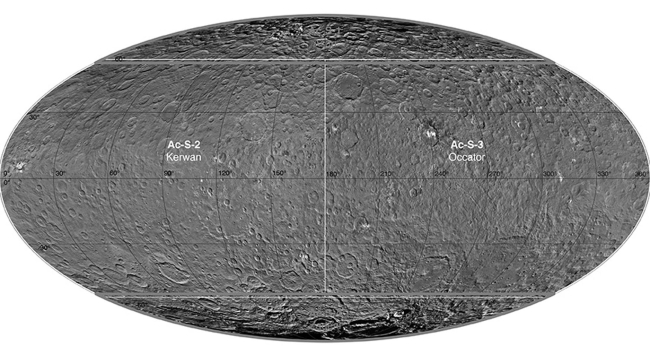
Cool movie time! The Dawn science team has released a movie compiled from images taken by the spacecraft, showing in false color the entire dwarf planet’s rotation as well as doing a fly-over of Occator Crater with its double bright spot.
I have posted the movie below the fold. The false colors illustrate the different materials so far detected on the surface, and help explain the nature and origin of the surface features.
» Read more
An evening pause: From the film The Snowman (1982), music by Howard Blake. Hat tip Danae for suggesting the song.
Based on an analysis of Dawn images scientists now believe that the bright spots on Ceres are salt deposits, not water ice.
Le Corre and colleagues, using images from Dawn’s framing camera, suggest that these salt-rich areas were left behind when water-ice sublimated in the past. Impacts from asteroids would have unearthed the mixture of ice and salt. โThe location of some bright spots also coincide with places where water vapor was detected by other spacecraft,โ said Reddy, a PSI Research Scientist. โThis gives us confidence that the bright spots are likely salt deposits left over by sublimating salty water.โ
While the bright spots themselves are not ice, they are what is left over after salty water evaporates.
In a contest to pick the name of Russia’s proposed new manned capsule to replace the Soyuz the public has so far picked “Gagarin” as its favorite.
The choice is entirely fitting and appropriate. The problem is whether the Russians will have the cash to build it.
The competition heats up: The Google Lunar X-Prize has now confirmed two launch contracts for sending a privately financed and built rover to the Moon by 2017.
Moon Express is now the second company to have a launch contract for their lunar lander spacecraft verified by the X Prize Foundation. An Israeli team, SpaceIL, had its contract to launch a lander on a SpaceX Falcon 9 verified by the foundation in October. SpaceIL will be one of the primary payloads on a launch purchased in September by Spaceflight Industries that will carry about 20 other spacecraft. That initial launch contract verification allowed the foundation to formally extend the competitionโs deadline to the end of 2017. Teams have until the end of 2016 to submit their own launch contracts in order to continue in the competition.
Sixteen teams remain in the competition, announced in September 2007, to land a privately-developed spacecraft on the moon, travel at least 500 meters across its surface, and return high-resolution videos and other data. Some teams are cooperating with others for launch arrangements.
The head of France’s space agency announced today that repairs to their instrument for NASA’s InSight Mars lander will be completed in time to ship the instrument to the U.S. in time for the scheduled March launch.
Briefing reporters here at the COP21 United Nations Climate Change Conference, Jean-Yves Le Gall said the leak, which compromised the required high-precision vacuum chamber carrying InSight sensors, was caused by a defective weld that is applied to close off the tank.
The leakโs cause has been identified and a new weld performed, Le Gall said. Tests to confirm the new weldโs integrity are underway and, assuming no problems, will be completed in time to ship the instrument to the United States in the first week of January. It will then be integrated into the InSight lander in preparation for the March launch.
As scheduled Orbital ATK’s Cygnus freighter has been successfully berthed to ISS.
This launch and docking is a success both for Orbital as well as ULA, both of whom demonstrated that Cygnus can be launched not only on an Antares rocket but on an Atlas 5 as well.