Nevada approves bill that requires electoral votes to go to winner of popular vote

Nevada’s state senate has approved a bill that will require its electoral votes in a presidential election to go to winner of popular vote.

The governor needs to sign the bill, but that is expected.

Assembly Bill 186, which passed the Senate on a 12-8 vote, would bring Nevada into the National Popular Vote Interstate Compact, an agreement between participating states to cast their electoral votes for the winner of the popular vote.

If signed as expected by Democratic Gov. Steve Sisolak, Nevada would become the 16th jurisdiction to join the compact, along with 14 states and the District of Columbia. The compact would take effect after states totaling 270 electoral votes, and with Nevada, the total would reach 195.

It appears to me that this Democratic effort to nullify the electoral college is going to eventually take effect. Once that happens, there will never be another Republican president, as the heavily Democratic and high population states of New York and California are going to always put the popular vote in the hands of Democrats. Essentially, they will have rigged the elections to guarantee their victory, much as they have done in California by eliminating parties in the voting.

Posted on the train from Barmouth to London.

35 comments

Wales Day 7

Cregennan

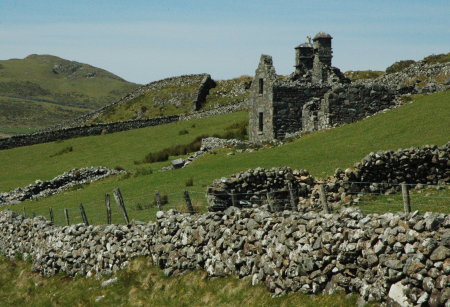
The home of 18th century composer John Williams

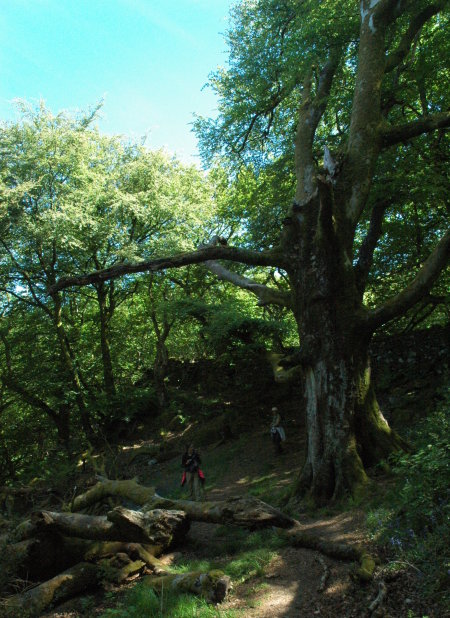
The tree

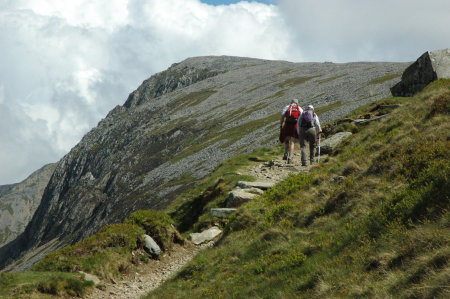
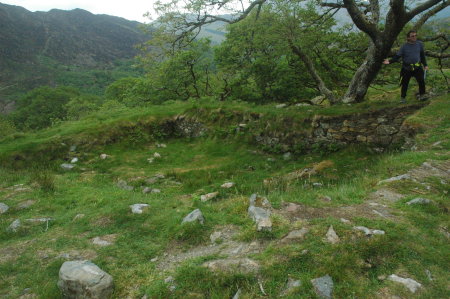
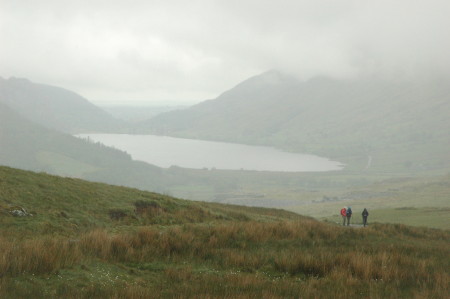
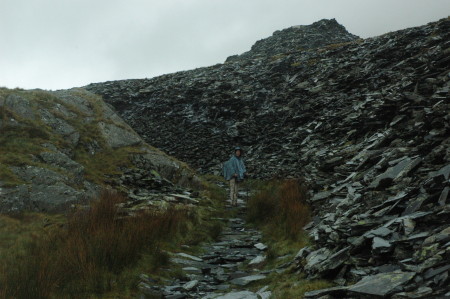
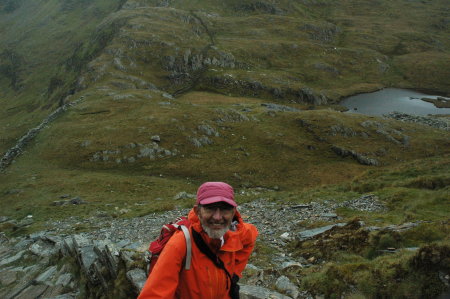
In our final day of our Wales journey, we spent the day strolling across the beautiful countryside of Cregennan, one of several parks along the flanks of the Cadair Idris range, which runs north-south to the coast. This park is closest to the ocean, so at our highest point we were overlooking the Irish Sea and the town of Barmouth.

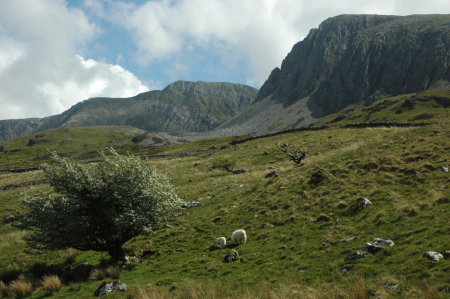
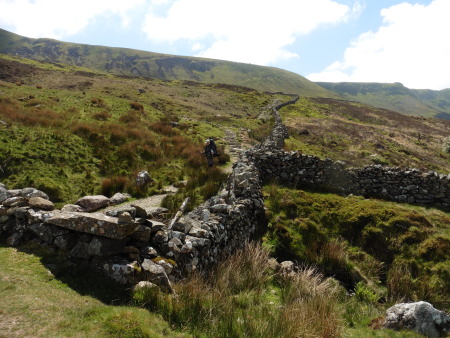
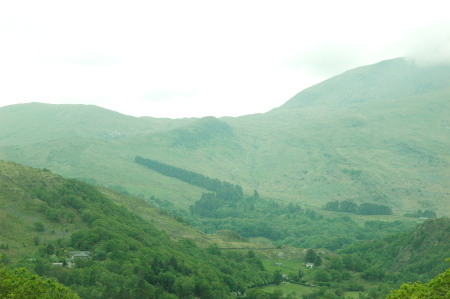
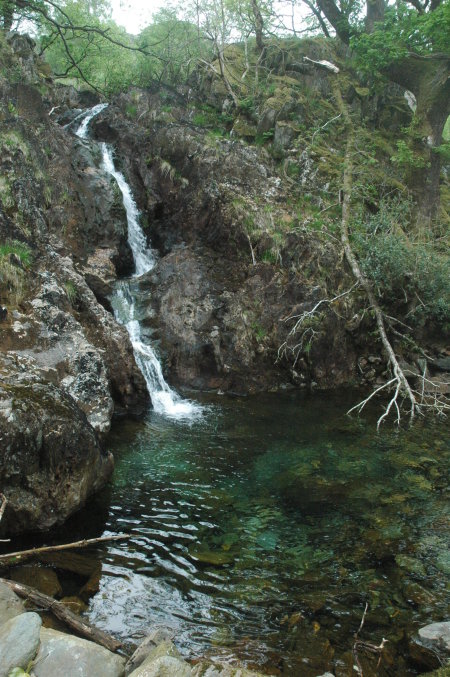
The three pictures on the right are only a small selection of the beauty of this region. There were several magnificent lakes nestled amid the mountains and fields. There were pastures with numerous sheep, some eating, some resting like white blobs on the green grass, and some “baa’ing” at each other. It was especially entertaining when a lamb started calling out for its mother, the mother responding, and then the two searching and finding each other.

And of course there were the standing stones and ancient ruins scattered about on several hilltops.

The abandoned house in the second picture is of special interest because it had been the home of an obscure 18th century Welsh composer by the name of John Williams. Williams was actually quite successful in his time, but only recently have some locals rediscovered unpublished manuscripts of his work. They plan a performance this fall.

Apparently his father was a hat-maker of some note, able to accumulate enough wealth to build this large country house in such a setting. Though I don’t know this, I suspect his success came from providing high quality hats to the upper classes, and this in turn gave his son the contacts necessary to become even more successful as a composer.

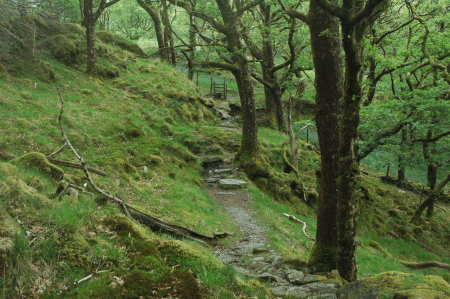
The last photo was taken as we walked downhill toward the ocean in a forested area beside a flowing stream, passing numerous waterfalls. This area is where our tour leader, Hywel “Taff” Roberts, was born and grew up, so he could give us some extra historical details about everything we saw. For example, the giant tree in that last picture was something that he remembered since childhood, home for birds and animals galore. It is old now, which is why several large branches have broken off.

Tomorrow the tour ends, and Diane and I will be taking the train to London, where we will spend two days before flying back to the states.

4 comments

Wisconsin HS students win U.S. rocketry competition

A team of high school students from Wisconsin have won U.S. rocketry competition and will now represent this country in the international competition to be held at the Paris International Air Show in June..

The teamโ€™s victory follows months of preparation designing, building, and testing a rocket capable of meeting rigorous mission parameters set by the contestโ€™s sponsors โ€“ the Aerospace Industries Association (AIA), National Association of Rocketry, and more than 20 industry sponsors. This yearโ€™s rules celebrated the 50th anniversary of Apollo 11 by requiring each rocket to carry three eggs in a separate capsule to symbolize the three astronauts that made the journey to the Moon and back.

The Top 101 teams, hailing from 25 states from Hawaii to New York, competed for a total of $100,000 in prize money and scholarships at the national finals โ€“ an all-day event held at Great Meadow in The Plains, Va., outside of Washington, D.C. The $100,000 prize pool will be split among the Top 10 teams, with Madison West taking home the top prize of $20,000 as U.S. champions. In addition, the top twenty-five finishers receive an invitation to participate in NASAโ€™s Student Launch initiative to continue their exploration of rocketry with high-powered rockets and challenging mission parameters.

The growth of this competition is clearly tied directly to the boom in commercial rocketry going on worldwide.

0 comments

Wales Day 6

Sheep on the flanks of Cader Idrisc

Stone walls on the flanks of Cader Idris

Approaching the halfway point in the hike up Cader Idrisc

After yesterday’s long hike on Mount Snowdon, today was planned as an easier day. First we changed locations, driving south to the village of Dolgellau.

In the morning we heard two short presentations, first about the first discovery of Wales by tourists in the 1700s, and second a more scholarly look at the place names of Wales that appear connected to Arthur. In this case the speaker, Scott Lloyd of the Royal Commission on Ancient and Historical Monuments of Wales, was focused more on what is really known, and was thus less sure about Arthur’s links to Wales than our previous expert, Gareth Roberts. Lloyd has documented the many place names (see his book, The Arthurian Place Names of Wales), but he has also documented the important detail that most started appearing after the first writings about Arthur started to appear, with most appearing several centuries after Arthur supposedly lived. This suggests that the names were chosen because of the legend, not because the man had been there.

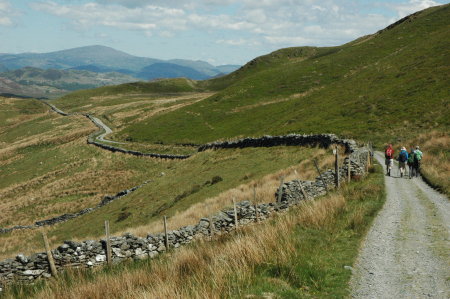
In the afternoon some of us did a short hike halfway up the nearby mountain Cader Idris. The first picture shows the mountain at the top right, with sheep in the center, and a hawthorn tree in bloom to the left. The second picture shows the trail going uphill parallel to one of the many typical stone walls found everywhere in Wales. The land is very rocky, and to make it better for grazing farmers would clear the stones from the fields, putting them in piles to the side. Then, when the enclosure laws were passed in the early 1800s they used those stones to build the walls to define their property lines.

The third picture shows Taff and Barbara ahead of me, with Cader Idris in the distance. Shortly thereafter we stopped to lie on the soft heather to chat and admire the countryside and the grey rocky slope going up to the peak ahead of us. We then headed back down for dinner and an evening in town.

1 comment

Wales Day 5

Lower part of Rhyd Ddu trail

Walking through West Snowdon Quarry

Taff Roberts on the stair climb up Clogwyn Du

Our crew with the summit in view

The goal today was to hike up to the top of Mount Snowdon, the highest point in Wales, as well as the island of England. Diane and I didn’t make it, but not for want of trying.

The route we took started at the trailhead of the Rhyd Ddu trail, one of the more popular routes up the mountain. The top photo to the right shows the view from the lower elevations of this trail, and gives a good sense of the beauty, barrenness, and dampness of the day. Though it never really rained on us, the sky was almost always overcast and the cloud cover sometimes came down to engulf us.

Rather than take Rhyd Ddu straight north to the top, however, our route has us head right (east) up the Clogwyn Du trail through the now inactive West Snowdon slate quarry, and then turn left (north) up the nose of a very steep ridgeline to meet up with Rhyd Ddu close to the summit. The second image on the left shows Diane standing on the trail surrounded by slate tailings from that quarry.

The next picture shows Hywel “Taff” Roberts, our leader and the owner of Wild Wales Tours, with the distant mountain floor below us. We have begun the climb up the nose of that ridgeline, with the initial section up a very steep stone staircase cut into the ground. I could not help but think of the stairs of Cirith Ungol from Tolkien’s Lord of the Rings.

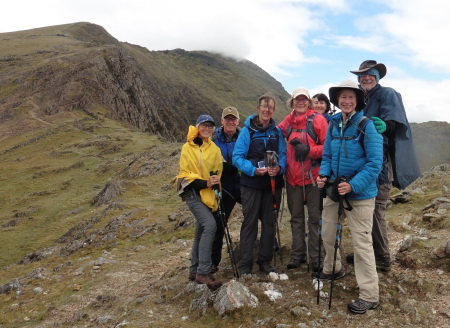
The last photo was taken by Taff showing our entire crew, with the peak of Mount Snowdon hidden by clouds at the top center of the image. From left to right we have Pat, Dennis, the sisters Penny and Barbara, our second guide Haf, and then Diane and myself. The peak at the top-left is actually the start of the knife-edge ridgeline that leads to the peak. Where that ridgeline begins Clogwyn Du meets up again with Rhyd Ddu, which follows that very narrow knife-edge ridge to the summit, with 1000 foot drop-offs on either side.

When we got to Rhyd Ddu on that ridgeline Diane and I decided to head back down on Rhyd Ddu. We were now in the clouds, so going on to the peak seemed silly as we likely wouldn’t be able to see anything. Moreover, it was colder than either of us are used to or like. While Taff came down with us, everyone else continued to the peak. As I write this they have not yet returned, though I have no doubt they had a spectacular time crossing that ridge to the summit. UPDATE: The rest of the crew made the peak, but could see nothing for that entire section of hike, because of the clouds.

Not making the summit does not bother me much. I like to get to the top, but also know that we could it do another time should we decide to try. Diane and I have been doing this for a lot of years. We know our capabilities. We don’t need to prove them to others or ourselves.

Besides, the views up until then had been breath-taking, and they continued to be as good on the hike down. This was why we came, and it paid us amply in beauty every step of the way.

9 comments

China launches GPS-type satellite

China yesterday launched another one of its Beidou GPS-type satellites using its Long March 3C rocket.

This is their fourth backup BeiDou placed in orbit, and the 45th total that has been launched.

The leaders in the 2019 launch race:

7 China
5 SpaceX
4 Europe (Arianespace)
3 Russia

The U.S. still leads China 10 to 7 in the national rankings.

2 comments

Wales Day 4

Sygun Fawr

Today's hike

Merlin's Pool

Foundation at top of hill

Today’s adventure in Wales was a pleasant seven mile hike up onto a small hill, Dinas Emrys, nestled in the pass in Snowdonia National Park that crosses from north to south Wales past Mount Snowdon. Our hotel, Sygun Fawr, can be seen in the lower left corner in the first picture on the right, which I took from the top of this hill. If you look close, you can see the window of our second floor room, looking out at the mountains.

The hike was through some of the lushest green woods I’ve ever seen, as illustrated by the second picture on the right. The trail itself was clearly very old, with stone steps and even a simple bridge made of flat stones and laid across a stream with a single larger rock in the center for support.

The hill itself is associated with Merlin in a number of ways. For example, the pool at the base of the waterfall in the third picture has been called Merlin’s Pool for centuries. Furthermore, Merlin supposedly hid a treasure in a cave somewhere on the hill, which will only be discovered by someone with golden hair and blue eyes and who will be guided to the cave by a bell ringing.

Legend also tells this tale:

Fleeing Anglo-Saxon invaders Vortigen came to Wales and chose the hillfort as his retreat. However all efforts at building on the site failed, with workers returning daily to find collapsed masonry. Vortigern was counselled to seek the help of a young boy born of a virgin mother; a suitable boy was found named Myrddin Emrys (Merlin Ambrosius). Vortigernโ€™s plan to kill Myrddin to appease the supernatural powers preventing him from building his fortress was scorned by Myrddin who instead explained that the fort could not stand due to a hidden pool containing two dragons. The White Dragon โ€“ he explained โ€“ of the Saxons would in time be defeated by the British Red Dragon.

The fourth pictures shows Gareth Roberts, our guide who as mentioned yesterday has been researching Welsh Arthurian place names, standing on the foundation of the ruin at Dinas Emrys’ top. To his left and slightly lower down on the hill in a gully was a second foundation and a pool from a natural spring. This spring was another reason this hilltop was a favored site for a stronghold, as it not only gave clear views both up and down the valley, was very defensible, but also had a ready supply of water. A fortress here would withstand attack for a considerable time.

Tomorrow we climb Mount Snowdon itself, The hike’s length will likely be about nine miles, and will gain 2,900 feet in elevation, somewhat comparable to many hikes in southern Arizona. The weather looks excellent, with spring temperatures at the mountain’s base.

4 comments

New LRO pictures showing Beresheet impact site

The Lunar Reconnaissance Orbiter (LRO) science team yesterday released an image showing the impact site where the privately-built Israeli lunar lander Beresheet crashed onto the surface of the Moon on April 11, 2019.

โ€œThe cameras captured a dark smudge, about 10 meters wide, that indicates the point of impact,โ€ said NASA. โ€œThe dark tone suggests a surface roughened by the hard landing, which is less reflective than a clean, smooth surface.โ€

The image released does not see the spacecraft but the surface evidence that an impact took place. Higher resolution images will be required to spot any surface wreckage.

1 comment

Hayabusa-2 aborts close-in drop of visual marker on Ryugu

Japan’s asteroid probe Hayabusa-2 automatically aborted a planned drop of a visual markee on the asteroid Ryugu at the site where the probe created a crater in April.

Thursday’s mission was to observe the targeted area in detail and drop a marker from an altitude of 10 meters. But officials say the probe automatically suspended the operation after it descended to about 50 meters above the surface. It then headed toward its standby position of 20 kilometers above Ryugu. Hayabusa2 is designed to automatically abort its landing if it detected any irregularity. The agency is looking into the cause of the arrested descent.

Once the marker is eventually in place, they will use it for guidance during a a second touchdown to grab further samples, this time hopefully of material churned up by the explosion that created the crater.

0 comments
1 94 95 96 97 98 156