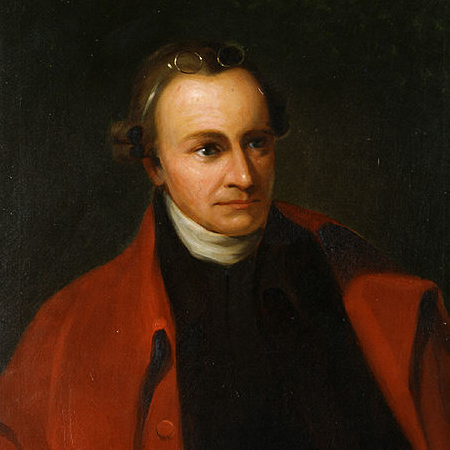
Pushback: Citizens create open Christmas soup kitchen when official food drive bans unjabbed

Spokane: Where some charities think some of the poor should starve during Christmas
Spokane: Where some charities think some of the poor should starve
during Christmas, while others step up to provide charity for all.

Pushback against blacklists: When the official annual Christmas soup kitchen in Spokane announced that the homeless and poor would be banned if they didn’t get COVID shots or tested first, a group of local citizens quickly organized an open soup kitchen where no jabs or testing would be required.

The image to the right illustrates the rules for the two competing soup kitchens.

A week before Christmas, in Spokane, WA, the Christmas Bureau food assistance program turned away needy people who could not show proof of Covid-19 vaccination or proof of a negative COVID test no more than 72 hours old.

The Christmas Bureau is an annual holiday assistance program coordinated by Catholic Charities Eastern Washington, Volunteers of America, and the Spokesman-Review. The program is made possible by generous monetary funds and volunteer hours donated by community members and organizations.

In response to the Christmas Bureau’s actions, a group of Christian patriots launched a “No Vaccine Canteen” to feed everyone — regardless of their medical history. [emphasis mine]

I purposely highlight the entities who decided that it was all right to deny charity to some of the poor and homeless during the Christmas season, merely because they hadn’t gotten the government jab. To paraphrase the words of Scrooge, “Maybe these unvaccinated should simply die and decrease the surplus population.”

For those in Spokane with the Christmas season in their hearts, this information should provide guidance next year when these particular organizations come begging for money. It is clear they really don’t have charity in mind, but power and enforcing their will, even onto the most vulnerable.

Instead, Spokane citizens should contact the people who ran the “No-Vaccine Canteen,” who teamed up with an organization called Blessings Under The Bridge, and give them their donations. When they heard about the Christmas Bureau’s decision to turn people away, these people were quickly able to raise $3500 and organize multiple free meal events for the poor.

Below is a video interview with Dan Bell, who helped organize the “No-Vaccine Canteen.” As he says,
» Read more

14 comments

Finalists announced in the ’21 Illusion of the Year contest

The top ten finalists, including the first place winner, in the 2021 best optical illusion of the year contest have now been announced.

The annual illusion contest is run by the Neural Correlate Society, an organization devoted to promoting awareness of the science behind perception and cognition. For 17 years the annual contest has consistently delivered an assortment of compelling illusions, frequently underpinned by fascinating scientific principles.

This year’s winner, from UK scientist and magician Matt Pritchard, is a unique example of an anamorphic illusion. These are illusions that present a viewer with an image that appears distorted until it is looked at from a specific perspective.

I have embedded below a video showing Pritchard’s illusion, dubbed the Phantom Queen. If you go to the contest’s website you can see videos of all ten finalists, all of which are fun and quite remarkable in their ability to fool the eye.
» Read more

2 comments

U.S. military adds Blue Origin to its point-to-point space cargo development program

Capitalism in space: The U.S. military on December 17th signed an agreement with Blue Origin to add it to its point-to-point space cargo development program.

The command last year signed similar agreements with SpaceX and with Exploration Architecture Corp. (XArc). Blue Origin is the third company to ink a CRADA [as these development contracts are called] for the rocket cargo program.

Under CRADAs, companies agree to share information about their products and capabilities but the government does not commit to buying anything. U.S. TRANSCOM’s analysis of industry data will inform the newly created “rocket cargo” program led by the Air Force Research Laboratory and the U.S. Space Force. The Air Force in its budget proposal for fiscal year 2022 is seeking $47.9 million to conduct studies and rocket cargo demonstrations. [emphasis mine]

I highlight the total budget of this program to show that this is a very small government program. The cash it provides these three companies is nice, but it is chicken feed when compared with the total cost of development. It certainly will not result in a faster pace at Blue Origin in developing its New Glenn rocket, which is presently two years behind schedule with further delays almost certain because its BE-4 rocket engine is not yet ready for mass production.

Whether the program itself is a good thing, or merely another example of government crony capitalism, is open to question. The practicality of using either Starship or New Glenn for cargo transport remains very unproven, especially for New Glenn, which was not designed with such a purpose in mind and cannot land its upper stage on Earth as Starship can.

5 comments

Starship prototype #20 completes another static fire launchpad test

Capitalism in space: Despite being blocked by the federal government bureauceacy from launching its Starship/Superheavy rocket on its first orbital flight, SpaceX yesterday successfully completed another static fire launchpad test of the 20th prototype of Starship.

It appears that this was the second static fire test that used all six of prototypes’s Raptor engines.

Meanwhile, Superheavy prototype #4 sits on the orbital launchpad, where similar static fire tests were expected but have not yet occurred. Either SpaceX engineers found they needed to additional revisions of the prototype before attempted such a test, which could fire as many as 29 Raptor engines at once, or the company has decided to hold back its testing because the FAA has not yet approved the environmental reassessment for the Boca Chica launch site. Firing the engines on Superheavy before that approval could be used by SpaceX’s environmental enemies as a public relations weapon to help kill the approval entirely.

Personally I think the answer is the former. It is not Elon Musk’s way to cower in fear of others. In fact, he is more likely to push forward, knowing that the publicity from a successful Superheavy static fire test will almost certainly be mostly positive and enthusiastic, thus helping to force politicians to force the bureaucracy to sign off its approval.

4 comments

Virgin Orbit merger produces only half the investment capital expected

Capitalism in space: It appears that the merger of Virgin Orbit with the special purpose acquisition company (SPAC) NextGen Acquisition II has produced only half the investment capital that had been expected.

The merger had expected to produce $483 million in investment capital for the rocket company. Instead it has produced only $228 million because many shareholders of NextGen cashed out before the merger occurred. Apparently, these shareholders did not have confidence in the Virgin Orbit, and feared their stock value would drop once the merger was completed.

It appears that Virgin Orbit has been stained by the failure of another Richard Branson space company, Virgin Galactic, to deliver on its promises. Virgin Orbit has successfully completed two orbital flights, and is expected to complete a third shortly. Unlike Virgin Galactic, it has done what it said it would, though it took longer than predicted (delays that were not unreasonable considering it was a startup rocket company). Investors have looked at the collapse of Virgin Galactic stocks, and have decided they do not wish to gamble their money on another Branson space company, no matter how successful.

0 comments

China completes two launches to make 2021 the most active year in rocketry ever

China yesterday completed two different launches from two different spaceports using two different rockets.

First it used its Long March 2D rocket to launch an Earth observation satellite from the Jiuquan Satellite Launch Center in northern China.

Then, a few hours later, a Long March 3B rocket launched a classified military satellite from the Xichang Satellite Launch Center in southwest China.

Both launches dropped first stage boosters in the interior of China. No word on whether either used parachutes or grid fins to better control the stages so that they avoid habitable areas.

These two launches bring China’s total number of successful launches in 2021 to 52, a record for that country and the most any single country has achieved since Russia successfully launched 54 times in 1992 as its high launch rate slowly shut down following the fall of the Soviet Union.

The two launches also bring the total number of successful launches in 2021 to 134, the most in any single year in the entire history of space exploration. The last time global launches reached such numbers was in the 1970s and 1980s, numbers that were produced mostly by the launch of a lot of short term low orbit surveillance satellites by the Soviets, using technology that the U.S. had abandoned in the 1960s as inefficient. It took the collapse of the communist state for Russia to finally cease such launches itself.

Now the high number of launches is increasingly being fueled by commercial competition and profits, though China’s record this year is partly due to the same top down communist set-up similar to the Soviet Union. Even so, the number of competing private rocket companies worldwide is on the rise, and in most places (even China in a few cases), it is those companies that are providing the launch services to the government. Profit and private ownership are the watchwords, and so there is aggressive competition that is lowering the launch cost.

I will have more to say about this in my annual report, which I will publish on Monday, January 3rd.

The leaders in the 2021 launch race:

52 China
31 SpaceX
23 Russia
7 Europe (Arianespace)

0 comments

Slope streaks in frozen lava flows on Mars

Slope streaks on frozen lava
Click for full image.

Cool image time! The photo to the right, cropped and reduced to post here, was taken on June 5, 2021 by the high resolution camera on Mars Reconnaissance Orbiter (MRO). It shows a ridgeline at the base of the giant volcano Pavonis Mons, with slope streaks on ridge’s north and south sides.

Slope streaks are a mysterious phenomenon unique to Mars. While they resemble an avalanche, they do not change the topography of the surface at all. They appear to occur randomly year round, fading slowly with time. Also, while most are dark, scientists have also spotted bright slope streaks as well.

Slope streaks also only appear on surfaces covered with a layer of fine dust, something that is obviously the case in the cool image to the right. There is so much dust on the surface here that bedrock only appears at the top of the ridge, peeking out in only a few places.

The location of this image, as shown in the overview map below, adds some additional details.
» Read more

1 comment

Today’s blacklisted American: NY elementary school bans singing “Jingle Bells”
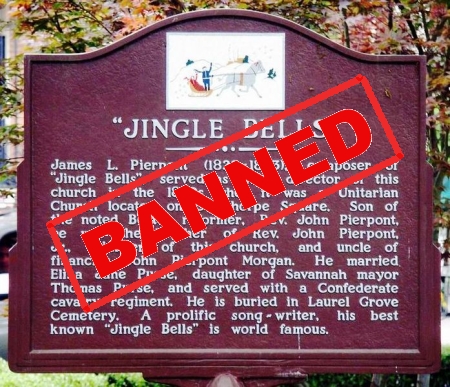
Banned by Brighton Central School District, NY
Banned by Brighton Central School District, NY.

The administrators at an upstate New York elementary school, Council Rock Primary, have decided to ban the song “Jingle Bells” because it might be “controversial or offensive.”

“Jingle Bells,” explained Council Rock principal Matt Tappon in an email, has been replaced with other songs that don’t have “the potential to be controversial or offensive.”

…Allison Rioux, Brighton Central School District assistant superintendent for curriculum and instruction, offered a different reason for removing “Jingle Bells.” She wrote, “Some suggest that the use of collars on slaves with bells to send an alert that they were running away is connected to the origin of the song Jingle Bells. While we are not taking a stance to whether that is true or not, we do feel strongly that this line of thinking is not in agreement with our district beliefs to value all cultures and experiences of our students.

“For this reason,” Rioux concluded, “along with the idea that there are hundreds of other 5 note songs, we made the decision to not teach the song directly to all students.” [emphasis mine]

Rioux use of the weasel words “Some suggest” as her source for this ridiculous justification is of course another way of her saying “I’m making this up.” According to Kyna Hamill of Boston University, the foremost expert on the history of the song (and whose work the school cites as their justification for the banning),
» Read more


21 comments

Deployment of Webb’s critical sunshield has begun

The deployment of the complex sunshield for the James Webb Space Telescope has successfully begun, and if all continues as planned, will continue for the next five days.

Early this afternoon the Webb mission operations team concluded the deployment of the first of two structures that hold within them Webb’s most unpredictable and in many ways complicated component: the sunshield.

The structures – called the Forward and Aft Unitized Pallet Structures – contain the five carefully folded sunshield membranes, plus the cables, pulleys, and release mechanisms that make up Webb’s sunshield. The team completed the deployment of the forward pallet at approximately 1:21 p.m. EST, after beginning the entire process about four hours earlier. The team will now move on to the aft pallet deployment.

Over the next five days the aft pallet must be deployed, along with a tower assembly that will raise the telescope itself away from the sunshield to better keep Webb cold. After this the deployment of the many additional parts of the shield will take place, a process that is probably the most complex in-space spacecraft deployment ever.

It is good news that so far all is proceeding as planned, and gives hope that all will continue to do so.

12 comments

FAA delays final approval of Starship environmental reassessment till Feb 28th

The FAA has now made it official and announced that the final approval of Starship environmental reassessment will not occur before the end of February, thus preventing any Starship orbital test flights until the spring, at the earliest.

As previously announced, the FAA had planned to release the Final PEA in on December 31, 2021. However, due to the high volume of comments submitted on the Draft PEA, discussions and consultation efforts with consulting parties, the FAA is announcing an update to the schedule. The FAA now plans to release the Final PEA on February 28, 2022.

When the rumors of a delay were first noted last week, I predicted that “Starship’s first orbital flight will not happen until the latter half of ’22, if then.” That prediction is now almost certainly confirmed.

Nor I am not confident the FAA’s environmental reassessment of SpaceX’s launch facility in Boca Chica will be ready even in February. The problem appears to be that the FAA needs to also get the approval of both NOAA and the U.S. Fish & Wildlife agencies, and both appear to be very hostile to SpaceX’s efforts.

In fact, this is beginning to look like the situation in Hawaii with the Thirty Meter Telescope. There protesters blocked the start of construction, and the government, controlled by Democrats, worked with those protesters to step by step keep that obstruction active and working. If so, SpaceX faces a very dangerous situation, as it appears the Biden administration is about to do the same thing to it.

51 comments
1 2 3 4 167