SpaceX’s Falcon Heavy rocket launches the Space Force’s X-37B

SpaceX’s Falcon Heavy rocket tonight successfully launched one of the two X-37B reuseable mini-shuttles in the Space Force’s fleet, lifting off from Cape Canaveral.

This was the seventh X-37B flight. It is not clear which of the two vehicles was flying, and how many flights it has completed previously. The previous X-37B flight stayed in orbit for a record 908 days, landing safely in November 2022.

The two side boosters completed their fifth flight, landing safely back at Cape Canaveral. The center core was treated as expendable, and was not recovered.

The leaders in the 2023 launch race:

95 SpaceX (with another launch scheduled later tonight)
65 China
19 Russia
8 Rocket Lab
7 India

American private enterprise now leads China in successful launches 109 to 65, and the entire world combined 109 to 102. SpaceX in turn trails the rest of the world (excluding other American companies) 95 to 102.

6 comments

December 28, 2023 Quick space links

Courtesy of BtB’s stringer Jay.


  • Another storage tank arrives at Boca Chica
  • This is for storing prior to the launch of a Starship/Superheavy, either methane or oxygen, I’m not sure which. Jay wonders “when they will start producing their own fuel.”

3 comments

Today’s blacklisted American wins $185K settlement from college that fired him

St. Philip's College, home to blacklisting and censorship
St. Philip’s College, the poster child of academic
blacklisting and censorship

They’re coming for you next: Today’s blacklist story is a follow-up on a July 2023 essay about the oppressive atmosphere at St. Philip’s College in Texas, where two different professors were fired in 2023 for political reasons.

First, Dr. Johnson Varkey, was fired because in teaching human anatomy he had the audacity to mention that sex is determined by the X and Y chromosomes, a very basic fact of biology that any medical student has to know to become a competent doctor. Four students walked out on him for saying so, and when they complained to the administration it fired him without due process. He is presently suing the college.

Then, college officials fired professor Will Moravits because he insisted on allowing free and open debate in his classroom and one anonymous student complained, and while doing so made false accusations against Moravits. The school felt so threatened by the idea of freedom of speech that it had Moravits escorted off campus by police, never to return.

Moravits has now won a $185K settlement with St. Philip’s College.
» Read more

4 comments

Mapping the major lava flood events in Mars’ volcano country

The volcanic events in Mars' volcano country
Click for original map.

In a paper just released, scientists have used the orbital data from Mars Reconnaissance Orbiter (MRO) to map on Mars forty different past volcanic eruptions of extensive flood lava covering large regions, all within the region I dub “volcano country” because its entire surface seems mostly shaped by flows of lava.

The map above, figure 1 from the paper, shows the study area (within the white rectangle), with its global context and additional information added by me on the right. Most of the largest earthquakes detected by InSight ran from north-to-south down the center of the white box. The named features are all large flood lava events, with the youngest being Athabasca. Within the Cerburus Plains feature the researchers mapped many smaller events which brought the total up to forty. From the abstract:

An area almost as large as Europe was investigated. The study revealed the products of more than 40 volcanic events, with one of the largest flows infilling Athabasca Valles with a volume of 4,000 km3. The surface appearance and material properties suggest that Elysium Planitia is composed of basalt, the most common type of lava on Earth. The area also experienced several large floods of water, and there is evidence that lava and water interacted in the past. However, while there could be ice in the ground today, it likely occurs in small patches.

None of these flood lava events involved the gigantic volcanoes that surround this region. Instead, the lava erupted from vents within this region, and then flowed downgrade to flood large areas, sometimes covering over parts of earlier lava floods. All also flowed much faster than lava on Earth, flooding vast regions — comparable to entire countries — often in mere weeks.

0 comments

Juno’s closest image of Europa suggests recent surface activity

Juno's best image of Europa
Click for original image.

Analysis by scientists of the closest image of Europa taken during Juno’s close-fly on September 29, 2022 suggests that a particular strange feature, dubbed the “platypus” due to its shape, might be very young and indicate recent surface activity that could be related to underground liquid water.

That picture, reduced and sharpened to post here, is to the right. It is figure 2 of the paper. The description of this photo from the abstract:

Intricate networks of cross-cutting ridges and lineated bands surround an intriguing 37 km (east-west) by 67 km (north-south) chaos feature with a concentric fracture system, depressed matrix margins, and low-albedo materials potentially associated with brine infiltration. The morphology and local relief of the chaos feature are consistent with formation in the collapse of ice overlying a salt-rich lens of subsurface water. Low-albedo deposits, similar to features previously associated with hypothesized cryovolcanic plume activity, flank nearby ridges. The SRU’s high-resolution view of many types of features in a single image allows us to explore their regional context and greatly improve the geologic mapping of this part of Europa’s surface. The image reveals several relatively youthful features in a potentially dynamic region, providing baselines for candidate locations that future missions can investigate for present day surface activity.

SRU is Juno’s Stellar Reference Unit camera, designed to take pictures using only the low light of Jupiter reflected onto nighttime surfaces of Jupiter’s moons. It took this photo when Juno was only 256 miles above the surface.

This feature will obviously become a prime target for Europa Clipper when it arrives into orbit around Jupiter in April 2030. From this vantage point — safer than continuous exposure to Jupiter’s magnetosphere while in orbit around Europa — the spacecraft will do 44 close-flys of the moon.

0 comments

Japan’s SLIM lunar lander releases its first pictures of Moon

Oblique view of Moon by SLIM
Oblique view of the Moon, as seen by SLIM.
Click for original image.

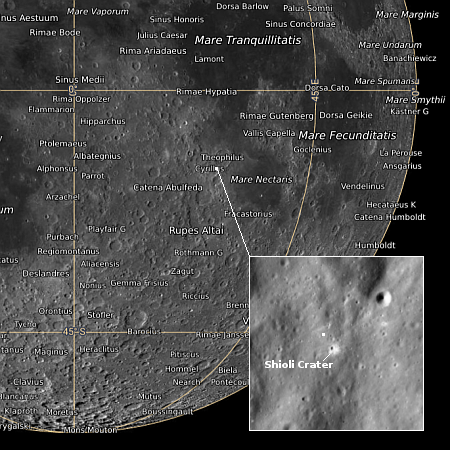
Japan’s space agency JAXA today released the first pictures taken of the Moon by its SLIM lunar lander after entering lunar orbit on December 25, 2023.

Three images were included in the tweet. The one to the right, reduced to post here, gives an oblique view of the Moon, including its horizon. None of the images are of great scientific value, but all are very significant in terms of SLIM’s engineering. They prove the spacecraft is operating as designed, able to orient itself precisely as well as point its camera correctly. These facts bode well for the precision landing attempt, which is SLIM’s main purpose, now targeting January 24, 2024. The primary goal is to demonstrate the ability for an unmanned spacecraft to land autonomously within a tiny landing zone only 300 feet across.

If SLIM succeeds, it will then hopefully operate for one lunar day, about two weeks. It is not expected to survive the lunar night that follows.

2 comments

The uncertainty of science as proven by the Webb Space Telescope

A long detailed article was released today at Space.com, describing the many contradictions in the data coming back from the Webb Space Telescope that seriously challenge all the theories of cosmologists about the nature of the universe as well as its beginning in a single Big Bang.

The article is definitely worth reading, but be warned that it treats science as a certainty that should never have such contradictions, as illustrated first by its very headline: “After 2 years in space, the James Webb Space Telescope has broken cosmology. Can it be fixed?”

“Science” isn’t broken in the slightest. All Webb has done is provide new data that does not fit the theories. As physicist Richard Feynman once stated bluntly in teaching students the scientific method,

“It doesn’t make a difference how beautiful your guess is, it doesn’t make a difference how smart you are, who made the guess, or what his name is. If it disagrees with experiment, it’s wrong.”

Cosmologists for decades have been guessing in proposing their theories about the Big Bang, the expansion of the universe, and dark matter, based on only a tiny amount of data that had been obtained with enormous assumptions and uncertainties. It is therefore not surprising (nor was it ever surprising) that Webb has blown holes in their theories.

For example, the article spends a lot of time discussing the Hubble constant, describing how observations using different instruments (including Webb) have come up with two conflicting numbers for it — either 67 or 74 kilometers per second per megaparsec. No one can resolve this contradiction. No theory explains it.

To me the irony is that back in the 1990s, when Hubble made its first good measurements of the Hubble constant, these same scientists were certain then that the number Hubble came up with, around 90 kilometers per second per megaparsec, was now correct.

They didn’t really understand reality then, and they don’t yet understand it now.

What cosmologists must do is back away from their theories and recognize the vast areas of ignorance that exist. Once that is done, they might have a chance to resolve the conflict between the data obtained and the theories proposed, and come up with new theories that might work (with great emphasis on the word “might”). Complaining about the paradoxes will accomplish nothing.

7 comments

Japan’s space agency JAXA schedules next H3 rocket launch

JAXA, Japan’s space agency, announced today that it has now scheduled the next test launch of its new H3 rocket for February 15, 2024.

This rocket, built by Mitsubishi for JAXA, is supposed to replace the H2A rocket, which completed its last launch in September 2023. The H3 was supposed to be flying years ago, but has experienced numerous engineering problems throughout its development. It was initially supposed to launch in 2020, but was first delayed to 2021 because of “engine issues,” which were later described as cracks and holes in the engine’s combustion chamber.

That launch date was never met. When JAXA was gearing up to launch in 2022 news sources revealed another yearlong delay until 2023 because of new engine problems, which appeared to require a complete engine redesign.

Then in February 2023 the rocket’s first launch attempt was aborted at T-0 when the two strap-on solid rocket boosters failed to ignite. A second launch attempt a month later failed when the second stage failed during launch.

Even if the rocket successfully launches in February, it still leaves Japan far behind the rest of the space-faring industry. The H3 is entirely expendable, and is far more expensive to launch than the new reuseable rockets in use or being developed by numerous private American companies or other nations. JAXA says it hopes to launch it six times a year, but I can’t imagine it getting even a third that number of customers.

What Japan’s government really needs to do is to get the launch business away from JAXA completely. Let other companies besides Mitsubishi build their own rockets and have JAXA buy their services, rather than try to design its own rockets. This system is working marvelously in the U.S., so much so that India is now aggressively trying to copy it, while communist China has made its own pseudo attempt, somewhat successfully, to do the same for the past five years.


3 comments

Elthin – Je vivroie liement

An evening pause: Written by Guillaume de Machaut in the 14th century. The title means “I should lead a happy life.” For a full translation go here. The players are clearly using instruments designed and built to match the traditional instruments used when this song was played.

Hat tip Alton Blevins.

3 comments

December 27, 2023 Quick space links

Courtesy of BtB’s stringer Jay.


After about half an hour the sky had brightened enough for divers to hit the water and attach a flotation collar to the capsule. As everyone waited for the hatch to open, someone in a rescue helicopter radioed a question to these three first-time lunar explorers. “Hey, Apollo 8, is the moon made of green cheese?”

“No,” Bill Anders said instantly. “It’s made of American cheese.”

3 comments

All I feel is fury at the bankruptcy of academia decades ago


A modern Ivy League education: “But Brawndo’s got what plants crave.
It’s got electrolytes!”

Recently Bari Weiss, former New York Times journalist who it blacklisted because she refused to follow the leftist narrative when the facts said otherwise, wrote a heart-wrenching column about the fall of American academia. She began as follows:

Twenty years ago, when I was a college student, I started writing about a then-nameless, niche ideology that seemed to contradict everything I had been taught since I was a child.

…What I saw was a worldview that replaced basic ideas of good and evil with a new rubric: the powerless (good) and the powerful (bad). It replaced lots of things. Color blindness with race obsession. Ideas with identity. Debate with denunciation. Persuasion with public shaming. The rule of law with the fury of the mob.

People were to be given authority in this new order not in recognition of their gifts, hard work, accomplishments, or contributions to society, but in inverse proportion to the disadvantages their group had suffered, as defined by radical ideologues. According to them, as James Kirchick concisely put it: “Muslim > gay, black > female, and everybody > the Jews.”

I was an undergraduate back then, but you didn’t need a PhD to see where this could go. And so I watched, in horror, sounding alarms as loudly as I could.

I was told by most Jewish leaders that, yes, it wasn’t great, but not to be so hysterical. Campuses were always hotbeds of radicalism, they said. This ideology, they promised, would surely dissipate as young people made their way in the world.

It is essential to repeat her second paragraph again to understand the utter bankruptcy of this new “philosophy.” It was…

… a worldview that replaced basic ideas of good and evil with a new rubric: the powerless (good) and the powerful (bad). It replaced lots of things. Color blindness with race obsession. Ideas with identity. Debate with denunciation. Persuasion with public shaming. The rule of law with the fury of the mob.

» Read more

11 comments
1 2 3 4 196