October 20, 2023 Zimmerman/Batchelor podcast
Embedded below the fold in two parts.
To listen to all of John Batchelor’s podcasts, go here.
» Read more
Embedded below the fold in two parts.
To listen to all of John Batchelor’s podcasts, go here.
» Read more
India’s attempt today to test the launch abort system to be used to safely propel its manned Gaganyaan capsule away from a failing rocket aborted at T-0.
They need to take the spacecraft back to the assembly building in order to figure out what went wrong, so the next attempt will likely be delayed at mininum several weeks. UPDATE: That’s what the head of ISRO said at the end of this live stream, but that is not what happened. See new post above.
An evening pause: Another attempt to get a sense of the vastness of existence.
Hat tip Alton Blevins.
Courtesy of BtB’s stringer Jay.
This confirms a June statement. China and Pakistan had in 2018 discussed flying a Pakistani astronaut to its space station (though no deal was ever announced). This new deal could make that astronaut flight a reality.
After checking to make sure the patch uploaded properly, they will activate it next week. The patch itself will help make fuel use more efficient. It will also prevent the communications issue that caused problems in 2022. Regardless, both spacecraft likely only have a few more years of operation, after which their nuclear power source will run out of power.
Cool image time! The picture to the right, rotated, cropped, reduced, and enhanced to post here, was taken on August 5, 2023 by the high resolution camera on Mars Reconnaissance Orbiter (MRO). The central darker strip however comes from a September 27, 2008 image by MRO’s lower resolution context camera, inserted to fill in the blank section where one component on the high resolution camera has failed.
The picture focuses on what the scientists call a “pit interacting with a mound.” The 100-foot-deep pit is one of a very long meandering string of such pits, all of which suggest the existence of an buried river canyon into which debris is sinking. Altogether this particular string runs from several dozen miles, and its interaction with the triangular 300-foot-high mound suggests at first glance that the river that created the canyon did a turn to the left to avoid a large underground mountain, now mostly buried but revealed by its still exposed peak.
As is usual in planetary research, the first glance is often wrong. The overview map below provides a different answer, which says the formation of the aligned pits is related to the formation of the mound itself.
» Read more
The uncertainty of science: Using ground-based radio and optical telescopes, astronomers think they have detected the most distant known fast radio burst yet, coming from a galaxy thought to be eight billion light years away.
On 10 June 2022, CSIRO’s ASKAP radio telescope on Wajarri Yamaji Country was used to detect a fast radio burst, created in a cosmic event that released, in milliseconds, the equivalent of our Sun’s total emission over 30 years.
“Using ASKAP’s array of dishes, we were able to determine precisely where [in the sky] the burst came from,” says Dr Ryder, the first author on the paper. “Then we used the European Southern Observatory (ESO) Very Large Telescope (VLT) in Chile to search for the source galaxy, finding it to be older and further away than any other FRB source found to date, and likely within a small group of merging galaxies.”
Note that the scientists have not actually measured the distance of this burst. They assume it sits at the same distance of the group of merging galaxies that surround it. Only about fifty fast radio bursts have so far been detected. As yet there is no accepted explanation as to what causes them, though knowing their assumed distance helps narrow the possibilities significantly.
The scientists also think they can use the energy from this burst to measure the intervening matter between it and Earth, and thus get a better estimate of the mass of the universe.

Click for original false-color infrared image.
Using the Webb Space Telescope’s infrared capability, scientists have now detected a high altitude jet stream that flows above the equatorial band of Jupiter at speeds estimated to 320 miles per hour.
The false-color infrared image to the right shows evidence of this jetstream in three places by the brightest features seen there. From the caption:
In this image, brightness indicates high altitude. The numerous bright white ‘spots’ and ‘streaks’ are likely very high-altitude cloud tops of condensed convective storms. Auroras, appearing in red in this image, extend to higher altitudes above both the northern and southern poles of the planet. By contrast, dark ribbons north of the equatorial region have little cloud cover. In Webb’s images of Jupiter from July 2022, researchers recently discovered a narrow jet stream traveling 320 miles per hour (515 kilometers per hour) sitting over Jupiter’s equator above the main cloud decks.
These features sit about 25 miles higher than the planet’s previously detected cloudtops.
This discovery only proves what has always been evident, that Jupiter’s atmosphere is very complex with many features earlier optical observations could not see. It also only gives us a hint of that complexity. It will take numerous Jupiter orbiters observing in all wavebands, not just Webb in the infrared millions of miles away, to begin to untangle that complexity. And that untangling will take decades as well, since global weather unfolds over time. You can’t understand it simply by one snapshot. You have to watch the changes from season to season and from year to year. As Jupiter’s year is 12 Earth-years long, this research will take many lifetimes.
Because the U.S. military as well as the FAA refused to issue Varda a license to land its recoverable capsule from orbit — carrying actual HIV pharmaceuticals that can only be manufactured in space — the company is now negotiating with a private range in Australia for landing rights.
The agreement between Varda and Southern Launch, a company based in Adelaide, Australia, would allow Varda’s second mission, scheduled to launch in mid-2024, to reenter and land at the remote Koonibba Test Range. “We plan, with the Koonibba Test Range, to conduct a reentry operation as soon as our second orbital mission, which the launch and reentry would be in mid-2024,” [Delian Asparouhov, the company’s chairman, president, and co-founder,] told Ars.[emphasis mine]
In other words, Varda’s first launched capsule, in space now but unable to land, has become a total loss, simply because the U.S. government blocked its return. The HIV drugs it produced while in orbit will never become available for sale. Nor will Varda be able to use it to demonstrate the returnable capability of its orbiting capsule.
Such a loss could easily destroy a startup like Varda, which is certainly not yet in the black as it develops its technology.
What is most disgusting about this blocking is that at the same time the military and the FAA refused Varda permission to land, those agencies had no problem letting NASA drop its OSIRIS-REx sample capsule in the same landing range in Utah.
Right now our federal government has become the enemy of the American people, doing whatever it can to stymie them, whether by intention or by incompetence.
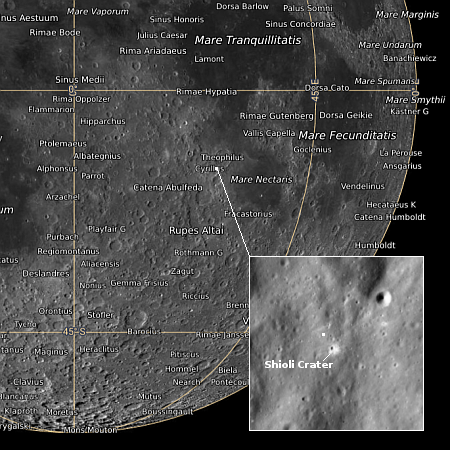
NPO Lavochkin, the Roscosmos division that builds Russia’s lunar landers, has now announced a revised schedule for all of that country’s proposed lunar unmanned projects, following the failure of its Luna-25 lander in August.
The program calls for at least six missions, including orbiters, landers, and a rover, launching from 2027 through the 2030s. However, this quote from the article is the reality:
As often before, the latest strategy relied on the development time frames that had never been demonstrated by NPO Lavochkin in comparable projects in the past three decades.
What is worse is the 100% failure record of Lavochkin’s planetary probes once launched. It takes forever to build anything, and then what it builds and launches doesn’t work.
Not that this absimal record will cost Lavochkin anything. The Russian government and the bureaucracy that controls it does not allow any competition. Instead, like prohibition-era mobsters, divisions like Lavochkin carve up territories that they control, and allow no one else in. For example, Lavochkin owns planetary research while Energia, another division in Roscosmos, controls manned space flight as well as its launch industry. No one else is allowed it enter these markets, which means Lavochkin can fail repeatedly for the next century and nothing will change.
The Japanese government, not its space agency JAXA, today announced it has awarded the commercial company Ispace an $80 million grant to develop a larger lunar lander, following its failed attempt earlier this year to land its first Hakuto-R1 lander on the Moon.
Japan will provide a subsidy of up to 12 billion yen ($80 million) to moon exploration startup ispace (9348.T) as part of a grant programme for innovative ventures, industry minister Yasutoshi Nishimura said on Friday.
The new lander is targeting a 2027 launch, and according to the company’s own statement [pdf] will replace the Hakuto-R lander being used on its first two lunar missions, as well as the Apex lander the American division of Ispace is now building for NASA. It also appears that the contract is fixed price, and will only be paid out when the company achieves actual milestones of development.
In other words, the Japanese government is doing what NASA is now doing, moving away from a government model, where its space agency JAXA builds and controls everything, to a capitalism model, where it buys what it needs from the private sector. That JAXA did not issue this award demonstrates this transition, in that until now all such space contracts were through that agency solely.
An evening pause: It is amazing how many of these short clips (as well as the full songs) are still so familiar and well known, considering its more than a half century since they were first played on the radio. Speaks well to their originality and uniqueness.
But how many of the songs and performers can you guess?
Hat tip Diane Zimmerman.
Courtesy of BtB’s stringer Jay.
The link is in German, requiring a translation tool. From Jay a translation of the lede: “In April 2024, a rocket from the Dutch company T-Minus will be launched for the first time as part of a demonstration mission from a mobile launch platform of the “German-Offshore Spaceport Alliance” (GOSA) in the North Sea.”
The schedule as now planned:
October: Combined test, launch rehearsal with ignition of the main stage, Kourou, French Guiana
November: Combined test, long-duration firing of the main stage with Vulcain 2.1 engine, Kourou, French Guiana
December: Upper stage firing test, Lampoldshausen, Germany
They then hope to be ready for a 2024 launch.
No other details about the investigation into the failure were released.
The live stream will be here.
The launch is scheduled for 2024.
The launch is targeting October 26, 2023.