June 27, 2025 Quick space links

Courtesy of BtB’s stringer Jay. This post is also an open thread. I welcome my readers to post any comments or additional links relating to any space issues, even if unrelated to the links below.

16 comments

Another blacklisted professors wins big in court

Law professor Scott Gerber

Fight! Fight! Fight! After two years of battle in the courts, a blacklisted tenured professor who was fired by his university in 2023 without due process because he had publicly criticized and opposed its racist diversity, equity, and inclusion (DEI) quota policies has now won a complete victory in court.

First the background: In 2023 Ohio Northern University (ONU) sent campus police to Dr. Scott Gerber’s classroom — while he was teaching a class — and had him physically removed from the campus, without warning or explanation. In firing Gerber no legal due process was followed, with the university violating in every manner its own employment policies. Even months later university officials refused to give any reason for his firing. The timing of its action though strongly suggested the university administration objected to his opinions, as he had that same week published an op-ed opposing the school’s DEI policies.

Gerber sued, hiring the pro-bono legal firm America First Legal (AFL) to defend him. (You can read the full complaint here [pdf]. The college’s actions were clearly unconscionable.)

Now two years later, AFL announced yesterday that it has won a full settlement victory for Gerber.
» Read more

5 comments

European Union proposes new space law to supersede national space rules

The European Union

The European Union (EU) has now released its proposed Space Act that would impose European-wide regulations on the space industries of all its partnering nations, superseding their own regulations and policies.

The press release claims, at the start, that this space act would “cut red tape, protect space assets, and create a fair, predictable playing field for businesses,” but in reading the act itself [pdf], it appears to do the exact opposite. It imposes new environmental, safety, and cybersecurity regulations on the design of satellites and spacecraft in a manner that will likely slow development and competition in Europe significantly. And it applies these regulations not only to European companies but to the rest of the world’s space industry, should it do any operations at all in Europe.

This European Union space law was initially supposed to be released last year, but was delayed because it appeared there was strong opposition to it from many of the union’s member nations.

The proposed law appears to have been reshaped to limit the areas the EU can regulate space, but my appraisal of these regulations is that they are designed to quickly expand to cover everything, while adding an unneeded layer of red tape across Europe’s space industry that will only cause it to founder.

It must also be noted once again that there is no one in the bureaucracy of the EU qualified to impose these regulations on the space industry. The EU launches nothing. Its bureaucracy knows nothing about space technology. All it can do is say no to anyone that wants to achieve anything, just because it thinks it knows better.

It will be interesting to see if this space law passes. It still must be approved by European Parliament and the European Commission. I expect there to be significant opposition from several different member states, most especially Germany, Spain, and Italy, each of which have a newly emerging space industry. We should also expect opposition from the member nations formerly part of the Soviet bloc, as their past totalitarian experience makes them very skeptical of this kind of bureaucratic power play.

At the same time, the political structure of the European Union is designed to encourage the passage of such laws, which is one reason there is a rising movement in many member nations to leave the union. If the law passes, expect it to cause more fragmentation within Europe, rather than unifying the continent as it claims it will do.

4 comments

OSHA investigating the collapse of a crane at SpaceX’s Boca Chica facility

OSHA has now opened an investigation into the collapse of a crane at SpaceX’s Boca Chica facility on June 24, 2025, captured by one of the commercial live streams that track activities there continually for the general public.

I have embedded the video of that collapse below.

A SpaceX crane collapse at the company’s Starbase, Texas facility on Tuesday has prompted an investigation by the Occupational Safety and Health Administration, the federal agency told CNBC in an email.

The crane collapse was captured in a livestream by Lab Padre on YouTube, a SpaceX-focused channel. Clips from Lab Padre were widely shared on social media, including on X, which is owned by SpaceX CEO Elon Musk.

It wasn’t immediately clear whether any SpaceX workers were injured as a result of the incident. Musk and other company executives didn’t respond to a request for comment.

The article at the link provides no additional information, instead focusing on what appears to be an anti-SpaceX screed. It never mentions that cranes such as this are almost certainly not owned by SpaceX, and are likely rented and operated for SpaceX by other independent crane companies. Thus, this failure is likely a failure of that crane company, not SpaceX directly.
» Read more

7 comments

June 26,2025 Quick space links

Courtesy of BtB’s stringer Jay. This post is also an open thread. I welcome my readers to post any comments or additional links relating to any space issues, even if unrelated to the links below.

  • Another new Chinese pseudo-company, Welight, touts a reusable rocket
    Jay notes, “I love the comment: ‘Every other month we get to see a new Chinese Space company'”. I note that the Xi government requires all of its rocket pseudo-companies to share data, which means anyone in that government can steal this information to form their own pseudo-company, and use their position of power to get favored treatment when it comes time to compete for government contracts. It is therefore not surprising that so many new pseudo-companies keep popping up.
16 comments

Rocket Lab launches four radio surveillance satellites

Rocket Lab today successfully launched four radio surveillance satellites for the company Hawkeye 360, its Electron rocket lifting off from one of its two launchpads at its New Zealand spaceport.

This was Rocket Lab’s second of three launches under a Hawkeye 360 three-launch contract.

The leaders in the 2025 launch race:

80 SpaceX
35 China
9 Rocket Lab
7 Russia

SpaceX still leads the rest of the world in successful launches, 80 to 59.

0 comments

The sagging flank of one of Mars’ giant volcanoes

The sagging flank of Elysium Mons
Click for original image.

Cool image time! The picture to the right, rotated, cropped, reduced, and sharpened to post here, was taken on May 1, 2025 by the high resolution camera on Mars Reconnaissance Orbiter (MRO). It shows what the science team labels a “chain of pit craters in [a] graben”.

A graben is a surface fissure created when the surface either spreads or two sections shift sideways in opposite directions. The chain of pits suggest that there is a larger void below into which the surface is sinking. It is also likely that a lot of the sinking material is volcanic ash, thrown free in an eruption hundreds of millions of years ago, which over the eons has been blown up to this location to settle in the crack to fill it. It is now trapped there, and sinking.

What caused the ground here to shift and create the fissure? In this case, the cause is quite large and massive, in a way that boggles the mind.
» Read more

2 comments

Nozzle blows off of Northrop Grumman SLS solid rocket booster during static fire test

During a static fire test of a new upgraded strap-on solid-fueled booster to be used on the second version of NASA’s SLS rocket, it appears the nozzle broke off near the end of the test.

I have embedded the video below.

This failure is not good for getting the upgraded version of SLS built, dubbed Block 2. Block 1 has flown once unmanned, and is planned for the next two manned missions. Block 2 would be for further manned missions beyond that. The Trump administration has proposed cancelling it, ending SLS after those two Block 1 flights. Senator Ted Cruz (R-Texas) has instead introduced a bill that would save it in order to fly two Block 2 SLS manned missions.

This failure is definitely going to delay and add cost to Block 2 development, a program that is already over budget many times over and a decade-plus behind schedule. These additional delays and cost overruns are not going to help it politically. It justifies the Trump administration’s desire to cancel it.

Moreover, this nozzle failure suggests a very fundamental design problem. Northrop Grumman, which built and was testing this booster, also builds the solid-fueled strap-on boosters used on ULA’s Vulcan rocket, which had a similar nozzle failure during Vulcan’s second launch in October last year. Both Northrop Grumman and ULA have said they had identified and fixed the cause of that failure, and the military has certified it for operational launches, but nonetheless Vulcan still remains sidelined, more than eight months later.

I suspect ULA is going to have to do more testing of the Northrop Grumman Vulcan side boosters before its next Vulcan launch, delaying that rocket further.
» Read more

9 comments

French startup Latitude to spend $9.3 million on building its French Guiana launch facility

French Guiana spaceport
The French Guiana spaceport. The Diamant launchsite is labeled “B.”
Click for full resolution image. (Note: The Ariane-5 pad is now the
Ariane-6 pad.)

The French rocket startup Latitude has announced it will spend $9.3 million to build its own launchpad at the spaceport in French Guiana, where hopes to launch its Zephyr rocket in 2026.

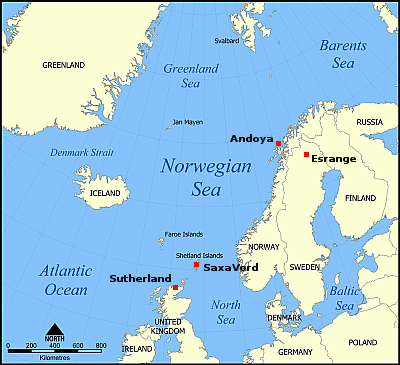
In a 23 June update, Latitude confirmed the Guiana Space Centre as the launch site for the inaugural flight of its 19-metre-tall, two-stage Zephyr rocket, which is designed to deliver payloads of up to 200 kilograms to low Earth orbit. The site was one of two under consideration, with the company also having committed to developing launch infrastructure at SaxaVord Spaceport in Scotland. When that partnership was announced in March 2022, Latitude, then known as Venture Orbital Systems, aimed to carry out its first launch from SaxaVord in 2024.

Construction of the ELM-Diamant shared launch facility began in 2025 and is expected to be completed by 2026. According to Latitude’s 23 June update, the company will work with CNES and the European Space Agency in the coming months to implement its dedicated launch infrastructure at the site. This will be followed by the inaugural launch of its Zephyr rocket in 2026.

It is not clear exactly how that ELM-Diamant launch site will be shared. France’s space agency CNES (which operates French Guiana) had previously said it wanted all the new European rocket startups that wanted to launch from there to use a common launch infrastructure, thus requiring them to share technology as well as redesign their rockets to fit CNES’s requirements. The rocket startups objected, but it now appears two startups, Latitude and PLD, and come to an agreement of some sort.

This deal also suggests that Latitude is shifting away from using the Saxavord spaceport in the United Kingdom, possibly because it has seen the difficult regulatory hurdles required there and has decided French Guiana is a better option.

2 comments

Webb takes infrared image of exoplanet

Webb's image of exoplanet

Using the Webb Space Telescope astronomers have now successfully taken an infrared false-color image of Saturn-sized exoplanet orbiting a young star about half the mass of the Sun and about 111 light years away.

The image is to the right, cropped and reduced to post here. The star, its light blocked out, is indicated by the circle with the star in the middle. The exoplanet is the orange blob to the upper right, sitting inside the blue accretion disk that surrounds the star, photographed in optical light by the Very Large Telescope in Chile.

You can read the paper here. The scientists rejected the possibility that this was a background galaxy after doing computer modeling, based on the data available. From their paper:

Dedicated N-body simulations were conducted for a planet with a mass of 0.34 [mass of Jupiter], located at 52 au [astronomical units] around the 0.46 [solar mass] central star. This value is consistent with the measured projected separation, assuming that the planet and the β‰ˆ13Β°-inclined disk are coplanar. The simulation also included a disk of 200,000 planetesimals, distributed between 20 and 130 au. These parameters were selected to roughly match the boundaries of the observed disk.

Note too that the picture to the right has been significantly enhanced by the press department at JPL, based on the actual data shown in the paper itself. These fact underline the uncertainties involved in this discovery.

Nonetheless, it is a good result, and suggests we are looking at the formation process of a new solar system surrounding a very young baby star.

2 comments
1 92 93 94 95 96 182