Speculation on future New Glenn launch schedule

According to anonymous sources at Blue Origin, the company has now delayed the second launch of its New Glenn rocket to September, ten months after its first launch in January 2025, and hopes to quickly follow with three more launches by the middle of 2026.

The September launch will launch NASA’s two smallsat Escapade Mars orbiters.

After Escapade, Blue Origin has several missions tentatively plotted out. However, sources cautioned that the manifest could be moved around due to the readiness of subsequent New Glenn vehicles and their payloads. Based upon information received by Ars, the launch manifest could look something like this:

  • New Glenn 2: ESCAPADE (fall 2025)
  • New Glenn 3: Firefly’s Elytra orbital transfer vehicle (end of 2025, early 2026)
  • New Glenn 4: Blue Moon MK1 lander (first half of 2026)
  • New Glenn 5: First batch of 49 Amazon Project Kuiper satellites (mid-2026)

Whether this schedule will occur as speculated is unknown. Blue Origin’s long term track record — slow and timid — suggests it is very unlikely. And even if it does fly as planned, it suggests strongly that Amazon is not going to meet its FCC license requirement to have 1,600 Kuiper satellites in orbit by July 2026. So far Amazon has only placed 54 operational Kuiper satellites into orbit, on two Atlas-5 launches. It has contracts to launch these satellites 46 times on ULA rockets (8 on Atlas-5 and 36 on Vulcan), 27 times on Blue Origin’s New Glenn, 18 times on ArianeGroup’s Ariane-6, and 3 times on SpaceX’s Falcon-9.

Except for the Falcon 9, none of the other rockets have begun flying with any frequency. Vulcan has only launched twice, New Glenn once, and Ariane-6 twice. All three have been extremely slow to ramp up operations, with months passing between each launch. To meet Amazon’s FCC license requirements, they will have to achieve between 35 to 60 launches in the next twelve months, a pace of three to six launches per month. At this point none of these companies appear capable of even coming close to doing this.

Nor does Amazon have the option to switch these launches to the Falcon 9. SpaceX would certainly accept the business, but the manifest for the Falcon 9 is presently very full. It is doubtful it could do more than double or triple its commitment to Amazon.

5 comments

NASA still hoping to save its Lunar Trailblazer mission

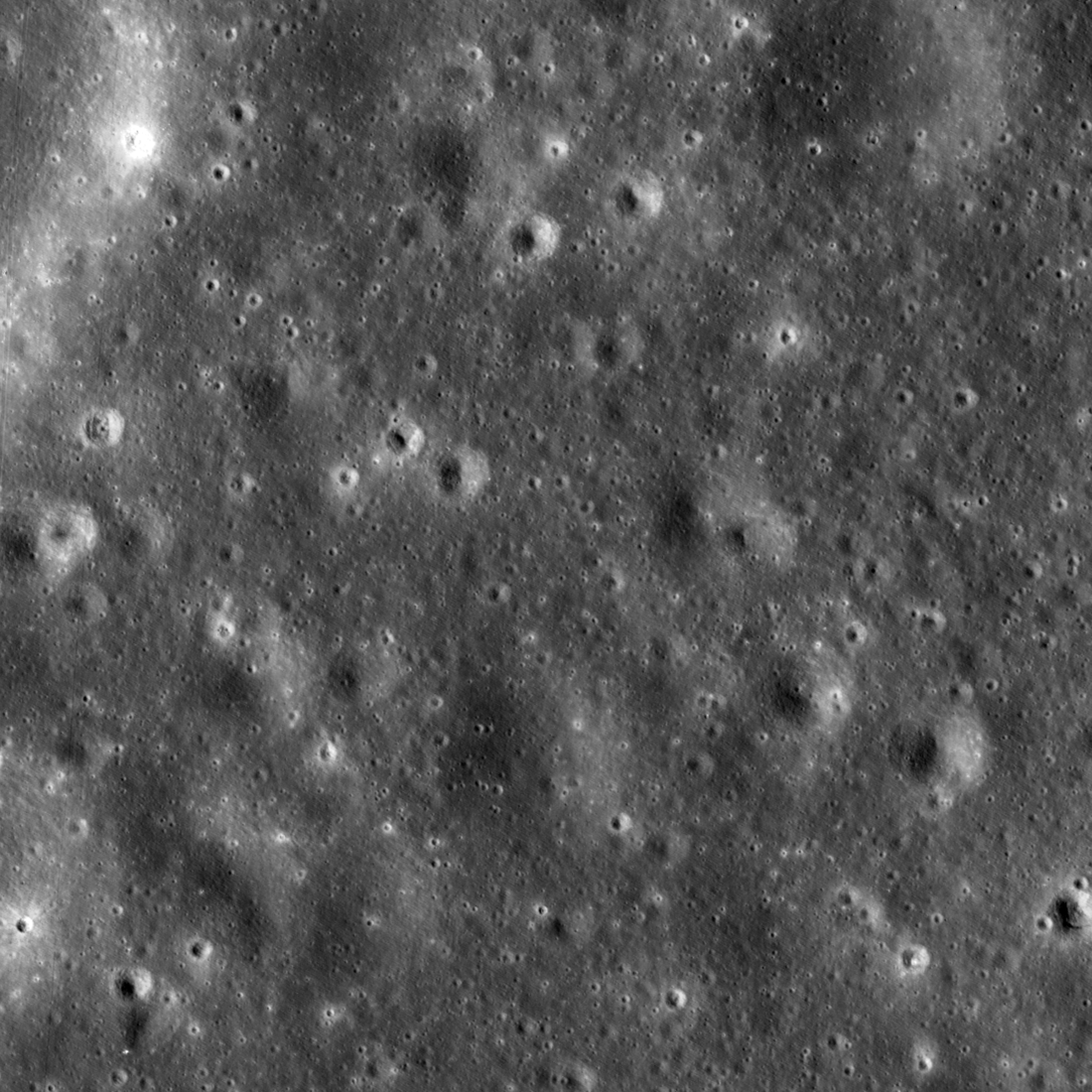
Though the odds of success are very dim, NASA has decided to give engineers another few weeks to try to activate its Lunar Trailblazer orbiter, that stopped communicating with Earth the day after it was launched in late February.

NASA has extended recovery efforts of its Lunar Trailblazer spacecraft from mid-June to early July. Updated modeling of the spacecraft’s trajectory by the mission team indicates lighting conditions will continue to be favorable and may provide enough sunlight for the spacecraft’s solar panels to recharge its batteries to an operational state and turn on its radio.

…Should enough sunlight reach Lunar Trailblazer’s solar panels, the batteries may charge to a level that allows the spacecraft’s radio system to boot up. But as Lunar Trailblazer travels farther away, it will soon be too distant to recover because its telecommunications signals to Earth will be too weak for the mission to receive telemetry and command.

The mission team has determined that if they can regain command of the spacecraft, the propulsion system isn’t frozen, and the instruments remain operable, the spacecraft may be able to achieve an elliptical lunar orbit and complete its lunar science objectives.

As I said, the chance of success are not good.

1 comment

Mitsubishi wants to cut launch price of H3 rocket to $35 million

Mitsubishi Heavy Industries, which developed the new H3 rocket for Japan’s space agency JAXA, wants to attract commercial launch business, and to do so hopes to cut the rocket’s launch price to about $35 million.

According to the article at the link, the price for the H2A rocket that the H3 has replaced was 10 billion Japanese yen, about $70 million.

The H2A launched more than 70 satellites and other objects into space, serving as the backbone of Japan’s space transportation. However, there was an average of only two launches a year, and most depended on “public demand” for government satellites. There were only orders for commercial launches for five satellites belonging to foreign countries, such as South Korea and the United Kingdom.

…For Mitsubishi Heavy Industries, Ltd., which took over the manufacture and operation of the H2A from JAXA in 2007, winning commercial orders has been a longstanding issue. The H3 was jointly developed by MHI and JAXA with the aim of halving the launch fee.

That price listed for the H2A rocket is likely wrong, much lower than the real price, as it matches what SpaceX has been offering publicly for the Falcon 9 for more than a decade. If the H2A had been that cheap, it would have garnered some business. It did not.

Lowering the cost for the H3 rocket to $35 million would definitely be competitive in the present launch market. Whether Mitsubishi can accomplish this however remains unclear. So far there is no indication that this new rocket has attracted any more business than the H2A, but as the rocket has only just started launching it is still too early to judge.

2 comments

Richard Strauss – Thus Spoke Zarathustra: Overture

An evening pause: Performed by the Orchestre National de Lyon, Jun Märkl, conductor.

And no, it wasn’t written for the movie 2001: A Space Odyssey. It was simply a good choice for the score.

Hat tip Mike Nelson.

0 comments

June 30, 2025 Quick space links

Courtesy of BtB’s stringer Jay. This post is also an open thread. I welcome my readers to post any comments or additional links relating to any space issues, even if unrelated to the links below.

5 comments

Baby stars illuminating the dust that surrounds them

Baby stars illuminating dark dust
Click for original image.

Cool image time! The picture to the right, cropped, reduced, and sharpened to post here, was taken by the Hubble Space Telescope showing the wispy bluish clouds made of dark dust that we can only see because the dust is illuminated by the reflected light from the five red and blue stars nearby. Think of the Moon, lit only by the reflected light of the Sun.

The photo however was not taken to study the clouds, but these baby stars, located in one of the closest star forming regions of the Milky Way.

GN 04.32.8 is a small part of the stellar nursery known as the Taurus Molecular Cloud. At only roughly 480 light-years from Earth in the constellation Taurus, it’s one of the best locations for studying newly forming stars. This reflection nebula is illuminated by the system of three bright stars in the centre of this image, mainly the variable star V1025 Tauri in the very centre. One of those stars overlaps with part of the nebula: this is another variable star that is named HP Tauri, but is classified as a T Tauri star, for its similarity to yet another variable star elsewhere in the Taurus Molecular Complex. T Tauri stars are very active, chaotic stars at an early stage of their evolution, so it’s no surprise that they appear in a prolific stellar nursery like this one! The three stars are also named HP Tau, HP Tau G2 and HP Tau G3; they’re believed to be gravitationally bound to each other, forming a triple system.

Eagle-eyed viewers might notice the small, squashed, orange spot, just left of centre below the clouds of the nebula, that’s crossed by a dark line. This is a newly-formed protostar, hidden in a protoplanetary disc that obstructs some of its light. Because the disc is edge-on to us, it’s an ideal candidate for study. Astronomers are using Hubble here to examine it closely, seeking to learn about the kinds of exoplanets that might be formed in discs like it.

As beautiful as this image is, it is that tiny protostar near the bottom that likely attracts the most interest from astronomers.

3 comments

Update on SpaceX’s plans to resume Starship/Superheavy flight testing

Link here. The article provides a detailed overview of the situation at Boca Chica following the static fire explosion of a Starship on June 18, 2025, which badly damaged the Masseys test stand used by Starship prior to launches.

The problem facing the company is that it wants to fly the last few version-two Starships (called Block 2) before it is ready to switch to the upgraded Block 3, and these two versions apparently require a different set up on the test stand. The article outlines three options, with the first two the simplest and most straightforward, but require the most delays.

Option three, which is the most SpaceX-like of them all, would involve the repair Masseys for Block 3 and, in parallel, attempt to come up with a plan to static fire Ships on Orbital Launch Pad 1 (A). This would allow SpaceX to continue testing and flying the remaining Block 2 Ships while preparing for Block 3 of Starship. This is what SpaceX is planning.

In other words, do Block 2 Starship prelaunch static fire tests on the launchpad itself while Masseys is being rebuilt for Block 3.

The article outlines in detail the technical difficulties this plan requires, because the launch mount is also used for prelaunch static fire tests of Superheavy. The two rockets require different mount clamping and fueling systems.

If this is the plan that SpaceX is following, it will likely mean that the next test flight, the tenth, will occur in about two months, maybe sooner. We will get a better idea of the company’s plans in the coming weeks.

6 comments

Blue Origin completes another New Shepard suborbital flight

My heart be still. Blue Origin yesterday successfully flew another New Shepard suborbital tourist flight, sending six passengers on a ten minute flight to the edge of space.

This was the company’s thirteenth suborbital flight, and the third in the past three months. Though it is gratifying that operations of New Shepard are becoming somewhat routine, it would be much more exciting if the company to do the same for its New Glenn orbital rocket. The suborbital flights are essentially a dead end. The real money and future is found in orbital operations, something Blue Origin has still not yet mastered.

4 comments

Orbex delays first launch from Saxavord until 2026

Map of spaceports surrounding Norwegian Sea
Proposed spaceports surrounding the Norwegian Sea

The rocket startup Orbex has now announced that “infrastructure requirements and engagement with regulators” has forced it to delay the first launch of its Prime rocket from 2025 until 2026.

Orbex at the start of this decade had signed a 50-year lease to launch its Prime rocket from the proposed Sutherland spaceport on the north coast of Scotland. In February 2022 it applied for a launch license, with the hope of launching before the end of that year. For three years it waited for the UK’s Civil Aviation Authority (CAA) to approve that license, to no avail.

Finally in December 2024 it gave up on launching from Sutherland and shifted its plans to the Saxavord spaceport in the Shetland Islands, apparently because that spaceport had been more successful in getting its CAA approvals (though even it had to wait years).

Though the company attributes this new delay as much to getting its launch facility ready at Saxavord, delays caused by British red tape continues to be a systemic and entrenched problem in the United Kingdom. It appears it remains so.

9 comments

More successful launches today

Two more launches occurred this morning, one in Japan and one in the U.S.

First, Japan completed the last launch of its H2A rocket, lifting off from its Tanegashima spaceport in south Japan, placing a Japanese climate satellite into orbit. This was the 50th launch for the H2A, which has now been replaced by the as expensive H3 rocket.

Next, SpaceX continued its unrelenting launch pace, its Falcon 9 rocket lifting off from Vandenberg Space Force Base in California carrying 26 more Starlink satellites into orbit. The first stage completed its eighth flight, landing on a drone ship in the Pacific Ocean.

As Japan’s launch was only its second in 2025, it does not make the leader board of the 2025 launch race:

82 SpaceX
35 China
10 Rocket Lab
7 Russia

SpaceX still leads the rest of the world in successful launches, 82 to 61.

1 comment

Two American launches this evening

This evening two different American companies completed successful commercial launches, doing so from opposites sides of the globe.

First, SpaceX launched another 27 Starlink satellites, its Falcon 9 rocket lifting off from Cape Canaveral, with the first stage completing its fifth flight, landing on a drone ship in the Atlantic Ocean. This launch was on the evening of June 27th.

Then, a few hours later Rocket Lab completed the first of two quickly scheduled launches for an unnamed commercial customer, its Electron rocket lifting off from one of its two launchpads in New Zealand. This launch, on June 28th in New Zealand, was the company’s second launch in less than two days, its fastest turn around yet. As of posting the payload was not yet deployed.

The leaders in the 2025 launch race:

81 SpaceX
35 China
10 Rocket Lab
7 Russia

SpaceX still leads the rest of the world in successful launches, 81 to 60.

6 comments
1 91 92 93 94 95 182