Lockheed Martin fights request to ease 2018 restrictions on Northrop Grumman’s solid rocket business

A legal fight between Lockheed Martin and Northrop Grumman has broken out over Northrop Grumman’s recent request to the Federal Trade Commission (FTC) to ease a 2018 consent order that restricts Northrop Grumman’s ability to market its solid rocket motors (SRM).

On April 2, Northrop petitioned the Federal Trade Commission to drop a 2018 consent order helmed when Northrop acquired solid rocket motor maker Orbital ATK. The consent agreement requires Northrop to supply SRMs to its competitors in the missile market on a non-discriminatory basis and to firewall its SRM business away from its other operations.

At the time, the FTC believed the measure was necessary due to Northrop’s status as a prime contractor and Orbital ATK’s position as one of only two American makers of solid rocket motors.

Northrop is not a major manufacturer in the American missile space, which is dominated by Raytheon and Lockheed. However, if the order is dropped, Northrop will be able to vertically integrate its solid rocket motor business with any munitions the company designs in the future — including potentially prioritizing SRM supplies for Northrop over competitors, Lockheed stated in a response to the petition.

This consent order has prevented Northrop from marketing its solid-fueled rockets openly. Instead, it appears it forces the company to sell to its competitors, such as Lockheed, who then garners the big profits in marketing them. That order I think has also limited Northrop’s ability to use its boosters for other purposes, such as launching satellites.

Overall it appears this consent order has been very counter-productive, in hindering competition in the American solid-fueled rocket industry. At present there is a shortage of production capacity in the U.S., so much so that the Italian rocket company has moved in to market its own solid-fueled rockets here. In fact, it is selling its rockets to Lockheed and Raytheon, which suggests Northrop is entirely justified in asking to be released from this order.

1 comment

Indian rocket startup Skyroot raises $60 million in private investment capital

Even as it prepares for the first orbital launch attempt of its Vikram-1 rocket, the Indian rocket startup Skyroot has raised $60 million in private investment capital in a recent funding round, bringing the total raised by the company to $160 million.

The startup announced it had raised $60 million at a valuation of $1.1 billion prior to the funding. The round was co-led by early Google investor Ram Shriram’s venture capital firm, Sherpalo Ventures, and Singapore’s sovereign wealth fund, GIC. New investors in the round include funds managed by BlackRock, Playbook Partners, Shanghvi Family Office, and others. Existing investors that also participated in the round include the founders of Greenko Group and Arkam Ventures.

The company hopes to launch Vikram-1 in about two months, though no specific launch window has been announced. The rocket is presently being shipped to India’s Sriharikota spaceport.

0 comments

May 6, 2026 Quick space links

Courtesy of BtB’s stringer Jay. This post is also an open thread. I welcome my readers to post any comments or additional links relating to any space issues, even if unrelated to the links below.

4 comments

Will Canada’s Telesat really complete its Lightspeed constellation by 2028?

According to the most recent financial report from the Canadian satellite communications company Telesat, it expects its Lightspeed low-Earth-orbit (LEO) satellite constellation to be launched and operational by 2028.

During the first quarter, Telesat invested $171 million into the Lightspeed program, reflecting $19 million in operating expenses and $152 million in capital expenditures, bringing its total investment to date to approximately $2.7 billion.

The company reported advancing through several technical milestones in early 2026. “During the quarter, we held further design reviews with our satellite and launch vehicle dispenser manufacturers and progressed our work on user terminals, network and satellite operations software development, and ground station deployments,” noted Telesat President and CEO Dan Goldberg.

The company confirmed it remains fully funded, utilizing cash on hand and existing financing facilities, to reach full global commercial service around the end of the first quarter of 2028.

At the moment however the company has launched no satellites in this LEO constellation. Moreover, in a recent amendment to its FCC application, the company reduced the size of the constellation from 1,671 satellites to only 300, with no explanation.

We shall see what happens. My instincts sense a bit of blarney here. This constellation will likely launch, but I think the company’s proposed schedule is questionable.

7 comments

Curiosity unintentionally picks up a rock slab

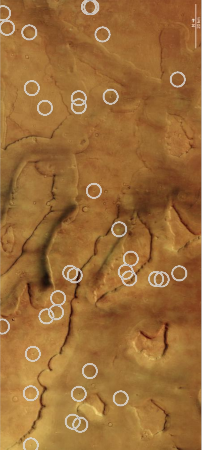
Sequence showing slab picked up and then dropped
Click for movie. Original images found here, here, here, and here.

In their latest drilling campaign using the drill on the Mars rover Curiosity, the science team picked up a big surprise that could have been a serious problem, but turned out all right in the end. When they tried to extract the drill from the hole, the drill instead stayed stuck to the rock, and picked the whole rock up instead.

The four images to the right show the sequence, sourced from here, here, here, and here.

On April 25, 2026, Curiosity drilled a sample from a rock nicknamed “Atacama,” which is an estimated 1.5 feet in diameter at its base, 6 inches thick and weighs roughly 28.6 pounds (13 kilograms). When the rover retracted its arm, the entire rock lifted out of the ground, suspended by the fixed sleeve that surrounds the rotating drill bit. Drilling has fractured or separated the upper layers of rocks in the past, but a rock has never remained attached to the drill sleeve. The team initially tried vibrating the drill to shake off the rock, but saw no change.

Then, on April 29, they tried reorienting Curiosity’s robotic arm and vibrating the drill again. Imagery in the GIF shows sand falling from Atacama, but the rock stayed attached to the rover.

Finally, on May 1, Curiosity’s team tried again, tilting the drill more, rotating and vibrating the drill, and spinning the drill bit. The team planned to perform these actions multiple times but the rock came off on the first round, fracturing as it hit the ground.

Had they not been able to release the rock it could have seriously impacted the mission, even ended it.

As noted by the science team in their own update today about this situation:

Future activities involve wrapping up the drill campaign on Atacama and, nominally, seeking a more firmly rooted drill target in order to collect drill tailings for analysis, which were lost from Atacama as part of the effort to dislodge the drill bit from the rock.

In other words, they are going to have hunt around for a better drill spot, as they really do want to study some drill samples at this location. They have left the boxwork area and have moved uphill closer to the pure sulfite unit, and want to see how the geology has changed.

5 comments

The UK’s Sutherland spaceport now appears dead

Proposed or active spaceports in North Europe

In a news report yesterday about the failure of the United Kingdom’s rocket startup Orbex in February 2026, the following details about the Sutherland spaceport in Scotland suggests that spaceport is now defunct, with little chance of being revived.

Administrators say that one of Orbex’s key remaining assets is the Sutherland Spaceport site near Melness – although the only construction work undertaken at the site is some 600m of access road. The company responsible for it, Sutherland Spaceport Ltd (SSL), remains financially stable, according to administrators. This means the site could still be sold or potentially restarted, even though no launch activity is currently taking place.

The spaceport sits on land leased from local crofters under a long-term arrangement managed through Highlands and Islands Enterprise. SSL holds a 50-year sublease, with an option to extend for 25 years, and a break clause in 2027.

Orbex had originally intended to launch from Sutherland — close to the rocket factory it had built — but local opposition by billionaire Anders Holch Povlsen (who is a major owner in the competing Saxavord spaceport on the Shetland Islands) as well as endless bureaucratic delays from the UK’s Civil Aviation Authority made that impossible. The company attempted to switch its launches to Saxavord, but the cost and new licensing requirements were too much.

No other launch company has expressed any interest in using Sutherland, and it appears none will be forthcoming in the near future. The red tape in the UK, combined with that powerful local opposition, has made Sutherland a pariah to the smallsat rocket companies looking for launch sites.

Though the spaceport might say it is “financially stable”, without any customers I guarantee it is going to disappear at some point.

2 comments

Former NASA administrator Bridenstine moves from lobbyist to CEO of orbital tug startup

Jim Bridenstine
Jim Bridenstine testifying before Congress
as a big space lobbyist

Former NASA administrator Jim Bridenstine has taken the job of CEO for the orbital tug startup Quantum, ending his post-NASA career as a lobbyist for some of the biggest old space companies.

Since his departure from NASA, Bridenstine has worked as a managing partner of The Artemis Group consulting firm, and the appointment to Quantum Space marks the first time he has taken up an official corporate post, he told Breaking Defense.

“I was asked several times” to be a CEO, he said, but “never accepted until now.”

Bridenstine waxed enthusiastic about Quantum Space’s plans for its Ranger spacecraft that is being designed to support “sustained maneuver for dynamic space operations.”

Bridenstine’s lobbying for the Artemis Group was mostly aimed at encouraging a giant NASA space program, comparable to the 1960s Apollo effort, with the main beneficiaries the older established companies like Boeing, Lockheed Martin, and Northrop Grumman, and at the expense of the new space industry led by SpaceX. That effort was largely a failure, as it has become very clear these old companies can’t get the job done, at least not at a price anyone can afford.

At Quantum Bridenstine is back on the side of new space, pushing a new orbital tug company whose Ranger tug can “carry a whopping 4,000 kilograms (8,818.49 pounds) of hydrazine fuel to orbit, Bridenstine explained, and will use that fuel for both chemical propulsion and electric propulsion.” It plans on launching the first Ranger demo mission in early 2027, after which the company hopes to win both commercial and military contracts using Ranger’s tug capabilities.

2 comments

SpaceX launches 24 more Starlink satellites

SpaceX tonight successfully launched another 24 Starlink satellites, its Falcon 9 rocket lifting off from Vandenberg Space Force Base in California.

The first stage completed its 24th flight, landing on a drone ship in the Pacific.

The leaders in the 2026 launch race:

55 SpaceX
23 China
8 Russia
6 Rocket Lab

For the third straight year SpaceX leads the entire world combined in total launches, 55 to 44.

0 comments

May 5, 2026 Quick space links

Courtesy of BtB’s stringer Jay. This post is also an open thread. I welcome my readers to post any comments or additional links relating to any space issues, even if unrelated to the links below.

2 comments
1 11 12 13 14 15 74