NASA approves SpaceX’s Starship to bid for some launch contracts

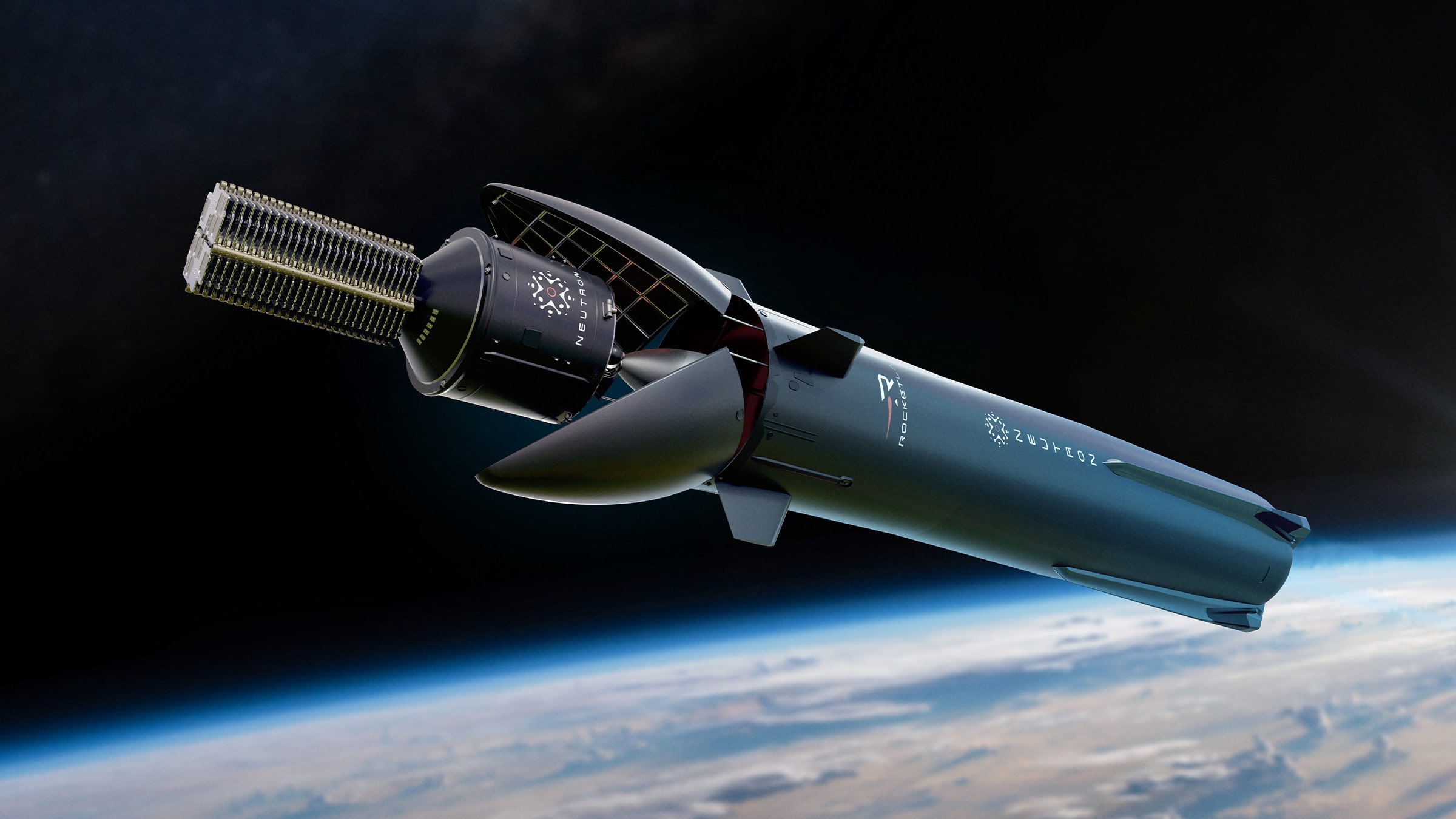
NASA yesterday announced that it has added SpaceX’s Starship/Superheavy rocket to its launch services program, thereby allowing the company to bid that rocket for some launch contracts.

The NLS II contracts are multiple award, indefinite-delivery/indefinite-quantity, with an ordering period through June 2030 and an overall period of performance through December 2032. The contracts include an on-ramp provision that provides an opportunity annually for new launch service providers to add their launch service on an NLS II contract and compete for future missions and allows existing contractors to introduce launch services not currently on their NLS II contracts.

This change is mostly bureaucratic in nature. SpaceX has not won a Starship launch contract from NASA. It has only been given the opportunity to bid that rocket in the future.

What is significant about this announcement is the change it signals in the way NASA’s bureaucracy functions. In the past these service contracts at NASA (and at the Pentagon) were routinely used to limit who could bid. NASA had to approve your company, and if it decided you weren’t good enough, or maybe didn’t like your politics, or possibly you weren’t one of the old-time big space companies the bureaucrats were buddies with, you stood no chance of getting in the game. For example, SpaceX had to sue the military when it would only allow ULA to bid while blocking any and all competitors.

These limits never made any sense. The best thing any customer can do is consider the products of as many businesses as possible, in order to get the best deal.

NASA decision here suggests its bureaucracy and management is loosening things up. Starship/Superheavy is not yet ready to put payloads in orbit, but this decision makes it possible for it to begin doing so, as soon as possible. No need to wait until it is 100% operational. NASA can now consider using it as a cheap way to launch some high risk missions during the testing period.

4 comments

Next SpaceX commercial manned flight set to launch on March 31, 2025

The next SpaceX manned commercial spaceflight, dubbed Fram2, is now targeting a 9:47 pm (Eastern) launch on March 31, 2025 from the Kennedy Space Center in Florida, carrying four private astronauts on their first flight, using SpaceX’s Resilience manned capsule on its fourth flight.

The crew consists of Malta resident Chun Wang, Vehicle Commander Jannicke Mikkelsen, Pilot Rabea Rogge and Mission Specialist and Medical Officer Eric Philips. All four of them will fly to space for the first time on this mission that is being funded by Wang for an undisclosed amount.

I have embedded the Space Affairs live stream below. This will be the third straight private commercial flight for Resilience. Since its first flight for NASA to ISS in 2020, it has flown two missions paid for by Jared Isaacman, with the second mission including the first spacewalk by a private citizen.

This mission will break new exploration ground, as it will be the first manned mission to fly a polar orbit taking humans above both the north and south poles. All other human missions, by the U.S., Russia, and China, have always flown a range of orbits over the Earth’s equatorial regions. Because of this orbit, Wang named the mission Fram2 in honor of Fridtjof Nansen’s Fram ship that explored the north pole region and its icecap from 1893 to 1896.

As always, it is important in watching this launch to remember that there is no government employee involved anywhere. This mission is entirely private, run by a private company for profit, and flown by a customer who had the cash to pay for it.
» Read more

6 comments

Airbus wins contract to build lander for Europe’s long delayed ExoMars Franklin rover

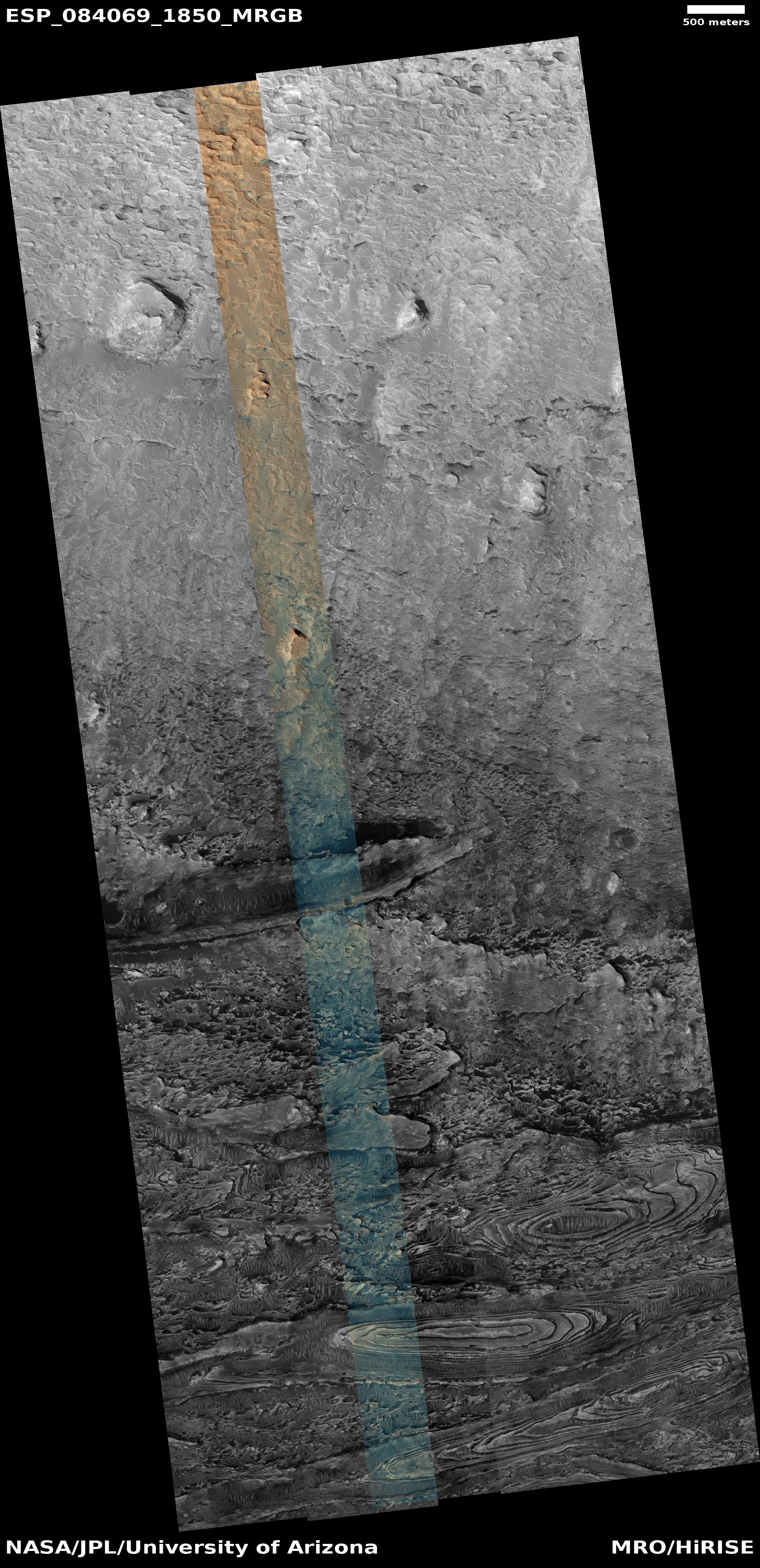
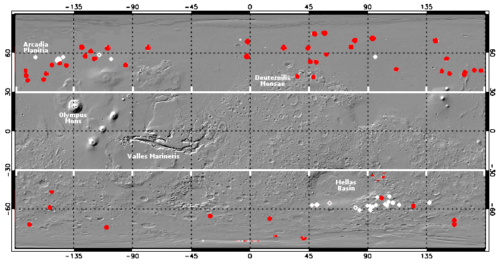
Low resolution cropped section of map
Geology map for Franklin landing site. Click for
original image. Click here for original article.

The European Space Agency (ESA) late yesterday announced that it has awarded Airbus a $194 million contract to build the lander that will place Europe’s long delayed ExoMars Franklin rover on the Martian surface, replacing the Russian lander that became unavailable when the ESA/Russian partnership ended after Russia invaded the Ukraine in 2022.

Airbus announced late March 28 (Eastern time) that it was selected by ESA and Thales Alenia Space, the prime contractor for the mission, to build the landing platform for that rover mission, scheduled to launch in 2028.

The landing platform is the part of the ExoMars spacecraft that handles the final phases of its descent to the Martian surface in 2030, including performing the final landing burn. After landing, the platform will deploy ramps to allow the ExoMars rover, named Rosalind Franklin, to roll onto the Martian surface.

This project was first begun in the early 2010s, with a launch date targeting 2018. Initially a partnership between ESA and NASA, Obama canceled all American participation in 2012. Russia picked up the slack, but then the mission had numerous technical problems that caused it to miss first that 2018 launch window, and then 2020 window as well. Then, just months before launch in 2022, Russia invaded the Ukraine, resulting in Europe ending all its partnership deals with Russia.

The mission is now working to launch in the 2028 window. We shall see if it can meet that date.

3 comments

March 28, 2025 Quick space links

Courtesy of BtB’s stringer Jay. This post is also an open thread. I welcome my readers to post any comments or additional links relating to any space issues, even if unrelated to the links below.

11 comments

Democrats: “We have the right to vandalize Teslas, and if you try to stop us you are fascists!”

The modern Democratic Party

My headline above paraphrases somewhat the insane position of Congressman Dan Goldman (D-New York), but so slightly that I think I can be forgiven. In a tweet posted earlier this week, Goldman’s reaction to a new federal task force aimed at investigating and catching the terrorists who have been firebombing Tesla dealerships and vandalizing Tesla cars was as follows:

This is the political weaponization of the DOJ. Trump uses his official authority to defend his benefactor Elon Musk. The FBI then creates a task force to use our law enforcement to “crack down” on adversaries of Musk’s.

Where are the Republicans so opposed to “lawfare”?

In other words, any effort to stop leftist rioters, looters, and vandals is misuse of government power, and is thus further justification for more leftist rioting, looting, and vandalism. According to Goldman, these thugs have the right to do anything they want to hurt Elon Musk, his businesses, his products, and his customers, simply because Musk no longer supports the Democratic Party and is trying to eliminate the fraud and corruption that has been impregnated within the entire federal government by that very party.

This is the Democratic Party today, a supporter of violence, censorship, and brutality, all in the name of gaining power. Nor is Goldman an exception at the top. » Read more

16 comments

NASA/Boeing: More Starliner ground engine tests throughout 2025; Next flight likely in 2026

Starliner docked to ISS
Starliner docked to ISS.

According to a press release from NASA late yesterday, both the agency and Boeing will spend most of the rest of this year doing additional Starliner static fire engine tests of thruster redesigns before considering another flight of the capsule to ISS.

NASA and Boeing are working to finalize the scope and timelines for various propulsion system test campaigns and analysis that is targeted throughout the spring and summer. Testing at White Sands Test Facility in New Mexico will include integrated firing of key Starliner thrusters within a single service module doghouse to validate detailed thermal models and inform potential propulsion and spacecraft thermal protection system upgrades, as well as operational solutions for future flights. These solutions include adding thermal barriers within the doghouse to better regulate temperatures and changing the thruster pulse profiles in flight to prevent overheating. Meanwhile, teams are continuing testing of new helium system seal options to mitigate the risk of future leaks.

“Once we get through these planned test campaigns, we will have a better idea of when we can go fly the next Boeing flight,” said Steve Stich, manager, NASA’s Commercial Crew Program at the agency’s Kennedy Space Center in Florida. “We’ll continue to work through certification toward the end of this year and then go figure out where Starliner fits best in the schedule for the International Space Station and its crew and cargo missions. It is likely to be in the timeframe of late this calendar year or early next year for the next Starliner flight.”

The release indicated that the goal is to get the capsule certified prior to the next flight so that it can carry a crew on a fully operational mission. The release however left open the option that this next ISS flight might instead be an unmanned cargo mission. The announcement said nothing about who will pay for this flight. Under Boeing’s fixed-priced contract, it should foot the bill, but no one should be surprised if NASA works a deal to funnel money Boeing’s way.

Meanwhile, the agency has changed some of the crew assignments for that first and long-delayed operational Starliner flight, switching astronaut Mike Fincke from that mission to the next Dragon mission to launch later this year. (I suspect Fincke wanted to fly again, and was tired of sitting on his hands waiting for Boeing to get Starliner working.)

9 comments

NASA experiment on Blue Ghost demonstrates the ability to repel the Moon’s abrasive dust

Before and after
Click for original blink movie.

In a press release yesterday, NASA revealed that one of its technology experiments on Firefly’s Blue Ghost lunar lander successfully demonstrated the ability to repel the Moon’s abrasive dust from the surfaces of various materials.

Lunar dust is extremely abrasive and electrostatic, which means it clings to anything that carries a charge. It can damage everything from spacesuits and hardware to human lungs, making lunar dust one of the most challenging features of living and working on the lunar surface. The EDS technology uses electrodynamic forces to lift and remove the lunar dust from its surfaces. The “before” image highlights the glass and thermal radiator surfaces covered in a layer of regolith, while the “after” image reveals the results following EDS activation. Dust was removed from both surfaces, proving the technology’s effectiveness in mitigating dust accumulation.

The images to the right, taken from a blink movie showing the change after the EDS technology was used, suggest that though this technology does work, it is not yet wholly successful in some cases. The thermal radiator was not cleared entirely of dust. More engineering research will be necessary, both on the Moon and here on Earth.

Nonetheless, this success is important and a major step forward for future exploration of the Moon, Mars, and the asteroids. In all these places dust is going to pose a major problem for equipment and spacesuits. New techniques must be developed to clean the dust away, since traditional Earth-based cleaning methods using water will not be available.

7 comments

Boeing now faces criminal trial for two 737-Max crashes that killed 346

Boeing Logo

In a criminal case against Boeing that has been going on since two Boeing 737-Max planes crashed in 2018 and 2019, the company now faces a criminal trial scheduled to begin in June over its admitted lies to the FAA about the airplane’s technical flaws that led directly to those crashes.

[T]he criminal charge pending against Boeing arises out of two deadly crashes of Boeing 737 MAX aircraft in 2018 and 2019. A Justice Department investigation uncovered the fact that Boeing had lied to the FAA about the safety of the aircraft—lies that led directly and proximately to the crashes killing 346 passengers and crew. On January 7, 2021, the Justice Department filed a criminal information with a one-count conspiracy charge against Boeing, alleging that “From at least in or around November 2016 through at least in or around December 2018, in the Northern District of Texas and elsewhere, the Defendant, The Boeing Company, knowingly and willfully, and with the intent to defraud, conspired and agreed together with others to defraud the United States by impairing, obstructing, defeating, and interfering with, by dishonest means, the lawful function of a United States government agency.”

In 2021 Boeing admitted to these charges as part of a plea deal with Justice, whereby prosecution would be deferred for three years if Boeing took certain actions to clean up its act. When that deal expired in 2024, Justice determined that Boeing had failed to live up to its agreement. Rather than go to criminal trial however government lawyers instead attempted twice to settle the case by having Boeing pay a big fine, first $243 million and then $455 million. In both cases the deals fell through when lawyers for the victims’ families objected.

After many further delays, the judge in the case has now taken action and set a trial date of June 23, 2025.

The article at the link is written by one of the lawyers for the victims, so it of course has a very decidedly anti-Boeing slant. Nonetheless, the situation for the company is very dire. It has already admitted guilt in the 2021 plea deal. It will be practically impossible for it to avoid a guilty sentence at that trial, resulting in gigantic payouts that could very well bankrupt the company.

I wonder however if instead of charging just the company, a corporation, the Justice Department should also have indicted the specific individuals at Boeing who committed the fraud itself. Those people are the ones responsible, not the entire company. Leaving them out of the case allows them to literally get away with the equivalent of second degree murder for “depraved indifference.”

For example, the CEO of Boeing at the time of those 737-Max crashes, Dennis Muilenburg, was fired in 2019 shortly after the crashes, suggesting the company was aware of his culpability in the situation. And what about the specific managers who filed false reports with the FAA? Do they all get off scot free?

As it stands now, the case is likely to destroy Boeing itself, harming thousands of innocent employees who had nothing to do with this fraud or the 737-Max. It will also do great harm to Boeing’s many other contracts with the government, NASA, and other private airline companies.

Then again, maybe it is time for this company to go. It surely hasn’t demonstrated in the past decade any ability to build anything reliably.

6 comments

March 27, 2025 Quick space links

Courtesy of BtB’s stringer Jay. This post is also an open thread. I welcome my readers to post any comments or additional links relating to any space issues, even if unrelated to the links below.

3 comments

Webb finds more elements not possible so soon after the Big Bang

A galaxy that shouldn't be there
Click for original image.

The uncertainty of science: Using the Webb Space Telescope, astronomers have now detected emissions of hydrogen from a galaxy that exists only 330 million years after the Big Bang that simply shouldn’t be possible, based on present cosmological theory.

The false-color infrared image of that galaxy is to the right, cropped to post here. At that distance, 13.5 billion light years away, all Webb can really see is this blurry spot. From the press release:

In the resulting spectrum, the redshift was confirmed to be 13.0. This equates to a galaxy seen just 330 million years after the big bang, a small fraction of the universe’s present age of 13.8 billion years old. But an unexpected feature stood out as well: one specific, distinctly bright wavelength of light, known as Lyman-alpha emission, radiated by hydrogen atoms. This emission was far stronger than astronomers thought possible at this early stage in the universe’s development.

“The early universe was bathed in a thick fog of neutral hydrogen,” explained Roberto Maiolino, a team member from the University of Cambridge and University College London. “Most of this haze was lifted in a process called reionization, which was completed about one billion years after the big bang. GS-z13-1 is seen when the universe was only 330 million years old, yet it shows a surprisingly clear, telltale signature of Lyman-alpha emission that can only be seen once the surrounding fog has fully lifted. This result was totally unexpected by theories of early galaxy formation and has caught astronomers by surprise.”

In more blunt terms, the theory that the haze would clear only one billion years after the Big Bang appears very wrong. This result is also similar to the story earlier this week about the detection of oxygen in a similarly early galaxy, oxygen that could not possibly be there only a few hundred million years after the Big Bang. Not enough time had passed for the number of star generations needed to produce it.

You can read the peer-reviewed paper here. While the Big Bang theory is hardly dead, the data from Webb continues to suggest it either needs a major rethinking, or there is something fundamentally wrong with it.

13 comments
1 168 169 170 171 172 2,413