SpaceX fully stacks Starship/Superheavy in preparation for launch
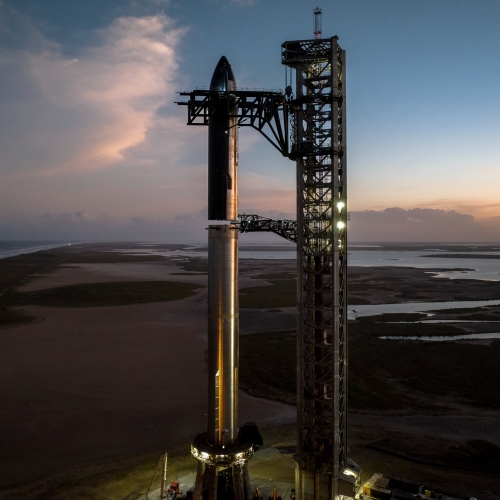
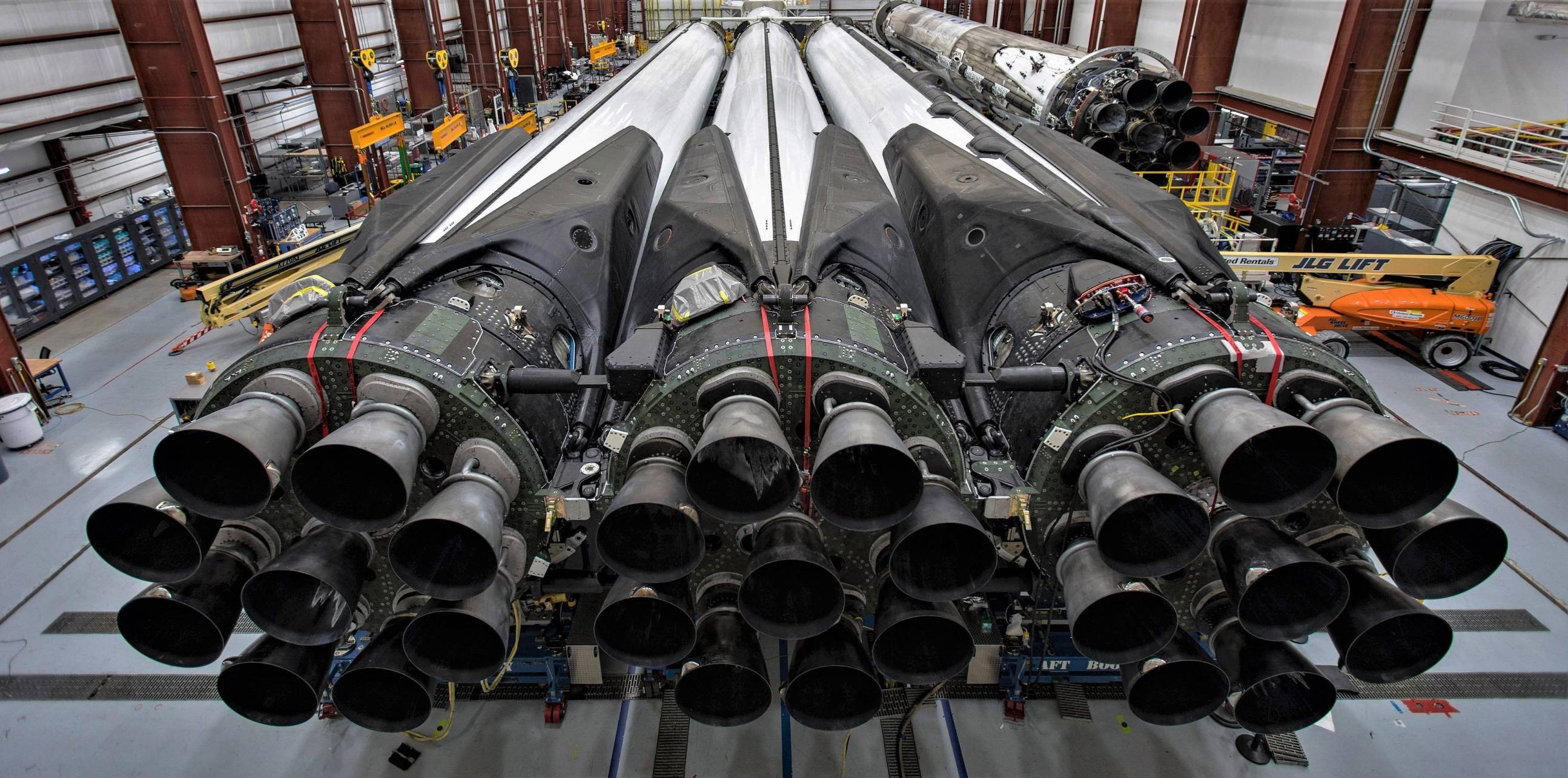
Starship about to be stacked on Superheavy
Starship about to be stacked on Superheavy, using
the launch tower’s chopstick arms. Click for full image.

For the first time in six months SpaceX engineers have stacked Starship prototype #24 on top of Superheavy prototype #7, with the intention of running a dress rehearsal countdown and a full static fire test of Superheavy’s 33 engines, all in preparation for the first orbital test flight before the end of this year.

According to CEO Elon Musk, Booster 7 and Ship 24 will attempt Starship’s first full-stack wet dress rehearsal (WDR) once all is in order. The prototypes will be simultaneously loaded with around 5000 tons (~11M lb) of liquid oxygen and methane propellant and then run through a launch countdown. Diverging just before ignition and liftoff, a WDR is meant to be more or less identical to a launch attempt.

…If the wet dress rehearsal goes to plan, SpaceX will then attempt to simultaneously ignite all 33 of the Raptor engines installed on Super Heavy B7, almost certainly making it the most powerful liquid rocket ever tested. Even if all 33 engines never reach more than 60% of their maximum thrust of 230 tons (~510,000 lbf), they will likely break the Soviet N-1 rocket’s record of 4500 tons of thrust (~10M lbf) at sea level. It would also be the most rocket engines ever simultaneously ignited on one vehicle. SpaceX will be pushing the envelope by several measures, and success is far from guaranteed.

Depending on the results of these tests, the stacked rocket will either require further modifications, or could even proceed directly to launch.

We are thus seeing a true race between SpaceX’s privately developed and funded rocket and NASA’s government developed and funded SLS rocket. Which will launch first? Right now the race is neck-and-neck, though that is deceiving since SpaceX began development twelve years after NASA started work on SLS. Even if SLS launches first, SpaceX will have clearly shown that private enterprise does things faster (7 years vs 18 years) and for far less money (about $9 billion vs $46 billion).


15 comments

NASA sets November 14th as next SLS launch date

NASA today announced that it will make its next attempt to launch its SLS rocket just past midnight on November 14, 2022.

NASA is targeting the next launch attempt of the Artemis I mission for Monday, Nov. 14 with liftoff of the Space Launch System (SLS) rocket carrying the Orion spacecraft planned during a 69-minute launch window that opens at 12:07 a.m. EST. Artemis I is an uncrewed flight test to launch SLS and send Orion around the Moon and back to Earth to thoroughly test its system before flights with astronauts.

This is the second launch opportunity in the November launch window, as shown in this graph [pdf]. It will result in a 26-day mission for the Orion capsule to and from lunar orbit, returning on December 9th.

2 comments

Genesis cover

On Christmas Eve 1968 three Americans became the first humans to visit another world. What they did to celebrate was unexpected and profound, and will be remembered throughout all human history. Genesis: the Story of Apollo 8, Robert Zimmerman's classic history of humanity's first journey to another world, tells that story, and it is now available as both an ebook and an audiobook, both with a foreword by Valerie Anders and a new introduction by Robert Zimmerman.

The print edition can be purchased at Amazon or any other book seller. If you want an autographed copy the price is $60 for the hardback and $45 for the paperback, plus $8 shipping for each. Go here for purchasing details. The ebook is available everywhere for $5.99 (before discount) at amazon, or direct from my ebook publisher, ebookit. If you buy it from ebookit you don't support the big tech companies and the author gets a bigger cut much sooner.


The audiobook is also available at all these vendors, and is also free with a 30-day trial membership to Audible.
 

"Not simply about one mission, [Genesis] is also the history of America's quest for the moon... Zimmerman has done a masterful job of tying disparate events together into a solid account of one of America's greatest human triumphs."--San Antonio Express-News

Russia’s Proton rocket successfully launches communications satellite

Russia today used its Proton rocket to successfully place an Angolan communications satellite into orbit.

The satellite’s launch had been delayed for several years, first because of the Wuhan panic and second because the sanctions against Russia over its invasion of the Ukraine prevented delivery of American components (eventually “resolved”, whatever that means).

Proton, developed in the 1960s, is winding down operations, and will soon be replaced by Russia’s Angara rocket.

The leaders in the 2022 launch race:

46 SpaceX
43 China
14 Russia
8 Rocket Lab
7 ULA

American private enterprise still leads China 66 to 43 in the national rankings, and the entire world combined 66 to 65.

0 comments

Japan’s Epsilon rocket fails during launch

Early this morning Japan’s Epsilon rocket failed during a launch intended to put eight satellites into orbit.

Live coverage by JAXA of the launch showed what appeared to be a stage 3 ignition failure, followed by a callout that the flight termination system (FTS) was activated. It’s the first Epsilon launch not to reach orbit.

This rocket was developed by Japan to offer a lower cost option to his H2 and new H3 rockets. The first launch of the H3 is set for March 2023 after several long delays due to problems with the rocket’s engine.

0 comments

Conscious Choice cover

Now available in hardback and paperback as well as ebook!

From the press release: In this ground-breaking new history of early America, historian Robert Zimmerman not only exposes the lie behind The New York Times 1619 Project that falsely claims slavery is central to the history of the United States, he also provides profound lessons about the nature of human societies, lessons important for Americans today as well as for all future settlers on Mars and elsewhere in space.

 
Conscious Choice: The origins of slavery in America and why it matters today and for our future in outer space, is a riveting page-turning story that documents how slavery slowly became pervasive in the southern British colonies of North America, colonies founded by a people and culture that not only did not allow slavery but in every way were hostile to the practice.  
Conscious Choice does more however. In telling the tragic history of the Virginia colony and the rise of slavery there, Zimmerman lays out the proper path for creating healthy societies in places like the Moon and Mars.


“Zimmerman’s ground-breaking history provides every future generation the basic framework for establishing new societies on other worlds. We would be wise to heed what he says.” —Robert Zubrin, founder of the Mars Society.


All editions are available at Amazon, Barnes & Noble, and all book vendors, with the ebook priced at $5.99 before discount. All editions can also be purchased direct from the ebook publisher, ebookit, in which case you don't support the big tech companies and the author gets a bigger cut much sooner.


Autographed printed copies are also available at discount directly from the author (hardback $29.95; paperback $14.95; Shipping cost for either: $6.00). Just send an email to zimmerman @ nasw dot org.

Leaving Earth cover

Leaving Earth: Space Stations, Rival Superpowers, and the Quest for Interplanetary Travel, can be purchased as an ebook everywhere for only $3.99 (before discount) at amazon, Barnes & Noble, all ebook vendors, or direct from my ebook publisher, ebookit.

If you buy it from ebookit you don't support the big oppressive tech companies and I get a bigger cut much sooner.


Winner of the 2003 Eugene M. Emme Award of the American Astronautical Society.

 
"Leaving Earth is one of the best and certainly the most comprehensive summary of our drive into space that I have ever read. It will be invaluable to future scholars because it will tell them how the next chapter of human history opened." -- Arthur C. Clarke

DART’s impact shortened Dimorphus’s orbit around Didymos by 32 minutes

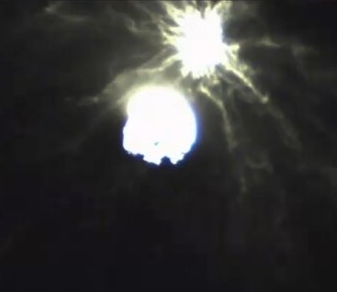
LICIACube Explorer image of DART impact
LICIACube Explorer image just after the DART
impact. Dimorphus is the blob near the top.

After two weeks of analyzing the orbit of Dimorphus around its parent asteroid Didymos, astronomers have determined that the impact of DART on Dimorphus shortened its orbit by 32 minutes.

Prior to DART’s impact, it took Dimorphos 11 hours and 55 minutes to orbit its larger parent asteroid, Didymos. Since DART’s intentional collision with Dimorphos on Sept. 26, astronomers have been using telescopes on Earth to measure how much that time has changed. Now, the investigation team has confirmed the spacecraft’s impact altered Dimorphos’ orbit around Didymos by 32 minutes, shortening the 11 hour and 55-minute orbit to 11 hours and 23 minutes. This measurement has a margin of uncertainty of approximately plus or minus 2 minutes.

Before its encounter, NASA had defined a minimum successful orbit period change of Dimorphos as change of 73 seconds or more. This early data show DART surpassed this minimum benchmark by more than 25 times.

It also appears the ejecta from the impact — much greater than expected — helped propel Dimorphus, a result that I think was also not expected.

Researchers are now shifting to studying the debris and asteroid itself, to better understand what happened as well as the nature of Dimorphus itself. This will also include a European probe dubbed Hera that will launch in 2024 an dvisit both asteroids in 2026.

14 comments

October 11, 2022 Quick space links

Courtesy of Jay, BtB’s stringer.


  • Upcoming schedule of launches to Tiangong-3
  • Mengtian on a Long March 5B on October 31st, Tianzhou-5 freighter on a Long March 7 on November 6th, and the next manned mission on Shenzhou-15 on a Long March 2F on November 26th.


3 comments

Voting in Arizona in 2022

Liberty enlightening the world
The citizen is sovereign, and your vote demonstrates that power

Below are my election choices in Arizona when I vote on November 8, 2022. Though early voting begins tomorrow in Arizona, on October 12, 2022, I think it utterly foolish to commit my vote even ten seconds early. Too much can happen in the next few weeks. As a citizen it is my responsibility to make these choices with the most information possible, and voting early for no reason but convenience is a dereliction of duty.

Nonetheless, many Arizonians will be voting early by mail — which has been somewhat customary here for more than a decade — so I am posting my preferences now, including my reasoning, to give my readers some help in making their decisions.

Though I am not partisan, and have always distrusted Republicans as much as Democrats, this year my choices are very partisan. The Democratic Party has become very very corrupt. The best thing Americans can do to clean up that party is to throw out as many of its elected officials as possible. At that point the party will be faced with a stark choice: shift gears, change leadership, or die (allowing a new party to replace it). With any of these options, the voters would be provided with a new choice in future elections, coming from a different direction.

I am also making recommendations in connection with statewide and local propositions, several of which are hidden mines designed to eliminate what little election security we presently have. Voters must know this.

Thus, my choices:
» Read more

20 comments

Webb gets first direct infrared image of exoplanet

Exoplanet as seen in the infrared by Webb

Using the Webb Space Telescope, scientists have obtained that telescope’s first direct infrared image of an exoplanet, covering four different wavelengths.

The image to the right is from the wavelength image with the least distortion (formed by Webb’s own optics and the shape of its mirror and indicated by the faint ring surrounding the planet). The star indicates the masked location of the star itself.

The planet is about seven times the mass of Jupiter and lies more than 100 times farther from its star than Earth sits from the sun, direct observations of exoplanet HIP 65426 b show. It’s also young, about 10 million or 20 million years old, compared with the more than 4-billion-year-old Earth.

You can download the full research paper here.

1 comment

Volcano on the Moon

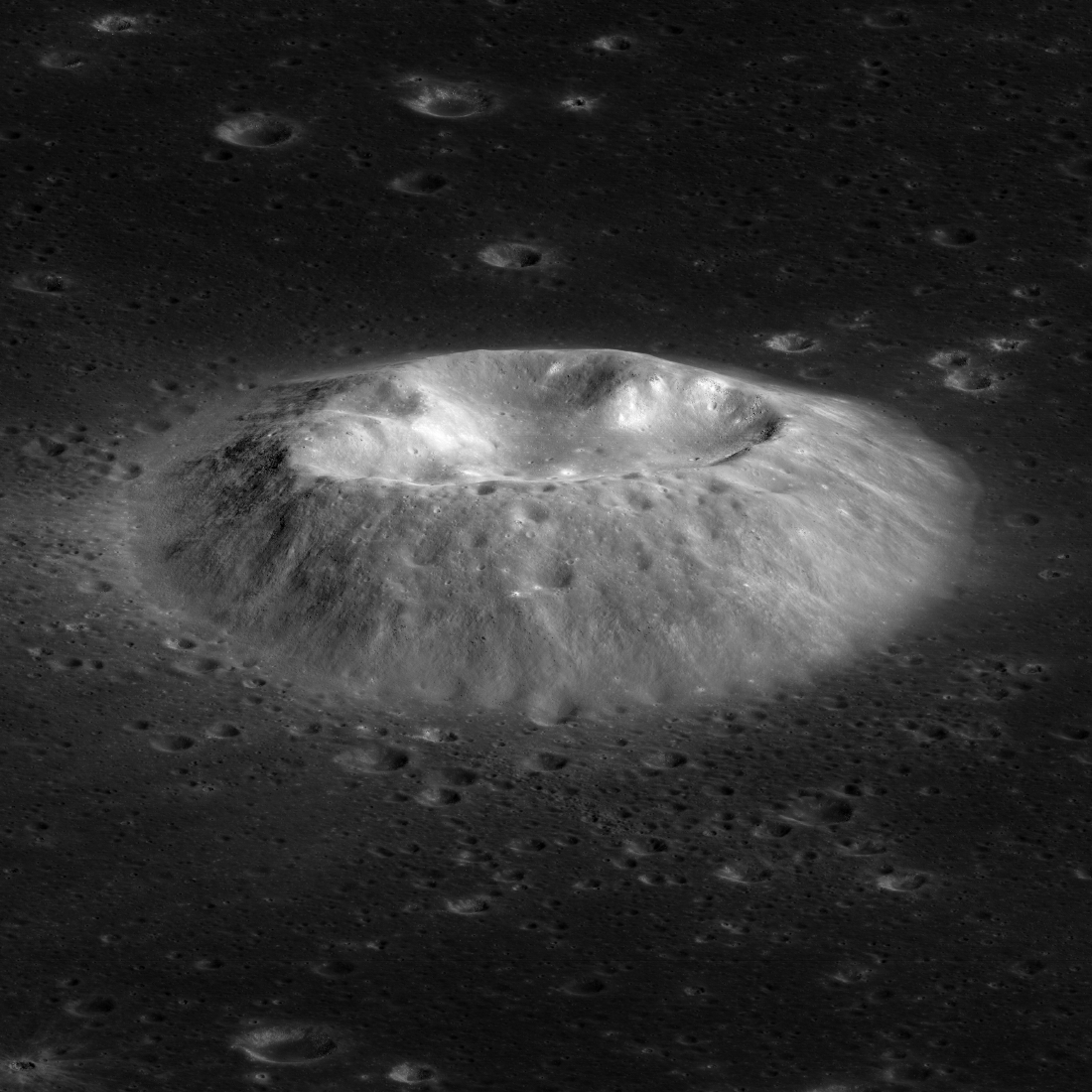
Wide shot of lunar volcano

Close-up of lunar volcano
Click for full image.

Cool image time! The Lunar Reconnaissance Orbiter (LRO) science team today released the oblique image above and in close-up to the right, showing what they call a “silicic volcano.” From the release:

The Mairan T dome is a large silicic volcanic structure with a pronounced summit depression. Remote sensing indicates that the composition of the volcanic material (lava) making up the dome is enriched in silica (SiO2). This rock type would be classified as either rhyolite or dacite on Earth, and the composition starkly contrasts with the dark, iron-rich mare basalts that embay the Mairan T dome. Most of the volcanism on the Moon is basaltic or iron-rich. Still, silicic volcanism also occurred on the Moon. Indeed, bits and pieces of similar materials were found in the Apollo samples; however, all are small fragments delivered to the Apollo sites as material ejected from distant impact events.

One of the great questions for lunar science is how the silicic materials formed. On Earth, specific tectonic settings and higher water contents in the rocks favor the formation of such lavas; however, the Moon lacks plate tectonics and water-rich sediments. NASA is planning a Commercial Lunar Payload Services (CLPS) lander mission to another, larger silicic volcano, one of the Gruithuisen domes, to address this question.

The scientists also note that this volcano formed first, and then was partly covered by the dark flood lava that surrounds it.

1 comment

Engineers test fly prototype balloon for Venus

JPL engineers have successfully completed two test flights of a smaller-scale prototype balloon intended to fly in the atmosphere of Venus.

The shimmering silver balloon ascended more than 4,000 feet (1 kilometer) over Nevada’s Black Rock Desert to a region of Earth’s atmosphere that approximates the temperature and density the aerobot would experience about 180,000 feet (55 kilometers) above Venus. Coordinated by Near Space, these tests represent a milestone in proving the concept’s suitability for accessing a region of Venus’ atmosphere too low for orbiters to reach, but where a balloon mission could operate for weeks or even months.

“We’re extremely happy with the performance of the prototype. It was launched, demonstrated controlled-altitude maneuvers, and was recovered in good condition after both flights,” said robotics technologist Jacob Izraelevitz, who leads the balloon development as the JPL principal investigator of the flight tests. “We’ve recorded a mountain of data from these flights and are looking forward to using it to improve our simulation models before exploring our sister planet.”

The idea is an upgrade of two French-built balloons that flew on two Soviet-era missions to Venus in the 1980s and operated in the Venusian atmosphere for almost two days, flying 33 miles in altitude and traversing almost 100 degrees in longitude in that short time due to Venus’s high winds.

This project wants its balloon to survive more than 100 days. As it is presently in very early development, no launch date is even proposed.

1 comment

New rocket startup focusing on new concepts to make upper stage reusable

Capitalism in space: Another new rocket startup, Stoke Space, is working to develop a new innovative reusable design for its upper stages.

Most commonly, a traditional rocket has an upper stage with a single engine. This second-stage rocket engine has a larger nozzle—often bell-shaped—to optimize the flow of engine exhaust in a vacuum. Because all parts of a rocket are designed to be as light as possible, such extended nozzles are often fairly fragile because they’re only exposed above Earth’s atmosphere. So one problem with getting an upper stage back from Earth, especially if you want to use the engine to control and slow its descent, is protecting this large nozzle.

One way to do that is to bury the engine nozzle in a large heat shield, but that would require more structure and mass, and it may not be dynamically stable. Stoke’s answer was using a ring of 30 smaller thrusters. (The tests last month only employed 15 of the 30 thrusters). In a vacuum, the plumes from these nozzles are designed to merge and act as one. And during reentry, with a smaller number of smaller thrusters firing, it’s easier to protect the nozzles.

Will this company succeed? Who knows? It is presently very early in development. However, that its founders are former engineers from SpaceX and Blue Origin is encouraging, especially based on this comment about why the Blue Origin guy, Andy Lapsa, left that company:

“I love Jeff [Bezos]’s vision for space,” Lapsa said in an interview with Ars. “I worked closely with him for a while on different projects, and I’m basically 100 percent on board with the vision. Beyond that, I think I would just say that I will let their history of execution speak for itself, and I thought we could move faster.”

Lapsa apparently was part of the exodus of high level managers and engineers that occurred at Blue Origin after Bezos hired Bob Smith as CEO. All complained of the company’s far-too-cautious management style under Smith.

0 comments

Deadly climate change on Mars!

Junk science! A new computer simulation by scientists now proposes that there was microscopic life on Mars billions of years ago, but its existence served to destroy the climate and kill all life!

The press appears to be eating this story up, with enthusiasm. From the New Atlas story above:

Humans might not be the first lifeforms in the solar system to face the threat of their own activity changing the climate of their home planet. A new model suggests that ancient Mars was once habitable enough to support methane-producing microbes, and they may have wiped themselves out by causing irreparable damage to the Red Planet’s atmosphere. [emphasis mine]

A Space.com story is written better, but it still jumps on the bandwagon:
» Read more

6 comments

Alternatives to PayPal for supporting Behind the Black

In the past two days a large number of my subscribers have suddenly canceled their PayPal subscriptions to Behind the Black. I am certain this sudden activity is because these subscribers have also canceled all of their business with PayPal, because of its announcement that if it doesn’t like what someone says or writes, it will literally steal up to $2,500 from that person’s PayPal account. See this article describing the sudden exodus from Paypal due to this unethical policy.

For the past two years I have been steadily adding additional payment options so that neither I nor my supporters will have to depend on PayPal. These have included Patreon, Zelle, and mailing a check to me directly.

I have now added one more, Gabpay. This payment service has been formed by the same people who created Gab as a free speech alternative to Twitter. Gabpay appears to work almost identical to PayPal, but its fees are less and it has no intention of stealing anyone’s money because it doesn’t like what someone says or writes.

Thus, regular readers can now support Behind The Black in one of five ways:

  • Send me a check payable to Robert Zimmerman c/o Behind The Black, P.O.Box 1262
    Cortaro, AZ 85652 . With this method every dime you contribute goes to me.
  • Subscribe or donate through Zelle, using my email address zimmerman @ nasw dot org. This method also charges no fees. Every dime you spend goes only to me.
  • NEW! Donate through Gabpay, using my email address zimmerman @ nasw dot org. Gabpay takes a cut of about 2%.
  • Subscribe or donate at my Patreon website, which takes a cut of about 12%.
  • Subscribe or donate through Paypal using the buttons in the tip jar elsewhere on this page. PayPal also takes a cut of about 12%.

I encourage my regular subscribers on both Paypal and Patreon to consider switching to Zelle. Several subscribers have done so, and have found the process simple and easy, while also guaranteeing all of your donation reaches me. If you use Zelle to either newly subscribe or switch your old subscription, please use my email address to send me a separate email telling me the monthly amount of your subscription and your chosen payment date. Zelle does not send notifications for such things.

Regardless, I celebrate my readers who are quitting PayPal. It has proven itself as unethical as companies like Google, Facebook, YouTube, and Twitter, all of which I avoid at all costs. Rather than sit back like sheep, these readers are proving that they are free citizens willing to fight. Kudos to you all!

13 comments

InSight’s power levels rise very slightly

InSight's power level through October 8, 2022

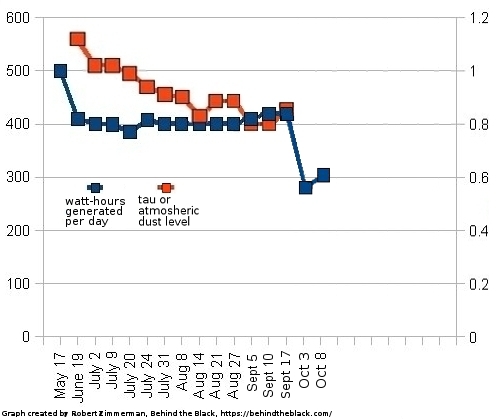
In a status report issued today, the science team for the InSight lander on Mars noted a slight increase in the amount of power produced daily by its solar panels. The graph to the right indicates that increase.

On October 8, 2022, InSight was generating an average of 300 watt-hours of energy per Martian day, or sol – an increase after a sharp decline last week from 430 watt-hours per sol to a low of 275 watt-hours per sol.

It appears that the atmosphere has begun to clear from the very large dust storm that occurred more than two thousand miles away. Despite that distance, the storm apparently reduced the available light above InSight significantly, and could take months to clear.

0 comments

October 10, 2022 Quick space links

Courtesy of BtB’s very own stringer Jay, trolling Twitter so none of us have to.


  • ULA gets one BE-4 engine, the 2nd expected in November
  • The company is targeting its first static fire tests of its Vulcan rocket in December, with the first launch in “early 2023”. Don’t bet on it. I expect ULA will not be able to get off the ground before March.


2 comments

Icebergs of Martian lava

Icebergs of Martian lava
Click for full image.

Cool image time! The photo to the right, cropped, reduced, and enhanced to post here, was taken on July 24, 2022 by the high resolution camera on Mars Reconnaissance Orbiter (MRO). The scientists label this “platy-ridged lava” but to my eye this more resembles lava ice bergs trapped within a now frozen lava stream flowing I think from the northeast to the southwest.

My guess that the flow follows that direction is based on two bits of data. First, the shape of the lava ice flows suggests vaguely a flow to the southwest. The wiggling black ridges inside the streams suggest that these flows occurred in two parts, a stronger wide flow that narrowed as the lava on the edges hardened. When the edges solidified the interior flow scraped against it, forming the wiggling ridges.

Second, the location of this image, as shown on the overview map below, strongly suggests the lava streams flowed to the southwest.
» Read more

1 comment

The dam is about to break on the COVID shots

Democrats might soon enter the Truth booth
Advocates of the jab are about to be forced, against their will,
to enter that door.

The research continues to pour in every day showing increasingly that the COVID shots that Democrats and Joe Biden forced down the throats of ordinary Americans are not only relatively ineffective at stopping COVID, they are downright risky to take, especially for the young and healthy.

One story however — having nothing to do with this scientific research — suggests strongly that the left’s fantasy-world about the jab is about to break, and break in a big way. These mind-numbed robots are suddenly discovering directly and personally how harmful the jab can be, in the worst possible manner.

Before I tell you about this one story, however, we first must review some of the new research and data that has popped up in just the past week. (For the substantial previous research about the harmful risks and uselessness of the COVID shots see Part 1 of my three part series on the COVID lie from the end of September, with parts 2 and 3 here and here.)

First, the uselessness of the jab:
» Read more

23 comments
1 416 417 418 419 420 1,762