Amy Macdonald – Let’s Start A Band
An evening pause: Performed live 2017.
Hat tip Dan Morris.
An evening pause: Performed live 2017.
Hat tip Dan Morris.
Embedded below the fold in two parts.
To listen to all of John Batchelor’s podcasts, well worth your time, go here.
» Read more
On Christmas Eve 1968 three Americans became the first humans to visit another world. What they did to celebrate was unexpected and profound, and will be remembered throughout all human history. Genesis: the Story of Apollo 8, Robert Zimmerman's classic history of humanity's first journey to another world, tells that story, and it is now available as both an ebook and an audiobook, both with a foreword by Valerie Anders and a new introduction by Robert Zimmerman.
The print edition can be purchased at Amazon or any other book seller. If you want an autographed copy the price is $60 for the hardback and $45 for the paperback, plus $8 shipping for each. Go here for purchasing details. The ebook is available everywhere for $5.99 (before discount) at amazon, or direct from my ebook publisher, ebookit. If you buy it from ebookit you don't support the big tech companies and the author gets a bigger cut much sooner.
"Not simply about one mission, [Genesis] is also the history of America's quest for the moon... Zimmerman has done a masterful job of tying disparate events together into a solid account of one of America's greatest human triumphs."--San Antonio Express-News

Ryan Kelley: a target for arrest for being a Republican
Blacklists are back and the Democrats have got ’em: One day after President Joe Biden joked on television with Jimmy Kimmel about “sending [Republicans] to jail,” the FBI arrested Ryan Kelley, one of the Republicans running for Michigan governor, on misdemeanor charges for daring to stand on the steps of the Capitol building on January 6, 2021, but never entering it.
Kelley is charged 17 months after the Jan. 6 riot and on the same day the House committee investigating the Jan. 6 attack on the U.S. Capitol is to hold a primetime hearing Thursday to present never-seen video, new audio and a mass of evidence following a year-long investigation by the select panel.
The criminal complaint obtained by Fox News Digital charged Kelley with: knowingly entering or remaining in any restricted building or grounds without lawful authority; disorderly and disruptive conduct in a restricted building or grounds; knowingly engaging in any act of physical violence against person or property in any restricted building or grounds; willfully injure or commit any depredation against any property of the United States. All are misdemeanor offenses. [emphasis mine]

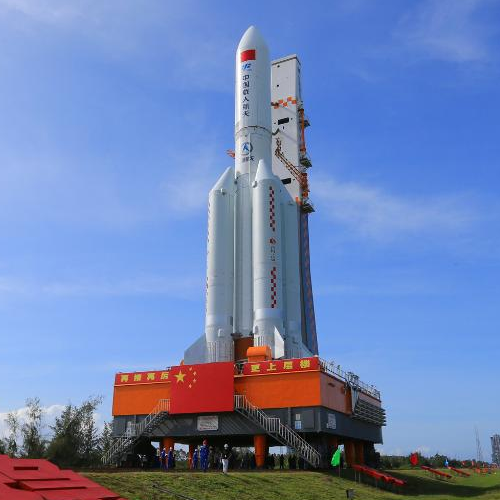
NASA’s bloated SLS mobile launchers
According to an inspector general report [pdf] released today, the second mobile launcher being built by the company Bechtel to transport its SLS rocket from the assembly building to the launch site is likely going to cost more than $1.5 billion, three times what was initially budgeted, and will not be completed any earlier than the end of 2027, four years behind schedule.
Compounding Bechtel’s projected cost increases and schedule delays, an ML-2 [mobile launcher-2] project analysis provided only a 3.9 percent confidence level that the nearly $1 billion cost [twice the original budget] and October 2025 [2.5 years late] delivery estimates were accurate. NASA requires projects to develop budgets and schedules consistent with a 70 percent joint cost and schedule confidence level (JCL), meaning a 70 percent likelihood the project will finish equal to or less than the planned costs and schedule. In fact, an Independent Review Team analysis determined the project would require an additional $447 million and 27 months, for a total contract value of $1.5 billion and a launcher delivery date of December 2027—a schedule that would enable an Artemis IV launch no earlier than the end of 2028.
The first mobile launcher, shown on the left in the graphic, cost more than $1 billion and will used only three times, at most. The second, on the right, is required for all of the assigned interplanetary tasks being given to the full size version of SLS beyond those first three test flights. Without it that version of SLS cannot launch. And even if the launcher is ready by 2028, as the IG report suggests, that will be more than a decade behind schedule, and six years from now.
» Read more
Now available in hardback and paperback as well as ebook!
From the press release: In this ground-breaking new history of early America, historian Robert Zimmerman not only exposes the lie behind The New York Times 1619 Project that falsely claims slavery is central to the history of the United States, he also provides profound lessons about the nature of human societies, lessons important for Americans today as well as for all future settlers on Mars and elsewhere in space.
“Zimmerman’s ground-breaking history provides every future generation the basic framework for establishing new societies on other worlds. We would be wise to heed what he says.” —Robert Zubrin, founder of the Mars Society.
All editions are available at Amazon, Barnes & Noble, and all book vendors, with the ebook priced at $5.99 before discount. All editions can also be purchased direct from the ebook publisher, ebookit, in which case you don't support the big tech companies and the author gets a bigger cut much sooner.
Autographed printed copies are also available at discount directly from the author (hardback $29.95; paperback $14.95; Shipping cost for either: $6.00). Just send an email to zimmerman @ nasw dot org.
The uncertainty of science: Using their large FAST radio telescope, Chinese scientists revealed this week that they have detected a new fast radio burst (FRB) whose behavior and location does not fit the present tentative theories for explaining these mysterious deep space objects.
The FRB was an exception from the beginning as it flared again and again in observations recorded by the Five-hundred-meter Aperture Spherical radio Telescope (FAST), which nestles among the hills of China’s Guizhou province. The multiple flares put the source among the few percent of FRBs that repeat. But unlike most repeaters, this one doesn’t have any apparent cycle of bursting and quiescence.
“FRB 20190520B is the only persistently repeating fast radio burst known so far, meaning that it has not been seen to turn off,” Li says.
In addition, whatever made the FRB is also emitting a constant buzz of radio waves. Astronomers have found an association with a persistent radio source in only two other FRBs, and for one of these the low-level radio waves seem to come from ongoing star formation in the host galaxy. For FRB 20190520B, though, the radio source is far more compact, and Li’s team thinks the radio waves probably come from the FRB source itself.
The data also suggests the location does not fit the theories, and even suggests that FRBs might not all come from magnetars, as presently proposed.
Japanese scientists revealed this week that they have detected more than 20 types of amino acids in the asteroid samples brought back from Ryugu by the probe Hayabusa-2.
Kensei Kobayashi, professor emeritus of astrobiology at Yokohama National University, said the unprecedented discovery of multiple types of amino acids on an extraterrestrial body could even hint at the existence of life outside of Earth. “Proving amino acids exist in the subsurface of asteroids increases the likelihood that the compounds arrived on Earth from space,” he said.
It also means amino acids can likely be found on other planets and natural satellites, hinting that “life could have been born in more places in the universe than previously thought,” Kobayashi added.
Let me emphasize that this is not a discovery of life on Ryugu, only chemistry that is found in life on Earth. Such chemistry however can be found outside of life as well. What this detection suggests however that it is relatively common to produce such complex chemistry in hostile space environments, which increases greatly the possibility of life everywhere in the universe.
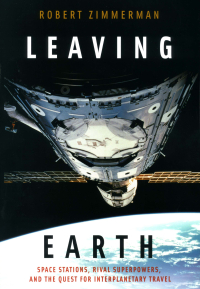
Leaving Earth: Space Stations, Rival Superpowers, and the Quest for Interplanetary Travel, can be purchased as an ebook everywhere for only $3.99 (before discount) at amazon, Barnes & Noble, all ebook vendors, or direct from my ebook publisher, ebookit.
If you buy it from ebookit you don't support the big oppressive tech companies and I get a bigger cut much sooner.
"Leaving Earth is one of the best and certainly the most comprehensive summary of our drive into space that I have ever read. It will be invaluable to future scholars because it will tell them how the next chapter of human history opened." -- Arthur C. Clarke
Even as the U.S. has gathered nineteen other countries — including most of the world’s space-faring nations — to sign the Artemis Accords protecting property rights in space, Russia yesterday announced that its government has approved its own space agreement with bankrupt and socialist Venezuela.
The agreement between the governments of the two countries was signed in Caracas on March 30, 2021. It is intended to create “organizational and legal foundations for mutually beneficial cooperation between the parties and relevant organizations of both states in the field of exploration and use of outer space for peaceful purposes.”
Russia also has an agreement with China, which like this Venezuela deal is somewhat vague. The countries have agreed to work together, but appear to have few plans for actual joint missions. What is clear is that both oppose the Artemis Accords.
Compared to the American alliance of nations, which includes Australia, Bahrain, Brazil, Canada, Columbia, France, Israel, Italy, Japan, Luxembourg, Mexico, New Zealand, Poland, Romania, Singapore, South Korea, the United Kingdom, the United Arab Emirates, and the Ukraine, the Russian alliance seems quite paltry, except for China.

Artist’s impression of solar panel
In the past month engineers for the Lucy asteroid mission have conducted a series of successful short tests to see if they can complete the unfolding of one of the probe’s two large solar panels.
On May 9, the team commanded the spacecraft to operate the array’s deployment motor using both the primary and back-up motor windings simultaneously to generate more torque, i.e. a harder pull. The motor operated as expected, further reeling in the lanyard that pulls the solar array open. After running the motor for a series of short intervals to avoid overheating, the team paused to analyze the results. Data from the spacecraft showed that the deployment was proceeding similarly to engineering ground tests, allowing the team to move forward with the second stage of the attempt. Analysis of the data also suggested that there was still additional lanyard to be retracted. The team sent the same commands again on May 12. Although this series of commands did not latch the solar array fully open, it did advance the deployment enough to increase the tension that stabilizes the arrays as was hoped.
On May 26, the spacecraft was again commanded to deploy the solar array. As in the first two attempts, both motor windings were operated simultaneously for short periods of time to avoid overheating. Afterwards the team again analyzed the data from the event, which again showed that the array was continuing to open. The team repeated the deployment command sequence a fourth time on June 2. While the array still did not latch, the data indicates that it continued to further deploy and stiffen throughout the attempt.
The graphic above illustrates the problem. The engineers will attempt further windings, and still hope the panel will open entirely and latch. If not, the stiffening suggests the panel will still stabilize in this open position, which up to now has been sufficient to produce about 90% of the power predicted and enough to complete the mission.
According to Eric Berger at Ars Technica, continuing delays with both the rocket’s payload and main engines, ULA’s Vulcan rocket will almost certainly not launch before the end of this year, as hoped by the company.
The rocket’s first stage BE-4 engines are being built by Blue Origin, and are already four years behind schedule. According to Berger’s sources, they will not be delivered to ULA until mid-August, which makes a launch in ’22 very unlikely, especially because both the engines and rocket are new, and will need time for fitting and further testing as a unit.
As for the payload, Berger’s assessment is not based on any new information. The payload, Astrobotic’s first lunar lander dubbed Peregrine, has also been experiencing delays, but the article provides no further information on whether it will miss its targets to be ready in ’22.
Regardless, it appears that Blue Origin is still dragging in its effort to build the BE-4 engine. If Vulcan cannot launch this year, it will threaten ULA’s long term future, since the company is depending on it to replace its Atlas-5 and Delta rockets. The delays now are allowing others to catch up and grab business that ULA might have garnered had Vulcan been operational as planned.
In a carefully worded press release this week, NASA revealed that one segment of the primary mirror of the James Webb Space Telescope had been hit by a micrometeoroid.
Between May 23 and 25, NASA’s James Webb Space Telescope sustained an impact to one of its primary mirror segments. After initial assessments, the team found the telescope is still performing at a level that exceeds all mission requirements despite a marginally detectable effect in the data. Thorough analysis and measurements are ongoing. Impacts will continue to occur throughout the entirety of Webb’s lifetime in space; such events were anticipated when building and testing the mirror on the ground.
The reason such events were expected is because — unlike most telescopes (including Hubble) — Webb’s mirrors are not enclosed in a tube for protection. To do so would have made the telescope far too expensive to build or launch.
After describing in great detail all the work done prior to launch to anticipate such hits and deal with them, the press release then mentioned this fact almost as an aside:
This most recent impact was larger than was modeled, and beyond what the team could have tested on the ground.
Localized damage to the primary mirror of any telescope is not unusual. With ground-based telescopes such issues are not infrequent and easily worked around. The same applies to Webb. The engineers will calculate how to calibrate this particular segment to minimize distortion from the impact.
However, that the telescope experienced a hit larger than ever modeled, so soon after launch, suggests that those models were wrong, and that larger and more frequent hits can be expected. If so, this could be very worrisome, as over the long run it could shorten the telescope’s life in space significantly.
An evening pause: I dare you not to smile. Or even laugh.
Hat tip Cotour.
Cool image time! The picture above, reduced to post here, was taken by Curiosity’s high resolution camera on June 5, 2022 (sol 3494). It shows a close up of another flaky rock near where the rover is presently sitting (the blue dot on the map to the right), similar to the one that I highlighted on May 28, 2022 but zoomed in closer.
Not only can you seen the layered flakes extending out from the rock’s main body, you can see what appear to be small deposits of material between the flakes, as if at one point the material was being placed here by condensation, either from the atmosphere or liquid.
The curvy rounded edges of the rock’s larger flakes could have been caused by the same process, or by long slow wind erosion over the eons since the flakes were formed.
The photo appears to be part of a larger mosaic that the rover’s science team is having the camera take of the strange geology that now surrounds Curiosity. The science team also appears to be continuing its beeline south towards the rover’s original planned route, indicated by the red dotted line on the map. The green dot marks the approximate location of a seasonal recurring dark streak on the cliffside, suggesting some form of seepage, while the white arrows mark a distinct layer that scientists have identified in many places on the flanks of Mount Sharp.
Capitalism in space: SpaceX today successfully launched an Egyptian communications satellite using its Falcon 9 rocket.
The first stage completed its seventh flight, and landed safely on the drone ship in the Atlantic.
The leaders in the 2022 launch race:
23 SpaceX
18 China
8 Russia
3 Rocket Lab
3 ULA
The U.S. now leads China 32 to 18 in the national rankings, and the entire world combined 32 to 29.
Cool image time! The photo to the right, cropped and reduced to post here, was created from a raw image from the Jupiter orbiter Juno by citizen scientist Sergio Diaz-Ruiz. As he notes in his caption:
Several jet streams at high latitude, near the north pole of the planet, crowned by clouds, contrast with a dark oval just over the center.
The original was taken on February 25, 2022 during Juno’s fortieth close approach to Jupiter. As Diaz-Ruiz notes, the contrast with the dark oval and the higher lighter clouds is striking. It is almost as if thermals rising over that oval are pushing the lighter clouds away.
This is only the fourth Juno image that Diaz-Ruiz has processed. All are quite stunning, and worth a look.

The Harrisonburg school board and its superintendent.
Bring a gun to a knife fight: Represented by the Alliance Defending Freedom (ADF), both parents and teachers on June 1st filed a lawsuit against the Harrisonburg City Public School Board for encouraging children to use incorrect sexual pronouns as it also indoctrinated the kids into the queer sex agenda, all while setting policies intended to conceal its actions from parents.
Upon a child’s request, school district policy requires staff to immediately begin using opposite-sex pronouns and forbids staff from sharing information with parents about their child’s request, instead instructing staff to mislead and deceive parents.
The lawsuit [pdf] is even more blunt than the press release above:
» Read more
Capitalism in space: According to Elon Musk, a public sale of stock for the Starlink internet satellite constellation has now been pushed back another three to four years, and will not occur any earlier ’25.
His revised date means Starlink’s IPO has been delayed once again for another three years. In an email to SpaceX workers in 2019, also obtained by CNBC, Musk gave a three-year timeline for Starlink’s public offering, meaning an IPO could have taken place this year.
In 2020, Musk tweeted that Starlink would “probably IPO” in “several years.” He then tweeted in June 2021 that it would be “at least a few years before Starlink revenue is reasonably predictable” and taking it public any earlier would be “very painful.”
This quote however from Musk I think best describes his experience being in charge of a publicly traded company: “Being public is definitely an invitation to pain.”
In remarks this past weekend on Russian television, Roscosmos head Dmitry Rogozin said that Russia now plans to continue its international partnership on ISS till at least 2024.
“The ISS will work exactly as long as the Russian side needs to work on it,” Rogozin said. “There are technical problems. The station has been operating beyond its lifespan for a long time. We have a government decision that we are working until 2024.”
…Earlier this year, it was reported by some media outlets that Russia was planning to quit the ISS, blaming Western sanctions, following comments Rogozin made on state television. Rogozin said: “The decision has been taken already, we’re not obliged to talk about it publicly. I can say this only—in accordance with our obligations, we’ll inform our partners about the end of our work on the ISS with a year’s notice.”
The Russian government is presently attempting to develop its own space station for launch before the end of this decade. Since such Russian projects have for decades routinely been delayed, for decades, it is likely that the Putin government has decided that it is better to stay on ISS for the moment then quit and have no space station at all.
Russia has also been negotiating with China to partner with it on China’s space station. While China says it is willing, it also appears entirely uninterested in committing any of its funds to help Russia. It might allow a Russia astronaut to visit its station at some point, but that would likely be the limit of that space station partnership.
All in all, Russia’s space effort faces a dim future. ISS is going to be replaced with several private commercial stations owned by American companies, none of which want to partner with Russia. And Russia doesn’t really have the funds to build its own station. Nor does it have a competitive aerospace industry capable of developing its own stations.
Unless something significant changes soon, Russia’s place in space will shrink considerably in the next ten years.
The South Korea government has canceled its proposed unmanned probe to asteroid Apophis that had been designed to reach the asteroid during its ’29 close approach of Earth and fly in formation with it.
The science ministry, which manages state-funded space programs, recently ruled the mission “unfeasible” and decided not to request the $307.7 million budget it initially sought for the mission. … “We’ve decided not to pursue Apophis probe mission because there were various issues making it difficult for the mission to be successful,” Shin Won-sik, a science ministry official, told SpaceNews. “To probe Apophis, we have to launch a spacecraft by 2027 at the latest. But with the rocket and spacecraft-making capabilities we have, it’s unrealistic to launch in time.”
South Korean officials insisted they are not abandoning all future asteroid missions, but merely shifting this effort to other asteroids in which there is less time pressure to launch. Right now they are considering a mission in the mid-2030s, which could also be an asteroid sample return mission.
The Russian company S7 has ended its project to build a private rocket, citing lack of funds and a dearth of Russian investors.
Due to a lack of opportunity to raise funding, the project to create a light-class carrier rocket has been suspended,” the press service said.
The company said that was the reason why it let go some of its staff – 30 people out of more than 100 – in June. “Still, S7 Space continues to operate in some areas, such as additive and welding technologies where work is underway,” it said.
S7 first announced this rocket project in 2019. Development was suspended in 2020, however, when the Putin government imposed new much higher fees on the company for storing the ocean launch platform Sea Launch, fees so high that the company was soon negotiating to sell the platform to a Russian state-run corporation.
At the moment it appears that while Russia has possession of the Sea Launch ocean floating launch platform, it has nothing to launch from it. Nor does there appear to be any Russia project that might eventually do so. The Putin government has quite successfully choked off S7 — fearing the competition it would bring to Roscosmos — and with it any other new rocket company.
The U.S. State Department yesterday announced that France has become the twentieth nation to sign the Artemis Accords.
The full list of signatories so far: Australia, Bahrain, Brazil, Canada, Columbia, France, Israel, Italy, Japan, Luxembourg, Mexico, New Zealand, Poland, Romania, Singapore, South Korea, the United Kingdom, the United Arab Emirates, the Ukraine, and the United States.
France’s signing is a major breakthrough, as both it and Germany, major players in the European Space Agency, have appeared to resist signing on because to do so would have limited their ability to partner with Russia on space projects (Russia opposes the accords). The Ukraine War has apparently ended France’s resistance. It no longer has any partnerships with Russia, and is not likely to form any new ones in the near future.
We should expect Germany to sign on in the near future as well.
As I wrote in May, the future factions in space are now becoming clearer. On one side we have the American Alliance, signers of the accords who support private property. On the other we have Russia and China, who oppose the accords because they also oppose private property.
In May I also included a third faction, made up of non-aligned space powers. That faction now appears to be fading away, though it still includes Germany and India.