Turkey begins construction of spaceport in Somalia

Somalia

According to statements by one Turkish official this week, his nation has begun building its own spaceport on the southeast coast of Somalia at a location not yet specified.

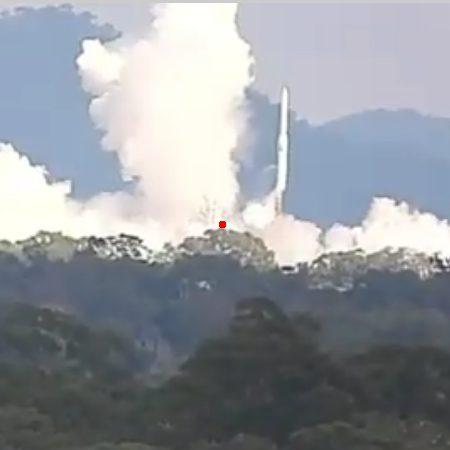
Türkiye has begun construction of a space launch facility in Somalia, marking the country’s entry into an exclusive group of nations with oceanside spaceports, Board Chairman of Baykar Selcuk Bayraktar announced on Thursday. “Türkiye now has a space launch station. Normally, you need to be by the ocean. Türkiye has a 30 kilometer by 30 kilometer area in Somalia,” Bayraktar said during a panel at Take Off İstanbul 2025. “When you have oceanside access, you can deploy launch vehicles, meaning you have a spaceport. There are 12 such places in the world. Because Somalia is part of our heartland geography, there will be a space station there,” he noted.

This plan has been in the works since earlier this year, though few real details (such as its specific location) have not been released. It appears however that Turkey wants to use it to test both ballistic missiles and eventually launch orbital rockets. The location on the coast will permit test flights of bigger missiles that Turkey cannot do from its present test sites inside Turkey.

9 comments

China launches nine more Guowang internet-of-things satellites

China today successfully launched another nine internet-of-things satellites for the Guowang (or SatNet) constellation, its Long March 12 rocket lifting off from its coastal Wenchang spaceport.

China’s state-run press did not reveal the number of satellites, but the previous three Long March 12 launches that carried Guowang satellites all launched nine, so I think it is safe to assume nine launched today as well. This was the sixteenth launch for this constellation, which now has about 119 satellites in orbit, with a planned 13,000 once complete.

The Long March 12 is expendable. Though the launch proceeded over the ocean, one drop zone for the rocket’s lower stages was in the Philippines, where authorities warned its citizens to avoid those zones and to exercise caution if they see any likely rocket debris.

An upgraded version, the Long March 12A, with a first stage designed to land vertically and be reused, is scheduled to launch sometime in the next two weeks.

The leaders in the 2025 launch race:

164 SpaceX
82 China (a new record)
15 Rocket Lab
15 Russia

SpaceX still leads the rest of the world in successful launches, 164 to 134.

0 comments

Genesis cover

On Christmas Eve 1968 three Americans became the first humans to visit another world. What they did to celebrate was unexpected and profound, and will be remembered throughout all human history. Genesis: the Story of Apollo 8, Robert Zimmerman's classic history of humanity's first journey to another world, tells that story, and it is now available as both an ebook and an audiobook, both with a foreword by Valerie Anders and a new introduction by Robert Zimmerman.

The print edition can be purchased at Amazon or any other book seller. If you want an autographed copy the price is $60 for the hardback and $45 for the paperback, plus $8 shipping for each. Go here for purchasing details. The ebook is available everywhere for $5.99 (before discount) at amazon, or direct from my ebook publisher, ebookit. If you buy it from ebookit you don't support the big tech companies and the author gets a bigger cut much sooner.


The audiobook is also available at all these vendors, and is also free with a 30-day trial membership to Audible.
 

"Not simply about one mission, [Genesis] is also the history of America's quest for the moon... Zimmerman has done a masterful job of tying disparate events together into a solid account of one of America's greatest human triumphs."--San Antonio Express-News

SpaceX launches 29 more Starlink satellites

The beat goes on! SpaceX today continued its torrid launch pace, launching another 29 Starlink satellites, its Falcon 9 rocket lifting off from Cape Canaveral in Florida.

The first stage completed its 16th flight, landing on a drone ship in the Atlantic.

The leaders in the 2025 launch race:

164 SpaceX (a new record)
81 China
15 Rocket Lab
15 Russia

SpaceX now leads the rest of the world in successful launches, 164 to 133.

5 comments

Conscious Choice cover

Now available in hardback and paperback as well as ebook!

From the press release: In this ground-breaking new history of early America, historian Robert Zimmerman not only exposes the lie behind The New York Times 1619 Project that falsely claims slavery is central to the history of the United States, he also provides profound lessons about the nature of human societies, lessons important for Americans today as well as for all future settlers on Mars and elsewhere in space.

 
Conscious Choice: The origins of slavery in America and why it matters today and for our future in outer space, is a riveting page-turning story that documents how slavery slowly became pervasive in the southern British colonies of North America, colonies founded by a people and culture that not only did not allow slavery but in every way were hostile to the practice.  
Conscious Choice does more however. In telling the tragic history of the Virginia colony and the rise of slavery there, Zimmerman lays out the proper path for creating healthy societies in places like the Moon and Mars.


“Zimmerman’s ground-breaking history provides every future generation the basic framework for establishing new societies on other worlds. We would be wise to heed what he says.” —Robert Zubrin, founder of the Mars Society.


All editions are available at Amazon, Barnes & Noble, and all book vendors, with the ebook priced at $5.99 before discount. All editions can also be purchased direct from the ebook publisher, ebookit, in which case you don't support the big tech companies and the author gets a bigger cut much sooner.


Autographed printed copies are also available at discount directly from the author (hardback $29.95; paperback $14.95; Shipping cost for either: $6.00). Just send an email to zimmerman @ nasw dot org.

December 11, 2025 Quick space links

Courtesy of BtB’s stringer Jay. This post is also an open thread. I welcome my readers to post any comments or additional links relating to any space issues, even if unrelated to the links below.

  • Perseverance detects static electricity produced by Martian dust devils
    I didn’t post this story last week when it was first announced because the media framed it as “Lightning found on Mar!” That’s balderdash. What was actually found was that the dust moving in dust devils produces static charges that have now been detected. I should have clarified this point then. I thank Jay for getting me to correct this omission.
7 comments

Astronomers: 70% of smaller galaxies don’t have supermassive black holes at their center

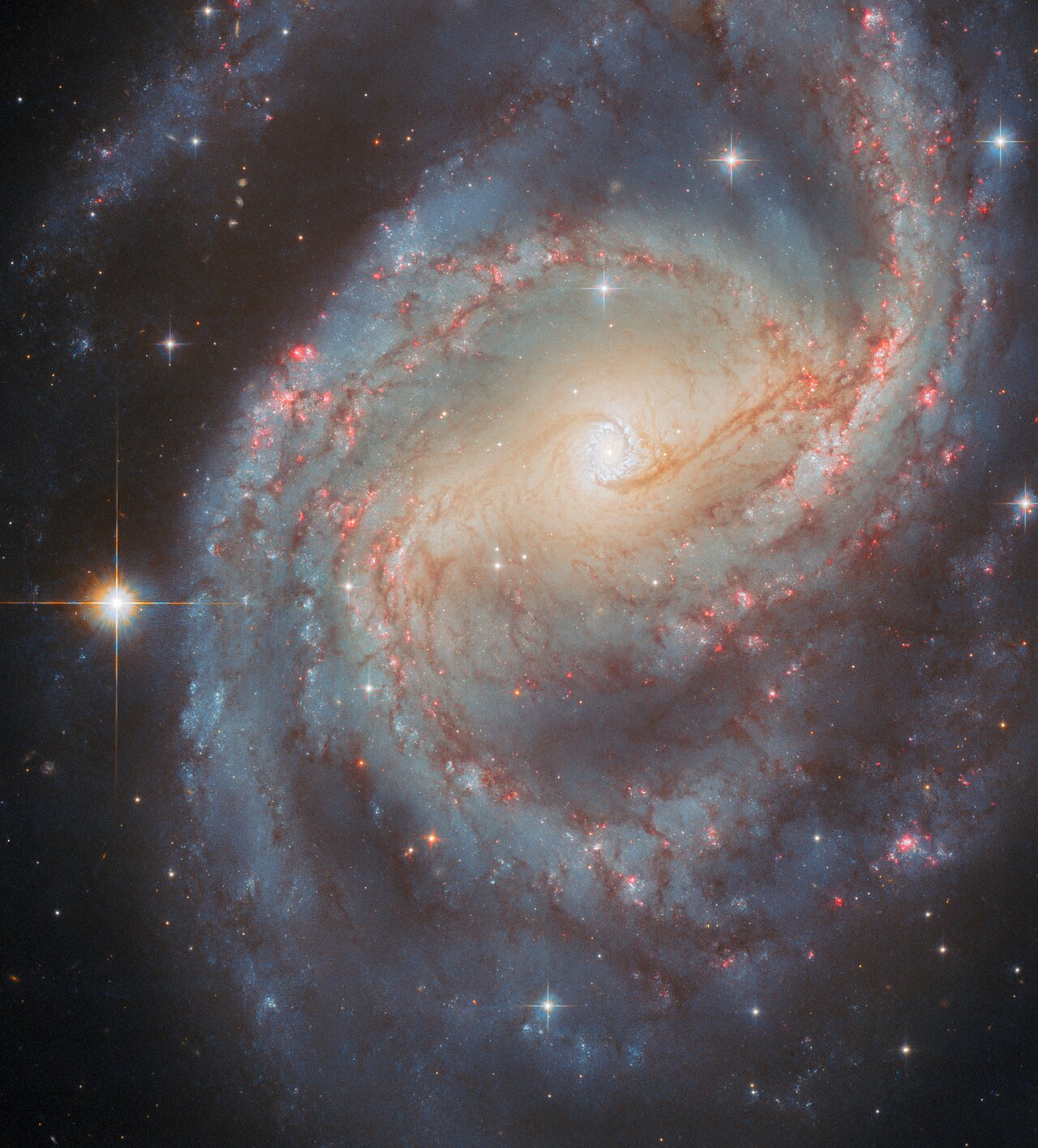
Astronomers reviewing data collected by the Chandra X-ray Observatory have found that 70% of smaller galaxies don’t appear to have supermassive black holes at their center.

A team of astronomers used data from over 1,600 galaxies collected in more than two decades of the Chandra mission. The researchers looked at galaxies ranging in heft from over ten times the mass of the Milky Way down to dwarf galaxies, which have stellar masses less than a few percent of that of our home galaxy. … The team has reported that only about 30% of dwarf galaxies likely contain supermassive black holes.

You can read the paper here [pdf].

This conclusion not only impacts the theories on the formation of supermassive black holes in the center of galaxies, it influences the present theories on the formation of galaxies themselves.

1 comment

Leaving Earth cover

Leaving Earth: Space Stations, Rival Superpowers, and the Quest for Interplanetary Travel, can be purchased as an ebook everywhere for only $3.99 (before discount) at amazon, Barnes & Noble, all ebook vendors, or direct from my ebook publisher, ebookit.

If you buy it from ebookit you don't support the big oppressive tech companies and I get a bigger cut much sooner.


Winner of the 2003 Eugene M. Emme Award of the American Astronautical Society.

 
"Leaving Earth is one of the best and certainly the most comprehensive summary of our drive into space that I have ever read. It will be invaluable to future scholars because it will tell them how the next chapter of human history opened." -- Arthur C. Clarke

Scientists posit that Neptune and Uranus might be rockier than previously theorized

Scientists doing new computer modeling of the known data now posit that Neptune and Uranus might not be as icy as previously believed and instead could be more like the inner terrestrial planets like Earth, much rockier in their interior.

According to the work carried by the UZH scientific team, Uranus and Neptune might actually be more rocky than icy. The new study does not claim the two blue planets to be one or the other type, water- or rock- rich, it rather challenges that ice-rich is the only possibility. This interpretation is also consistent with the discovery that the dwarf planet Pluto is rock-dominated in composition.

…With their new agnostic, and yet fully physical model, the University of Zurich team found the potential internal composition of the “ice giants” of our Solar system, is not limited at all to only ice (typically represented by water). “It is something that we first suggested nearly 15 years ago, and now we have the numerical framework to demonstrate it,” reveals Ravit Helled, a professor at the University of Zurich and initiator of the project. The new range of internal composition shows that both planets can either be water-rich or rock-rich.

This new hypothesis might also help explain the multi-polar magnetic fields of both planets.

All is uncertain of course, as this is just a computer model based on limited data. Nor is it a surprise that an alternative conclusion appears to work. We know so little about these distant worlds that it is likely that multiple theories could fit the data, and all could be wrong when we finally learn more.

12 comments

French startup The Exploration Company now building an in-orbit servicing spacecraft

The French startup The Exploration Company, which has been developing an unmanned cargo spacecraft called Nyx to supply the commercial space stations under development, has now also gotten funds from the European Space Agency (ESA) to build an in-orbit spacecraft designed to provide refueling and servicing capabilities as well.

More information here.

In a 25 November update on its progress with an ESA-funded project, the company revealed that it is also working on a spacecraft called Oura, designed to refuel satellites in orbit, thereby extending their operational lifespan.

…As part of the 25 November update, the company announced that it had been awarded a Phase B2 contract for the InSPoC-1 programme. The Phase B2 development of the project will include activities up to Technology Readiness Level 6, which represents the development of a prototype and its demonstration in a relevant environment.

Once again, this contract from ESA is radically different than its past policy of building and owning everything itself. Instead, it is hiring this French company to develop this capability, which this French company will then own and be able to sell for profits to others.

2 comments

Scientists map the outside edge of the Sun’s atmosphere

The mapping of the Sun's atmosphere

Using multiple solar observatories in space, scientists have now been able to map the approximate location of the outside edge of the Sun’s atmosphere, the point “where the speed of the outward solar wind becomes faster than the speed of magnetic waves.”

The panels to the right are a sampling of that mapping, and is figure 3 of the peer-reviewed paper [pdf]. The bulk of the data (black) comes from five spacecraft observing the Sun from the L1 point a million miles from Earth. The blue line is data from Solar Orbiter, while the red line is data from the Parker Solar Probe. From the press release:

Astronomers have produced the first continuous, two-dimensional maps of the outer edge of the Sun’s atmosphere, a shifting, frothy boundary that marks where solar winds escape the Sun’s magnetic grasp. By combining the maps and close-up measurements, scientists from the Center for Astrophysics | Harvard & Smithsonian (CfA) showed that the boundary grows larger, rougher and spikier as the Sun becomes more active.

…The boundary in the Sun’s atmosphere where the solar wind’s outward speed becomes faster than the speed of magnetic waves, known as the Alfvén surface, is the “point of no return” for material that escapes the Sun and enters interplanetary space; once material travels beyond this point, it cannot travel back to the Sun. This surface is the effective “edge” of the Sun’s atmosphere, and provides scientists with an active laboratory for studying and understanding how solar activity impacts the rest of the solar system, including life and technology on and around Earth.

This new data further refines the nature of the boundary, as earlier probes had already given scientists a rough idea of its size and nature.

2 comments

Yesterday’s posts are sadly lost

The outage earlier today unfortunately toasted everything I did yesterday. That also appears to include the comments people left as well.

I will attempt to recreate those posts later today and over the weekend. Sorry however about the comments. I don’t think I can recover them.

UPDATE: I think I have recreated all the posts from yesterday. I was also able to repost the lost comments from the National Academies of Science story because commenter Edward had them still and sent them to me.

If I have missed anything, please comment below.

6 comments

Pentagon decides New Glenn must fly four times before its certifies it for military launches

Pentagon officials yesterday announced that before it will certify Blue Origin’s New Glenn rocket for commercial military payloads, it must complete two more successful orbital launches, for a total of four flights.

Blue Origin’s New Glenn rocket will have to complete four successful orbital flights as its pathway to certification under the U.S. Space Force’s National Security Space Launch (NSSL) program, Lt. Gen. Philip Garrant said Dec. 10 at the Spacepower conference. Garrant, who leads the Space Systems Command, said Blue Origin selected the four-flight benchmark and the government agreed. “The government is supporting a four-flight certification for New Glenn,” he told reporters. The rocket has logged two successful missions so far, and Garrant said a third launch is expected “earlier in the new year than later.” If upcoming flights stay on track, he added, “I think they’re going to be in a fantastic place to become our third certified provider and compete for missions.”

If certified, Blue Origin would join SpaceX and United Launch Alliance as the Space Force’s third heavy-lift launch provider.

It is surprising that the military is requiring four successful flights from Blue Origin, but required only two from ULA’s new Vulcan rocket, and certified that even though there were problems on Vulcan’s second flight.

These extra flights should not cause a significant delay, since Blue Origin is expecting to complete a number of launches in 2026 to meet its obligations under its Amazon Leo contract

7 comments
1 83 84 85 86 87 2,928