The Netherlands says it will sign Artemis Accords

According to a press release from the government of the Netherlands yesterday, it plans to sign the Artemis Accords, becoming the thirtieth nation to join the American alliance to explore and settle the solar system.

The full list of signatories to the Artemis Accords is now as follows: Argentina, Australia, Bahrain, Brazil, Canada, Columbia, Czech Republic, Ecuador, France, Germany, India, Israel, Italy, Japan, Luxembourg, Mexico, the Netherlands, New Zealand, Nigeria, Poland, Romania, Rwanda, Saudi Arabia, Singapore, South Korea, Spain, the United Kingdom, the United Arab Emirates, the Ukraine, and the United States.

Increasingly the entire western world is signing on, leaving China, Russia, and their few communist allies isolated on the other side.

Though this sounds good, we must remember that the west no longer stands as firmly for freedom and individual rights as it did during the Cold War. Instead, we increasingly see two alliances that are both more interested in promoting the power of the people who run each, rather than furthering the rights and dreams of their citizens. As I concluded in Conscious Choice:

It is therefore likely that the first few centuries of colonization throughout the solar system will not proceed peacefully or justly, as wished for by the good intentions of the Outer Space Treaty. Instead, the initial exploration will be a brutal legal nightmare for all involved.

Governments will scramble to grab as much as they can. And for private enterprise to succeed in space, the treaty’s restrictions on property rights will force those operations, very expensive, time consuming and extremely risky, to focus on maximizing profits so as to at least minimize the legal risks. Meanwhile, ordinary citizens will have few legal rights, because the rights citizens enjoy on Earth will not exist legally for them.

We are certainly going to explore and settle the solar system in the coming centuries. It is also likely that the citizens living there will have a terrible battle to obtain the same rights we on Earth have since the Enlightenment taken for granted.

1 comment

Germany signs Artemis Accords

Germany today finally signed the Artemis Accords, becoming the 29th nation to do so. More important, its signing puts most of Europe within the accords, as well as all of the major players in space except for China and Russia.

The full list of signatories to the Artemis Accords is now as follows: Argentina, Australia, Bahrain, Brazil, Canada, Columbia, Czech Republic, Ecuador, France, Germany, India, Israel, Italy, Japan, Luxembourg, Mexico, New Zealand, Nigeria, Poland, Romania, Rwanda, Saudi Arabia, Singapore, South Korea, Spain, the United Kingdom, the United Arab Emirates, the Ukraine, and the United States.

We now can essentially see the alliance that will compete with China, Russia, and the handful of third world leftist nations such as Venezuela and South Africa. Though there are some nations on this list that have not flown in space and have a very weak infrastructure for space (Nigeria, Romania, and Ecuador for example), most of the signatories have major aerospace industries with a strong space component. More important, while the Biden administration has been deemphasizing the original conception of the accords, aimed at strengthening property rights in space, the members of the alliance are still mostly capitalist countries, with legal systems that support individual rights.

On the other side are nations that have traditionally or are now pushing for communism and strong authoritarian rule.

Thus, we can now see the rough outline of the political competition that will exist as the solar system is explored and colonized in the coming centuries.

0 comments

Argentina signs Artemis Accords

Argentina yesterday became the 28th nation to sign the Artemis Accords.

Originally conceived by the Trump as a series of bi-lateral agreements between the U.S. and another country in order to strengthen property rights in space as well as build a U.S. alliance in space, the Biden administration has been more focused on the latter, using the accords more as a tool to increase international cooperation.

The full list of signatories to the Artemis Accords is now as follows: Argentina, Australia, Bahrain, Brazil, Canada, Columbia, Czech Republic, Ecuador, France, India, Israel, Italy, Japan, Luxembourg, Mexico, New Zealand, Nigeria, Poland, Romania, Rwanda, Saudi Arabia, Singapore, South Korea, Spain, the United Kingdom, the United Arab Emirates, the Ukraine, and the United States.

0 comments

Biden administration announces India will sign Artemis Accords

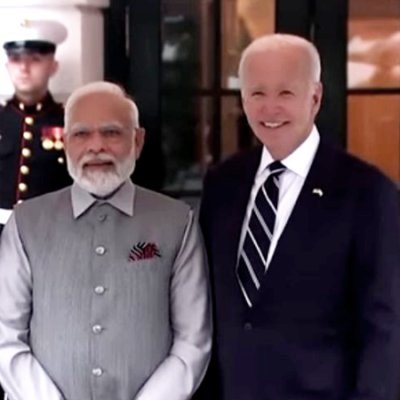
Modi meeting Biden upon arrival at White House June 21, 2023
Modi meeting Biden upon arrival at White House
on June 21, 2023

As part of the visit of Indian prime minister Narendra Modi to the U.S., the Biden administration today announced that India has agreed to sign Artemis Accords, becoming the 27th nation to join the American space alliance.

It appears India made this decision after the Biden administration agreed to foster a whole range of cooperative technology exchanges.

Cooperation in advanced computing, artificial intelligence, and quantum information science is also being fostered through the establishment of a joint Indo-US quantum coordination mechanism and the signing of an implementation arrangement on artificial intelligence, advanced wireless, and quantum technologies.

Both countries are working together on 5G and 6G technologies, including Open Radio Access Network (RAN) systems, with plans for field trials, rollouts, and scale deployments in both markets. “Here we’ll be announcing partnerships on open ran, field trials and rollouts, including scale deployments in both countries with operators and vendors of both markets. This will involve backing from the US International Development Finance, for cooperation and to promote the deployments in India,” the official said.

The US will support the removal of telecommunications equipment made by untrusted vendors through the US rip and replace program and welcomes Indian participation in this initiative.

The full list of signatories to the Artemis Accords is now as follows: Australia, Bahrain, Brazil, Canada, Columbia, Czech Republic, Ecuador, France, India, Israel, Italy, Japan, Luxembourg, Mexico, New Zealand, Nigeria, Poland, Romania, Rwanda, Saudi Arabia, Singapore, South Korea, Spain, the United Kingdom, the United Arab Emirates, the Ukraine, and the United States.

One would hope that this decision would help separate India from China and Russia, but this is unclear.

There are other questions. » Read more

3 comments

Ecuador becomes 26th nation to sign Artemis Accords

In a ceremony yesterday in Washington, Ecuador became the 26th nation to sign the Artemis Accords, a bi-lateral agreement with the United States that was designed during the Trump administration to act as a work around to the limitations to private enterprise in space created by the Outer Space Treaty.

The full list of signatories so far: Australia, Bahrain, Brazil, Canada, Columbia, Czech Republic, Ecuador, France, Israel, Italy, Japan, Luxembourg, Mexico, New Zealand, Nigeria, Poland, Romania, Rwanda, Saudi Arabia, Singapore, South Korea, Spain, the United Kingdom, the United Arab Emirates, the Ukraine, and the United States.

Adding third world nations to the alliance strengthens it, but it is really the clout of major space players like France, Luxembourg, the UK, the UAE, Italy, and Japan that gives the United States a great deal of leverage in establishing future space legal policy, assuming the alliance is used as originally intended. Considering however the Biden administration’s general hostility to the private sector and freedom, it is unclear if that will be the goal.

3 comments

Spain becomes 25th nation to sign Artemis Accords

In a ceremony yesterday in Spain, that country became the 25th nation to sign the Artemis Accords, a bi-lateral agreement with the United States that was designed during the Trump administration to act as a work around to the limitations to private enterprise in space created by the Outer Space Treaty.

The full list of signatories so far: Australia, Bahrain, Brazil, Canada, Columbia, Czech Republic, France, Israel, Italy, Japan, Luxembourg, Mexico, New Zealand, Nigeria, Poland, Romania, Rwanda, Saudi Arabia, Singapore, South Korea, Spain, the United Kingdom, the United Arab Emirates, the Ukraine, and the United States.

This alliance gives the United States a great deal of leverage in establishing legal policy, if it is used as originally intended. It however at present remains unclear if the Biden administration intends to do so, considering its general hostility to the private sector and freedom.

0 comments

Czech Republic to sign Artemis Accords

In a press release today describing the planned signing ceremony, NASA today revealed that the Czech Republic is going to sign the Artemis Accords on May 3, 2023, becoming the 24th nation to join this American-led alliance in space.

The full list of signatories so far: Australia, Bahrain, Brazil, Canada, Columbia, Czech Republic, France, Israel, Italy, Japan, Luxembourg, Mexico, New Zealand, Nigeria, Poland, Romania, Rwanda, Saudi Arabia, Singapore, South Korea, the United Kingdom, the United Arab Emirates, the Ukraine, and the United States.

The accords, bi-lateral agreements between each nation and the U.S., were designed during the Trump administration to emphasize the rights of private investors in space and thus do an end-around of the Outer Space Treaty. Under the Biden administration it is no longer clear if that remains the goal. The existence of a signed alliance led by the U.S. and the capitalistic west however gives the U.S. the political force to protect those rights, assuming the American government is interested in the future in doing so.

It has also created a kind of bi-polar competition with the alliance of nations signing on to China’s projects in space. That alliance so far only includes China, Russia, and Venezuela, but we should expect several nations once part of the former Soviet Union, such as Kazakhstan, as well as other former communist block nations, such as North Korea, to sign up at some point. I would also expect Iran to join also.

0 comments

Saudi Arabia withdraws from Moon Treaty

On January 5, 2023, Saudi Arabia submitted its official withdrawal [pdf] from Moon Treaty, to be effective one year later.

The 1979 Moon Treaty is not the 1967 Outer Space Treaty, which almost all space-faring nations have signed. The Moon Treaty has been signed by almost no one because its language literally forbids private ownership.

In a sense, the Artemis Accords, which Saudi Arabia recently signed, is in direct conflict with the Moon Treaty, and no nation can really honor both. The Artemis Accords were designed by the Trump administration to get around the less stringent restrictions on private enterprise imposed by the Outer Space Treaty. That it has encouraged the Saudis to leave the Moon Treaty, however, suggests that the Artemis Accords might eventually cause a major abandonment of the Outer Space Treaty as well. To withdraw from such treaties up until now has been considered taboo. Saudi Arabia might have broken that spell.

If so, this action by the Saudis could be the best news for the future exploration and settlement of the solar system that has occurred in years, even more significant than that first vertical landing of a Falcon 9 rocket. It might finally force a major revision in the Outer Space Treaty so that each nation’s laws can be applied to its own colonies.

0 comments

Rwanda and Nigeria to sign Artemis Accords

Rwanda and Nigeria have become the first two African nations to sign te Artemis Accords, bringing the number of signatories to this American-led alliance to 23.

Neither Nigerian nor Rwandan officials described in detail any plans to participate in Artemis at the signing ceremony, but at the Secure World Foundation event, a State Department official said that is not a condition for signing the Accords.

“We continue to encourage all responsible spacefaring nations to sign the Accords, and we also encourage countries that are just developing their space sector to also consider signing,” said Kristina Leszczak of the State Department’s Office of Space Affairs. “We stress that interested countries do not need to come to the table with existing space capabilities or even near-term plans to contribute to Artemis. We find this opens the conversation up to a much more diverse group.”

The full list of signatories so far: Australia, Bahrain, Brazil, Canada, Columbia, France, Israel, Italy, Japan, Luxembourg, Mexico, New Zealand, Nigeria, Poland, Romania, Rwanda, Saudi Arabia, Singapore, South Korea, the United Kingdom, the United Arab Emirates, the Ukraine, and the United States.

The accords, bi-lateral agreements between each nation and the U.S., were designed during the Trump administration to emphasize the rights of private investors in space and thus do an end-around of the Outer Space Treaty. Under the Biden administration it is no longer clear if that remains the goal. The existence of a signed alliance led by the U.S. and the capitalistic west however gives the U.S. the political force to protect those rights, assuming the American government is interested in the future in doing so.

4 comments

NASA and ESA sign simple lunar exploration agreement

In what appears to be an attempt by both to maintain their working relationship, even though several major European nations have not yet signed the Artemis Accords, last week NASA and ESA signed a simple agreement reaffirming their desire to work together in exploring the Moon.

Neither ESA nor NASA published the agreement, which in a photograph appeared to be little more than one page. In a Sept. 23 statement, NASA described the agreement as a “non-binding joint statement” about current and prospective future cooperation in Artemis.

Of ESA’s members, only France, Italy, Luxembourg, Poland, and the United Kingdom have signed the Artemis Accords. Thus, ESA and NASA face a conundrum. According to the accords and the NASA policy established by the Trump administration and supposedly continued under Biden, only signatories can participate in the Artemis program. Yet, most of the members of ESA have not signed, and ESA has no authority to make them do so. ESA however is building the service module for the Orion capsule — as well as other major components of Artemis — which NASA must have.

I suspect this short one page agreement is the Biden administration’s under-handed admission that — when it comes to Europe — the Artemis Accords will no longer be required.

6 comments

First meeting of all 21 nations who have signed Artemis Accords

For the first time yesterday, the 21 nations who have signed the Artemis Accords gathered together in a single meeting during the International Astronautical Congress being held in Paris this week.

The article at the link comes from the UAE’s state-run press.

Sarah Al Amiri, Minister of State for Public Education and Advanced Technology and chairwoman of the UAE Space Agency, attended the signatories’ meeting on behalf of the UAE. “During this meeting, heads of space agencies discussed future plans in the industry to ensure the safety of humans and deconfliction of activities on the Moon, as well as the importance of the Accords to emerging space nations,” she said.

Since the U.S. is the lead nation in these accords — with all signatories becoming participating partners in its Artemis program to settle the solar system — U.S. government policies will dominate any discussion. When the Trump administration established the Artemis Accords, a major goal was to establish property rights in space for private companies. Under Trump, the U.S. would have thus certainly exercised its power to make sure that was the goal.

With the Biden administration in charge, it appears the focus has shifted — for good intentions — to promoting international cooperation, which means the goals of our other international partners appear more dominant. Under Biden, the U.S. appears willing to allow these other countries to propose policy. Should this happen, I guarantee the opportunities for private enterprise as well as the freedom for future space generations will not be as promising.

1 comment

Saudi Arabia signs Artemis Accords

According to an announcement yesterday by NASA administrator Bill Nelson, Saudi Arabia has now become the twenty-first nation to sign the Artemis Accords, joining the growing American alliance to explore the solar system.

The full list of signatories so far: Australia, Bahrain, Brazil, Canada, Columbia, France, Israel, Italy, Japan, Luxembourg, Mexico, New Zealand, Poland, Romania, Saudi Arabia, Singapore, South Korea, the United Kingdom, the United Arab Emirates, the Ukraine, and the United States.

The accords were introduced by the Trump administration and are bi-lateral agreements between each nation and the United States. Their language is designed to protect property rights in space, and thus get around the limitations of the Outer Space Treaty. By signing up as many nations as possible, the accords are also creating this new American space alliance, which will be competing against the Chinese-Russian axis that opposes the accords.

Right now Germany and India remain the only major players in space who have not aligned themselves with either side. I expect Germany to eventually sign. India however appears to want to remain non-aligned.

7 comments

Russia and Venezuela sign space cooperation agreement

Even as the U.S. has gathered nineteen other countries — including most of the world’s space-faring nations — to sign the Artemis Accords protecting property rights in space, Russia yesterday announced that its government has approved its own space agreement with bankrupt and socialist Venezuela.

The agreement between the governments of the two countries was signed in Caracas on March 30, 2021. It is intended to create “organizational and legal foundations for mutually beneficial cooperation between the parties and relevant organizations of both states in the field of exploration and use of outer space for peaceful purposes.”

Russia also has an agreement with China, which like this Venezuela deal is somewhat vague. The countries have agreed to work together, but appear to have few plans for actual joint missions. What is clear is that both oppose the Artemis Accords.

Compared to the American alliance of nations, which includes Australia, Bahrain, Brazil, Canada, Columbia, France, Israel, Italy, Japan, Luxembourg, Mexico, New Zealand, Poland, Romania, Singapore, South Korea, the United Kingdom, the United Arab Emirates, and the Ukraine, the Russian alliance seems quite paltry, except for China.

4 comments

France signs Artemis Accords

The U.S. State Department yesterday announced that France has become the twentieth nation to sign the Artemis Accords.

The full list of signatories so far: Australia, Bahrain, Brazil, Canada, Columbia, France, Israel, Italy, Japan, Luxembourg, Mexico, New Zealand, Poland, Romania, Singapore, South Korea, the United Kingdom, the United Arab Emirates, the Ukraine, and the United States.

France’s signing is a major breakthrough, as both it and Germany, major players in the European Space Agency, have appeared to resist signing on because to do so would have limited their ability to partner with Russia on space projects (Russia opposes the accords). The Ukraine War has apparently ended France’s resistance. It no longer has any partnerships with Russia, and is not likely to form any new ones in the near future.

We should expect Germany to sign on in the near future as well.

As I wrote in May, the future factions in space are now becoming clearer. On one side we have the American Alliance, signers of the accords who support private property. On the other we have Russia and China, who oppose the accords because they also oppose private property.

In May I also included a third faction, made up of non-aligned space powers. That faction now appears to be fading away, though it still includes Germany and India.

6 comments

U.S. and Japan agree to send Japanese astronaut to Gateway and the Moon

In a deal negotiated for signing this week while President Biden was in Japan, the United States and Japan have agreed to send a Japanese astronaut on a mission to the Lunar Gateway station, as well as begin planning for a Japanese astronaut to land on the Moon, all part of the Artemis program.

The agreement also confirmed the exchange of material from the countries’ two sample return asteroid missions, Hayabusa-2 and OSIRIS-REx.

None of this is a surprise. Not only was Japan one of the first to sign the Artemis Accords, Japanese subcontractors are already providing some of the life support equipment for Gateway.

2 comments

The future factions in space become clearer

Based on two stories yesterday, it appears that the future alliances between nations in space are now beginning to sort themselves out.

First there was the signing ceremony announcement of Columbia becoming the nineteenth nation to sign the Artemis Accords with the U.S. and the third Latin American country to do so.

The Artemis Accords were created by the Trump administration as an international treaty to bypass the restrictions on private property imposed by the Outer Space Treaty. By signing bilateral agreements with as many nations as possible, the U.S. thus creates a strong alliance able to protect those rights in space.

The full list of signatories so far: Australia, Bahrain, Brazil, Canada, Columbia, Israel, Italy, Japan, Luxembourg, Mexico, New Zealand, Poland, Romania, Singapore, South Korea, the United Kingdom, the United Arab Emirates, the Ukraine, and the United States.

In the second story, France and India — both of whom have so far resisted signing the Artemis Accords — announced their own bilateral agreement intended to strengthen their partnership across many fronts, from security to economic development to the Ukraine war. The agreement also included this paragraph on the subject of space:
» Read more

7 comments

Europe’s deep space communications network to support India’s next two missions beyond Earth orbit

The new colonial movement: Based upon a 2021 agreement, the European Space Agency (ESA) today outlined how its deep space communications network of antennas will support India’s next two missions beyond Earth orbit.

ESA’s global deep-space communication antennas will provide essential support to both missions every step of the way, tracking the spacecraft, pinpointing their locations at crucial stages, transmitting commands and receiving ‘telemetry’ and valuable science data.

In June 2021, ESA and the Indian Space Research Organisation (ISRO) signed an agreement to provide technical support to each other, including tracking and communication services to upcoming Indian space missions via ESA’s ground stations.

The first missions to benefit from this new support agreement will enable India look to the Sun and the Moon with the Aditya-L1 solar observatory and Chandrayaan-3 lunar lander and rover, both due to launch in 2022 from the Satish Dhawan Space Centre in Sriharikota Range (SDSC SHAR), India.

Though scheduled for launch this year, ISRO (India’s space agency) has not yet announced firm launch dates for either.

This arrangement signals an effort by India and Europe to remain independent of the American Artemis program, which is NASA’s central program for manned missions beyond Earth orbit. To partner with NASA for such missions the Trump administration had demanded nations sign the Artemis Accords, though that requirement might have been eased by the Biden administration for deep space communications.

Regardless, this agreement gives both India and ESA flexibility for remaining outside the accords, at least for now. Neither India nor most of the partners in the ESA have signed, with France and Germany the most notable European nations remaining outside the accords.

0 comments

Singapore signs Artemis Accords

Singapore announced yesterday that it has become the eighteenth nation to sign the Artemis Accords with the United States.

The full list of signatories: Australia, Bahrain, Brazil, Canada, Israel, Italy, Japan, Luxembourg, Mexico, New Zealand, Poland, Romania, Singapore, South Korea, the United Kingdom, the United Arab Emirates, the Ukraine, and the United States.

Though the press announcement claims the accords are “grounded in the Outer Space Treaty,” this is only superficially correct. The real goal of the accords is to build a coalition of governments that wish to overcome the treaty’s restrictions on property rights in space.

Russia and China oppose the accords. Of the other big space-faring nations, France, Germany, and India remain uncommitted one way or the other. The Ukraine War could very well push all three to sign the accords, as their partnerships with Russia have largely vanished, and with them any incentive to stay out. Moreover, the U.S. has made it clear that for a nation to participate in its Artemis program it must sign the accords.

0 comments

Bahrain signs Artemis Accords

Bahrain announced today that it has signed Artemis Accords, making it the second Arab country, after the United Arab Emirates (UAE), to do so.

The full list of signatories, now seventeen: Australia, Bahrain, Brazil, Canada, Israel, Italy, Japan, Luxembourg, Mexico, New Zealand, Poland, Romania, South Korea, the United Kingdom, the United Arab Emirates, the Ukraine, and the United States.

In the past week both Bahrain and Romania have joined the accords. The timing suggests both actions might have been triggered by the Ukraine War. Russia opposes the Artemis Accords, and for Romania, a former Soviet block nation, and Bahrain, an Arab nation, to make such announcements so quickly after Russia’s invasion of the Ukraine suggests both are signalling their willingness to ally themselves against Russia.

For this western alliance in space to be complete however it will require that France and Germany as well as more members of the European Space Agency (ESA) to sign on. Before Russia’s invasion these two nations as well as other ESA partners were considering allying themselves with either Russia or China (which also opposes the accords) in future space endeavors. Such an alliance would have prevented them from signing the accords.

The Russian invasion has almost certainly ended any chance these European nations will partner with Russia in space. Thus, it is very likely Russia’s invasion will force them back into a more firm space alliance with the U.S., and get them to sign the accords. If the American State Department has any competence (something we should not expect) it will be jumping on this situation and ramping up its pressure on Europe to sign on.

7 comments

Romania signs Artemis Accords

Romania on March 1st became the sixteenth nation to sign the Artemis Accords, designed to get around the Outer Space Treaty’s restrictions on private enterprise and property rights in space.

Romania is now the third former Soviet block nation to sign the accords, joining Poland and the Ukraine. The full list of signatories now includes Australia, Brazil, Canada, Israel, Italy, Japan, Luxembourg, Mexico, New Zealand, Poland, Romania, South Korea, the United Kingdom, the United Arab Emirates, the Ukraine, and the United States.

Up to now Germany and France — two of the west’s most important major space powers — have resisted signing, probably because both countries have had strong partnership ties with Russia, and Russia opposes the accords. The Russian invasion of the Ukraine however has caused Germany to break off all such Russian cooperation, which suggests it now may be more amendable to signing. I also suspect France may become more willing, though predicting France in these matters is always difficult.

0 comments
1 2 3 4