Honing the search for alien civilizations

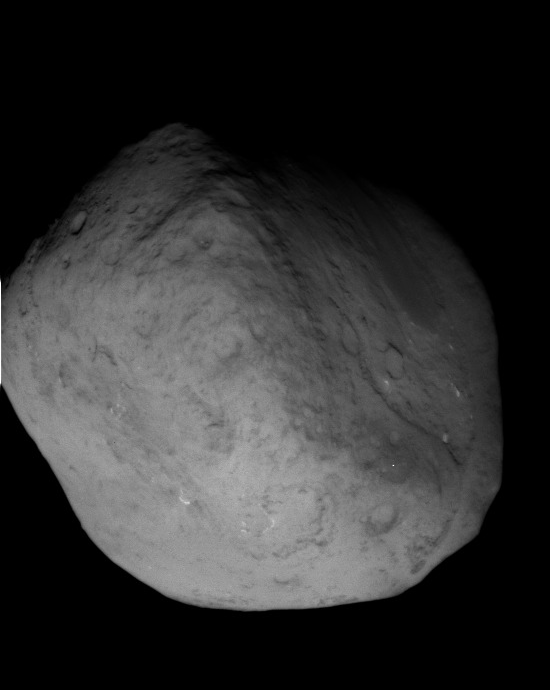
Worlds without end: In order to increase the odds of contacting extraterrestrial civilizations, astronomers have calculated the area in the sky where an alien-built Kepler could have seen the Earth transit the sun, thus increasing the chances that those alien-astronomers have discovered Earth and have tried to contact us.

“The key point of this strategy is that it confines the search area to a very small part of the sky. As a consequence, it might take us less than a human life span to find out whether or not there are extraterrestrial astronomers who have found the Earth. They may have detected Earth’s biogenic atmosphere and started to contact whoever is home,” explains René Heller from the MPS.

Not every star is equally well suited as a home of extraterrestrial life. The more massive a star, the shorter is its life span. Yet, a long stellar life is considered a prerequisite for the development of higher life forms. Therefore the researchers compiled a list of stars that are not only in the advantageous part of the sky but also offer good chances of hosting evolved forms of life, that is, intelligent life. The researchers compiled a list of 82 nearby Sun-like stars that satisfy their criteria. This catalogue can now serve as an immediate target list for SETI initiatives.

12 comments

LISA Pathfinder cubes in freefall

After a week of testing scientists have now completely released LISA Pathfinder’s two gold-platinum cubes so that they are floating free within the spacecraft.

With the cubes released, the spacecraft is now measuring the position of each cube and using thrusters to adjust its position and keep the cubes floating within it. This success has essentially proven that the technology works, though they now have to see if the technology can be maintained in orbit for a long enough period of time to be worthwhile. If so, this mission will be followed by multiple similar spacecraft, flying in formation while also measuring their positions precisely relative to each other. If a gravitational wave rolls past, they will detect it by the tiny differences of each cube’s position, kind of like beach balls floating on the ocean as a wave rolls past.

0 comments

India okays its own LIGO detector

The Indian government today approved construction of LIGO-India, using some duplicate components already available from the American LIGO gravitational wave detector.

“We have built an exact copy of that instrument that can be used in the LIGO-India Observatory,” says David Shoemaker, leader of the Advanced LIGO Project and director of the MIT LIGO Lab, “ensuring that the new detector can both quickly come up to speed and match the U.S. detector performance.” LIGO will provide Indian researchers with the components and training to build and run the new Advanced LIGO detector, which will then be operated by the Indian team.

What this new instrument will accomplish is to give astronomers more information when a gravitational wave rolls past the Earth. By having detectors half a world apart, they will be able to better triangulate the direction the wave came from, which in turn will help astronomers eventually pinpoint its source event.

6 comments

Hubble measures the rotation of an exoplanet

Worlds without end: Using the Hubble Space Telescope astronomers have measured the daily rotation of a super Jupiter exoplanet 170 light years away.

They estimate, based upon brightness variations attributed to clouds in the upper atmosphere, that the rotation rate is about 10 hours long. We should all recognize however the significant uncertainty of this number. Clouds change, as do weather conditions. The data only gives us a hint at what is going on here.

1 comment

Astronomers make first analysis of a SuperEarth’s atmosphere.

Worlds without end: Using the Hubble Space Telescopes astronomers have made the first chemical analysis of a SuperEarth’s atmosphere.

The planet, 55 Cancri e, is estimated to have a mass of eight Earths. Its atmosphere was found to have hydrogen, helium, and the molecule hydrogen cyanide. No water was detected.

Astronomers have used Hubble to detect the components of a number of exoplanets, but these have all been giant planets more like Jupiter. This is the first measurement of an exoplanet whose mass is small enough that it might be rocky, like Earth.

0 comments

TMT might abandon Hawaii

The consortium building the Thirty Meter Telescope (TMT) decided last week that, because of the delays forced on them by protesters in Hawaii, they are going to start identifying alternative locations.

I don’t think they have a choice. They want to start construction no later than 2018, which already involves a three year delay from their original schedule and significant additional costs. I doubt there is any chance that the permit process, which took years the first time they did it, can take anywhere close to that.

2 comments

TMT to repeat hearings before state

After years of doing everything the state of Hawaii demanded in order to get permission to build the Thirty Meter Telescope, a state judge today ordered that the whole process should start over again.

Since this order was instigated by the protesters, and that it appears the government favors those protesters, I expect that there is no chance TMT will ever get approval to build in Hawaii. Though the university consortium building the telescope says they want to go through the new process to get permission, they are wasting their time. It will never happen. The peasants with the pitchforks and burning torches, terrified of new knowledge while preferring the worship of a mountain, are in control in Hawaii.

1 comment

Hawaii’s governor expresses empty support for TMT

The coming dark age: In his state of the state address on Monday the Democratic governor of Hawaii, David Ige, expressed weak support for the construction of the Thirty Meter Telescope (TMT) on the summit of Mauna Kea.

“In its recent ruling, the Supreme Court did not say don’t do this project,” Governor Ige said. “What it did say was that the state didn’t do the right things in the approval process.  It told us we needed to do a better job of listening to people and giving them a real opportunity to be heard.

“I am committed to pursuing this project and I hope its sponsors will stay with us.  And this time, we will listen carefully to all, reflect seriously on what we have heard and, whatever we do in the end, we will do it the right way.”

These are empty words. Listening to the protesters means the telescope doesn’t get built at all. The protesters made it very clear during their protesters this past year that their’ objective is to stop the telescope, to return to the illiterate native culture that existed before the arrival of the white man and his western civilization. They also made it clear that they are bigots, who want all not-native Hawaiians removed from the island. By saying he wants to “do a better job of listening” to them means that Ige is willing to go along with some of their ideas.

Right now, I am very doubtful TMT will ever get built on Mauna Kea.

1 comment

Comet 67P/C-G’s active surface

Comet 67P/C-G's active surface

Cool image time! The Rosetta science team today released a spectacular image, taken by Rosetta’s high resolution camera, of the surface of Comet 67P/C-G. A cropped version is above and below the fold. A cropped version of the full image, focusing in on the smooth and active area dubbed Imhotep, is above.

This smooth dusty terrain, which covers about 0.8 sq km, is etched with curvilinear features stretching hundreds of metres and which have been found to change in appearance over time. Many large boulders are also seen scattered within the smooth terrain, including the boulder Cheops in the foreground. Smaller but more numerous boulders are associated with exposed cliff faces and are most likely the product of erosion. In some debris falls, detailed analysis has revealed the presence of water ice.

I have also included, below the fold, a second close-up crop from this same image, showing the layered cliffs to the left of Imhotep as well as several mysterious as-yet not understood round features at the cliff’s base.
» Read more

2 comments

Thirty Meter Telescope’s future in Hawaii in state’s hands

The coming dark age: The executive director of the Thirty Meter Telescope (TMT) on Friday made it clear that the future of the project in Hawaii is waiting on the state government.

Ed Stone, the project’s executive director, said telescope officials don’t have enough information to decide. “We’re waiting now for the instructions from the courts through the Department of Land and Natural Resources … which they can convey to us what this new process needs to be, what the schedule is and then we can take it into account in deciding what we do next,” he said. “So we can’t really do anything until we have an idea what it is the state’s requiring to see if that’s going to be consistent with what we can do.”

State officials are not holding up the process, state Attorney General Doug Chin said in a statement. “On Dec. 29, the Supreme Court remanded the case to the circuit court to further remand to the Board of Land and Natural Resources so that a contested case hearing can be conducted,” he said. “As of today, the circuit court has not remanded the case. BLNR cannot take action or provide instructions to anyone until this happens.”

The excuse of Hawaii’s attorney general above is garbage. If the governor pushed, he could get the court to move. They are instead allowing the case to languish, which once again tells us that the sympathies of this liberal Democratic Party government lie entirely on the side of the protesters.

1 comment

Most powerful supernovae ever

The uncertainty of science: Astronomers have discovered the most powerful supernovae ever detected.

This one, called ASASSN-15lh, is about 3.8 billion light years away, 200 times more powerful than most supernovas, and twice as bright as the previous record holder. It shines 20 times brighter than the combined output of the Milky Way’s 100 billion stars, and in the last six months, it has spewed as much energy as the sun would in 10 lifetimes, says Krzysztof Stanek of the Ohio State University, co-principal investigator of the All Sky Automated Survey for SuperNovae (ASAS-SN) network that spotted the explosion. “This is really on steroids, and then some,” he says. “If it was in our own galaxy, it would shine brighter than the full moon; there would be no night, and it would be easily seen during the day.”

At the moment astronomers don’t really have an theory to explain how the supernovae could produce that much energy.

0 comments

Was the Wow! signal from two comets?

One of the most baffling radio astronomical detections, dubbed the “Wow! signal” and that some believe could have been caused by an extraterrestrial transmission, is now theorized to have been caused by two comets, not an alien civilization.

Antonio Paris, a professor of astronomy at St Petersburg College in Florida, thinks the signal might have come from one or more passing comets. He points the finger at two suspects, called 266P/Christensen and P/2008 Y2 (Gibbs). “I came across the idea when I was in my car driving and wondered if a planetary body, moving fast enough, could be the source,” he says.

Comets release a lot of hydrogen as they swing around the sun. This happens because ultraviolet light breaks up their frozen water, creating a cloud of the gas extending millions of kilometres out from the comet itself. If the comets were passing in front of the Big Ear in 1977, they would have generated an apparently short-lived signal, as the telescope (now dismantled) had a fixed field of view. Searching that same area – as subsequent radio telescopes did – wouldn’t show anything. Tracing the comets’ positions back in time, Paris says that the possible origin for the Wow! signal falls right between where they would have been.

Neither comet was known in 1977; they were both discovered in the last decade, which would mean nobody would have thought to search for them.

6 comments
1 106 107 108 109 110 188