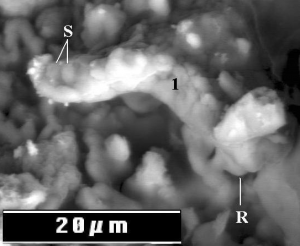
The Russians now say that they have not found any previously unknown life forms in the sample from Lake Vostok.

The uncertainty of science: The Russians now say that they have not found any previously unknown life forms in the sample from Lake Vostok.

Sergei Bulat of the genetics laboratory at the Saint Petersburg Institute of Nuclear Physics had said Thursday that samples obtained from the underground Lake Vostok in May 2012 contained a bacteria bearing no resemblance to existing types. But the head of the genetics laboratory at the same institute said on Saturday that the strange life forms were in fact nothing but contaminants.

It appears that the earlier announcement was either premature, or inappropriate.

0 comments

The first analysis of the water from Lake Vostok, buried deep under the Antarctic icecap, has shown no evidence of life.

The first analysis of the water from Lake Vostok, buried deep under the Antarctic icecap, has shown no evidence of life.

Bulat and his colleagues counted the microbes present in the ice sample and checked their genetic makeup to figure out the phylotypes. They counted fewer than 10 microbes/ml β€” about the same magnitude they would expect to find in the background in their clean room. And three of the four phylotypes they identified matched contaminants from the drilling oil, with the fourth unknown but also most likely from the lubricant.

The scientists note that this is a preliminary result. Further drilling for new deeper samples will take place in 2013.

0 comments

Astronaut Sunita Williams completed first simulated triathlon in space this past weekend on ISS.

Astronaut Sunita Williams completed the first simulated triathlon in space this past weekend on ISS.

After “swimming” half a mile (0.8 km), biking 18 miles (29 km), and running 4 miles (6.4 km), Williams finished with a time of one hour, 48 minutes and 33 seconds, she reported. The space station has its own treadmill and stationary bike, which use harnesses and straps in place of gravity to keep astronauts from floating away. To simulate the swimming portion of the race, Williams used what’s called the Advanced Resistive Exercise Device (ARED) to do weightlifting and resistance exercises that approximate swimming in microgravity.

0 comments

A new and very large study now suggests that — even though no one really knows why — acupuncture might actually be effective.

The uncertainty of science: A new and very large study now suggests that — even though no one really knows why — acupuncture might actually be effective.

The key mystery here is the lack of any explanation for why acupuncture seems to work. And without that explanation, a large number of doctors will justifiable still refuse to use it as a course of treatment.

0 comments

Mars’ clay minerals might have been formed by volcanic processes, not standing liquid water as generally believed.

The uncertainty of science: Mars’ clay minerals might have been formed by volcanic processes, not standing liquid water as generally believed, according to a new study.

Data collected by orbiting spacecraft show Mars’ clay minerals may instead trace their origin to water-rich volcanic magma, similar to how clays formed on the Mururoa atoll in French Polynesia and in the Parana basin in Brazil. That process doesn’t need standing bodies of liquid water. “The infrared spectra we got in the lab (on Mururoa clays) using a reflected beam are astonishingly similar to that obtained on Mars by the orbiters,” lead researcher Alain Meunier, with the University of Poitiers in France, wrote in an email to Discovery News. The team also points out that some of the Mars meteorites recovered on Earth do not have a chemistry history that supports standing liquid water.

If correct, this alternative explanation would mean that Mars was not that wet in the past, and would have been far less likely of ever having sustained life.

0 comments
1 11 12 13 14 15 25