How 500 horses get to Mackinac Island each spring

An evening pause: As noted at this website:

The island was America’s second national park (after Yellowstone National Park) for 20 years and has been the state of Michigan’s first state park. The island has had a ban on automobiles since the earliest days and still has the only highway in the nation where cars are banned.

Apparently, during the winter the horses are taken to the mainland for their benefit, and then returned in the spring in preparation for the summer tourism season. As this is the Friday of Memorial Day weekend, the start of the summer season, this seems most appropriate for tonight.

Hat tip Wayne DeVette.

6 comments

Northrop Grumman wins $45.6 million contract to launch Space Force weather smallsat

Northrop Grumman has won $45.6 million contract from the Space Force to launch a weather smallsat, using its Minotaur-4 rocket that was formerly a military ICBM.

The weather satellite, built by General Atomics, is part of an effort by the military to stop building its big expensive and continuously delayed weather satellites and instead buy the services from the private sector. This three year demonstration mission will prove whether General Atomics’ weather satellite can do the job. The Space Force has also contracted with Orion Space Systems to test its own weather satellite in orbit.

For Northrop Grumman, this contract helps keep its launch business alive while it awaits a new American engine for its Antares rocket, replacing the Russian engines it has previously depended on.

3 comments

Satellite fuel company Orbit Fab signs Impulse to build part of its fuel depot

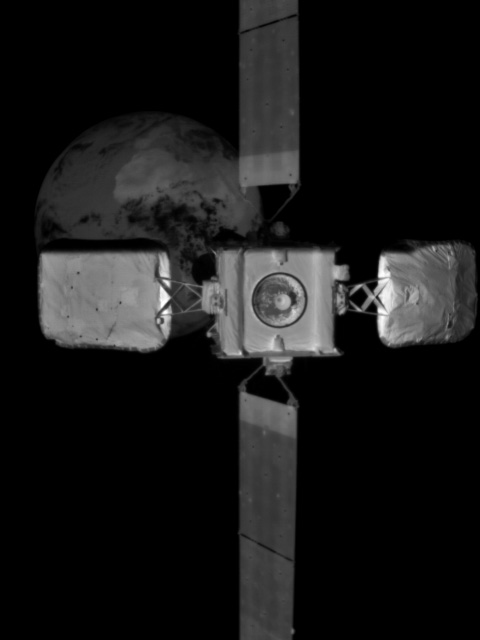
The satellite fuel company Orbit Fab, which is offering a way for satellites to get refueled on a regular basis based on a firm price schedule, has selected the orbital tug company Impulse to build part of its fuel depot in advance of a demonstration refueling mission for the Space Force.

The Space Force last year awarded Orion Space Solutions a $50 million contract for the Tetra-5 experiment. Three satellites will be stationed in geostationary orbit (GEO) where Impulse Space’s Mira orbital service vehicle will serve as a hosting platform for Orbit Fab’s fuel depot. “This demonstration will pave the way for future commercial orbital refueling services, as well as additional collaborative opportunities and missions between Orbit Fab and Impulse Space,” said Barry Matsumori, chief operating officer of Impulse Space.

The Tetra-5 satellites and the fuel depot will use Orbit Fab’s refueling port known as RAFTI, or Rapidly Attachable Fuel Transfer Interface. Impulse Space will provide hosting services such as power, communications, attitude control and propulsion for the fuel depot. The Tetra spacecraft will rendezvous and dock with the depot.

If successful, this mission will prove the viability of this refueling system, and encourage other satellite manufacturers to include RAFTI on their satellites.

0 comments

NASA’s corrupt safety panel doubts Starliner is ready for its first manned flight in July

The head of NASA’s safety panel — which over the years has consistently missed the big safety issues while whining about things that did not matter — expressed strong doubts yesterday on whether Boeing’s Starliner manned capsule is ready for its first manned flight in July.

Speaking at a May 25 public meeting of the Aerospace Safety Advisory Panel, Patricia Sanders, chair of the committee, expressed skepticism that NASA and Boeing will be able to close known issues with Starliner in time for a launch currently scheduled for as soon as July 21.

“There remains a long line of NASA processes still ahead to determine launch readiness” for the Crew Flight Test (CFT) mission, the first crewed flight of the spacecraft with two NASA astronauts on board. “That should not be flown until safety risks can either be mitigated or accepted, eyes wide open, with an appropriately compelling technical rationale.”

This panel hasn’t the faintest idea what it is talking about, and should be ignored. It appears that NASA and Boeing are presently reviewing the capsule’s parachute system. Sanders however raised other issues which actually appear more designed to simply slow or even prevent the capsule’s launch.

The panel did the same thing during the development of SpaceX’s manned Dragon capsule, making irrelevant claims about paperwork and the safety of the company’s Falcon 9 fueling procedures that were ridiculous. Meanwhile, it has ignored much more fundamental numerous safety issues with NASA’s SLS rocket and Orion capsule, such as the agency’s plan to fly it manned using its capsule environmental system for the first time.

It is very possible that there remain serious safety issues with Starliner. I simply note that I would not rely on NASA’s safety panel to provide me an honest or educated appraisal of the situation.

4 comments

Vulcan launchpad static fire engine test aborted

ULA engineers were forced yesterday to abort their first attempt to complete a launchpad static fire engine test of the first stage of the company’s new Vulcan rocket due to an issue with “the booster’s ignition system.”

[D]uring the countdown at Launch Complex 41 Thursday afternoon, ULA teams “observed a delayed response from the booster engine ignition system,” the company said in a statement. The issue meant that countdown procedures ahead of the ignition of two Blue Origin-built BE-4 engines at the business end of the company’s new rocket had to be halted.

The roughly 200-foot rocket will have to be rolled back into ULA’s nearly 300-foot protective Vertical Integration Facility for technicians to assess the booster’s ignition system.

It will obviously be necessary to attempt this static fire test again before attaching the rocket’s solid-fueled side boosters, which suggests the launch’s tentative target date in June is likely threatened.

These kinds of issues are not unexpected prior to a rocket’s first launch. ULA however is now paying for the three-plus year delay imposed on it by Blue Origin’s delays in delivering the BE-4 engines used in that first stage. These pre-launch tests had been planned for 2020, not 2023. Let us hope that ULA engineers don’t rush these tests now, because of those Blue Origin delays.

3 comments

Ispace publishes results of its investigation into Hakuto-R1 lunar landing failure

Hakuto-R1 impact site, before and after
Before and after images of Hakuto-RI, taken by Lunar Reconnaissance
Orbiter (LRO). Click for original blink image.

Ispace today published the results of its investigation into the failure of its Hakuto-R1 lunar landed to touch down on the moon successfully, stating that the cause was a software error which thought the spacecraft was closer to the ground than it was.

At the end of the planned landing sequence, it approached the lunar surface at a speed of less than 1 m/s. The operation was confirmed to have been in accordance with expectations until about 1:43 a.m., which was the scheduled landing time.

During the period of descent, an unexpected behavior occurred with the lander’s altitude measurement. While the lander estimated its own altitude to be zero, or on the lunar surface, it was later determined to be at an altitude of approximately 5 kms above the lunar surface. After reaching the scheduled landing time, the lander continued to descend at a low speed until the propulsion system ran out of fuel. At that time, the controlled descent of the lander ceased, and it is believed to have free-fallen to the Moon’s surface.

The company believes the software got confused when the spacecraft crossed over the rim of Atlas Crater.

The resulting crash produced the debris seen by LRO to the right.

1 comment

Virgin Galactic completes first manned suborbital flight in two years

Virgin Galactic yesterday completed its first manned suborbital flight since July 2021, carrying six employees to about fifty miles altitude for about five minutes.

Virgin Galactic’s “mothership” aircraft, VMS Eve, took off from the runway at Spaceport America in New Mexico at 11:15 a.m. Eastern. The takeoff occurred more than an hour behind a schedule provided by the company the day before, but the company did not disclose the reason for the delay.

Virgin Galactic released VSS Unity at 12:23 p.m. Eastern. The spaceplane appeared to perform a nominal burn of its hybrid rocket engine before descending to a runway landing back at Spaceport America nearly 15 minutes later. Virgin Galactic said the vehicle reached a peak altitude of 87.2 kilometers — above the 50-mile altitude used by U.S. government agencies for awarding astronaut wings, but below the 100-kilometer Kármán line — and top speed of Mach 2.94.

The company did not live stream the event, in sharp contrast to the heavy coverage it always provided when Richard Branson was in charge. It now says it soon begin regularly passenger flights.

0 comments

Rocket Lab’s Electron rocket lifts two more NASA hurricane monitoring satellites into orbit

Rocket Lab today successfully used its Electron rocket to place the last two of NASA’s four-satellite Tropics hurricane monitoring constellation into orbit.

The first launch occurred about two and a half weeks ago, on May 7, 2023. Both launches were originally contracted to Astra, but when that company discontinued operations of its Rocket-3 rocket, NASA turned to Rocket Lab.

The leaders in the 2023 launch race:

34 SpaceX
19 China
7 Russia
5 Rocket Lab

The U.S. now leads China 39 to 19 in the national rankings, and the entire world combined 39 to 33. SpaceX by itself now trails the entire world, including American companies, 34 to 38.

Note that at this moment SpaceX and Rocket Lab are the only American companies that have launched. The established rocket companies, ULA and Northrop Grumman, have launches planned but none as yet, while two American companies have ceased operations, Astra (supposedly temporarily) and Virgin Orbit (permanently).

American freedom resulted in the competition in rocketry which has lowered costs but taken business from the established companies. Freedom has also caused the death of two companies, because the success that freedom brings also carries risks. Failure can happen, but the sum total of achievement is always greater than when competition is squelched.

3 comments

Nova Scotia spaceport gets another launch contract

Maritime Launch Services, which is building a spaceport in Nova Scotia and hopes to offer its own rocket services to put satellites in orbit, has obtained what it claims could be a $1 billion contract with an unnamed European orbital tug company.

The only two European orbital tug companies that closely fit the description provided by Maritime officials are D-Orbit or Exolaunch. The latter had had a contract with Virgin Orbit to launch as many as 20 of its satellites. Coming less than one day after Virgin Orbit’s assets were sold off, this announcement suggests Exolaunch has replaced Virgin Orbit with this deal.

Unlike other spaceports, Maritime isn’t merely providing a launch site for rocket companies. Instead the company will also launch smallsats itself, using either Ukraine’s Cyclone-4M rocket or a British-made startup rocket dubbed Skyrora.

0 comments

Relativity and Impulse are now targeting ’26 launch window for 1st private mission to Mars

According to officials from the two companies, Relativity and Impulse have now delayed the launch date of their joint private unmanned lander to Mars from the ’24 launch window to the ’26 launch window.

The companies have also shared few technical details about the lander, but noted they plan to leverage designs and technologies developed for NASA’s InSight Mars lander, such as its heat shield. “We’re not trying to reinvent the wheel,” Brost said. “Doing a clean-sheet design of a lander is an insane, monumental engineering feat.”

Relativity is tasked with launching the probe, using its Terran-R rocket, which is under development and has its first launch scheduled in 2026. Impulse, which is building the lander, is at this point simply trying to develop its first small rocket engine. It appears therefore that this proposed Mars lander is designed mostly to make NASA willing to consider it when it starts hiring private companies to land probes on Mars. Its chances of launching in ’26 is quite small.

0 comments

Spaceport startup launches small amateur rockets from ship

A company dubbed The Spaceport Company on May 22, 2023 launched two small amateur rockets from a ship in the Gulf of Mexico in order to demonstrate the logistics of such launches in advance of developing a floating launchpad.

The Spaceport Company, based in northern Virginia, launched on Monday 4-inch and 6-inch diameter rockets from a vessel about 30 miles south of Gulfport, Miss. The one-year-old company wanted to demonstrate its operations and logistics, which included getting approval from federal regulators, before developing larger floating platforms that would send satellites into orbit.

These offshore launches, as small as they were, were the first such ocean launches in U.S. history.

It appears that the company wants to offer an alternative launch option that might avoid the problems created by regulators in the UK that destroyed Virgin Orbit.

7 comments

Launch of Sierra Space’s Dream Chaser now scheduled for six month window opening in August

After years of delays, Sierra Space’s first Dream Chaser reusable mini-shuttle, dubbed Tenacity, is now scheduled for launch during the six month mission to ISS of a crew scheduled for launch in August.

Dream Chaser’s first flight on a United Launch Alliance Atlas V rocket is expected while Crew-7 is aboard and two of those crew members, NASA’s Jasmin Moghbeli and JAXA’s Satoshi Furukawa, recently trained on it. JAXA and NASA formally announced Furukawa’s assignment to Crew-7 today. Furukawa, Moghbeli, ESA’s Andreas Mogensen and a Russian cosmonaut whose assignment has not been officially announced yet, are expected to launch in mid-August for a 6-month stay on the ISS.

The exact launch date within that mission has not yet been determined. It will largely depend scheduling, fitting it in with other launches to the station, assuming Tenacity’s construction is finished in time. That construction began in 2015, and has taken three to four years longer than first announced.

1 comment
1 185 186 187 188 189 676