Supreme Court unanimously rules the federal government’s regulatory overuse of environmental impact statements is wrong

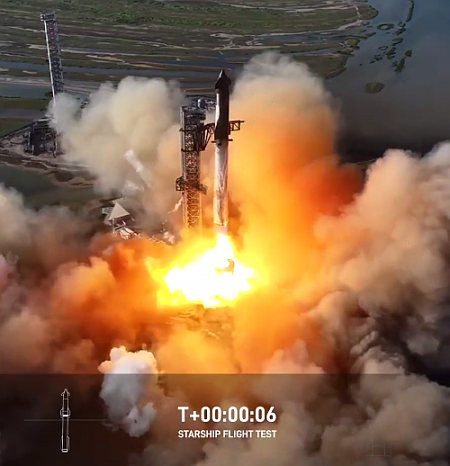
In a ruling that will have wide-ranging impacts across multiple industries, including rocketry, the Supreme Court yesterday ruled 8-0 that the mission creep expansion of federal government’s regulatory use of environmental impact statements (EIS) to hinder all new construction projects is incorrect and must stop.

The case involved a planned railroad in Utah, that had gotten all its permits for construction, including approval of its environmental impact statement, but was then stymied by lawsuits by political activist groups that claimed the impact statement, issued under the National Environmental Policy Act (NEPA), had not considered the impact of the industries the railroads would serve, including impacts far from the railroad’s location itself.

This is a perfect example of the broad expansion of NEPA that has been imposed in the last two decades by federal bureaucracy working hand-in-glove with these leftist political groups.

The Supreme Court, including all of the Democratic Party appointees, said enough!

In its majority opinion, authored by Justice Brett Kavanaugh, the Court clarified that under NEPA the STB “did not need to evaluate potential environmental impacts of the separate upstream and downstream projects.” The Court concluded that the “proper judicial approach for NEPA cases is straightforward: Courts should review an agency’s EIS to check that it addresses the environmental effects of the project at hand. The EIS need not address the effects of separate projects.”

This statement “is particularly significant for infrastructure projects, such as pipelines or transmission lines, and should help reduce NEPA’s burdens (at least at the margins),” wrote Jonathan Adler, a law professor at the Case Western Reserve University School of Law, in The Volokh Conspiracy. “The opinion will also likely hamper any future efforts, perhaps by Democratic administrations, to expand or restore more fulsome (and burdensome) NEPA requirements.”

The article notes (and confirms) what I have been writing now for the past five years in connection with the FAA’s demand that rocket companies require new impact statements every time they revise their operations, even when those changes are relatively minor.

This point could reduce one of the largest delays caused by NEPA: litigation. Since its passage in 1969, NEPA has been weaponized by environmental groups to stunt disfavored projects—which has disproportionately impacted clean energy projects. On average, these challenges delay a permitted project’s start time by 4.2 years, according to The Breakthrough Institute.

The increased threat of litigation has forced federal agencies to better cover their bases, leading to longer and more expensive environmental reviews. With courts deferring more to agency decisions, litigation could be settled more quickly.

This ruling is an excellent move in the right direction, but no one should assume it will be followed honestly by the next Democrat who sits in the White House. Just as Biden expanded red tape by simple forcing the FAA to slow-walk its launch licensing process, future presidents could do the same.

Nor should be expect the lawsuits by these luddite leftists to cease. They will find other legal challenges and will push those instead.

The real solution is to reduce the bureaucracy’s size entirely, so there won’t be paper-pushers for these petty dictators to utilize for their authoritarian purposes. Eliminating or simplifying these environmental regulations would help as well, giving the activists fewer handles on which to hang their lawsuits.

7 comments

SES cleared by the United Kingdom to buy Intelsat

The long-established Luxembour satellite company SES has now gotten regulatory approval from the United Kingdom to buy another long-established satellite company, Intelsat, with the purchase price €2.8 billion.

SES’s €2.8 billion acquisition of Intelsat was cleared by the UK’s competition regulator, in a move that will create a satellite giant to better compete with Elon Musk’s Starlink. The Competition and Markets Authority decided on the basis of “the information currently available to it,” to not subject the deal to an in-depth probe, it said in a statement on Friday.

The deal still needs to be approved by the European Union, which has set June 10th as the deadline for a decision.

This merger is because these older satellite companies are presently losing in competition with the many new low-orbit satellite constellations by new companies, led mostly by Starlink. By merging they hope to compete better.

1 comment

SpaceX launches GPS satellite for military

SpaceX this morning successfully placed a military GPS satellite into orbit, its Falcon 9 rocket lifting off from Cape Canaveral in Florida.

The first stage completed its fourth flight, landing on a drone ship in the Atlantic. As of posting the satellite has not yet been deployed.

This was the second military GPS launch that the Space Force has taken from ULA and its Vulcan rocket and given to SpaceX instead. Even though Vulcan was certified in late March by the military for these kinds of military launches, delays in getting Vulcan operational forced the Space Force to find another more reliable launch provider. Even now, two months after that certification, ULA has still not announced a launch schedule for this rocket. The company in December 2024 had predicted it would launch 20 times in 2025, with 16 of those launches being by Vulcan. The year is almost half over now and ULA has only launched once, using an Atlas 5 rocket.

The leaders in the 2025 launch race:

66 SpaceX
32 China
6 Rocket Lab
6 Russia

SpaceX now leads the rest of the world in successful launches, 66 to 51.

0 comments

SpaceX: We are targeting 170 launches in 2025

According to a statement by a SpaceX official during a telephone press conference on May 28, 2025, the company is now hoping to complete 170 total launches in 2025.

“We’re targeting 170 launches by the end of the year,” Anne Mason, director of national security space launch at SpaceX, said during a call with reporters on Wednesday (May 28).

…”I always find it amazing that this cadence has become somewhat normal,” Mason added during Wednesday’s call, which served to preview SpaceX’s planned Friday (May 30) launch of the GPS III SV08 satellite for the U.S. Space Force. “But if we look back just five years ago, in 2020 when we launched roughly 25 times, which is still a healthy rate at twice a month, and now launching on average every two to three days — I think this demonstrates how Falcon’s reusability and reliability, plus the hard work and dedication of the SpaceX team, has been critical to supporting assured access to space,” she said.

Last year SpaceX set a record of 137 successful orbital launches, a number that also exceeded what the entire world had accomplished yearly for most of the space age since Sputnik in 1957. This new goal however appears to be a reduction from its earlier hopes. Near the start of the year SpaceX officials had predicted it would complete 180 launches.

There is also the possibility that Mason above was only referring to Falcon 9 and Falcon Heavy launches, and not counting the test flights of Starship and Superheavy.

Either way, SpaceX continues to prove that freedom and private enterprise can do far more than government, and do it faster and cheaper as well.

2 comments

Northrop Grumman invests $50 million in Firefly and new rocket

Northrop Grumman and the rocket startup Firefly announced yesterday that the former has invested $50 million in the latter in order to develop a fully new rocket, dubbed Eclipse, with capabilities allowing it to compete with SpaceX for customers.

“Firefly is incredibly grateful for Northrop Grumman’s investment that further solidifies our first-of-its-kind partnership to build the first stage of Antares 330 and jointly develop Eclipse,” said Jason Kim, CEO of Firefly Aerospace. “…With a 16 metric ton to orbit capability, Eclipse is a sweet spot for programs like NSSL Lane 1 and a natural fit to launch proliferated constellations in LEO, MEO, GEO, and TLI.”

Built upon Northrop Grumman’s Antares and Firefly’s Alpha rocket, Eclipse offers a significant leap in power, performance, production cadence, and payload capacity. The launch vehicle retains the flight-proven avionics from the Antares program with additional upgrades, including a larger 5.4 meter payload fairing. Eclipse also utilizes the same first stage Firefly is developing for Antares 330 and retains scaled-up versions of Alpha’s propulsion systems and carbon composite structures, allowing the team to rapidly build and test Eclipse with significant production efficiencies and economies of scale.

The companies say that because of its reliance on already proven launch rockets, they hope Eclipse’s first launch will take place in 2026 from Wallops Island.

As I noted yesterday, the demand for launch services — especially for heavier payloads — presently exceeds the supply, as already established rocket companies ULA and Blue Origin have so far failed to deliver as promised. Rocket Lab is developing its medium-lift Neutron expressly to grab this market. It now appears Northrop Grumman wants a share as well, and is partnering with Firefly to get it.

If all goes as planned this partnership will soon have two rockets to offer customers, the Antares 330 and Eclipse.

2 comments

Elon Musk’s presentation “The Road to Making Life Multiplanetary”

The Musk game plan for Mars exploration over the next few years
The Musk game plan for Mars exploration over the next few years.

It appears Elon Musk finally gave his public presentation to SpaceX employees today, entitled “The Road to Making Life Multiplanetary”, and had it posted on X.

I have embedded that presentation below.

After reviewing the present development program for Starship/Superheavy (without mentioning anything about this week’s flight), Musk then outlined the game plan for the the next few years, as shown in the graphic above. If all goes as planned (not to be expected), the first Starships will head to Mars in about eighteen months, at the next launch window near the end of 2026. These flights will be unmanned, and will require that by then SpaceX will have also developed orbital refueling capability.

Musk hopes the first manned missions will take place at the next launch window in 2028-29, with the number of ships increased from 5 to 20. Later windows will see 300 and then 500 ships launched. For those flights a lot of work will need to be done to make Starships function as interplanetary spaceships, something it appears SpaceX and Musk have not yet devoted much energy to.

As always, Musk’s target goals are ambitious and not likely to be met. But as always, his targets are not unreasonable, which means SpaceX will likely eventually get all this done but late by only one or several launch windows.

Musk also noted that this entire program is presently being funded by Starlink revenues. The government for SpaceX and Musk’s space exploration plans is largely now irrelevant. This fact is possibly the most historically significant revelation in his presentation.

I strongly recommend you watch his whole speech, if only to enjoy the “Wow!” factor.

The future is going to be exciting for sure.

Hat tip to reader Gary.
» Read more

23 comments

South Korea rocket startup launches small prototype rocket

Unastella rocket at launch

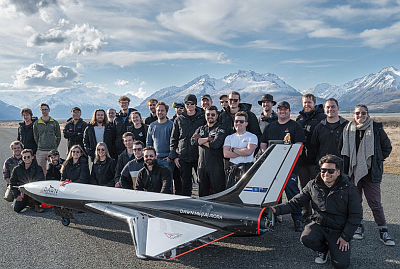
A South Korea rocket startup dubbed Unastella on May 28, 2025 successfully launched a small prototype suborbital rocket from its own launch site near the country’s southern coast.

UNA EXPRESS-I is 9.45 meters long and has a total weight of 2 tons. It is a small launch vehicle that uses kerosene (jet fuel) and liquid oxygen as fuel, with a thrust of 5 tons. The vehicle successfully completed its flight to the target distance of 10 kilometers and fell into the maritime safety zone set by Goheung County, the company stated. Park Jae-hong, the CEO of Unastella, noted, “For the first launch, we lowered the altitude for safety and extended the reach.”

This is South Korea’s second rocket startup that has launched a small test prototype, the first being Innospace which launched its test rocket from Brazil in 2023 and hopes to do an orbital launch before the end of the year.

It appears that South Korea is shifting successfully to the capitalism model. Back in 2023 it was trying to develop its government-built Nuri rocket, but that development seems to have stalled. Since then its newly formed space agency has established policies encouraging private space commercialization, which has apparently resulted in these two new rocket companies.

0 comments

SpaceX launches more Starlink satellites

The beat goes on! SpaceX this morning successfully placed another 27 Starlink satellites into orbit (including 13 with cell-to-satellite capabilities), its Falcon 9 rocket lifting off from the Kennedy Space Center in Florida.

The first stage completed its nineteenth flight, landing on a drone ship in the Atlantic.

The leaders in the 2025 launch race:

65 SpaceX
30 China (with two launches scheduled later today)
6 Rocket Lab (with one launch scheduled for today SCRUBBED)
6 Russia

SpaceX now leads the rest of the world in successful launches, 65 to 49.

0 comments

SpaceX launches Starship/Superheavy on ninth test flight, but experiences issues in orbit

Starship in orbit before losing its attitude control

SpaceX today was able to successfully launch Starship and Superheavy on its ninth test flight, lifting off from SpaceX’s Starbase spaceport at Boca Chica.

The Superheavy booster completed its second flight, with one of its Raptor engines actually flying for the third time. Rather than recapture it with the launchpad chopsticks, engineers instead decided to push its re-entry capabilities to their limit. The booster operated successfully until it was to make its landing burn over the Gulf of Mexico, but when the engines ignited all telemetry was lost. Apparently that hard re-entry path was finally too much for the booster.

Starship reached orbit and functioned successfully for the first twenty minutes or so. When engineers attempted a test deployment of some dummy Starlink satellites, the payload door would not open properly. The engineers then closed the door and canceled the deployment.

Subsequently leaks inside the spacecraft with its attitude thrusters caused the attitude system to shut down and Starship started to spin in orbit. At that point the engineers cancelled the Raptor engine relight burn. The spacecraft then descended over the Indian Ocean as planned, but in an uncontrolled manner. Mission control then vented its fuel to reduce its weight and explosive condition. It essentially broke up over the ocean, with data was gathered on the thermal system until all telemetry was lost.

Though overall this was a much more successful flight than the previous two, both of which failed just before or as Starship reached orbit, the test flight once again was unable to do any of its objectives in orbit. It did no deployment test, no orbital Raptor engine burn test, and no the re-entry tests of Starship’s thermal protection system. Obviously the engineers gathered a great deal of data during the flight, but far less than hoped for.

SpaceX has a lot of Superheavy and Starship prototypes sitting in the wings. I expect it will attempt its next flight test, the tenth, relatively quickly, by July at the very latest. I also do not expect the FAA to stand in the way. It will once again accept SpaceX’s investigative conclusions instantly and issue a launch license, when SpaceX stays it is ready to launch.

As Starship reached orbit as planned, I am counting this as a successfully launch. The leaders in the 2025 launch race:

64 SpaceX
30 China
6 Rocket Lab
6 Russia

SpaceX now leads the rest of the world in successful launches, 64 to 49.

33 comments

SpaceX launches 24 Starlink satellites

SpaceX today successfully placed another 24 Starlink satellites into orbit, its Falcon 9 rocket lifting off from Vandenberg Space Force base in California.

The first stage completed its thirteenth flight, landing on a drone ship in the Pacific. At least, it appeared so, though there were problems this time with the live stream, which cut off just before touchdown.

The leaders in the 2025 launch race:

63 SpaceX
30 China
6 Rocket Lab
6 Russia

SpaceX now leads the rest of the world in successful launches, 63 to 49.

0 comments

Live stream of Elon Musk’s speech to SpaceX employees today

FINAL UPDATE: It appears his talk has been called off, for the present. I suspect he wants a better idea what happened on today’s flight before speaking.

UPDATE: It appears Musk has rescheduled his speech for 6 pm (Central) tonight, after the launch of the ninth test flight of Starship/Superheavy. The embedded live stream below is for this rescheduled broadcast.

I have embedded below the Space Affairs live stream of Elon Musk’s speech that he plans to give to his SpaceX employees today at 10 am (Pacific) today. Musk has entitled it “The road to making life interplanetary.” He has already indicated that he will outline in more detail SpaceX’s program for getting Starship/Superheavy operational, including the likelihood of test flights to Mars in the near future.
» Read more

6 comments

Cargo Dragon splashes down and is recovered successfully

A SpaceX cargo Dragon capsule was recovered successfully earlier today after it splashed down off the coast of California.

The spacecraft carried back to Earth about 6,700 pounds of supplies and scientific experiments designed to take advantage of the space station’s microgravity environment after undocking at 12:05 p.m., May 23, from the zenith port of the space station’s Harmony module.

Some of the scientific hardware and samples Dragon will return to Earth include MISSE-20 (Multipurpose International Space Station Experiment), which exposed various materials to space, including radiation shielding and detection materials, solar sails and reflective coatings, ceramic composites for reentry spacecraft studies, and resins for potential use in heat shields. Samples were retrieved on the exterior of the station and can improve knowledge of how these materials respond to ultraviolet radiation, atomic oxygen, charged particles, thermal cycling, and other factors.

Other cargo returned included a robot hand that tested its grasping and handling capabilities in weightlessness, as well as other experiments.

The capsule itself spent three months in orbit after launching at the end of April.

12 comments
1 65 66 67 68 69 677