Local county now in full support of SpaceX land swap

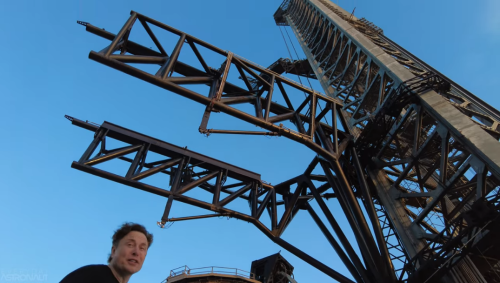
According to a local Cameron county judge, who had previously expressed opposition, county officials including himself are now in full support of the proposed land swap, giving SpaceX 43 acres of Boca Chica State Park land in exchange for 477 acres at a national wildlife area about 10 miles away.

A special meeting of the Texas Parks and Wildlife Commission to vote on this land swap is now scheduled for March 5, 2024 in Austin, and it appears it is ready to approve. That meeting however should be entertaining, because it also appears that the small minority of leftist activists organizations in the area that oppose everything SpaceX is achieving are organizing carpools to attend the meeting. Expect them to perform the typical shennigans of the left, screaming and shouting and attempting to take over the venue to prevent the vote.

What these activists of course refuse to recognize, or simply don’t care, is that the change of opinion by local officials is because the local community and in fact the majority of Texans support what SpaceX is doing. It has revitalized the Brownsville area, bringing billions of new investment capital and tens of thousands of new jobs to the region. It has also demonstrated repeatedly it is being a good steward to the environment at Boca Chica, and will do much as a launch site to help preserve the coastal wildlife there, just as NASA has done at Cape Canaveral for three quarters of a century.

17 comments

SpaceX and China complete launches

Two successful launches today, first from China and then from SpaceX.

First, China launched what it called a”high-orbit internet services” satellite into orbit, its Long March 3B rocket lifting off from its Xichang spaceport in southwest China. No word where the rocket’s four strap-on boosters or core stage crashed in China.

Then SpaceX launched another 23 Starlink satellites into orbit, its Falcon 9 rocket lifting off from Cape Canaveral. The first stage successfully completed its 11th flight, landing on a drone ship in the Atlantic.

The leaders in the 2024 launch race:

19 SpaceX
10 China
3 Russia

American private enterprise still leads the entire world combined 22 to 19 in successful launches, while SpaceX remains tied 19-19 with the rest of the world, excluding American companies.

0 comments

Marilyn Monroe – Happy Birthday/Thanks For The Memories

An evening pause: Another bit of cultural history from the 1960s. From the Youtube webpage:

Marilyn footage singing to JFK on his gala birthday bash on May 19th 1962. The running joke for the evening, as planned, was that Marilyn was late! it was planned that way for the event. Everything we see Marilyn do on stage was rehearsed right down to her arm movements and jumping up and down at the end of the song as we can see in the rehearsal photos before the event. so Marilyn did this spot on as planned.

Sadly, she would be dead by August, and Kennedy by November of the next year.

Hat tip Judd Clark.

9 comments

“Thar’s gold in them there asteroids!”

Actually, the “gold” in the quote refers less to the actual element and more to the potential wealth lurking within the resources available in many asteroids in space. I base this optimistic assessment, which is looking at the very long term and not the near future, based on the following chart, just published in a new white paper report [pdf] dubbed “Asteroid Mining: Key to Large-Scale Space Migration or Rocky Road?” The chart itself comes from this October 2023 research paper.

The estimated resources in the metallic asteroids, compared to Earth

Except for gold, the estimated abundances in metallic asteroids of all these important minerals exceeds the entire reserves contained on Earth, by many times. And even though the asteroid reserves of gold do not exceed that of Earth, that in-space gold is likely far easier to access and mine. As the report notes:
» Read more

24 comments

Rocket Lab unveils a family of four different service modules for all kinds of satellites

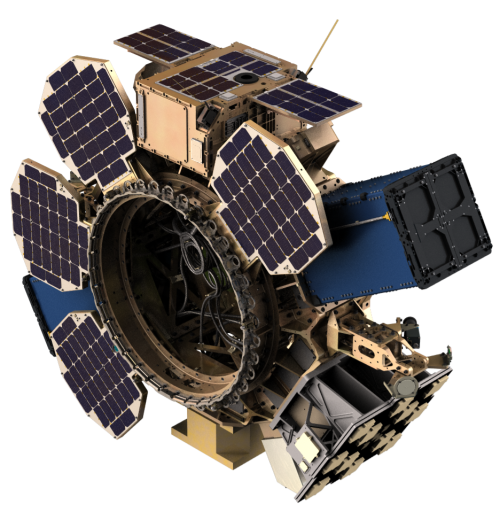
Rocket Lab continues to expand its product line beyond just rockets, today unveiling a family of four different types of service modules, designed to provide maneuvering, communications, and power to satellites.

The four service modules, dubbed Photon, Lightning, Pioneer, and Explorer, are each designed to serve different types of satellites, from low orbit to geosynchronous. The company is also developing a larger rocket, Neutron, in addition to its Electron rocket.

Presently only Electron and Photon are operational, both having serviced multiple customers. Neutron is still scheduled for a first launch later this year, though a delay into 2025 is expected. It is not clear when Lightning, Pioneer, and Explorer will make their first flights.

0 comments

Update on Starship/Superheavy preparations at Boca Chica

Link here. After two separate but aborted dress rehearsal countdowns, the rocket has been destacked with Superheavy rolled back to the assembly building.

After two Wet Dress Rehearsal (WDR) aborts, SpaceX opted to destack Ship 28 before removing Booster 10 from the Orbital Launch Mount (OLM). The Booster has since rolled back to the Production Site, while Ship 28 conducted standalone testing on Pad B, opening with a Spin Prime test on Monday.

A March launch of Flight 3 for Starship is still possible, pending the completion of full stack testing and approval from the FAA.

While the aborts suggest some technical issues occurred that need addressing, the destacking and additional work could also be for other reasons. The FAA has still not issued a launch license, and is demanding certain actions before doing so. It could be that the company is being forced to make certain upgrades on these prototypes it would have rather left to the next test launch with more advanced prototypes.

Either way, it now appears that a March launch is possibly threatened.

3 comments

Astra’s founders slash their offer price to buy the company

The two founders of the startup Astra have now slashed their offer price from $1.50 to $0.50 per share to buy the company and take it private.

Kemp and London cited several reasons for cutting the share price. They included continued cash burn by the company since they tendered the original offer and higher โ€œnon-operating expensesโ€ as the company used multiple third-party advisers to assess options. They also said the special committee, as well as customers and investors, sought a plan that ensured a sufficient cash balance to support company operations once the deal closed.

It appears that they are willing to let the company go into bankrupty rather than pay their original offer. The new offer of $0.50 per share however remains significantly below the present trading price of about $1.76.

1 comment

ULA begins stacking Atlas-5 rocket for launching the first manned mission of Starliner

ULA has begun to assemble the Atlas-5 rocket that will hopefully launch Boeing’s Starliner capsule on its first manned mission to ISS, presently targeting a late April lift-off.

The rocketโ€™s main stage was transferred from the nearby Advanced Spaceflight Operations Center to the integration facility Wednesday, Feb. 21, where it will await integration with the rocketโ€™s upper Centaur stage and Starliner. The spacecraft will carry NASA astronauts Suni Williams and Butch Wilmore to the orbiting laboratory for a short stay of about one to two weeks before returning to a landing site in the southwest United States.

The late April date appears to be a slight delay from previous announcements.

5 comments

Major layoff expected at Northrop Grumman’s facility at Redondo Beach, California

On February 26, 2024 Northrop Grumman issued a required notice to its employees at its facility at Redondo Beach, California, that a major layoff of about a thousand employees, about 14% of its workforce at this location, is upcoming.

No reason was given for the cuts, nor did the notice indicate what divisions at the facility would be most affected. However, the cancellation only two weeks ago of a $733 million satellite contract with the Space Force — due to scheduling issues and budget overages — is likely a factor. In addition, the cost overruns in building the habitable module for NASA’s Lunar Gateway space station probably also contributed.

The company has also had problems with its Antares rocket, which relied on Russian engines and a Ukrainian-built first stage. It is presently grounded while Firefly designs and constructs a new American-built first stage. Northrop has had to also spend extra money to buy launch services from SpaceX to get its Cygnus cargo capsule to ISS.

0 comments

Odysseus’ tip-over likely caused because it landed without good elevation data

It appears that the improvised switch to a NASA range finder instrument just before landing only partly worked during Odysseus’s landing attempt on the Moon, causing the spacecraft to hit the ground at too great a speed with too much laterial motion, resulting in the snapping of one leg and the lander tipping over.

Apparently, Odysseus could no longer process altitude data from the NASA instrument once it was within 15 kilometers of the surface. It had to rely on its optical cameras, a poor substitute.

By comparing imagery data frame by frame, the flight computer could determine how fast it was moving relative to the lunar surface. Knowing its initial velocity and altitude prior to initiating powered descent and using data from the inertial measurement unit (IMU) on board Odysseus, it could get a rough idea of altitude. But that only went so far. “So we’re coming down to our landing site with no altimeter,” Altemus said.

Unfortunately, as it neared the lunar surface, the lander believed it was about 100 meters higher relative to the Moon than it actually was. So instead of touching down with a vertical velocity of just 1 meter per second and no lateral movement, Odysseus was coming down three times faster and with a lateral speed of 2 meters per second.

Though the spacecraft landed upright, the high speed and sideways motion caused one leg to snap, and the spacecraft then fell over. In this sideways position Odysseus’ main solar panel could not get enough sunlight, forcing the mission to end prematurely.

A final press conference summing up the mission is scheduled for 2 pm (Eastern) today.

Was the mission a success? The failures and problems during touchdown illustrated engineering and management issues that must be addressed before the next flight. At the same time, the mission’s number one goal was to soft land on the Moon, and it did do so, even with those serious engineering problems.

More important, this flight’s first and foremost goal was an engineering test of that technology. In this sense that mission succeeded brilliantly, revealing those last technical issues.

5 comments
1 193 194 195 196 197 897