A protest of boats now intends to violate the range and prevent the next Starship/Superheavy test launch

Protest announcement.
Protest announcement. Click for original.

A Mexico activist group now plans to launch a fleet of boats that plan to violate the range and prevent the next Starship/Superheavy test launch.

A translated version of the protest announcement can be seen to the right. From the first link above:

A Mexican environmental group, Comité Global A.C., said it plans to protest the launch by sending boats into the Gulf of Mexico near Starbase. If they enter designated safety areas during the planned launch period, they could delay the mission.

The group’s leader said the Matamoros Port Authority gave permission for the protest dubbed “Operación Golfo de México.” It will also include protesters on Playa Bagdad, a Mexican beach just south of the Rio Grande where people often gather for Starship launches.

I have not yet gotten confirmation that the local port authority has approved this protest as the organization claims, but it also appears that this activist group intends to show up in boats regardless. If so, this protest could easily cause the next test launch, now scheduled for August 24, 2025, to be delayed endlessly.

It seems this is a matter for Trump and the Coast Guard. Someone must move in and remove these boats, arresting and fining the occupants for violating launch range restrictions that apply to all international waters.

Hat tip to reader Richard M.

34 comments

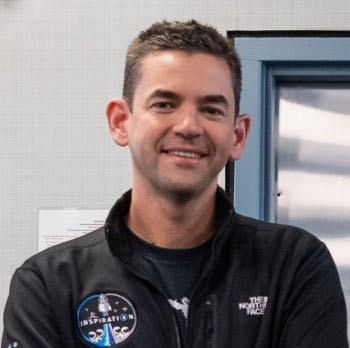
Jared Isaacman proves in an op-ed today why Trump dumped him

Jared Isaacman
Jared Isaacman has now proven he was
the wrong man for NASA administrator

In an op-ed posted today by Jared Isaacman and Newt Gingrich, the two men pushed the idea that NASA should lead a new “mini-Manhattan Project” to develop “nuclear-electric-powered spaceships” in order to conquer the heavens.

The President’s budget calls for an eventual pivot away from NASA’s Space Launch System (SLS)—leaving the heavy-lift rocket business to a capable commercial industry. That pivot should be toward something no other agency, organization, or company is capable of accomplishing: building a fleet of nuclear-electric-powered spaceships and extending America’s reach in the ultimate high ground of space.

The NASA centers, workforce, and contractors that manage, assemble, and test SLS are suited to take on this inspiring and necessary challenge. NASA Center at Michoud, for example, built landing craft during WWII, the Saturn V during the space race, the Space Shuttle, and the SLS. It is now waiting for the next logical evolution to ensure the competitiveness of our national space capabilities.

Oy. What piffle. » Read more

41 comments

SpaceX donates $4.4 million to upgrade beach access at Boca Chica

Even as leftist politicians and anti-Musk haters rage incoherently against SpaceX’s growing facility at Boca Chica, the company this week donated $4.4 million to upgrade the beach access and facilities at South Padre Island, near Starbase at Boca Chica.

Beachgoers visiting South Padre Island will soon be able to enjoy a surfside park with a smorgasbord of family-friendly amenities paid for by a $4.4 million contribution from Elon Musk’s SpaceX. Previously, MySA reported that the project was expected to cost $4.5 million, according to Texas Department of Licensing and Regulation records.

Cameron County Beach Access #3, a currently undeveloped pedestrian beach access located just outside the South Padre Island city limits, will soon begin construction on the latest phase of a multimillion-dollar improvement project that will transform it into a destination beach access. To that end, Cameron County leaders celebrated with a groundbreaking ceremony on Monday, August 11, at the access, located at 28495 State Park Road 100-North, on South Padre Island.

In other words, SpaceX is paying almost the entire bill for this work. It might now have the power to close these beaches when necessary, but it is also acting like a good citizen, improving those beaches for everyone when they are open.

It is expected this work will be completed by next year.

10 comments

Update on next Starship/Superheavy launch

Superheavy after its flight safely captured at Boca Chica
Superheavy after the October 2024 flight,
safely captured during the very first attempt

Link here.

SpaceX now appears to have completed the prelaunch testing of Starship prototype #37, having tested the ship again after swapping out an engine after the first static fire test. It is now moving to put Superheavy on the launchpad for its own static fire tests.

The bottom line is that SpaceX appears moving successfully towards a launch of the next test flight of Superheavy/Starship, its tenth, for sometime between August 22nd and August 28th.

The report also describes the company’s work to preserve Superheavy prototype #12, the first to be captured and recovered during the fifth orbital test flight in October 2024.

The picture to the right shows that Superheavy booster, hanging from the chopsticks just after it was captured.

4 comments

Trump orders the federal agencies regulating space to review and streamline regulations

Trump defiant after being shot
Trump’s war with the swamp continues

Fight! Fight! Fight! In a new executive order issued yesterday, President Trump tasked NASA and the Transportation, Commerce, and Defense departments to work together to review and streamline the present regulations that have been hindering the American space industry for the past four years.

A summary of the order can be found here.

The order specifically tasks Transportation secretary Sean Duffy to review and streamline the regulations related to launches and re-entry, as well as the environmental requirements that were imposed during the Biden administration requiring numerous environment impact statements for practically any new project and even when an established project gets revised slightly. It has been these new rules that squashed the efforts of almost all the new American rocket companies during the Biden administration.

The order also demands that Commerce, Transportation, Defense, and NASA review the laws relating to coastal management that have allowed the states to block “spaceport infrastructure development.” All these agencies are also required to review their licensing rules to eliminate duplication while also eliminating rules that impede “novel space activities (missions not clearly or straightforwardly governed by existing regulatory frameworks).”

Finally, the order establishes a new position at the FAA but reporting directly to the Transportation secretary who will be expressly focused in following through on these regulatory reforms, with the primary goal to aid the commercial space industry.

While this order changes no specific regulations, it now forces the bureaucracy toward change, with deadlines set for action ranging from two to six months. Expect whole swathes of regulations and licensing requirements to disappear in the coming months. We might even see new rocket companies finally resume launches, something that ceased during the Biden years.

1 comment

SpaceX completes two launches, reaching 100 successful orbital launches in 2025

Having successfully completed two Starlink launches last night, putting a total of 52 satellites into orbit, SpaceX has now accomplished 100 successful orbital launches in 2025.

First, in the early evening last night the company launched 24 satellites from Vandenberg in California, its Falcon 9 rocket first stage completing its fifth flight, landing on a drone ship in the Pacific.

Seven hours later it placed another 28 Starlink satellites into orbit, its Falcon 9 rocket lifting off from Cape Canaveral in Florida. The first stage on this flight completed its tenth flight, landing on a drone ship in the Atlantic.

The leaders in the 2025 launch race:

100 SpaceX
44 China
11 Rocket Lab
9 Russia

SpaceX now leads the rest of the world in successful launches, 100 to 77.

SpaceX’s launch rate has become so routine that it is important to note the truly amazing nature of its achievement. Until 2018, the entire world had trouble completing 100 launches in a year. In fact, prior to SpaceX’s arrival it only happened because the Soviet Union in the ’70s and ’80s launched many short term small reconnaissance satellites that only stayed in orbit for a few months. When the Soviet Union fell the launch rate fell below 100 and did not recover until SpaceX began increasing its launch rate.

In other words, this one American private company has fueled a renaissance in space exploration. And it has done so by being efficient, innovative, and most important of all, profitable. And it all happened under the banner of freedom.

3 comments

Starlink expands in the Ukraine, starts in Kazakhstan, but hits roadblock in Lebanon

Access to SpaceX’s Starlink internet constellation to customers worldwide continues to expand.

First. Kazakhstan announced that Starlink is now available in that country, beginning today.

Next, the Ukraine government announced it is beginning beta testing of SpaceX’s direct-to-phone Starlink capability, with the product to launch to its citizens later this year.

With Starlink’s Direct to Cell system, Ukrainians will be able to send SMS messages in remote or hard-to-reach areas—such as in the mountains, during severe weather, or blackouts—without the need for expensive satellite equipment. The only requirements: a standard 4G smartphone with a SIM or eSIM card, and a clear view of the sky.

These actions by both Kazakhstan and the Ukraine underlines the negative consequences of Russia’s invasion of the Ukraine. Its former Soviet provinces, now independent, have become much more willing to forge alliances and deals with western nations and companies, in order to better protect themselves from possible attack.

In Lebanon however things have not gone so well. SpaceX’s request to offer Starlink has met with opposition in that nation’s parliament.

Lebanon’s parliamentary Media and Communications Committee raised serious legal and procedural concerns over a proposed license for SpaceX’s Starlink satellite internet service. Committee chair MP Ibrahim Mousawi and rapporteur MP Yassine Yassine said discussions with the telecom minister and officials from regulatory and oversight bodies revealed “major constitutional and legal violations.” These include bypassing Parliament’s authority to grant natural resource concessions, ignoring public procurement laws, sidelining the Telecommunications Regulatory Authority, and failing to ensure data sovereignty.

The committee recommended against Starlink, demanding a new and expanded review of the proposal. I suspect these ministers are either upset because they didn’t get their own kickbacks in the deal, or are worried that giving Lebanese citizens Starlink — thus bypassing all government censorship — might threaten their hold on power.

6 comments

Axiom completes first set of underwater tests of its commercial spacesuit

Axiom's moonsuit
Click for original image.

Axiom, in partnership with the company KBR, has successfully now completed its first set of manned underwater tests of its commercial spacesuit, being built for NASA but owned by Axiom and available for use by others.

These initial crewed tests involved an astronaut being fully submerged in the NBL’s 6.2-million-gallon pool while wearing Axiom Space’s next-generation spacesuit, the AxEMU, which is being developed for use on NASA’s Artemis III mission. The goal was to evaluate the suit’s integrity in an environment that closely simulates the weightlessness of space.

Throughout the tests, the suit remained completely sealed and airtight, signifying it’s ready for more advanced evaluations, and ultimately, future missions.

For Axiom, having its own spacesuit makes its space station project more viable. None of the other proposed stations presently have suits, though Vast’s Haven project is closely tied with SpaceX, and thus would likely work with that company to upgrade SpaceX’s spacesuit used on Jared Isaacman’s last private orbital mission.

The four commercial stations under development, ranked by me based on their present level of progress:
» Read more

4 comments

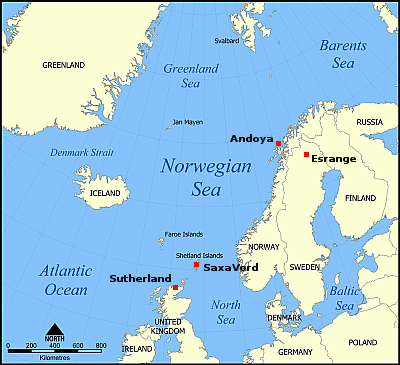
Founder of SaxaVord spaceport passes away

Frank Strang, who first proposed the SaxaVord spaceport on the island of Unst in the Shetland Islands in 2017, died yesterday at 67 from cancer, having never seen a single launch from the spaceport almost entirely due to the odious red tape of the United Kingdom.

When Strang announced last month that he had cancer, he also said he hoped to live long enough to see the first launch. The German rocket startup Rocket Factory Augsburg plans its first launch later this year, though this schedule is not firm. Its launch attempt last year was cancelled when the first stage failed during its last static fire test on the launchpad. Whether the UK’s Civil Aviation Authority will issue a launch permit on time remains decidedly unclear.

1 comment
1 65 66 67 68 69 897