Jay Leno’s Garage – 1965 Shelby 427 Cobra Competition
An evening pause: For car buffs, and anyone else who wants to take a drive this weekend.
Hat tip Cotour.
An evening pause: For car buffs, and anyone else who wants to take a drive this weekend.
Hat tip Cotour.
The Indian rocket startup Skyroot has successfully tested the solid-fueled motor it plans to use in its three-stage solid-fueled Vikram-1 rocket. From the press release issued by India’s space agency ISRO:
First Static Test of the KALAM 1200 Motor – the first stage of Vikram – 1 Launch Vehicle of M/s Skyroot Aerospace Pvt. Ltd. (SAPL), Hyderabad is accomplished successfully at Static Test complex of Satish Dhawan Space Centre, Sriharikota, ISRO, Department of Space at 09:05 hrs on 08.08.2025. This is a major milestone in the configuration and realization of the systems for Vikram – 1 Launch Vehicle. The motor is a 11 m long, 1.7 m dia monolithic composite motor with a Propellant Mass of 30t. Based on the design inputs, this longest monolithic motor is prepared at the Solid Propellant Plant, Sriharikota. Similarly, ISRO team has provided the design for the Test Stand, which is used for the static test of the motor.
This is in line with the Government of India initiative on Space Policy, 2023 for providing the necessary technical infrastructure and managerial guidance for the Private Sector players to contribute for the space economic growth. The performance of the test bed and the associated systems is normal as predicted.
The last paragraph is the most important. The Modi government has tasked its space agency to provide its facilities and expertise to help rocket startups like Skyroot. It appears from this test and press release the resistance within ISRO to this policy — which cuts into ISRO’s turf — is fading.
Skyroot had said it wants to do the first orbital test flight of Vikram-1 before the end of 2025. It remains unclear whether it will meet that schedule.
Hat tip BtB’s stringer Jay.
When Firefly announced it was going public at the end of July, it predicted the stock price would range from $35 to $39, with the initial public offering raising about $600 million in capital for the company. Less than a week later it revised these predictions upward to $45 and about $700 million.
When trading opened yesterday, these numbers were still too low, with the stock immediately trading at $70 per share> and raising almost $900 million.
The space and defense technology company reached a peak valuation of more than $9.84 billion during intraday trading, after its shares began trading at $70 — up more than 55% from the initial public offering price of $45. The stock climbed as high as $73.80 during the session before closing at $60.35.
Firefly sold more than 19 million shares in the offering, raising at least $868 million. By the end of trading Thursday, total volume had approached 30 million shares.
This confidence and enthusiasm by Wall Street reflects Firefly’s success this year in becoming the first private company to land an unmanned spacecraft softly on the Moon. It also suggests the market expects the company’s orbital tug and rockets to succeed. Though its Alpha rocket has had a mixed record of success, its new larger Eclipse rocket is being built in partnership with Northrop Grumman, which has invested $50 million into its development.
As part of a series of press releases in connection with the release of Rocket Lab’s second quarter financial report, the company announced that it is inviting shareholders to enter a sweepstakes for attending the official opening of its just completed launchpad at Wallops Island for its new Neutron rocket.
According to the announcement, the opening is scheduled for August 28, 2025.
Rocket Lab will randomly select ten (10) eligible entrants to win admission to the event. Eligible entrants are limited to U.S. citizens who are at least 18 years old and shareholders of Rocket Lab. Winners are responsible for their own travel and accommodation costs, and any other costs and expenses associated with traveling to and attending the event
The sweepstakes is a fun idea, but what is really significant is that the company appears to be continuing to meet its schedule for a first launch of Neutron before the end of 2025. If so it will be a major achievement, considering the company began work on this rocket in December 2021. To go from a blank sheet to launch in only four years is unprecedented. Normally it takes about twice as long to get a rocket to the launchpad.
Even if the launch date slips into the first quarter of 2026 the achievement will be spectacular.
Rocket Lab’s 2nd quarter financial report appears bright as well, noting a 36% increase in revenues from the previous year. While its rocket division continues to ramp up launches, the company has also done well diversifying into other space areas, from low Earth orbital constellations to deep space technology.
In connection with the visit of Azerbaijan’s president to the United States, he and other officials held a meeting with SpaceX vice president Stephanie Bednarek to discuss possible areas of cooperation. From Azerbaijan’s state-run press:
At the meeting, we noted Azerbaijan’s economic potential, strategic development directions, and favorable investment climate. We discussed prospects for cooperation with SpaceX, including partnership opportunities in the application of innovative and space technologies, artificial intelligence solutions, and knowledge and experience transfer.
In plain language, Azerbaijan is considering buying services from SpaceX. That it is doing so underlines once again the negative consequences of Putin’s invasion of the Ukraine. Azerbaijan now fears Russia, and is looking elsewhere for aid. It also senses Russia’s increasing weakness, economically, technologically, and militarily, making it more willing to forge alliances with others.
Link here. ULA’s CEO Tory Bruno outlined the overall state of the company’s launch plans, including its goal of ramping up the launch rate by the end of this year to what Bruno had hoped to achieve at this start of 2025.
ULA anticipates a robust schedule, aiming for about two launches per month across its Atlas and Vulcan fleets in 2025 and 2026, “unless something interesting happens.”Bruno expressed confidence in achieving nine launches this year, bolstered by the completion of a new Vertical Integration Facility (VIF) and Mobile Launch Platform (MLP), enabling parallel rocket assembly.
In December 2024 Bruno had predicted the company would complete 20 launches in 2025. Right now it has only completed two launches (one each for Vulcan and Atlas-5). Getting up to 9 launches by the end of this year will require it to go from one launch every four months to two launches per month, and do so immediately. In its entire history the company has never come close to achieving that launch pace. The best it ever did was 16 launches in 2009.
That pace will also rely on Blue Origin delivering enough BE-4 engines for Vulcan’s first stage. According to Bruno, Blue Origin is now getting it done, and “might be an engine or two ahead.”
Much more at the link.
An evening pause: How about some hot dancing today? Some truly original moves that I think Fred Astaire would applaud.
Hat tip Mike Nelson. Note too that he found this on X. It is nice to give youtube some competition.
❤️🔥 Jason Colacino and Katie Boyle – Honky Tonk
Now THAT'S what I call pure elegance, charm, and undeniable heat!! 🫶🔥 pic.twitter.com/P1NHHG3rtW— Love Music (@khnh80044) April 1, 2025
The lunar lander startup Intuitive Machines has now acquired the long-established deep space navigation company Kinetx, based in Arizona.
With a heritage of supporting NASA and National Security Space missions, and as the only commercial company certified by NASA for deep space navigation, KinetX provides flight dynamics capabilities for both lunar and interplanetary missions. Its proprietary navigation software stack has supported both of Intuitive Machines’ lunar missions to date.
Despite the failure of two lunar landers, both of which tipped over upon landing, Intuitive Machines is still alive. It has more lunar landers in the pipeline, as well as a returnable capsule for space manufacturing.
Hat tip BtB’s stringer Jay. Because every single link he sent me today was newsworthy enough to become a full post, there won’t be a quick links to follow.
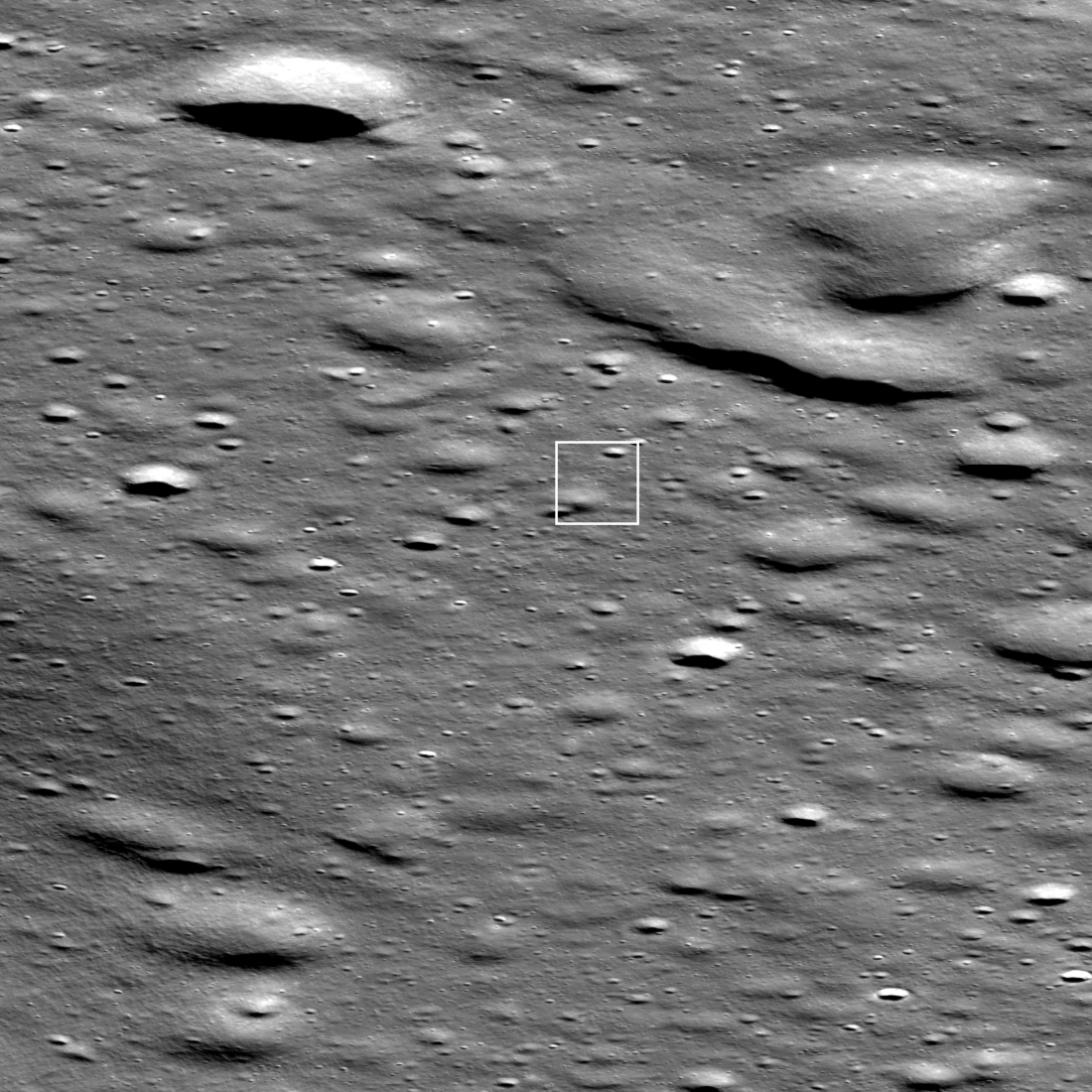
India’s Chandrayaan-2 lunar orbiter has now produced a new high resolution image of Intuitive Machines’ Athena lander, sitting on its side inside a small crater near the Moon’s south pole.
The IM-2 ‘Athena’ lander attempted a soft touchdown near the Moon’s South Pole on 6 March, 2025. Although the lander remained intact, it failed to reach its intended landing spot and ended up tipping over on its side inside a crater.
In the … images taken by the OHRC instrument on board the Chandrayaan-2 Orbiter, the Athena lander can be clearly seen lying on its side inside a crater.
This image, posted to the right, compares very favorably with the photos taken by Lunar Reconnaissance Orbiter (LRO) in March 2025. The lander’s legs can clearly be seen sticking out toward the top of the picture.
Hat tip BtB’s stringer Jay.
Virgin Galactic has trimmed its work force by 7% even as it announced a delay in the first flight of its new Delta suborbital spacecraft from this summer to the fall.
Virgin Galactic Holdings Inc. cut 7% of its workforce as it works to bring to market an upgraded spaceplane central to its plans to expand suborbital tourism and research operations.
The Richard Branson-founded company plans to resume private space tourism trips in the autumn of 2026 after its Delta spacecraft’s first commercial flight, a research mission that was delayed from summer 2026 to also occur in the fall.
It still remains to be seen whether the business model for suborbital hops is viable and profitable. Blue Origin’s New Shepard has been flying somewhat regularly, and appears to have a customer base, but whether it is making a profit remains unknown. Virgin Galactic is deep in the red, and has done no flights for several years as it builds a new spacecraft. Both face stiff competition from the orbital market, which offers a much better product though at a much higher price.
According to a tweet by SpaceX’s president and chief operating officer Gywnne Shotwell today, the Italian Space Agency (ASI) has signed an agreement to fly experiments on first Starship flights to Mars that will carrying customer payloads. She quoted a tweet by ASI’s president, Teodoro Valente:
ASI_Spazio and SpaceX have signed a first-of-its-kind agreement to carry Italian experiments on the first Starship flights to Mars with customers. The payloads will gather scientific data during the missions. Italy continues to lead in space exploration!
Little other information has yet been released, but expect more details in the coming days.
UPDATE: ASI’s press release on August 8th added this detail:
The payloads will include a plant growth experiment, a weather monitoring station and a radiation sensor. The goal is to collect scientific data in the approximately six-month interplanetary flight phase from Earth to Mars and then on the Martian surface.
Hat tip to reader Gary.

Sean Duffy, transportation secretary and interim
NASA administrator
Earlier this week NASA’s interim administrator Sean Duffy issued a new directive [pdf] that fundamentally reshaped the agency’s space station program in how it will fund and operate the private commercial space stations now under development.
Under the present plan, NASA had issued development contracts to three proposed commercial stations, with a major contract award expected next year to one of the four companies/consortiums that are bidding. Duffy instead wants NASA to fund all the stations in an open-ended manner.
Instead of moving forward in Phase 2 with a firm fixed price contract for [commercial station] certification and services, NASA will continue to support U.S industry’s design and demonstration of [commercial stations] with multiple funded SAAs [Space Act Agreements] for the next phase. NASA will shift the formal design acceptance and certification planning acceptance from this SAA phase to a follow-on certification phase.
Utilizing SAAs for the next phase better aligns with enabling development of US industry platforms. It provides greater resources for industry to align schedule with NASA’s needs. SAAs also provide more flexibility to deal with possible variations in funding levels without the need of potentially protracted and inefficient contract renegotiations.
SAAs are generally fixed price, but the structure Duffy is establishing appears to allow NASA to supplement these contracts endlessly, making them a kind of hybrid cost-plus deal. It also aims at supporting “a minimum of two, preferably three or more” of the private stations under development.
Duffy’s shift to SAAs will also give the private stations more design and operational freedom, as SAAs shift responsibility and ownership to the company, not NASA. The arrangement will also likely require a larger investment by the companies, though this is not clear in Duffy’s directive.
» Read more