Two orbital launches today by China and SpaceX, plus a suborbital hypersonic launch by Rocket Lab

The beat goes on! Since last night both China and SpaceX successfully completed orbital launches.

First, China used its most powerful operating rocket, the Long March 5, to place what its state-run press called “a new communication technology test satellite” into orbit, the rocket lifting off from its coastal Wenchang spaceport. As the Long March 5 can haul very large payloads into orbit, it suggests this one satellite is unusually heavy.

Next, SpaceX successfully placed another 24 Starlink satellites into orbit, its Falcon 9 rocket lifting off from Vandenberg Space Force Base in California.

The first stage (B1071) successfully completed its 34th flight (38 days after its previous flight), landing on a drone ship in the Pacific. With this flight the stage moved past the space shuttle Atlantis, putting it in third place in the rankings for the most reused launch vehicle:

39 Discovery space shuttle
35 Falcon 9 booster B1067
34 Falcon 9 booster B1071
33 Atlantis space shuttle
32 Falcon 9 booster B1063
31 Falcon 9 booster B1069
28 Columbia space shuttle
28 Falcon 9 booster B1077
28 Falcon 9 booster B1078

Sources here and here.

Though it was not an orbital launch and thus isn’t added to my launch totals, Rocket Lab also launched last night, using its HASTE suborbital version of its Electron rocket to do a suborbital hypersonic test for the War Department, as part of its $190 million contract to do twenty such test flights. This appears to be the first of those launches.

UPDATE: The HASTE launch appears to have actually been an orbital one, with a second stage and kick stage, both of which reached orbit. No information has been released on the status of the classified payload, which I suspect was a test hypersonic missile that was accelerated to orbital speeds by that second stage and kick stage, but then flew a guided high speed planned suborbital test flight. Since this launch did place objects in orbit, and appears to have been 100% successful as planned I am including it in my launch totals below.

The leaders in the 2026 launch race:

69 SpaceX
36 China
8 Russia
8 Rocket Lab (plus two suborbital HASTE launches)

For the third straight year SpaceX leads the entire world combined in total launches, 69 to 62.
3 comments

Rocket Lab launches radar satellite for Japanese company Synspective

Rocket Lab early today successfully completed its ninth launch (out of a 27-launch contract) for the Japanese radar satellite company Synspective, its Electron rocket lifting off from one of its two launchpads in New Zealand.

The leaders in the 2026 launch race:

59 SpaceX
28 China
8 Russia
7 Rocket Lab

For the third straight year SpaceX leads the entire world combined in total launches, 59 to 51.

2 comments

Rocket Lab gets big launch contract for both its Electron and new Neutron rocket

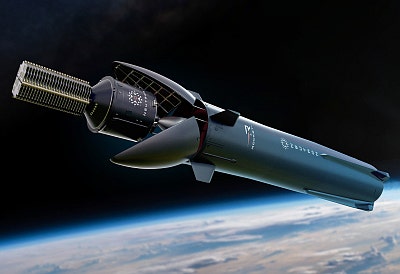
Artist's rendering of the Neutron first stage deploying its second stage
Artist’s rendering of Neutron’s first stage fairings opening
to deploy the payload with the second stage engine.

Rocket Lab announced yesterday that it has won a big new launch contract with an undisclosed customer for three launches of its Electron rocket and five launches of its new Neutron rocket.

The multi-launch agreement includes five dedicated Neutron launches and three dedicated Electron launches baselined to launch between 2026 and 2029. The missions will lift-off from both Rocket Lab Launch Complex 1 in New Zealand and Rocket Lab Launch Complex 3 in Virginia. Pricing for these launches aligns with Rocket Lab’s average selling price for Neutron and Electron. The remaining terms of the deal are undisclosed.

Based on the known average launch prices for these rockets, this deal is likely worth somewhere between $250 million to $300 million. That a customer was willing to purchase five launches of Neutron before the rocket has even launched is also a strong statement of confidence in Rocket Lab itself. The company hopes to do the first test launch of Neutron before the end of this year.

Rocket Lab also made a slew of other announcements yesterday. The company will be partnering with Anduril as part of its 20-launch contract with the War department to use its suborbital HASTE version of its Electron first stage for hypersonic testing. The deal involves three of those twenty launches.

The company also announced a partnership with Raytheon to “demonstrate advanced capabilities for the United States Space Force’s Space Based Interceptor program.” Rocket Lab also revealed it is acquiring the California robotic company Motiv Space Systems that has built equipment used on the Mars rover Perseverance.

Rocket Lab might not be as big as SpaceX, but it has unquestionably been as successful in its own way.

17 comments

Rocket Lab launches satellites for Japan’s space agency JAXA

Rocket Lab today successfully placed eight smallsats for Japan’s space agency JAXA, its Electron rocket lifting off from one of its two launchpads in New Zealand.

Because all of JAXA’s rockets are presently grounded due to technical failures, Japan’s space agency has had to turn to Rocket Lab. In fact, these eight satellites were originally supposed to launch on JAXA’s Epsilon-S rocket, which remains grounded after an explosion during a static fire test. There have been no updates on the status of Epsilon-S since December 2024.

Rocket Lab was also supposed to do a suborbital hypersonic test flight yesterday out of Wallops Island in Virginia, using the first stage of Election in its HASTE suborbital configuration. As this is a test for the War Department, little information is generally released. This video from a distance confirms the launch apparently took place, but whether it was a success or not remains unknown. That Rocket Lab’s announcers did not tout its success either before or after today’s JAXA launch — as they have routinely done in the past — suggests something might have gone wrong, though this too is pure speculation.

The leaders in the 2026 launch race:

48 SpaceX
21 China
6 Russia
6 Rocket Lab

For the third straight year SpaceX continues to lead the entire world combined in total launches, 48 to 38.

10 comments

Rocket Lab launches GPS-type demo satellite for Europe

Rocket Lab this morning successfully placed a European Space Agency (ESA) smallsat into orbit, its Electron rocket lifting off from one of its two launchpads in New Zealand.

The smallsat, dubbed Celeste, is the first of two such demo satellites that ESA has contracted Rocket Lab to launch. They are designed to test a low Earth orbit constellation for providing global navigation and location information to users on the ground, similar to the U.S.’s GPS constellation. Celeste will work from low orbit with Europe’s medium orbit Galileo constellation, but being smaller will be cheaper and faster to build and launch.

The leaders in the 2026 launch race:

38 SpaceX
15 China
5 Rocket Lab
4 Russia

SpaceX continues to lead the entire world combined in total launches, as it did in both ’24 and ’25.

4 comments

Two launches today by Rocket Lab and SpaceX

The launch pace continued today with two American commercial launches.

First Rocket Lab placed a Synspective radar satellite into orbit, its Electron rocket lifting off from one of its two launchpads in New Zealand. This was the company’s eighth launch for Synspective, out of a 27-launch contract.

Next, SpaceX placed 25 more Starlink satellites in orbit, its Falcon 9 rocket lifting off from Vandenberg Space Force Base in California. The first stage completed its fourth flight, landing on a drone ship in the Pacific.

The leaders in the 2026 launch race:

36 SpaceX
12 China
4 Rocket Lab
2 Russia

SpaceX continues to lead the entire world combined in total launches, as it did in both ’24 and ’25.

5 comments

Rocket Lab wins $190 million hypersonic test contract from War Department

War Department logo

Rocket Lab yesterday announced it has won a $190 million contract from War Department to do another twenty suborbital test launches using its HASTE first stage version of its Electron rocket.

Rocket Lab Corporation … today announced the signing of its single largest launch agreement yet: a $190 million contract for a block buy of 20 hypersonic test flights with its HASTE launch vehicle for the Test Resource Management Center (TRMC) Multi-Service Advanced Capability Hypersonic Test Bed (MACH-TB) 2.0 program – a U.S. Department of War effort executed in partnership with Naval Surface Warfare Center Crane Division (NSWC Crane) to rapidly accelerate hypersonic flight tests and advanced aerospace technologies shaping the future of defense missions.

Under MACH-TB 2.0 Task Area 1, led by Kratos Defense & Security Solutions, Inc, Rocket Lab will perform 20 hypersonic test flights with its HASTE launch vehicle over a four-year period. The first of these 20 new missions is expected to take place within months of contract signing, demonstrating Rocket Lab’s operational efficiency and ability to move quickly to meet modern warfare demands.

This is the work that Stratolaunch had hoped to grab with its giant Roc airplane and Talon hypersonic test vehicle. Rocket Lab saw an opportunity and quickly reconfigured the first stage of its Electron rocket for the same work, dubbing this version HASTE. In the past three years both it and Stratolaunch have done hypersonic test flights, but Rocket Lab’s work has been more frequent and extensive, doing seven HASTE hypersonic launches to one test by Stratolaunch. That success apparently convinced the military to give Rocket Lab this larger new contract.

0 comments

Rocket Lab completes another launch yesterday

Rocket Lab yesterday successfully placed a satellite into orbit, its Electron rocket lifting off from one of its two launchpads in New Zealand.

The company did not reveal the name of its customer, though according to this source the satellite was a Blacksky Earth imaging satellite, the fourth launch of a four-launch contract with that satellite company.

The 2026 launch race:

28 SpaceX
8 China
3 Rocket Lab
2 Russia
1 ULA
1 Europe (Arianespace)

Not only is SpaceX this year leading the entire world combined in total launches — as it did in both ’24 and ’25 — at the moment its pace is about twice as much as the rest of the globe.

2 comments

Rocket Lab completes another HASTE suborbital mission

Rocket Lab late yesterday successfully completed its seventh HASTE suborbital mission, using the first stage of its Electron rocket to do a hypersonic test mission for the War Department.

In this case, the test vehicle was from the Australian company Hypersonix, and it lifted off from Rocket Lab’s Electron launchpad at Wallops Island in Virginia.

This was Rocket Lab’s second flight for this particular military agency in the past three months, and its eleventh overall launch from Wallops Island. The company’s quick reconfiguration of Electron for hypersonic suborbital testing made it possible for it to capture a bulk of the military’s suborbital hypersonic testing business that others, such as Stratolaunch, had hoped to win.

2 comments

Two American launches this evening

Two American companies, Rocket Lab and SpaceX, successfully completed launches during the evening of January 29-30.

First, Rocket Lab today (January 30th in New Zealand) placed a South Korean test smallsat, its Electron rocket lifting off from one of its two launchpads in New Zealand. The satellite is the first of a planned mass-produced constellation to provide precise observations of the Korean peninsula.

Next, SpaceX placed another 29 Starlink satellites into orbit, its Falcon 9 rocket lifting off from Cape Canaveral in the early morning hours. The first stage completed fifth flight, landing on a drone ship in the Atlantic.

The 2026 launch race:

13 SpaceX
5 China
2 Rocket Lab

1 comment

Rocket Lab completes its 7th launch for Japanese company iQPS

Rocket Lab this evening successfully completed its 7th launch of a radar satellite for Japanese company Q-Shu Pioneers (iQPS), its Electron rocket lifting off from one of the two launchpads in New Zealand.

Q-Shu has signed Rocket Lab to do eleven launches total, so expect four more launches next year.

In 2025 Rocket Lab also completed three launches of its HASTE version of Election, which is designed to do suborbital hypersonic tests for the Pentagon. If we count these, the company has completed 21 launches in 2025. And even if we don’t count these suborbital launches, Rocket Lab has now launched more times than any other private company, except for SpaceX.

The leaders in the 2025 launch race:

168 SpaceX
85 China
18 Rocket Lab (a new record)
15 Russia

SpaceX still leads the rest of the world in successful launches, 168 to 142.

2 comments

Rocket Lab launches a set of technology test satellites for Space Force

Rocket Lab tonight successfully placed into orbit a set of Space Force technology test satellites dubbed DISKSat, its Electron rocket lifting off from Wallops Island in Virginia.

DISKSat is a new standard satellite design, shaped like a flat disk about a yard across and developed by the Aerospace Corporation. The idea is that these disk-shaped satellites will more efficiently fit payload into the standard cylindrical fairings used by rockets. This mission includes four that will be deployed in low Earth orbit, but during the mission will also test operation in much lower orbits than satellites normally fly. I suspect the flat design reduces the atmospheric drag at those low orbits, thus allowing the satellite to remain in orbit for longer time periods.

The leaders in the 2025 launch race:

168 SpaceX
84 China
17 Rocket Lab (a new record)
15 Russia

SpaceX still leads the rest of the world in successful launches, 168 to 140.

12 comments

The two American launches today set a new global annual launch record exceeding 300+

Liberty enlightens the world
Now liberty is enlightening the solar system!

Two American companies today successfully completed launches from opposite sides of the globe, and in doing so set a new global benchmark for rocket launches in a single year.

First, Rocket Lab placed a Japanese technology test smallsat into orbit, its Electron rocket taking off from one of its two launchpads in New Zealand. The satelliite, dubbed Raise-4, was built by Japan’s space agency JAXA and carries eight different experimental payloads from a variety of academic and industry entities, including a test of a new solar sail design.

SpaceX then followed, launching another 27 Starlink satellites, its Falcon 9 rocket lifting off from Vandenberg Space Force Base in California. The first stage completed its 9th flight, landing on a drone ship in the Pacific.

The leaders in the 2025 launch race:

165 SpaceX (a new record)
83 China
16 Rocket Lab (a new record)
15 Russia

SpaceX now leads the rest of the world in successful launches, 165 to 136.

More significantly, with these two launches the total number of successful orbital launches in 2025 has now exceeded 300, for a present total of 301. To put the spectacular nature of this number in perspective, until 2020 it was rare for the world to exceed 100 launches in a year, especially after the fall of the Soviet Union. Most often, the total each year ranged between 50 to 80 launches.

Those numbers are now history, and it has been competition and freedom that has made all the difference.
» Read more

8 comments

Rocket Lab sets new annual launch record for the company

Rocket Lab today set new annual launch record for the company, quickly scheduling and launching a payload for a “confidential commercial customer”, its Electron rocket lifting off from one of the company’s two launchpads in New Zealand.

This was the 15th orbital launch by Rocket Lab in 2025, beating the record of 14 the company set in 2025. Rocket Lab has also launched its HASTE suborbital version of Electron three times, so the company has actually completed the equivalent of 18 Electron launches this year, though three were not intended to reach orbit.

What made this launch unusual is that it was not announced in advance, and took place suddenly without revealing the customer. It is likely the customer was flying a classified military payload. UPDATE on November 26, 2025: That customer was actually the commercial imagery company BlackSky, launching another one of its satellites for its constellation used by both the military and the public. The company did not explain why it wished its identity hidden during the launch.)

The leaders in the 2025 launch race:

151 SpaceX
71 China
15 Rocket Lab (a new record)
13 Russia

SpaceX still leads the rest of the world in successful launches, 151 to 119.

15 comments

Two American launches today, setting several new launch records

The beat goes on! Three different American companies attempted launches today, with two successfully getting off the ground while the third was forced to scrub due to an unspecified technical issue.

First Rocket Lab successfully launched another radar satellite for the Japanese company Q-Shu Pioneers (iQPS), its Electron rocket lifted off from one of Rocket Labs’ two New Zealand launchpads. This was the fifth launch out of a total eleven-launch contract that Rocket Lab has from Q-Shu. The launch also tied Rocket Lab’s record for the most successful orbital launches in a single year, 14, set in 2024.

Next, SpaceX launched another 29 Starlink satellites into orbit, its Falcon 9 rocket lifting off from Cape Canaveral in Florida. The first stage completed its fifth flight, landing on a drone ship in the Atlantic. The launch once again set a new annual launch record for SpaceX.

Only about two hours later, ULA attempted to launch a Viasat communications satellite using its Atlas-5 rocket, also lifting off from Cape Canaveral. At T-minus 4 minutes however there was an unplanned hold. After trouble-shooting the problem for almost an hour, they scrubbed the launch with only a few minutes left in the launch window. They will try again tomorrow.

With the two successful launches, the world’s global launch industry tied the record that was set last year for the most successful orbital launches in a single year, 256. That record will certainly be passed in the next few days.

What is more significant is that until 2020, the industry struggled to reach 100 launches per year. Since then the numbers have skyrocketed, led mostly by SpaceX’s overwhelming success.

The leaders in the 2025 launch race:

144 SpaceX (a new record)
67 China
14 Rocket Lab (tying its previous record)
13 Russia

SpaceX now leads the rest of the world in successful launches, 144 to 112.

4 comments

Three launches in the past day

Even as all eyes focused on SpaceX’s 11th test launch of Starship/Superheavy yesterday, there were three other launches in the past fourteen hours taking place on three different continents by China and two different American companies.

First, China placed a technology test satellite into orbit, its Long March 2D rocket lifting off from its Jiuquan spaceport in northwest China. The only information about the satellite is that it will test “new optical imaging.” No information at all was released on where the rocket’s lower stages, using very toxic hypergolic fuels, crashed inside China.

Next, SpaceX placed 24 of Amazon’s Kuiper satellites into orbit, its Falcon 9 rocket lifting off from Cape Canaveral in Florida. The first stage completed its second flight, landing on a drone ship in the Atlantic.

With this launch, Amazon now has 154 satellites in orbit, out of a planned constellation of about 3,200. Its FCC license requires it to have about 1,600 in orbit by July of ’26, but that goal seems increasingly unlikely to be met. With this launch SpaceX completed its three-launch contract for Amazon. It has contracts with ULA for 46 launches (having so far completed three in 2025), and that company appears ready to launch regularly in the coming months. Amazon’s other launch contracts with Blue Origin’s New Glenn (27 launches) and ArianeGroup’s Ariane-6 (18 launches) however are more uncertain. Neither company has achieved any launches on their contracts, and it is not clear when either company, especially Blue Origin, will ever begin regular launches.

Finally, this morning Rocket Lab placed the seventh radar satellite into orbit for the company Synspective, its Electron rocket lifting off from one of its two launchpads in New Zealand. Rocket Lab has a contract for another twenty Synspective launches over the next few years. The launch also featured a larger fairing that will give the company the ability to launch bigger-sized satellites with Electron.

The leaders in the 2025 launch race, now including yesterday’s Starship/Superheavy launch:

131 SpaceX
60 China
13 Russia
13 Rocket Lab

SpaceX now leads the rest of the world in successful launches, 131 to 101.

0 comments

Rocket Lab gets two-launch contract from Japan’s space agency JAXA

In what appears to be a significant slap at its own rockets (especially its delayed Epsilon-S rocket), Japan’s space agency JAXA this week signed a two-launch deal with the American rocket company Rocket Lab.

Launching from Rocket Lab Launch Complex 1 in New Zealand, the two Electron missions will deploy satellites for JAXA’s Innovative Satellite Technology Demonstration Program. The first launch, scheduled from December 2025, will deploy the agency’s RApid Innovative payload demonstration SatellitE-4 (RAISE-4) spacecraft, a single satellite that will demonstrate eight technologies developed by private companies, universities, and research institutions throughout Japan.

The second launch, scheduled for 2026, is a JAXA-manifested rideshare of eight separate spacecraft that includes educational small sats, an ocean monitoring satellite, a demonstration satellite for ultra-small multispectral cameras, and a deployable antenna that can be packed tightly using origami folding techniques and unfurled to 25 times its size.

Rocket Lab has previously won contracts from several private Japanese satellite companies (Q-Shu, Astroscale, ALE), but this I think is the first JAXA contract it has won. What makes it significant is that JAXA has always focused on using its own rockets, the large retired H2A and the new H3 as well as the smaller Epsilon-S. To go to an American company is somewhat unprecedented.

Though larger than Rocket Lab’s Electron rocket, Epsilon-S was being developed to compete for the same market. That development however has been plagued by failure, including explosions of engines during tests of both its upper and first stages in ’23 and ’24 respectively. After the second explosion JAXA announced in December 2024 the rocket’s first launch would not occur in the spring of 2025 as planned, but provided no additional information. Since then there have been no updates.

This Rocket Lab deal suggests the Epsilon program is in big trouble. In the long run however this might be a very good thing for both JAXA and Japan’s own nascent rocket industry. JAXA might finally be recognizing that building and owning its own rockets is not the best plan, that it would be better to use the capitalism model and simply be a customer buying the services from the private sector. At the moment Japan doesn’t yet have a viable commercial rocket sector, with only Mitsubishi having an operational commercial rocket, the H3 (mostly controlled by JAXA). There are a number of new startups however, including Interstellar, Honda, Space One, and Tispace, all of which have done tests of one kind or another. If JAXA is ready to abandon its own government rockets and buy the service from the private sector, those Japanese startups will start to prosper.

6 comments

Japanese satellite company extends its launch contract with Rocket Lab

The Japanese satellite company Q-shu Pioneers of Space, Inc. (iQPS) has purchased three more launches from Rocket Lab, for a total of seven planned.

The multi-launch contract includes three dedicated Electron missions that will launch no earlier than 2026 from Rocket Lab Launch Complex 1 in New Zealand. With four dedicated missions already booked by iQPS on Electron, these three additional missions bring the total number of upcoming launches for iQPS to seven.

Each dedicated launch will deploy a single synthetic aperture radar (SAR) satellite from a Rocket Lab Motorized Lightband separation system – demonstrating Rocket Lab’s vertical integration across launch and space systems that improves reliability and streamlines the launch process for its customers.

Rocket Lab has already completed four successful launches for iOPS, so with this deal means that it will complete eleven launches total for the satellite company. Essentially iQPS has made Rocket Lab its prime launch provider.

This is also the second major launch contract for Rocket Lab in the past week. On September 30, 2025 Synspective purchased its second multi-launch contract with the company, buying ten more launches. Its first contract was for eleven launches, with six already completed. Synspective hopes to have its entire radar constellation of 30 satellites in orbit by the late 2020s.

Both contracts tell us that Rocket Lab’s Electron rocket is going to have a very busy launch schedule for the next few years, even as the company initiates its larger Neutron rocket.

0 comments

Two American launches this evening

This evening two different American companies completed successful commercial launches, doing so from opposites sides of the globe.

First, SpaceX launched another 27 Starlink satellites, its Falcon 9 rocket lifting off from Cape Canaveral, with the first stage completing its fifth flight, landing on a drone ship in the Atlantic Ocean. This launch was on the evening of June 27th.

Then, a few hours later Rocket Lab completed the first of two quickly scheduled launches for an unnamed commercial customer, its Electron rocket lifting off from one of its two launchpads in New Zealand. This launch, on June 28th in New Zealand, was the company’s second launch in less than two days, its fastest turn around yet. As of posting the payload was not yet deployed.

The leaders in the 2025 launch race:

81 SpaceX
35 China
10 Rocket Lab
7 Russia

SpaceX still leads the rest of the world in successful launches, 81 to 60.

6 comments
1 2 3 11