
Explosion at SpaceX test site part of launchpad investigation

An explosion yesterday at SpaceX’s Texas test facility appears to have been planned and is part of the company’s investigation into the September 1 Falcon 9 launchpad explosion.

“The sound heard by residents was actually the result of a pressurization test at the McGregor Rocket R&D facility. These tests take place periodically at the site, and this particular test was part of the ongoing testing being conducted by our Accident Investigation Team,” SpaceX spokesman Phil Larson said in an email response to questions. “The volunteer fire department responded as a matter of procedure, but there was no damage to the site or injuries to any personnel.”

I would guess that they are trying to see if they can precisely duplicate the conditions that produced the September 1st explosion, including triggering new explosions in a reliable manner. If so, they would then know precisely what to avoid doing to trigger future tank failures.

Meanwhile, this story notes the successful first pressure tests of the carbon fiber tank that SpaceX is developing for its interplanetary spaceship. Not much information, though SpaceX has released some cool images of the tank being prepped for the test.
4 comments

SpaceX files FCC application for 4000+ internet satellite constellation

The competition heats up: SpaceX today filed an FCC application for the construction and launch of a 4,425-satellite constellation designed to provide internet access worldwide.

In the technical information that accompanied its application, SpaceX said it would start commercial broadband service with 800 satellites. That service would cover areas of the globe from 15 degrees north to 60 degrees north, and from 15 degrees south to 60 degrees south. That leaves out some portions of Alaska, which would require a temporary waiver from the FCC.

Eventually, the network would grow to 4,425 satellites, transmitting in the Ku and Ka frequency bands. “Once fully deployed, the SpaceX system will pass over virtually all parts of the Earth’s surface and therefore, in principle, have the ability to provide ubiquitous global service,” SpaceX said.

When Musk first proposed this last year, he said it would take about $10 billion and five years to get it built. So, don’t expect these satellites to fly tomorrow. A lot of other things must happen first before this new plan takes flight.

6 comments

Software issues threaten Orion/SLS schedule

Despite having more than a decade to develop the software for SLS and Orion, NASA now faces the possibility that the rocket’s first test flight in 2018 might be delayed because that software is not ready.

Specifically, a NASA advisory board has revealed that Orion’s flight software is behind schedule and might not be ready in time. This, combined with schedule problems for the capsule’s service module, being built by the European Space Agency, threatens the 2018 launch date.

0 comments

Chinese astronauts to return to Earth this week

The competition heats up: After spending a month in orbit in their country’s second orbiting space station module, two Chinese astronauts are expected to return to Earth this week.

The article provides a lot of details about China’s upcoming space station plans. For example, this will likely be the last manned mission to the Tiangong-2 module. It will be used next year to test the docking of an unmanned freighter, but the next manned mission will be to the core unit of their full-sized space station, now set to launch in 2018 on a Long March 5 rocket, which successfully completed its first test launch two weeks ago.

0 comments

The Fact and Fiction of the NASA EmDrive Paper Leak

A NASA paper outlining work that appears to substantiate the EmDrive concept that involves the production of a thrust in a way that violates the laws of physics was leaked last week, and this story tries to figure out what has been learned.

To me, the key is this paragraph:

In essence, the NASA EmDrive in the paper consists of a closed copper cone, the inside of which is being bombarded with microwaves. To test the EmDrive, the researchers powered it with 40, 60, and 80 watts and found that it generated up to 58, 128, and 119 micronewtons of thrust, respectively. Given that this “anomaly” was still observed by White and his colleagues after accounting for error, this suggests that the results of the experiment show an EmDrive is indeed possible.

Based on these results, the researchers estimated that their contraption would be capable of generating approximately 1.2 millinewtons of thrust per kilowatt were they to scale up the power input. To put this in perspective, the Hall thruster—one of the most powerful in development and powered by ejecting plasma—generates about 60 millinewtons of thrust per kilowatt. [emphasis mine]

Interestingly , the article did not comment on how little thrust this EmDrive test produced. This tiny amount, however, to me suggests strongly that what they are measuring is some outside force acting on the drive that they have missed that would invalidate all the theories listed in the article. And even if the thrust drive does prove a new component of fundamental physics, as suggested in the article, the system simply doesn’t appear to produce enough thrust to make it practical.

6 comments

Mars rover update: November 14, 2016

Curiosity

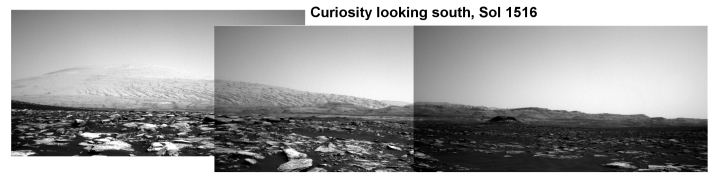
Curiosity looking south, Sol 1516

For the overall context of Curiosity’s travels, see Pinpointing Curiosity’s location in Gale Crater.

Since my last update on November 3rd, Curiosity has reached the region of sand dunes and has started to pick its way through it. The panorama above was created using images from the rover’s left navigation camera, taken on Sol 1516. It looks south, with Mount Sharp rising on the left.

That same day Curiosity also used its mast camera to zoom in on the canyon gap in the center of the panorama. The first image below is the wider mast camera shot, with the an outline showing the even closer zoom-in below that.
» Read more

1 comment

Oxo Crater on Ceres

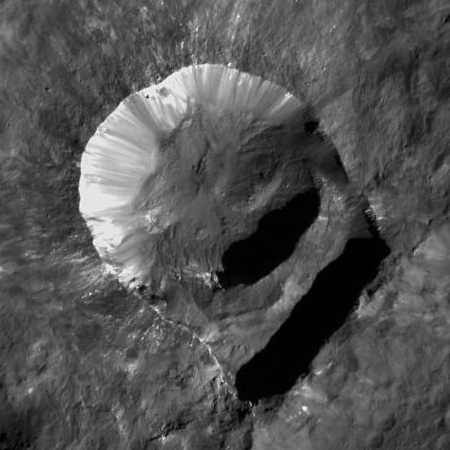
Oxo Crater on Ceres

Cool image time! The Dawn image at the right, cropped to show here, was taken on April 19, 2016. It shows the crater Oxo on Ceres and is especially intriguing because it not provides high resolution imagery of the crater’s bright rim, the second brightest feature on Ceres, it also shows how the southeastern part of the crater’s rim has literally slide down into the crater, leaving behind a gaping rombus-shaped pit.

The slumping, combined with the bright material on the rim, is more evidence that at some point in the past Ceres was geologically active.

0 comments

NASA considers alternatives to Orion

The competition heats up: Faced with long delays and an ungodly budget, NASA is now considering alternatives to replace the Orion capsule.

NASA has initiated a process that raises questions about the future of its Orion spacecraft. So far, this procedural effort has flown largely under the radar, because it came in the form of a subtle Request for Information (RFI) that nominally seeks to extend NASA’s contract to acquire future Orion vehicles after Exploration Mission-2, which likely will fly sometime between 2021 and 2023.

Nevertheless, three sources familiar with the RFI, who agreed to speak on the condition of anonymity, told Ars there is more to the request than a simple extension for Orion’s primary contractor, Lockheed Martin. Perhaps most radically, the RFI may even open the way for a competitor, such as Boeing or SpaceX, to substitute its own upgraded capsule for Orion in the mid-2020s.

The article also has this juicy quote:

The new RFI states that Lockheed will continue with development of Orion through a second uncrewed flight set for late 2018 and Exploration Mission-2, the first crewed mission, as early as 2021. However, once this “base vehicle” configuration is established, the RFI signals NASA’s intent to find a less expensive path forward. “This RFI serves as an examination of the market, which is an initial step in pursuing any of the available acquisition strategies, including the exercising of existing options,” the document states.

The end of SLS and Orion is beginning.

5 comments

Russians to put first centrifuge on ISS

Russia today announced that they are developing and plan to launch the first small centrifuge ever to fly in space.

The centrifuge would be installed on an inflatable module that Russia’s Institute of Biomedical Problems, which specializes in studying the medical problems of space travel, is building, and would be used to study the effects of artificial gravity in weightlessness.

Unfortunately, the announcement doesn’t tell us much more than this. Based on previous such announcements from Russia, I would not be surprised if this project never flies.

7 comments

Using the X-37B as a space ambulance?

Researchers have proposed using the Air Force’s X-37B as an ambulance in space.

Halberg said that an effective astronaut taxi should, among other things, be able to stay at the ISS for two years or more at a stretch; be capable of getting people back to Earth rapidly, within three hours or so; impose minimal G-loads on occupants; have the ability to land close to a hospital; and allow patients to lie in a supine position. These requirements all point to a space plane rather than a capsule, Halberg said — meaning SpaceX’s Dragon capsule and Boeing’s CST-100 capsule, which are scheduled to start flying NASA astronauts to and from the ISS within the next year or two, wouldn’t make the grade as ambulances.

Another private crew-carrying vehicle that’s currently in development, Sierra Nevada Corp.’s Dream Chaser space plane, is an intriguing option that bears further investigation, Robinson and Halberg said. But their initial concept study focused on the robotic X-37B, chiefly because the 29-foot-long (8.8 meters) military space plane has already racked up millions of miles in orbit, while Dream Chaser has yet to launch.

Makes sense, though once Dream Chaser is flying it will have the potential to provide the same service with far greater capabilities.

5 comments

Orion faces more delays

Faced with looming schedule problems for Europe’s effort to build the service module for the Orion capsule, NASA has created a working group to attack the problem.

The European Service Module (ESM) element of Orion has been classed as a major schedule driver for the program for some time. The Service Module for Orion was originally going to be an all-American system, under the control of Lockheed Martin. However, a deal back in 2012 resulted in an alliance with the European Space Agency (ESA) to utilize hardware associated with its Automated Transfer Vehicle (ATV).

The deal made sense. NASA’s goal of international collaboration is deemed to be an essential formula for spreading the costs and increasing the viability of NASA’s exploration goals, building on the success of the partnerships that built the International Space Station. Also, the ATV is proven technology, having already proved its worth via a string of successful resupply missions to the orbital outpost.

However, the challenge of combining the technology into what is essentially an American vehicle has resulted in schedule pressures.

Let me once again point out that Orion was first proposed by President George Bush in 2004. Its first official flight, with service module, is now scheduled for 2018. That means it took NASA 14 years to build and launch a unmanned single complete capsule, assuming they can get the service module built in time. That it took that long to build this is shameful. That there is even the slightest possibility that 14 years won’t be enough time to build the service module is downright disgusting, and is another illustration of the complete failure of the federal government.

Note that the previous unmanned Orion test flight in 2014 really doesn’t count. That capsule was a engineering test capsule, designed to test the capsule’s heat shield, even though NASA had already decided before the flight to abandon that heat shield design. In other words, it was a complete waste of money.

4 comments

Musk predicts mid-December return to flight

In a cable news interview today, Elon Musk reiterated recent reports that SpaceX expects to resume launches by the middle of December.

That the head of Inmarsat, one of SpaceX’s satellite customers, has confirmed this plan and appears to have no problem with it, suggests to me that SpaceX is on solid ground and that they have pinpointed a solution to the launchpad explosion that will not require any major re-engineering.

17 comments

Vector teams up with private company for low-cost launch tracking capability

The competition heats up: The new smallsat rocket company Vector Space Systems has signed a deal with Atlas Space Operations, a private company focused on providing low-cost launch and satellite tracking capabilities.

As early as 2018, Vector Space Systems will be able to provide a space-to-ground communication network from the Galactic Sky division to its customers through ATLAS LINKS™ – the world’s first mobile, rapidly deployable, and electronically steered array RF ground system that is revolutionizing the space industry. Designed for communications with both low-earth orbit and deep space missions, and capable of rapid deployment anywhere on the globe – ATLAS LINKS™ arrays will enable Vector Space Systems to simultaneously track signals over multiple frequencies, effectively eliminating high civil engineering costs associated with the installation of other systems that require expensive antennae and pedestals. Satellite ground architecture and data services will support Vector Space Systems’ launch operations from the ground and in-orbit, transforming satellite telemetry tracking and command systems (TT&C) and ground operations for space startups.

In other words, Atlas is in direct competition with the antenna network of NASA’s Deep Space Network, and is designed to be cheaper and more flexible.

0 comments

Luxembourg invests $28 million into asteroid mining company

The competition heats up: In its continuing effort to make money from space, the government of Luxembourg has invested $28 million in the asteroid mining company Planetary Resources.

As part of the deal, Planetary Resources is establishing a European headquarters in Luxembourg that will conduct research and development activities. Georges Schmit, a member of the Space Resources advisory board to the Government of Luxembourg, wil join Planetary’s board. “We plan to launch the first commercial asteroid prospecting mission by 2020 and look forward to collaborating with our European partner in this pivotal new industry,” said Chris Lewicki, Planetary Resources chief executive.

As with Luxembourg’s other deals, the investment has required the company to shift many of its operations from the U.S. to Luxembourg.

0 comments
1 566 567 568 569 570 821