
ESA invites private companies to build lunar satellites for communications and navigation

Capitalism in space: The European Space Agency (ESA) has now invited European and Canadian companies to build the lunar communications and navigation satellites that will be needed to serve the many future manned and unmanned missions presently being planned by the U.S. and Europe.

Under its Moonlight programme, ESA is inviting space companies to create these lunar services.

By acting as an anchor customer, ESA is enabling space companies involved in Moonlight to create a telecommunication and navigation service for the agency, while being free to sell lunar services and solutions to other agencies and commercial ventures.

Once Moonlight is in place, companies could create new applications in areas such as education, media and entertainment – as well as inspiring young people to study science, technology, engineering and maths, which creates a highly qualified future workforce.

According to the press release, almost 100 companies have already expressed interest.

It is however unclear how much freedom the companies will have in designing and creating these satellites, based on ESA’s own descriptions of the project. It appears that ESA wants to design them, and is simply looking for private companies to build them. Under this arrangement, ownership will not belong to the companies, even if they are given the freedom to make money selling the capability to others. In fact, past history suggests that in the end, ESA will eventually retract this part of the deal, because of its desire to fully control the satellites it designed.
2 comments

ESA successfully unfurls solar sail from cubesat

The European Space Agency (ESA) has successfully unfurled a solar sail from a cubesat in order to test using that sail to help de-orbit that cubesat more quickly.

The sail was deployed from a package measuring 3.93 by 3.93 by 3.93 inches (10 by 10 by 10 centimeters). The unfurling process was captured by an integrated camera onboard the Ion satellite carrier, which is operated by the Italian company D-Orbit.

The satellite will eventually burn up in the atmosphere, providing a quicker, residue-free method of disposal, according to ESA.

A short video of that unfurling can be viewed here.

This flight was intended as a proof of concept. Thus, ESA like many similar NASA test projects will now close the project down, which is dubbed ADEO, having no specific plans to do anything with what was learned. Private cubesat companies, however, might adopt this solar sail deployment technology, but I suspect less for de-orbit purposes but instead as a method of maneuvering their satellite in orbit.

0 comments

Arianespace’s chief condemns the idea of independent private European rocket companies

Stéphane Israël, the head of Arianespace, the European Space Agency’s (ESA) commercial rocket division, yesterday strongly condemned the idea of allowing independent private European rocket companies to develop and compete with his government operation.

“It is not possible to copy-paste the US model,” he said. “It is not possible. The level of space spending in the United States is five times higher than in Europe, and the private capital is not the same. So if the answer is to say let’s do what the US has done, I think we will not manage to do it.”

Moreover, Israël said the European Space Agency must resist supporting microlaunchers to the point where these companies might compete with the existing capabilities.

“A huge mistake would be that this focus on microlaunchers destabilizes Ariane 6 and Vega C—it would be a historic mistake,” he said. “Microlaunchers can be of support to boost innovation. But we should not make any confusion. This launcher will never give autonomous access to space to Europe. They’re on a niche market representing maybe 10 percent of the market, and less than that when it comes to European needs.”

He said this in Brussels at the 15th European Space Conference, where it appears he was trying to convince the ESA to block any competition with Arianespace.

Israël might say this, but not only has his track record in predicting the success of commercial space in the U.S. been bad, other European governments are not taking his advice. Both Germany and the United Kingdom have several rocket startups gearing up for their first launches this year, with others in Spain and France not far behind. Moreover, Israël doesn’t have much to offer in competition. Arianespace’s Vega rocket, intended to be a low cost option, has failed on three of its last eight launches. The Ariane 6 rocket is years behind schedule, and has not yet launched. And both are overpriced and cannot compete, not only with the American rocket startups but with India’s government rockets.

Moreover, those European governments have in recent years been taking control and power away from Israël and Arianespace. Unlike earlier rockets, the Ariane 6 rocket is not controlled or owned by Arianespace. Instead, it belongs to ArianeGroup, the partnership of Airbus and Safran that is building it. Arianespace’s role in operating it will be greatly limited, once it begins flying.

11 comments

ESA commits more than $100 million to encouraging private space companies

Capitalism in space: The governmental officials representing all of the partners in the European Space Agency this week decided to commit $122 million to a program designed to encourage private independent and competing space companies.

This budget represented a 17% increase.

The ScaleUp programme, which has two elements, supports a company along its entire life cycle. First, it assists in the development of the enterprise with business incubation, business acceleration, intellectual property and technology transfer services (ScaleUp Innovate), and then, it facilitates the scaling up of their products on new markets (ScaleUp Invest).

ScaleUp is business-focused and not technology or sector specific and applies within all ESA programmes. This programme targets start-up companies, applied research and innovation centres, and more mature companies such as SMEs, Mid-Caps and large system integrators.

While encouraging news, the language of the press release and the size of the budget indicates that these European governments are being dragged kicking and screaming into this new capitalist aerospace world. It is clear that ESA has been losing out by sticking with its government-run and government-owned Arianespace operation. At the same time, it is also clear that ESA officials and their governments are showing the same reluctance Congress showed in the last decade when NASA wanted to transition from its government-run and -owned system. At that time, Congress consistently resisted budgeting the commercial space line in NASA’s budget, thus delaying the launch of both Dragon and Starliner significantly.

In the end the effectiveness of competition, private property, and freedom however won out in the U.S. I expect it will do the same in Europe, though it might take another decade or so before Europe’s governments realize it.

3 comments

European nations struggle with the new private commercial space station concept

The European partners that have been doing research and work on ISS are now struggling to figure out their future on the multiple new private commercial space stations American private enterprise is now building to replace ISS.

The ISS today relies extensively on barter arrangements among participating agencies, providing services to cover their share of operations of the station. Such arrangements are unlikely to work for commercial stations, however. “We need to find a new way of cooperating,” said Nicolas Maubert, space counselor at the French Embassy in the U.S. and representative of the French space agency CNES in the U.S., citing the challenges of extending current barter arrangements to commercial stations. “We need to put on the table every option.”

The simplest approach — direct payments from space agencies to the companies operating commercial stations — could face political obstacles. “The taxpayers in Europe don’t want to pay directly to private American companies,” he said. [emphasis mine]

The highlighted words illustrate the fundamental problem. Europe on ISS has been for decades like a welfare queen. It has gotten access to space mostly free, since what it has offered in exchange for that access has never come close to matching what its work on ISS cost American taxpayers. Now that it will have to pay for that access in real dollars, some of its member nations are balking.

France for example still wants a free ride. Maubert suggested that Europe build its own space station, which means France wants its other ESA partners to help pay for the station that France wants to use.

I say, too bad. The costs on the private stations — built for profit and efficiency — will be far less that ISS. That cost will also be far far less than anything Europe might spend trying to build its own government station. Europe should bite the bullet and pay up. It won’t regret it.

10 comments

ESA asks member nations to build lander for Franklin Mars rover

In its most recent request for funding from the member nations of the European Space Agency (ESA), the agency has asked the member nations to finance the design and construction of a new lander for its long delayed Rosalind Franklin Mars rover, replacing the Russian lander that had became unavailable due to sanctions resulting from Russia’s invasion of the Ukraine.

According to the BBC (opens in new tab), ESA will request 360 million euros to kickstart work on the new landing system, with additional funds likely needed in subsequent years. ESA has already spent some 1.3 billion euro on the ExoMars program, which also includes an orbiter that has been studying Mars’ atmosphere and surface since 2017. ESA will put the plan in front of delegates of its 22 member states at a ministerial conference in November.

“We will have to wait if the [member states] decide to go forward with the project,” Parker said. “This concept is now proposed as part of the director general’s package within [ESA’s] exploration program for decision at the ministerial [conference].”

If ESA’s member nations agree to this plan, expect the launch of Franklyn to be delayed further. Based on the normal pace in which ESA functions, that lander will take a minimum of five years to design and build (likely much longer). Though ESA is now targeting ’28 for the launch of Franklin, which was supposed to launch this past summer after a two year delay, this plan likely means it will not get off the ground this decade.

Meanwhile, there are now at least a half dozen private companies building lunar landers that could more quickly (and for less money) get a Franklin Mars lander built for ESA. None are in Europe however, which means ESA would rather have this mission delayed years so that it can funnel money to its own contractors..

0 comments

ESA delays first Ariane-6 launch to late in 2023

The European Space Agency has once again delayed the first Ariane-6 launch, shifting it to the fourth quarter of 2023.

Even so, officials warned that this is merely “a planned date,” and that static fire tests of both the first stage and second stage must first be completed before the launch can go forward.

Ariane-6 was initially supposed to begin launching in 2020, putting it three years behind schedule. Furthermore, it has struggled to obtain customers, as it is entirely expendable and thus expensive and not competitive with SpaceX’s Falcon 9.

Since Ariane-6 is delayed and the Ariane-5 rocket’s has only a few launches left before retirement, ESA officials also noted that it has now been forced to buy two launches from SpaceX.

The launches include the Euclid space telescope and the Hera probe, a follow-up mission to NASA’s DART spacecraft which last month succeeded in altering the path of a moonlet in the first test of a future planetary defence system. “The member states have decided that Euclid and Hera are proposed to be launched on Falcon 9,” ESA Director General Josef Aschbacher told reporters after a meeting of the 22-nation agency’s ministerial council.

The launches will take place in 2023 and 2024 respectively.

The irony is that ESA is probably going to save a lot of money launching with the Falcon 9, rather than its own Ariane-6. In fact, I would not be surprised if the total SpaceX price for both launches equals one Ariane-6 launch. Furthermore, SpaceX gets this business because its own American competitors, ULA and Blue Origin, have also failed to get their new rockets flying on time.

6 comments

ESA looking to SpaceX to launch Euclid space telescope

Capitalism in space: Having lost its Soyuz launch vehicle for its Euclid space telescope because of the Russian invasion of the Ukraine, the European Space Agency (ESA) is now looking at SpaceX as a possible option.

At a meeting of NASA’s Astrophysics Advisory Council, Mark Clampin, director of the agency’s astrophysics division, said his understanding is that the European Space Agency was leaning towards launching its Euclid mission on a Falcon 9 in mid to late 2023.

NASA is a partner on Euclid, a space telescope that will operate around the Earth-sun L-2 Lagrange point 1.5 million kilometers from Earth to study dark energy, dark matter and other aspects of cosmology. The 2,160-kilogram spacecraft was to launch on a Soyuz rocket from French Guiana in 2023.

Europe has for years used its own rockets for its science missions. However, right now the Falcon 9 appears the only option. The last launches of Europe’s Ariane-5 rocket are already assigned, and the new Ariane-6 rocket has not yet flown, is behind schedule, and its early launches are also already reserved.

Nor does ESA have other options outside of SpaceX. Of the rockets powerful enough to do the job, ULA’s Atlas-5 is also being retired, and the Vulcan rocket is as yet unavailable. Blue Origin’s New Glenn is years behind schedule, with no clear idea when it will finally launch.

A final decision is expected soon. ESA could either go with SpaceX, or simply delay several years until Ariane-6 is flying.

If SpaceX gets the job however it will once again demonstrate the value of moving fast in a competitive environment. While its competitors have dithered and thus do not have their rockets ready, SpaceX has been flying steadily for years, so it gets the business.

12 comments

NASA and ESA sign simple lunar exploration agreement

In what appears to be an attempt by both to maintain their working relationship, even though several major European nations have not yet signed the Artemis Accords, last week NASA and ESA signed a simple agreement reaffirming their desire to work together in exploring the Moon.

Neither ESA nor NASA published the agreement, which in a photograph appeared to be little more than one page. In a Sept. 23 statement, NASA described the agreement as a “non-binding joint statement” about current and prospective future cooperation in Artemis.

Of ESA’s members, only France, Italy, Luxembourg, Poland, and the United Kingdom have signed the Artemis Accords. Thus, ESA and NASA face a conundrum. According to the accords and the NASA policy established by the Trump administration and supposedly continued under Biden, only signatories can participate in the Artemis program. Yet, most of the members of ESA have not signed, and ESA has no authority to make them do so. ESA however is building the service module for the Orion capsule — as well as other major components of Artemis — which NASA must have.

I suspect this short one page agreement is the Biden administration’s under-handed admission that — when it comes to Europe — the Artemis Accords will no longer be required.

6 comments

Astrobotic gets ESA’s first commercially purchased lunar lander payload

Capitalism in space: Astrobotic yesterday announced that the European Space Agency (ESA) has purchased payload space on the company’s Griffin lunar lander for a commercially produced camera.

This is the first commercial payload ESA has purchased for a lunar mission. The camera will fly as a secondary payload on Griffin’s first mission, which will deliver NASA’s VIPER rover to the Moon’s south pole in 2024. The camera is being built by a French startup called Lunar Logistics Services.

0 comments

Rocket Lab & ESA complete launches

Very early today from New Zealand Rocket Lab successfully launched the first of two quickly scheduled launches for the National Reconnaissance Office, designed to demonstrate its ability to achieve fast scheduling and rapid turnaround. The second launch is targeting July 22, 2022, only ten days later.

Also today the European Space Agency (ESA) successfully completed the first launch of its new upgraded Vega-C rocket, putting its prime payload (a passive test satellite) plus six cubesats into orbit. Though ESA says it will eventually hand over operations to Arianespace, its commercial arm, the rocket itself is mostly built by the Italian company Avio. Also, the rocket’s solid rocket first stage will be used as an optional side booster on the Ariane-6 rocket ArianeGroup is building for ESA.

Though ESA launched Vega-C, as it will eventually be managed by Arianespace I include it in that company’s total, which is now three launches for 2022.

The leaders in the 2022 launch race:

29 SpaceX
22 China
9 Russia
5 Rocket Lab
4 ULA

American private enterprise. now leads China 42 to 22 in the national rankings, and the entire globe 42 to 38.

0 comments

Europe’s new long term space strategy calls for its own independent and competing manned program

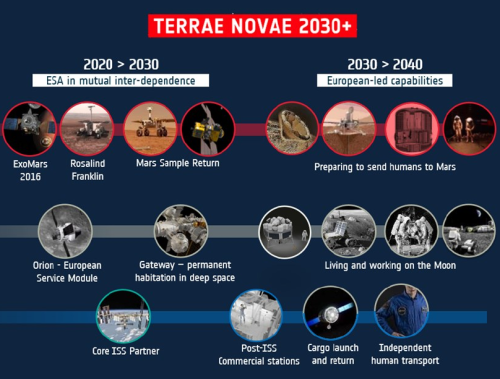
Figure 6 from the Terrae Novae policy paper

The new colonial movement: The European Space Agency (ESA) yesterday unveiled a new roadmap for its future space effort, aimed primarily in developing an independent space program capable of launching its own astronauts and taking them to both the Moon and Mars.

The program is dubbed Terrae Novae (“New Worlds”) and aims to put European astronauts on other worlds using its own rockets and landers by the 2030s. The graphic to the right, figure 6 from the policy paper, illustrates this long term goal.

From the full document [pdf]:
» Read more

3 comments
1 13 14 15 16 17 22