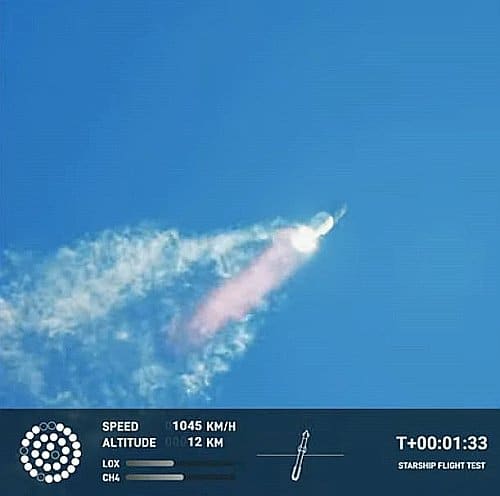
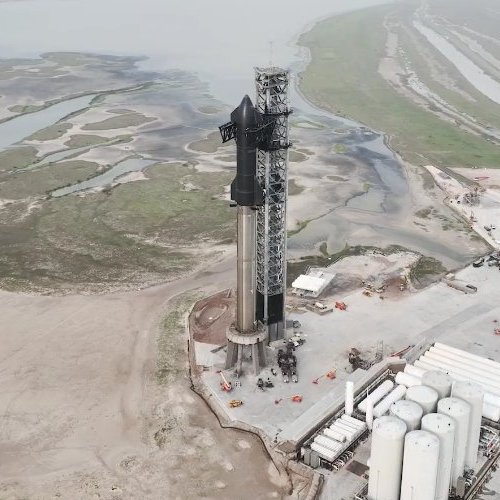
Starship/Superheavy 2nd test launch likely delayed until next year by federal bureaucracy and White House
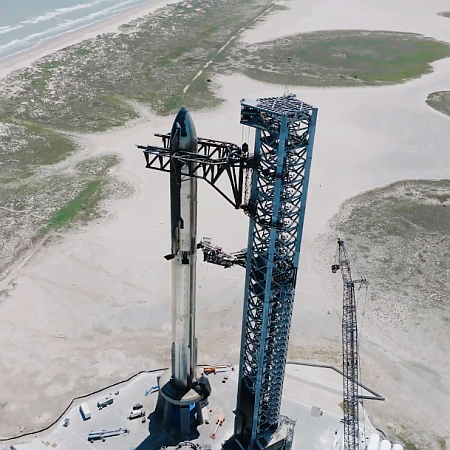
Starship stacked on Superheavy, September 5, 2023
Starship stacked on Superheavy, September 5, 2023,
when Elon Musk said it was ready for launch

They’re coming for you next: While answering questions from reporters at a conference yesterday on when SpaceX might get its next Starship/Superheavy launch license, FAA acting chief Polly Trottenberg said she hoped that license will be awarded by October, but then slipped in one minor additional detail that had not previously mentioned or required:

SpaceX would still need a separate environmental approval from the U.S. Fish and Wildlife Service before a launch. Trottenberg did not say how long that might take.

Not surprisingly, the story from Reuters buries this detail, spinning the story to make it seem that the FAA is eager to help SpaceX launch. Similarly, this NasaSpaceFlight.com story (a space news outlet which has also tried to spin things to make the delays appear the fault of SpaceX) fails to even mention this detail.

SpaceX is now destacking Starship from Superheavy (live stream here).

I predicted in the spring that intransigence from the federal bureaucracy, controlled by the Biden administration, would likely delay this launch well past August, and likely into next year. I also said I would be thrilled if my cynical prediction turned out to be wrong.

Sadly, it looks like that prediction will be correct, and in fact might have actually been conservative. » Read more

24 comments

Good news? FAA issues own report on April Starship/Superheavy launch

The FAA today closed out its own investigation into the April test launch failure of SpaceX’s Starship/Superheavy rocket, stating that it found “63 corrective actions SpaceX must take” before another launch license will be issued.

Corrective actions include redesigns of vehicle hardware to prevent leaks and fires, redesign of the launch pad to increase its robustness, incorporation of additional reviews in the design process, additional analysis and testing of safety critical systems and components including the Autonomous Flight Safety System, and the application of additional change control practices.

It is not clear how many of these corrections have already been completed by SpaceX. The FAA made it clear however that it does not yet consider its requirements to have been met.

The closure of the mishap investigation does not signal an immediate resumption of Starship launches at Boca Chica. SpaceX must implement all corrective actions that impact public safety and apply for and receive a license modification from the FAA that addresses all safety, environmental and other applicable regulatory requirements prior to the next Starship launch.

The timeline suggests FAA is demanding additional actions from SpaceX. The company submitted its own investigation report to the FAA on August 16th. The FAA then spent almost a month reviewing it, during which it almost certainly decided some of SpaceX’s corrections were insufficient. It has now followed up with its own report, listing additional actions required.

Remember, no one at the FAA is qualified or even in a position to do a real investigation. They are simply acting as a chess kibitzer on the sidelines, making annoying commentary based on less information than held by the players of the game (in this case SpaceX). Unlike a chess kibitzer, however, the FAA controls the board, and can force SpaceX to do its recommended moves, or declare the game forfeited by SpaceX.

If the FAA has required additional actions, we will find out in the next few days when SpaceX destacks Starship/Superheavy and rolls both back into the assembly building. It is also possible we instead shall have a few weeks of back-and-forth negotiations by phone, zoom, paper, and face-to-face meetings, whereby SpaceX engineers will be desperately trying to make FAA paper-pushers understand some of their engineering work which will eventually result in an agreement by the FAA to let SpaceX launch.

Remember, none of this kind of regulatory interference and investigation took place between SpaceX and the FAA during the Trump administration when SpaceX was flying a Starship suborbital test flight almost monthly. The heavy boot of regulation arrived soon after Biden. The two are closely linked.

16 comments

Starship and Superheavy: Ready for launch but still blocked by the White House

Starship stacked on Superheavy, September 5, 2023

Elon Musk yesterday tweeted a short video showing Starship prototype #25 as it was stacked on top of Superheavy prototype #9, stating that both were now ready for their orbital test launch, the second attempt by SpaceX to launch this new rocket.

The image to the right is a screen capture from that movie, showing the full rocket ready to go. When it will go however remains a complete unknown, as Musk himself noted in the tweet: “Starship is ready to launch, awaiting FAA license approval.”

In May I predicted that though Musk predicted at that time that SpaceX would be ready to do this launch in August, it would not happen then or likely for months afterward, because the FAA under the Biden administration is slow-walking all launch approvals for SpaceX, as I showed in detail in a later June essay.

It is now September. SpaceX didn’t meet Musk’s original August ready date for launch, but it only missed that target by about five days. And as I predicted, the FAA has also not yet approved the launch license.
» Read more

19 comments

SpaceX completes successful 6-second static fire test of Superheavy

screen capture during static fire test
Screen capture during static fire test

SpaceX today successfully completed a full 5-second static fire test of all 33 Superheavy Raptor-2 engines as well as the deluge system of the launchpad at Boca Chica.

The link goes to the live stream, which is still on-going. The static fire test occurs at about 42 minutes, if you wish to see it.

According to the narrators of the live stream, Elon Musk tweeted that the static fire was a success. It certainly appeared to go for the full five seconds, and it certainly appeared more robust than the previous test. We will have to wait however for confirmation that all 33 engines fired as planned.

The company clearly appears just about ready to do an orbital test flight. Too bad the Biden administration still stands in the way. There is yet no word on when the FAA will approve a launch license, and the decision of the Justice Department yesterday to file a bogus discrimination lawsuit against SpaceX strongly suggests the White House is working hard to figure out ways to squelch this private effort by an American citizen and his company.

Hat tip to Jay, BtB’s stringer.

32 comments

SpaceX report on first Starship/Superheavy launch failure submitted to FAA

Though we don’t know exactly when this was done, SpaceX has submitted to the FAA its final report on its investigation into the launch failure during the first Starship/Superheavy test launch in April, and now awaits the FAA’s response.

Now comes the FAA’s review of SpaceX’s investigation, fulfilling the agency’s role as the regulator charged with ensuring public safety during commercial launch operations. “When a final mishap report is approved, it will identify the corrective actions SpaceX must make,” an FAA spokesperson told Ars. “Separately, SpaceX must modify its license to incorporate those actions before receiving authorization to launch again.

Do not expect that response to be fast, or accepting. I predict the FAA will demand a lot more investigation and changes from SpaceX, actions that will take time to implement and be approved. Furthermore, I fully expect the FAA to take at least two months to review the SpaceX report before it issues those demands. As I have been predicting since May, there will be no Superheavy/Starship launch this year.

2 comments

SpaceX conducts static fire test of Superheavy and its launchpad systems

SpaceX yesterday conducted a static fire test of Superheavy and its launchpad systems at Boca Chica.

After a couple of hours of chilling the fuel lines, filling of the liquid oxygen and liquid methane tanks aboard Booster 9 began at T-Minus 67 minutes. The liquid oxygen tank was fully filled with the liquid methane only partially filled with what was required for the test.

After a smooth countdown, Booster 9 lit all 33 Raptor engines, however, 4 shut down early during the 2.74-second duration test. The test was intended to last 5 seconds.

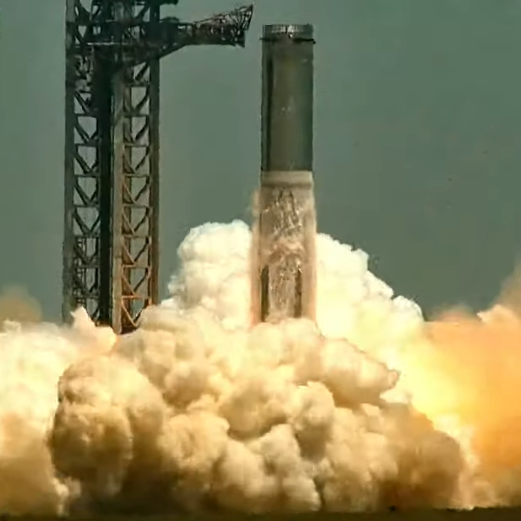
The new water deluge system seemed to work as intended, albeit with a very short firing of the engines. Instead of a giant dust cloud that is usually formed after a static fire test, this test created a steam cloud that dissipated fairly quickly following the test.

The premature shutdown and the even earlier shut down of four engines suggests SpaceX still has kinks it needs to work out. No surprise. It will now probably switch out those four engines, analyze the test, and do it again. It will do so partly because it needs to before the orbital test flight, and partly because it can’t do that test flight because the FAA has still not issued a launch license.

I have embedded the video of that test below the fold.
» Read more

3 comments

Update on the technical progress at Boca Chica, preparing for the next Starship/Superheavy orbital test

Link here. Lots of progress had been made in getting the pad and the rocket ready for that next orbital test flight, with the first static fires tests of Superheavy using the launchpad’s new water deluge system are now expected in the coming week.

The company is also preparing additional prototypes of Superheavy and Starship for later orbital tests. even as it upgrades the assembly facilities, replacing temporary tents with actual buildings. More details, including videos, at the link.

Meanwhile, the only word from the FAA about SpaceX’s application for a launch permit has been a warning that it will not issue that permit until it is good and ready, suggesting the company should not expect to launch in August, as I have been predicting for months.

12 comments

Unless Congress acts soon, the unelected administrative state will rule unopposed

A dying document
A dying document

While much of the conservative press has been focusing on the illegal abuse of power by security agencies like the FBI, the CIA, and the Department of Justice, in the past week a whole slew of stories having nothing to do with election politics or Donald Trump have even more starkly illustrated the growing power of the many alphabet agencies of the federal government’s executive branch, power that is cancelling the real constitutional power of Congress — even as Congress looks on impotently.

Unlike abusive and illegal indictments of Trump, or evidence that the Justice Department and FBI are acting to protect Joe Biden and his son Hunter, however, these others stories have generally gone unnoticed, except by your intrepid reporter here at Behind the Black.

First, on July 26th we had the Space Force proposing new regulations that would allow it to literally take control over all private space assets in any declared international emergency, without any need to compensate the owners.

The Space Force’s draft framework for how commercial satellite services could be called up in times of crisis or conflict to support military missions would allow the Defense Department to deny participating companies the right to sell their wares to any other client in times of “war, major conflict, national or international emergency.” [emphasis mine]

What is the point of owning anything if the U.S. military has the power to simply steal it from you, without paying you for it, anytime any president or Congress on a whim decides to declare an international emergency? Such declarations were once rare, but now they happen routinely, with dire consequences for private citizens, as we all learned during the COVID panic.

On that same day we also learned that the FAA has refused to allow the private company Varda from bringing back to Earth a capsule it had launched to space several months ago, with the express intent to manufacture needed pharmaceuticals in weightlessness that can’t be made on Earth.
» Read more

15 comments

FAA: No Starship/Superheavy launch until we say so!

We’re here to help you! The FAA yesterday stated in no uncertain terms that there will be no additional orbital test launches of SpaceX’s Starship/Superheavy until it has decided the launch will be safe.

The FAA, which is overseeing an investigation into the April 20 launch, said Wednesday it was still awaiting the report it needs to identify corrective actions SpaceX must take to get the OK to launch again from Boca Chica.

An FAA spokesperson declined to speculate when the agency’s investigation might be completed, saying that “public safety and actions yet to be taken by SpaceX will dictate the timeline.”

“The FAA will not allow a return to flight operations until it determines that any system, process, or procedure related to the mishap does not affect public safety or any other aspect of the operator’s license,” the spokesperson said. “The mishap investigation is ongoing.”

The implication that the FAA is awaiting completion of SpaceX’s own investigation sounds like an attempt to shift the blame for the delay from the government to SpaceX, even though the company has made it very evident in words and deeds that it is moving quickly and will be ready to launch in August.

This threat of a delay is hardly a surprise. I predicted in late April that the federal bureaucracy is targeting SpaceX, and by late May predicted the the FAA would block this August launch attempt.

It is also important to underline the fact that there is absolutely no one at the FAA capable of or knowledgeable enough to competently assess the safety of the next launch. The only people who can really do that are the engineers at SpaceX. All the FAA can do is reject SpaceX’s investigation — for political reasons — and demand SpaceX take additional actions, based merely on random guesses as to what needs to be done. And it can keep doing this repeatedly.

This launch is likely to be delayed many months. You heard it here first.

8 comments

Varda blocked from bringing its capsule back to Earth by FAA

Varda has been forced to delay the first return of its capsule from space, loaded with a drug designed to treat HIV/AIDS that can only be manufactured in weightlessness, because the FAA has so far refused to issue “a re-entry license,” a new regulatory power grab the FAA instituted two years ago supposedly to “streamline the launch and reentry licensing process.”

This new language, which I was unaware of and know of no Congressional act approving it, has done exactly the opposite.

A key issue, he said, is that Varda is the first to seek a reentry license under new FAA regulations known as Part 450. Those regulations were enacted by the FAA more than two years ago to streamline the launch and reentry licensing process.

…For the commercial launch industry, the Part 450 regulations have become an area of concern. Only a handful of Part 450 launch licenses have been issued to date as the FAA begins a transition to the new regulations, but those licenses have taken longer to complete than expected, in some cases missing a 180-day statutory deadline. Industry officials raised the issue at a July 13 hearing of the House Science Committee and at a July 11 meeting of an FAA advisory group, the Commercial Space Transportation Advisory Committee. [emphasis mine]

The highlighted language says it all. It also suggests these new regulations, apparently written by the FAA and not Congress, might be contributing to the delays being experienced by SpaceX in its attempt to do test launches of its Starship/Superheavy rocket.

Varda is presently hoping to return the capsule in mid-August. It had begun this re-entry licensing process in early 2021 — more than two years ago — and still does not have that approval. Its business plan is to make money by manufacturing things in weightlessness that can’t be made on Earth — such as this HIV drug — and returning those items to Earth for sale.

Such a plan can’t work if the federal administrative state stands in the way.

6 comments

Update on preparations at Boca Chica for next Starship/Superheavy test launch

Link here. The article provides an excellent review of the extensive work SpaceX is doing, especially in repairing and upgrading the Superheavy launch facility.

Overall, SpaceX is moving fast, suggesting that Elon Musk’s prediction that it will be ready technically to launch in August quite believable. I remain doubtful that launch will happen in August, however, as I fully expect the FAA and the Biden administration will not issue a launch license on time, but will delay it.

8 comments

SpaceX completes six-engine static fire test of Starship prototype #25

SpaceX yesterday successfully completed a six-engine static fire test of Starship prototype #25, the prototype that will be stacked on top of Superheavy prototype #9 and flown on the next orbital test flight.

Musk said in an interview on Saturday that more than a thousand upgrades were planned before the next flight of the Starship/Super Heavy. Including a significant change to the stage separation system that will see the Starship ignite its engines while still attached to the Super Heavy. Improvements are also being made to the Raptor engines to prevent leaks of super-heated gas which resulted in multiple engine failures during the April launch.

Major repair work and modifications are also underway to the Starship launch pad, after extensive damage occurred during the April 20 test flight.

Musk has also said the company will be ready to launch by August. While it is certainly possible that engineering will cause a slight delay to that schedule, more likely SpaceX will be ready, and then have to sit and wait for the FAA and the Biden administration to issue a launch permit. I am predicting it will not be issued by then, and likely not for months afterward.

4 comments

FAA finally reduces airspace restrictions for some launches out of Cape Canaveral

On June 15, 2023 FAA announced that it has at last reduced the airspace restrictions for some launches out of Cape Canaveral, thus allowing more launches while reducing the disruption to commercial airline traffic.

The move is part of broader efforts to address the conflicts between launches and commercial aviation, particularly in Florida’s congested airspace. In April, the FAA released a set of factors when considering whether to allow a launch to proceed or ask the launch company to identify alternative windows for the launch.

Among those factors are the timing of the launch, particularly relative to holidays or other special events that cause increases in air traffic, and the duration of the launch window. “The FAA encourages commercial space operations to take place during nighttime hours (to the extent practicable) when other flight operations tend to be reduced,” the guidelines state.

I say “at last” because SpaceX have been pushing for this reduction for years. It knows its rockets will fly very reliably, and even if a rare failure forces their destruction, the territory threatened is much smaller than what was once considered necessary in the past. It just took years to get the federal bureaucracy to recognize these facts.

3 comments

New House bill proposes giving FAA responsibility for monitoring space junk

A just proposed House bill for reauthorizing the Federal Aviation Administration (FAA) also proposes giving that agency the responsibility for monitoring space junk.

The bill instructs the FAA to establish a program to track objects “that are potential sources of covered airborne debris” with a focus on identifying those about to reenter and could pose a risk to aircraft in airspace. That program would coordinate with the FAA’s air traffic control system to identify airspace that needs to be closed for a reentry. It would allow the FAA to establish its own space situational awareness (SSA) facilities and work with other federal agencies, companies or international organizations for data on such objects.

While the focus of the bill is tracking debris to assess airspace risks, the bill does enable additional uses of the data the FAA collects. In particular, it directs the FAA to offer “a basic level of data, information, and services” at no charge. That includes maintaining a public catalog of space objects and “emergency conjunction notifications” of such objects.

The article at the link notes that this new FAA job would also duplicate work of the Space Force, as well as a new Commerce Department office tasked with similar responsibilities. It also duplicates the same responsibilities the FCC has created for itself, outside of its statutory authority.

In other words, there is a factional turf war going on within the swamp, with each faction attempting to establish its territory and control over this work.

The result? Expect Congress to allow this duplication to go forward, funding all three efforts. As we all know, money grows on trees, and hiring as many Washington bureaucrats is the most important thing Congress can do, even if those bureaucrats don’t do anything useful.

5 comments

NASA worried FAA launch permit delays to Starship/Superheavy will delay first lunar landing

During a public meeting on June 7, 2023, a NASA official expressed concerns that the FAA’s slow launch permit process for SpaceX’s test program for developing Starship/Superheavy will end up seriously delaying the first Artemis manned lunar landing, presently targeting a December 2025 launch date.

The official, Jim Free, was very careful how he worded his comments, but the FAA issue loomed large in his mind.

Free said NASA met with the Federal Aviation Administration recently to discuss the importance of the Starship rocket to the space agency’s moon exploration plans. The FAA is overseeing SpaceX’s investigation into the problems encountered on the April 20 test launch, when the flight termination system took longer to destroy the rocket than expected. The destruct system is designed to terminate the flight before an errant rocket threatens populated areas.

The FAA is not expected to grant SpaceX another Starship launch license until the investigation is complete, and federal regulators are satisfied with changes to the rocket to address any public safety concerns. “They just have to get flying,” Free said of SpaceX. “When you step back and you look at (it), that’s a lot of launches to get those missions done, so our FAA partners are critical to that.”

For the FAA to treat SpaceX’s test program like ordinary launches, requiring a detailed investigation by it after every test flight, will likely delay the development of Starship/Superheavy by years.

Following the early suborbital tests of Starship, the FAA did not “oversee” the investigations. The FAA merely observed closely SpaceX’s investigation, and let it move forward when SpaceX was satisfied. Now the FAA wants to determine for itself when each launch will occur, even though there is no one at the FAA truly qualified to do that. The result will be endless delays and paperwork, and many fewer flights spaced many more months apart, none of which will do anything to aid the development.

NASA is obviously trying to get the FAA to see this, but we must remember that the change in policy at the FAA almost certainly came from the Biden administration, which doesn’t care as much for getting to the Moon as it does wielding its power to hurt Elon Musk, whom it now sees as a political opponent. Expect NASA’s pleas to fall on deaf ears.

22 comments

SpaceX confirms Starship prototype to fly on next Superheavy test flight

SpaceX has confirmed that it will use Starship prototype #25 to fly on top of Superheavy prototype #9 on the next orbital test flight.

Starship #25 does not include a lot of the upgrades that have been installed on later Starship prototypes, but by using it SpaceX tells us its focus on that next orbital test flight will be to test Superheavy. Using this less capable Starship gets it used and out of the way so that the kinks in Superheavy can more quickly be worked out.

It also means SpaceX’s prime focus on that second flight will not be reaching orbit, though the company will try nonetheless.

The article at the link also notes that this next orbital test cannot take place any sooner than August, based simply on engineering requirements.

Ship 25 is now at the launch site and awaiting a six-engine static fire test, with Elon Musk noting the pad modifications should be complete in a month, ahead of another month of testing before the next test flight.

This gives the FAA two full months to approve the launch license. I predict however that come August, that launch license will still not be approved, and we will still have no clear idea of when that approval will come. Nor should we be surprised if approval does not come before the end of this year.

2 comments

Three government agencies now investigating the safety of methane-fueled rockets

We’re here to help you! It appears that three different federal agencies have been tasked to investigate the safety of methane-fueled rockets, which SpaceX, Relativity, Blue Origin, and others are beginning to use for their rockets. It burns cleaner and with more power than kerosene and is easier to handle than hydrogen.

Yet, the federal government under Biden now seems worried a new innovation in rocketry is being developed. First, the FAA is studying the explosive potential of such rockets, according to Brian Rushforth, the manager of the innovation division.

The FAA has set up a test stand at the Dugway Proving Ground in Utah. A crane 43 meters tall will be used to drop stainless steel containers containing mixtures of LOX and methane. A series of tests is planned to start in June on three-week intervals to measure the explosive power of that propellant combination. A second phase, tentatively scheduled for next year, will conduct similar tests with varying velocities. He said the data from those tests will be shared with other government agencies, such as NASA and the U.S. Space Force, along with launch vehicle developers.

Meanwhile, NASA and the Space Force are jointly doing a separate study on how methane-fueled rockets threaten the launch range and other nearby launchpads.

In all three cases it can be argued that these studies make sense. It also can be argued that the Biden administration is putting pressure on these agencies to find ways to squelch this new technology, especially because it is central to the development of SpaceX’s Superheavy/Starship rocket, and there is real hostility in Democrat/leftist circles to Elon Musk. This latter argument is further strengthened when you consider the explosive possibilities of hydrogen fuel, used by the space shuttle for decades as well as NASA’s SLS rocket. I can’t imagine its danger is less than methane. If hydrogen has been determined to be okay why should methane now be considered a threat?

Either way, we can be sure of one thing: These studies will slow down development by SpaceX and others of these new methane-fueled rockets. They will also provide ammunition for outside environmental groups who want to file further lawsuits against these companies to stop their rockets from launching.

11 comments

With the federal bureaucracy gleefully sharpening its knives to shut down Boca Chica, SpaceX should quickly shift Starship/Superheavy operations to Florida

Superheavy still going strong, shortly after Max-Q

The results of the spectacular test launch last week of SpaceX’s Superheavy/Starship heavy lift rocket was predictable in almost all ways.

First, everyone knew that it was highly unlikely that the launch would do everything intended. This was the first time ever that SpaceX had fired all 33 Raptor-2 engines at the base of Superheavy, at full power. It was the first time ever that this firing took place with Starship stacked on top. It was the first time ever that the entire stack was fueled. It was the first time ever that this rocket — the world’s most powerful (twice as powerful as the Saturn-5 and about three times more powerful than SLS) — had every launched.

The number of unknowns were gigantic, which was exactly why SpaceX needed to do the launch. The company’s engineers needed to find out what they didn’t know about Superheavy in order to refine their engineering so that Superheavy will be more likely for success in its next launch. They also needed to find out what such a launch would do to their preliminary launchpad, in order to refine its engineering as well so that future launches could take place with little or no damage.

Thus, it is not surprising that there were surprises. The most significant was the actual amount of success. Superheavy functioned far better than anyone could have dreamed, retaining flight control through max-q and then flying for almost three minutes before Starship failed to separate and the entire stack lost control and had to be destroyed. Most of its engines worked, though discovering the reasons for the handful that failed will be a prime question in the subsequent investigation.

The second unsurprising thing about this launch is the reaction of the federal bureaucracy, run by Democrats and the Biden administration. It has quickly moved in to squelch any further launches at Boca Chica, likely for a considerable time. The FAA immediately initiated its own investigation while grounding all further launches from Boca Chica. The Fish & Wildlife Service has now begun detailing, almost gleefully, the amount of ground damage the launch caused, including ripping out the concrete base below the rocket and flinging chunks of debris hundreds of feet away as well as depositing a cloud of sand dust on everything up to 6.5 miles from the launchpad.

This quote however is significant, and tells us the real truth:
» Read more

29 comments

FAA issues Starship launch license; SpaceX schedules launch for April 17th

Starship stacked on top of Superheavy
Starship prototype #24 stacked on top of Superheavy prototype #7

FAA just sent out an email notice announcing that it has issued SpaceX the launch license for the first orbital test launch of Superheavy/Starship.

After completing an evaluation of all applicable Vehicle Operator License requirements, the Federal Aviation Administration (FAA) issued a commercial Vehicle Operator License to SpaceX for launches of the Starship/Super Heavy Launch Vehicle Program in Cameron County, TX.

The affected environment and environmental impacts of Starship/Super Heavy operations at the Boca Chica Launch Site had been analyzed in the 2022 Final Programmatic Environmental Assessment for the SpaceX Starship/Super Heavy Launch Vehicle Program at the SpaceX Boca Chica Launch Site in Cameron County, Texas. Since the 2022 Programmatic Environmental Assessment (PEA), SpaceX provided the FAA with additional information regarding Starship’s planned landing, Super Heavy’s planned soft water landing, and the Launch Pad Detonation Suppression System. In accordance with FAA Order 1050.1F, Environmental Impacts: Policies and Procedures, the FAA prepared the Written Re-evaluation of the 2022 Final Programmatic Environmental Assessment for the SpaceX Starship/Super Heavy Launch Vehicle Program at the Boca Chica Launch Site in Cameron County, Texas to describe and evaluate this additional information.

Based on the Written Re-Evaluation, the FAA concluded that the issuance of a vehicle operator license for Starship/Super Heavy operations conforms to the prior environmental documentation, that the data contained in the 2022 PEA remains substantially valid, that there are no significant environmental changes, and all pertinent conditions and requirements of the prior approval have been met or will be met in the current action. Therefore, preparation of a supplemental or new environmental document is not necessary to support the Proposed Action.

In plain English, the FAA (and other federal agencies) have finally agreed that this launch will do nothing to change the conclusions of the environmental reassessment report that was approved in June 2022. That these agencies decided apparently decided to rehash that approved environmental reassessment for a launch that was also approved in that reassessment suggests that there are individuals in these agencies salivating for an opportunity to squelch SpaceX.

SpaceX has now set April 17, 2023 as the launch date, with its live stream going live in two days. I will embed that live stream late on April 16, 2023, for those who wish to watch it here.

18 comments

Starship orbital test flight delayed one more week due to FAA delays

According to a tweet yesterday by Elon Musk, the first orbital test flight of Starship/Superheavy has been delayed again.

Starship launch trending towards near the end of third week of April

Musk had made it clear in an April 8th tweet the cause of this delay or any other delays:

Starship is ready for launch. Awaiting regulatory approval

Musk needs to be somewhat diplomatic as it will not help him to make federal bureaucrats his enemies. What he is doing here is subtly letting everyone know the sole cause of the delay, in order to press the FAA to get a move on, without saying so directly. He leaves that to others, such as myself, to say it instead.

I fear that the FAA is now demanding that it must look at the data from any wet dress rehearsal countdown, including the short engine burst that Superheavy will likely do at T-0, before it will issue the permit. If so, we could see more than a week delay. The launch should easily slip to late May if not later.

The absurdity of this is that it is utterly pointless for FAA bureaucrats to look at any of this data. What do they know? Nothing. If something was significantly wrong SpaceX engineers would know far sooner, and delay the launch themselves.

The delays seen in issuing this one launch license however give us a nice picture of what it will be like for the launch industry once the moratorium on heavy regulations by the FAA and other federal agencies expires on October 1, 2023. Expect a substantial slowdown in development and launches, with many of the new companies about to become operational instead going bankrupt in a replay of the destruction of Virgin Orbit by the UK’s Civil Aviation Authority.

9 comments
1 5 6 7 8 9 13