What life was really like in the American wild west

Vanished Arizona by Martha Summerhayes

Though I read a lot of good, detailed, and well-researched histories, I repeatedly find that if I really want to get a sense of the reality of times past, it is necessary to read something that was written by a person who lived at the time, and was an actual witness to great events.

When you do this you instantly cut through the political narratives that color all histories, whether sincere or not. Historians writing generations later bring their own viewpoint to the subject, colored by subsequent history shaped by what the original players did. So, to really understand those original players fairly, you really need to hear their side of the story, from their own lips.

Thus, I was thrilled recently when I came across a used copy of Vanished Arizona: Recollections of the Army life of a New England Woman by Martha Summerhayes. The book covers her memories from 1870 to 1900 as the wife of Jack Summerhayes, an officer in the American military stationed in the western United States, with the bulk of the story centered in Arizona.

This is an amazingly readable book. More important, it tells this story of army life from the perspective of the women who lived it. Most histories cover the battles and important events that Summerhayes’s husband Jack participated in, from defeating the Apaches and Geronimo to establishing the first settlements in early Arizona. Martha Summerhayes instead tells the story from her perspective as a woman living in an isolated fort in the hot desert wilderness of Arizona. The story is riveting, and revealing as well.

In reading her work now, 150 years later during the first half of the 21st century, I noted two important things.
» Read more

19 comments

China and SpaceX complete launches

The pause in launches in the past week has now ceased, completely for SpaceX and partly for China.

Yesterday China completed its first launch in more than a week and only its second since it had two launch failures on January 17, 2026. It successfully launched its Shenlong X-37B copycat mini-reusable shuttle on its fourth mission, its Long March 2F rocket lifting off from its Jiuquan spaceport in northwest China.

No word on how long Shenlong will remain in orbit. All China’s state-run press would reveal is that it is performing “technological verification” in orbit. That state-run press also said nothing about where the rocket’s lower stages, using very toxic hypergolic fuels, crashed inside China.

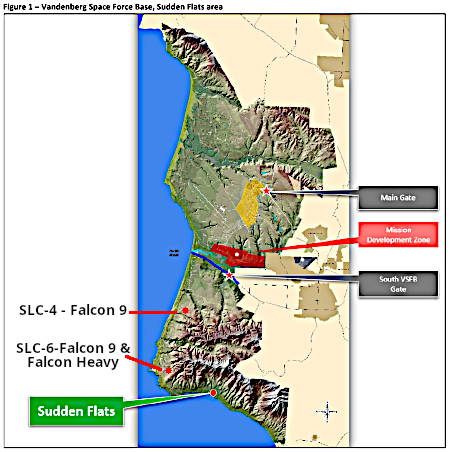
SpaceX today resumed launches after its own weeklong pause, caused as the company investigated why the upper stage on the February 2nd launch did not complete its de-orbit burn as planned. The company has released no information on the results of that investigation, but apparently it was satisfied with the results to resume launches. It successfully placed 25 more Starlink satellites in orbit today, its Falcon 9 rocket lifting off from Vandenberg Space Force Base in California.

The first stage completed its 13th flight, landing on a drone ship in the Pacific.

The 2026 launch race:

15 SpaceX
7 China
2 Rocket Lab
1 Russia

1 comment

Isaacman issues directive to shift power back to NASA and away from private sector

Jared Isaacman, in announcing this directive

NASA administrator Jared Isaacman yesterday issued a major three-part directive which he claimed would save more than a billion dollars at NASA while allowing the agency to “regain its core competencies in technical, engineering, and operational excellence”.

The plan could actually backfire, however, as it appears to shift power and control back to NASA and away from private sector.

First, Isaacman wants to eliminate much of the outside contracting NASA now relies on, bringing that work back into the agency itself. Second, he wants eliminate “restrictive clauses that prevent us from doing our own work and addressing intellectual property barriers that have tied our hands.” Third, he wants to “restore in-house engineering,” having more work done by NASA engineers instead of depending on outside contractors.

To some extent, there is value in all these changes, because in many cases NASA employees use the policy of using contractors to outsource their entire work load, so they can sit and do practically nothing.

Overall however this directive could very well squelch the present renaissance in commercial space, because it will put NASA much more in control of everything. Rather than simply being a customer buying the products built and owned by the private sector (ie, the American people) — the capitalism model — the directive demands that NASA run things, the centralized Soviet-style top-down government model.

This aspect is best illustrated by the second part of his directive. Many contractors, such as SpaceX, do not wish to reveal everything about their product designs to NASA, because then it becomes public and can be stolen by their competitors. By requiring companies to release all proprietary data, those companies will no longer own that data, and thus will no longer be as easily able to benefit from its development. This will discourage private investment. It will also once again centralize development at NASA. Rather than getting multiple ideas and innovation from multiple companies, everything will funnel into the ideas NASA managers and engineers come up with.

Isaacman has come to this directive after spending his first two months as administrator delving into how the agency is operating. But he has gotten the solution entirely backwards. Rather than centralize and expand the work done inside NASA, thus justifying its large workforce that Isaacman has found isn’t doing much, wouldn’t it be better to simply eliminate those government jobs entirely? Trim NASA down to its essentials, and let the American people, not the government, come up with what they need and want in space.

Isaacman is not doing this however. Instead, he is apparently working to rebuild the NASA empire, so that it can once again design all, own all, and control all. That was how things were during the shuttle era, and the result was that for almost a half century, America went nowhere in space.

My doubts and concerns about Isaacman and his priorities, which started during his first nomination hearings, have only increased. Despite being a man who made billions in the free private sector, he increasingly appears to be someone eager to build a government empire to laud over everyone.

31 comments

Midnight repost: How the localized nature of Democrat vote tampering will influence the 2022 election

The news during the past few weeks revealing scads of new evidence proving the 2020 presidential election was stolen from Donald Trump in Georgia reminded me of my 2022 essay, now reposted below. What I described in that essay was the exact tactic the Democrats used in Georgia, most specifically in Fulton County that covers the heavily Democratic Party dominated city of Atlanta. In some parts of that county Democrats were so dominant that they could work under the radar, and fudge the vote aggressively.

Though a number of my election predictions in this essay turned out wrong, the essay does provide the basics of what happened in 2020, and could still happen in 2028 and beyond, if a real effort is not made to regain some control of this election tampering. And not surprising, the Democrats are now opposing any such reforms with great enthusiasm, using their slander and demagoguery tactics to rile up their base, helped enthusiastically by the propaganda press that works as their public relations arm.

————————
How the localized nature of Democrat vote tampering will influence the 2022 election

Based on the ample evidence of election fraud, corruption, and vote tampering done repeatedly by Democrats nationwide during the 2020 election, we can expect these politicians and their minions to commit similar election crimes in the upcoming 2022 mid-term elections, especially because the effort by some Republicans to reform their state election systems in the key purple states was so effectively blocked by Democrats, by many quisling Republicans, and by a willing leftist press.

It is however important to understand where that election tampering was done in 2020 in order to understand the election fraud to come, as well as creating a strategy to prevent it. As real estate agents like to say, “Location is everything!”, and it appears this applies to election fraud as well.
» Read more

2 comments

A new American satellite constellation gets FCC approval

The satellite startup Logos has won approval from the Federal Communications Commission (FCC) for its proposed 4,178 satellite internet constellation.

The Federal Communications Commission partially granted the Redwood City, California-based venture’s constellation proposal Jan. 30, clearing operations in K-, Q- and V-band spectrum under certain conditions while deferring and denying parts of its higher-frequency requests. The satellites would operate across seven orbital shells ranging from 870 kilometers to 925 kilometers above Earth, with inclinations spanning 28 to 90 degrees.

Under FCC rules, Logos must deploy and operate half of the constellation within seven years, with the remainder in place by Jan. 30, 2035.

The company last year raised $50 million in private investment capital, and hopes to launch its first satellite by 2027.

It seems this constellation is coming to the game very late.

3 comments

Has the FAA officially approved Starship launches for Kennedy Space Center in Florida?

Proposed Starship/Superheavy launchsites at Kennedy and Cape Canaveral
Proposed Starship/Superheavy launchsites at
Kennedy (LC-39A) and Cape Canaveral (SLC-37)

It appears that though the FAA’s preliminary summary that it issued on January 30, 2026 only suggested it was leaning to approve Starship/Superheavy launches at SpaceX’s LC-39A launchpad at the Kennedy Space Center in Florida, it now appears that SpaceX is treating it as an official approval, and has begun work re-configuring LC-39A from the launchpad used for manned Falcon 9 launches to a facility for launching both Falcon Heavy and Starship/Superheavy.

The launch pad has seen a pause in action due to SpaceX working to finalize the Starship tower and launch pad on the site. Then on Wednesday, Feb. 4, a crane appeared next to the Falcon 9 launch tower, attaching to the crew access arm.

“For our manifest going forward, we’re planning to launch most of our Falcon 9 launches off of Space Launch Complex 40. That will include all Dragon missions going forward,” said Lee Echerd, senior mission manager of Human Spaceflight Mission Management at SpaceX during the Crew-12 prelaunch press briefing. “That will allow our Cape team to focus 39A on Falcon Heavy launches and hopefully our first Starship launches later this year.”

This Space News article today claims the FAA has issued a final approval for Starship/Superheavy at LC-39A, but it links to that preliminary summary from January 30th, which as far as I can tell is still preliminary and does not include an official approval.

Not that it matters. The FAA appears quite prepared to okay Starship/Superheavy launches at LC-39A, and it now appears SpaceX is proceeding under that assumption.

2 comments

Voyager Technologies and Max Space team up to develop inflatable planetary structures

The station designs as of the end of 2025

The space station startups Voyager Technologies, which is leading the consortium developing Starlab, and Max Space, which is developing its own inflatable Thunderbird station, have now partnered to use their combined talents to develop inflatable planetary structures for habitation and cargo.

In terms of their space stations, they are similar but different. Voyager’s Starlab station will be a single giant module launched on Starship. The consortium building this module had hired the interior decoration company Journey to design the interior, and yesterday showed off a mock-up of that interior.

Max Space’s Thunderbird is an equally large single module but because it uses inflatable technology it will launch on a Falcon 9. The company plans to launch a smaller demo module in ’27 to prove this technology.

Both companies will now use their skills together to begin design work on inflatable habitats that both NASA and SpaceX could use on the planned lunar and Mars colonies.

The phased development path includes ground validation and in-space demonstrations later this decade, with the goal of enabling operational lunar and Mars capabilities aligned with NASA’s exploration timelines. The partnership emphasizes early risk retirement, interoperability and commercial scalability as guiding principles.

In other words, these companies are expanding their business model to sell their products across a wider range of uses. This deal does not change my rankings of the five space stations currently under development, as shown below, but it is an interesting data point that suggests the technology of these space stations can be marketed in many other space-related areas.
» Read more

2 comments

Stephen Sondheim – Someone in a Tree

An evening pause: For my birthday, a repost of a 2010 evening pause of one of my favorite Broadway songs, from Stephen Sondheim’s Pacific Overtures, which I only recently learned was his favorite song as well.

It tells the story of a significant moment in history, the moment when Japan’s leaders signed their first international treaty in 1852 with the United States, but from the point of view of outside witnesses. Its point is profound, that history is not just made by the leaders who sign the deals, but by every individual who makes up the whole of human society.

It’s the fragment, not the day
It’s the pebble, not the stream
It’s the ripple, not the sea
That is happening.
Not the building but the beam
Not the garden but the stone
Only cups of tea
And history
And someone in a tree.

0 comments

French startup The Exploration Company completes first splashdown tests of Nyx capsule prototype

The French cargo capsule startup, The Exploration Company, has successfully completed the first splashdown tests of a smallscate prototype model of its proposed Nyx capsule.

On 5 February, The Exploration Company announced that it had successfully completed a splashdown test campaign at the National Research Council’s Institute of Marine Engineering (CNR-INM) in Rome.

A 1:4-scale mockup of Nyx, with a mass of around 135 kilograms, was built for the test campaign by Poli Model, a small Turin-based model builder. For reference, the full-scale capsule will be 4 metres wide and stand at 7 metres tall. The subscale model’s exterior was fitted with pressure sensors, accelerometers, and a gyroscope.

The tests were conducted in the CNR-INM facility’s Umberto Pugliese towing tank, a 470-metre-long pool measuring 13.5 metres across and 6.5 metres deep. Between 13 and 28 January, a total of 20 drops were conducted at varying heights and speeds in calm water, which the company explained maximised repeatability.

The company hopes to fly a fullscale demo mission to ISS in 2028, and wants to upgrade Nyx to manned capabilities in the 2030s.

2 comments

Israeli weather satellite startup raises $175 million in investment capital

An Israeli weather satellite startup, dubbed Tomorrow.io, has now raised $175 million in investment capital to build an AI-driven constellation of satellites to supplement the smallsat constellation it has already launched.

This financing builds on a proven foundation of execution. Tomorrow.io has completed the full deployment of its first satellite constellation, having launched 13 satellites to space, achieving 60-minute global revisit, while scaling an AI-driven intelligence platform now embedded across critical industries. DeepSky extends this foundation into the next phase of the company’s roadmap, supporting continued commercial growth, expanding data coverage, and unlocking new high-frequency sensing capabilities.

I find amusing this new desire to label all computer programming “AI”, when in many cases it is simply the same software slightly upgraded that these companies have been using for years.

Nonetheless, this story signals the continuing transition in the weather satellite industry from the government/Soviet-style model, where all weather satellites are built and operated by governments, to the capitalism model, where governments and industry buy weather data from privately built, launched, and maintained commercial constellations.

2 comments

German rocket startup Isar Aerospace opens new rocket testing facility at Esrange spaceport

Proposed or active spaceports in North Europe

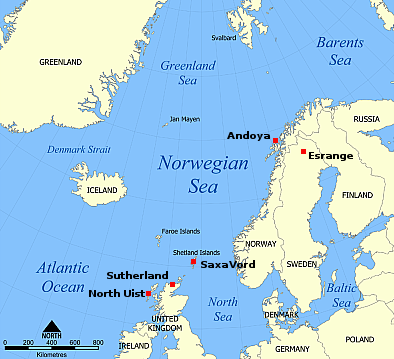
Though the German rocket startup Isar Aerospace is using Norway’s Andoya spaceport to launch its Spectrum rocket, it is now expanding significantly its testing facilities at Sweden’s Esrange spaceport to the east.

European space company Isar Aerospace is significantly expanding their testing operations with SSC Space at Esrange Space Center in Sweden, opening a second test site to support the development and production of its ‘Spectrum’ rocket. The new facility will enable testing of 30+ engines per month, along with expanded integrated stage testing capabilities, increasing testing capacity and enabling faster development.

Launching from Esrange is a problem because of its interior location, but testing engines there, close to Germany and the Andoya spaceport makes great sense.

Isar had hoped to make its second attempt to complete the first orbital launch of Spectrum in January, but postponed the launch until March to deal with a valve issue.

Hat tip to BtB’s stringer Jay.

0 comments

Midnight repost: Truth, Justice, and the American Way

Tonight Diane and I decided to watch again the 1978 Richard Donner movie, Superman. The overall film is lighthearted entertainment that captures the myth of this super-hero perfectly. However, it has two scenes that remain among the best moments in movie history (which you can watch here and here). The first captures the myth in every way. The second shows us that Superman truly stood for the best in America.

In watching the movie tonight again and reliving the myth I grew up with — that great things are possible if you believe and follow sincerely Superman’s motto of “truth, justice, and the American way” — I decided to repost my essay from 2020 where I attempted to explain what that motto really meant.

Enjoy!
———————

The heroic Superman as envisioned in the 1950s
George Reeves as the heroic Superman as envisioned
in the 1950s television show, emulated later by Richard
Donner in his 1978 movie. Click for show’s opening credits.

Truth, Justice, and the American Way

The words spoken during the opening credits of a 1950s children’s television show:

Faster than a speeding bullet.
More powerful than a locomotive.
Able to leap tall buildings in a single bound.
Look up in the sky!
It’s a bird.
It’s a plane.
It’s Superman!

Yes, it’s Superman, strange visitor from another planet who came to Earth with powers and abilities far beyond those of mortal men.

Superman, who can change the course of mighty rivers, bend steel in his bare hands, and who, disguised as Clark Kent, mild-mannered reporter for a great metropolitan newspaper, fights a never-ending battle for truth, justice, and the American Way.

That television show was obviously Superman, starring George Reeves, and these opening words expressed the mythology and basic ideals by which this most popular of all comic-book super-heroes lived.

I grew up with those words. They had been bequeathed to me by the American generation that had fought and won World War II against the genocidal Nazis, and expressed the fundamental ideals of that generation.

Much of the meaning of these fundamental ideals is outright and clear.
» Read more

12 comments
1 20 21 22 23 24 684