Blue Origin provides update on pad repair and New Glenn explosion investigation

New Glenn explosion
New Glenn exploding on May 28th.

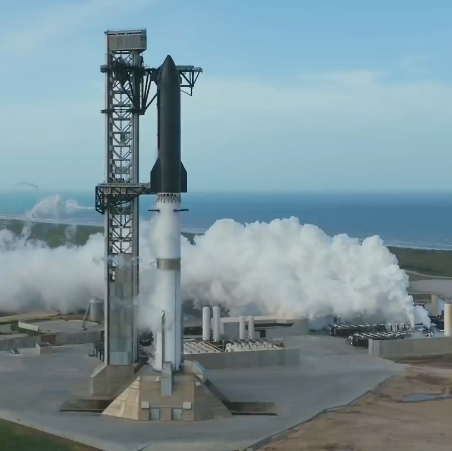
The CEO of Blue Origin, David Limp, yesterday posted an update on the company’s effort to get its New Glenn rocket back flying after the May 28, 2026 launchpad explosion, promising once again that they will resume launches before the end of 2026.

Most of his update described the work the company is doing cleaning up and rebuilding the launchpad. For one thing, they are taking advantage of the explosion by going directly to an upgrade whereby they no longer stack New Glenn entirely horizontally. Instead, some stacking will be horizon, and some vertical. This change is to simplify operations and make the pad compatible for the present New Glenn — with its configuration of seven first stage engines and two upper stage engines (7×2) — and the more powerful 8×4 version, with eight first stage engines and four upper stage engines.

As for the investigation into the explosion itself, Limp was much more vague:

We continue to actively investigate the cause of the anomaly. The vehicle is highly instrumented with extensive data from multiple camera angles and sensors, giving us confidence in our ability to identify and correct the root cause. Early analysis points to the aft section of the first stage.

There is no doubt they can get the launchpad ready before the end of the year. Finding the cause of the explosion and fixing it by December however remains less certain. Limp’s reticence could be simply the company’s desire to restrict access to proprietary information. Or it could be they haven’t yet pinned down the cause. If the latter, the December date becomes far more doubtful.

0 comments

The present state of NASA’s Artemis program

Artemis logo

The aggressive effort by NASA administrator Jared Isaacman to rationalize and speed up the agency’s Artemis program to get back to the Moon and build a base there has resulted in a plethora of new missions, almost all of which are being built by the private sector.

Today Isaacman and his Moon Base program manager, Carlos García-Galán, held a press conference where they announced four more missions.

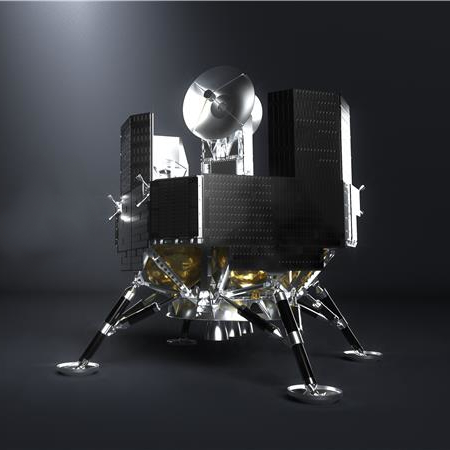
  • Astrobotic won a $297.9 million contract to build and fly two more of its smaller Peregrine lunar landers. This lander attempted a landing in 2024, but a fuel leak right after launch made that impossible.
  • Firefly won a $144.2 million contract to build and fly another Blue Ghost lander, the only commercial lander to successfully achieve a lunar soft landing, in 2025.
  • Intuitive Machines won a $148.3 million contract to build and fly another Nova-C lander. This lander attempted two landings, and in both cases it tipped over just after launch. The Nova-D design, under development, has a lower center of gravity, but for reasons not well explained by García-Galán NASA chose to go with the Nova-C design.

All are considered part of the first phase of the Artemis program and thus are targeting a launch by 2028.

In addition, NASA is considering using back-up equipment developed to build the Curiosity and Perseverance Mars rovers to create quickly and relatively inexpensively a lunar rover that they have dubbed “Promise.”

In order to make some sense of this program and these many misssions, I have created below a chronological list of confirmed missions, with their present status indicated (including uncertainties), as well as some unconfirmed missions based on my own speculations. All dates are tentative at this point, even if NASA has provided us a specific target date.

Several things to note as you review this list. While there are handful of missions going elsewhere, Isaacman is attempting to focus the program toward landing at the planned lunar base near the south pole, and to do so as fast as possible in the most effective way. The cargo missions and rovers are to get there ahead of the manned missions, in order to provide the astronauts supplies and surface transportation once they arrive. Those same missions will also do some preliminary scouting, and likely carry power and excavation equpiment needed to build the base.

It is also important to note that this plan is still in its very early stages of development. Many of the rockets and spacecraft and landers needed for these missions are not yet operational. Many have not yet demonstrated the capability to do what is requested. Thus, the program will certainly not follow the plan as presently outlined by the agency. Moreover, there will be failures along the way.

The program however is designed to accelerate development, to accept those failures within the program’s larger scope. If one mission fails, others are on the table to fly quickly to overcome the loss. And since the program is relying on the entire aerospace industry, the agency will have great redundancy from many companies.

I welcome comments and suggested changes or corrections. I fully intend to publish this list repeatedly over the coming years as the Artemis program evolves. And as the private sector begins flying its own missions to the Moon, independent of NASA, I intend to include those as well.
» Read more

3 comments

NASA’s IG: Boeing must foot the bill to get Starliner certified for manned flights

Starliner docked to ISS
Starliner docked to ISS.

The inspector general (IG) for NASA today released a new audit report [pdf] of the agency’s management of its manned commercial crew program, specifically looking at Boeing’s Starliner capsule and its failures. Though the IG made six recommendations, mostly about management procedures to better run the program, the first was the most important:

As the [Boeing] contract allows, defer payments, including partial or advanced payments, to Boeing for any Starliner-3 milestones until the human-rating certification of Starliner is complete.

In other words, the IG doesn’t want NASA to pay Boeing anything more. Boeing’s contract for Starliner was fixed price. It is Boeing’s responsibility to deliver the product, and until it does so NASA should lay out no more cash.

More significantly, NASA’s management immediately concurred with this recommendation.

This IG report now explains much of what happened in the past few months. » Read more

9 comments

The rise and fall of two Australian spaceports

Australian commercial spaceports
Australia’s commercial spaceports as of 2024. Click for original map.

Two stories today about the success of one Australian commercial spaceport and the failure of another illustrate perfectly the normal ups and downs one can expect from freedom and capitalism.

The ports in question are Southern Launch and Equatorial Launch Australia. In the first story, Southern Launch announced today that it has raised $25 million in private investment capital.

Adelaide-based spaceport operator Southern Launch has raised $25 million in a funding round led by national security investor Brindabella & Company, with the National Reconstruction Fund Corporation (NRFC) committing $10 million in direct equity to help scale Australia’s sovereign launch infrastructure.

The capital will fund expansion of Southern Launch’s two facilities – the Koonibba Test Range on the far west coast of South Australia and the Whalers Way Orbital Launch Complex near Port Lincoln – as the company works to meet growing demand from domestic and international launch customers.

Though the spaceport has obtained several tentative launch contacts, this success is mostly the result of its multiple contracts by capsule companies to use Koonibba as a landing site. There is a boom in this recoverable capsule industry at this time — with lots of investment money and multiple companies flying or building capsules. Koonibba at this moment has become the go-to place for such landings.

In the second story, we learn the sad fate of Equatorial Launch Australia (ELA). » Read more

0 comments

Rocket Lab buys Iridium

In a blockbuster deal today, Rocket Lab acquired the satellite company Iridium and all its satellite constellation assets.

Rocket Lab will acquire all the outstanding shares of Iridium common stock for $54 per share in a cash and stock transaction. This represents an enterprise value for Iridium of approximately $8.0 billion.

The acquisition … merges Rocket Lab’s leading launch capabilities and satellite manufacturing with Iridium’s global satellite communications network, spectrum, and 500-plus strong partner ecosystem to create a competitive, vertically-integrated space company that designs, builds, launches, and operates its own constellations, delivering critical communications capability to millions of users worldwide.

The transaction will give Rocket Lab an immediate foothold in space-based applications, including both proprietary and standards-based satellite Internet of Things (IoT) and direct-to-device (D2D), PNT (GPS-capability), and critical safety-of-life services, creating a formidable challenger in the global telecom market.

This deal continues Rocket Lab’s aggressive effort in the last few years to diversify its capabilities beyond simply launching rockets. It has successfully demonstrated its ability to build satellites and even interplanetary probes. This merger immediately gives the company the spectrum and communications constellation that already has 2.5 million subscribers, with the ability to enhance and expand that constellation using its launch and satellite capabilities. With the introduction of its larger Neutron rocket next year, Rocket Lab will be well positioned to compete directly with all the other communications constellations, and to do it at a lower cost.

The deal also strengthens the company’s vertical integration. As the press release notes, it “creates an end-to-end space company spanning launch, spacecraft, spectrum, and on-orbit communications services through a proprietary network. Expected to eliminate third-party launch costs for constellation deployment and replenishment and captures launch margin internally while guaranteeing orbital access as launch capacity tightens, ensuring continuity of service to customers.”

Not surprisingly, the value of Rocket Lab’s stock today has leaped upward, rising from a closing price on Friday of around $85 to over $100 today (late Monday).

The industry trend across the board now is vertical integration, begun by SpaceX. It just pays to have the rocket company own the satellite constellation. Such a partnership lowers cost, and gives the company great flexibility and control. Expect more satellite constellations to team up with other rocket companies, especially the startups like Stoke Space and Relativity that are building reusable rockets.

10 comments

SpaceX launches Sirius radio geosynchronous satellite

SpaceX tonight successfully launched a SiriusXM radio geosynchronous satellite, its Falcon 9 rocket lifting off from Cape Canaveral Space Force station in Florida.

The first stage (B1085) completed its 17th flight (31 days after its previous mission), landing on a drone ship in the Atlantic. The two fairings completed their 6th and 30th flights respectively.

This was SpaceX’s second launch today. The leaders in the 2026 launch race:

78 SpaceX
41 China
10 Rocket Lab (plus two suborbital HASTE launches)
8 Russia

For the third straight year SpaceX leads the entire world combined in total launches, 78 to 71.

6 comments

SpaceX launches 24 more Starlink satellites

SpaceX this morning successfully launched another 24 Starlink satellites, its Falcon 9 rocket lifting off from Vandenberg Space Force Base in California.

The first stage (B1088) completed its 17th flight (25 days after its previous flight), landing on a drone ship in the Pacific.

The leaders in the 2026 launch race:

77 SpaceX
41 China
10 Rocket Lab (plus two suborbital HASTE launches)
8 Russia

For the third straight year SpaceX leads the entire world combined in total launches, 77 to 71.

8 comments

Rocket Lab launches another radar satellite for Japanese company Synspective

Rocket Lab early today successfully completed its tenth launch (out of a 27-launch contract) for the Japanese radar satellite company Synspective, its Electron rocket lifting off from one of its two launchpads in New Zealand.

The leaders in the 2026 launch race:

76 SpaceX
41 China
10 Rocket Lab (plus two suborbital HASTE launches)
8 Russia

For the third straight year SpaceX leads the entire world combined in total launches, 76 to 71.

0 comments

SpaceX’s proposed cloud constellation of a million satellites named “Starmind”

Elon Musk has confirmed that SpaceX has named its proposed constellation of a million data computing satellites will be dubbed “Starmind”, following its pattern in recent years of naming every new project in a similar manner.

After Starship, Musk has named every project a variation thereof. We have had Starlink, Starshield, Starbase, Starfactory, Starfall, and now Starmind. It is also building natural gas pipeline to supply methane to Boca Chica that it has dubbed Starpipe.

The company hopes to launch the first Starmind satellites on Starship early in 2027.

14 comments

Firefly buys the AI navigation technology used on its Blue Ghost lunar landing

Blue Ghost's shadow on the Moon, with the Earth in the background
Blue Ghost’s shadow on the Moon, with the Earth in the background,
after its 2025 touchdown.

Firefly has now acquired Space-ng, the company that makes the AI navigation technology and software that Firefly used on its successful Blue Ghost lunar landing in 2025.

Space-ng’s vision navigation software was utilized during Firefly’s historic Blue Ghost Mission 1 to determine position and attitude, detect hazardous lunar terrain, and autonomously redirect Blue Ghost in real-time, enabling a safe, precise touchdown within the Moon’s Mare Crisium.

…In addition to vision navigation software, Space-ng brings high-resolution spacecraft cameras and AI compute hardware to enable advanced space domain awareness, onboard optical navigation, rendezvous and proximity operations, and docking without requiring GPS or GNSS. Firefly plans to integrate Space-ng’s technologies across its fleet of lunar landers and orbital vehicles to support its growing mission manifest, including three additional lunar missions under NASA’s Commercial Lunar Payload Services initiative, another lunar mission supporting NASA MoonFall, and a space domain awareness mission for the Defense Innovation Unit.

Of all the recent attempts by commercial companies to land on the Moon, Firefly is the only one to have a complete success. While Space-ng’s technology worked perfectly to guide Blue Ghost to a safe touch down, the guidance technology used by Intuitive Machines (twice), Ispace (twice), Beresheet, and the first Vikram lander for India all failed close to landing. No wonder Firefly decided to buy it.

2 comments

South Korea’s space agency wants to accelerate its launch capabilities

The head of South Korea’s space agency KASA, Oh Tae-seok, yesterday outlined plans to to accelerate the launch cadence of its government-built Nuri rocket, while also beginning research into building a second spaceport along with a specific launchpad for private companies.

Oh Tae-seok, head of KASA, held a press briefing at the agency in Sacheon, South Gyeongsang Province, on Thursday. “This week, the assembly of the first, second, and third stages of the fifth Nuri rocket will be completed,” he said. “From next week, we will begin full assembly of the entire rocket, and after the Launch Management Committee in early August, a September launch is expected.”

Oh also stressed the need to build a repeated launch system after the fifth launch to advance toward an era of “commercial launch services.” “To ensure the economic viability of Nuri, changes are needed in standardization and specification, as well as contracting methods and launch site operations, in addition to the advancement project,” he said. “We are preparing for four launches from 2029 to 2032.”

In addition, the agency plans to accelerate construction of the second spaceport. KASA began accepting candidate site applications for the second spaceport on the 22nd of this month. “We will select the final candidate site in October this year and aim to begin the project in 2028,” the agency said Thursday.

This second news report quoted Oh as also saying this:

“In the 2030s, rather than the current R&D approach, we should consider converting to a system where we commission launch services through purchasing, as NASA does.” This is a model similar to how NASA purchases launch services from private companies such as SpaceX.

In other words, even as he accelerates the use of Nuri, Oh wants to replace it with private rockets. Whether he can do both is questionable, because they act to cancel each other. A cheaper and viable government rocket will make it difficult for private startups to compete.

At the moment South Korea has one truly viable rocket startup, Innospace, which has one launch failure and hopes to try again before the end of the year. That it does not launch in South Korea but in Brazil suggests KASA has not been as cooperative with the commercial sector as Oh wants. His statements about building a launchpad for the private sector suggest he is aware of this.

12 comments

ESA to expand its program designed to encourage its commercial rocket industry

The European Space Agency (ESA) today announced it is expanding its “European Flight Ticket” program, designed to encourage its commercial rocket industry, by offering more rocket startups the opportunity to join.

The European Space Agency and the European Commission are inviting launch service providers across Europe to apply to join the European Flight Ticket Initiative. The objective of the Flight Ticket Initiative is to strengthen Europe’s access to space. European launch service providers compete to deliver missions for In-orbit Demonstration and Validation satellite (IOD/IOV) which test new space technologies in orbit. To support this, ESA launched a new two-part call for proposals.

To participate in the Flight Ticket Initiative, a launch service operator must first be awarded a framework contract. This allows them to compete for future missions under the Initiative. Avio, Isar Aerospace, PLD Space, and Rocket Factory Augsburg hold such contracts with ESA, following a first selection in 2024.

ESA and the European Commission are now expanding this pool by inviting additional European providers to apply. Companies that expect to be ready to launch before 2028 are encouraged to take part.

The program is also requesting bids for a new round of launch contracts. All bids are due by July 17, 2026.

The five European companies listed above are all either already operational (Avio), or hope to complete their first launch this year. There are several other European startups (Maiaspace, Latitude, HyImpulse) that are not far behind, and will likely bid.

2 comments

Four medical research organizations sign deals to do work on Vast’s space stations

Vast's Haven-1 and Haven-2 stations

Capitalism in space: The space station startup up Vast yesterday announced that three medical research companies and one university institute have signed preliminary agreements to continue and expand their ISS biological research on Vast’s Haven-1 and Haven-2 space stations.

Vast, the company building next-generation space stations and space infrastructure, announced today memorandums of understanding (MoUs) with UC San Diego’s Sanford Stem Cell Institute, Auxilium Biotechnologies, LambdaVision, and BioOrbit, advancing its network of microgravity research and manufacturing partners. Vast’s network brings together world-class universities, pioneering researchers, and cutting-edge technology providers to shape the future of microgravity research and manufacturing conducted in low-Earth orbit (LEO).

Though all four have done pure research on ISS, none have been permitted to produce products there for sale on Earth, due to NASA’s anti-commercial regulations. This will change on the new private stations. For example, LambdaVision has already signed an earlier agreement with the Starlab station to use it to manufacture its artificial retinas for sale. Auxilium meanwhile has already demonstrated on ISS the ability to create implantable medical devices using 3D printing. On Vast’s stations it will be able to expand this work by producing saleable products. BioOrbit in turn will use the Haven stations to begin manufacturing the zero gravity pharmaceuticals it has already tested on ISS.

Below is my updated ranking of the five American space stations presently under development:
» Read more

6 comments

SpaceX launches 24 more Starlink satellites

SpaceX last night successfully placed another 24 Starlink satellites into orbit, its Falcon 9 rocket lifting off from Vandenberg Space Force Base in California.

The first stage (B1081) completed its 25th flight (50 days after its previous flight), landing on a drone ship in the Pacific.

The leaders in the 2026 launch race:

76 SpaceX
41 China
9 Rocket Lab (plus two suborbital HASTE launches)
8 Russia

For the third straight year SpaceX leads the entire world combined in total launches, 76 to 70.

4 comments

SpaceX to raise $20 billion more by selling bonds

As part of its need for cash both to support its planned major capital projects and partly it appears to pay off some debt, SpaceX now plans to sell bonds in order to raise an additional $20 billion more.

The proceeds from the bond offering will mostly be used to refinance a $20 billion bridge loan SpaceX took in March as it prepared to go public. Such loans basically ensure that companies planning to go public have the money they would need to wait out an unfavorable turn in market conditions.

As the article at the link notes, however, SpaceX is hardly cash poor, having on hand over $100 billion after its initial public offering (IPO) of stock two weeks ago. On the surface this bond sale seems unnecessary, but I suspect its purpose is merely refinancing some already existing debt in order to save the company some money.

The propaganda press has been making much in the past week about the drop in SpaceX’s stock price following its original burst during the IPO, often spinning the drop as proof that SpaceX is not that valuable a company (see this NBC report for example). After raising to above $200 per share from its initial price of $135, it has since dropped to about $160. All of this is entirely normal. New stocks that capture the public’s interest all do this. The stock is simply now finding its natural market price, which by the way is still higher than that initial price.

3 comments

Two launches by China and SpaceX

Since yesterday there were two more launches by the global rocket industry.

First, China placed a “communication technology experimental satellite” into orbit, its Long March 7A rocket lifting off from its coastal Wenchang spaceport. No other information was provided.

Artist's rendering of Starfall provided during today's live steam
Artist’s rendering of Starfall provided during today’s live steam

Next, SpaceX launched in the early morning the first demo mission for its Starfall recoverable capsule, its Falcon 9 rocket lifting off from Cape Canaveral Space Force Station in Florida. The company has released little information about this project, including not showing the deployment or splashdown of Starfall in the launch broadcast. Its short description of Starfall during the live stream made it sound very similar to Varda’s recoverable capsule, though larger. According to Wikipedia,

Starfall has a circular, disk-shaped form measuring 10′ in diameter and 2′ 6″ in height. Its empty mass is 2,100 kg (4,600 lb). Starfall carries up to 1,000 kilograms of payload in a volume of 2.5 by 0.5 meters and a total mass of about 3,100 kilograms. The vehicle consists of a top plate with maneuvering thrusters and a heat shield that jettisons before a parachute assisted splashdown. Starfall reaches orbit as a payload on Falcon 9 or Starship. The design focuses on precision delivery to specific locations, supporting rapid delivery for critical cargo.

The company has at this time provided no information about the results of this demo mission.

The rocket’s two fairings completed their 24th and 36th flights respectively. The first stage (B1078) completed its 29th flight (29 days after its previous mission), landing on a drone ship in the Atlantic. With this flight this booster moved past the space shuttle Columbia into a seventh place tie in the rankings for the most reused launch vehicle:

39 Discovery space shuttle
35 Falcon 9 booster B1067
34 Falcon 9 booster B1071
33 Atlantis space shuttle
33 Falcon 9 booster B1063
31 Falcon 9 booster B1069
29 Falcon 9 booster B1077
29 Falcon 9 booster B1078
28 Columbia space shuttle

Sources here and here.

The leaders in the 2026 launch race:

75 SpaceX
41 China
9 Rocket Lab (plus two suborbital HASTE launches)
8 Russia

For the third straight year SpaceX leads the entire world combined in total launches, 75 to 70.

1 comment

Botswana to sign the Artemis Accords

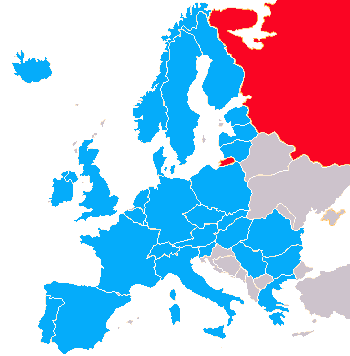
NASA yesterday announced that the Republic of Botswana will sign the Artemis Accords on June 25, 2026, becoming the 68th nation to join this American alliance in space.

The Republic of Botswana will sign the Artemis Accords during a ceremony at 9:30 a.m. EDT Thursday, June 25, at NASA Headquarters in Washington. NASA Deputy Administrator Matt Anderson will host Botswana’s Minister of Communications and Innovation David Tshere and U.S. Department of State Senior Advisor for Space Gregory Autry for the event.

Since NASA administrator Jared Isaacman took over, the NASA press releases announcing these signings have eliminated much of the pro-globalist language introduced during the Biden administration. No longer does NASA claim the accords are designed to “reinforce” the Outer Space Treaty. In today’s release the language is relatively vague, stating merely that the accords are

responding to the growing interest in lunar activities by both governments and private companies. The accords introduced the first set of practical principles aimed at enhancing the safety, transparency, and coordination of civil space exploration on the Moon, Mars, and beyond.

As the accords were originally conceived by Trump as a long term tool to overcome the Outer Space Treaty’s restrictions on private property and the establishment of American law in its colonies, this vagueness is likely intended to avoid antagonizing Russia and China, to lull them into apathy about the issue at this time. Later, when the U.S. Moon base is largely established expect that vagueness to fade. That will be the time to use the clout of this large alliance to force a major legal change in this international treaty.

The full list of nations in this American space alliance is as follows:

Angola, Argentina, Armenia, Australia, Austria, Bahrain, Bangladesh, Belgium, Brazil, Botswana, Bulgaria, Canada, Chile, Colombia, Cyprus, Czech Republic, Denmark, Dominican Republic, Ecuador, Estonia, Finland, France, Germany, Greece, Hungary, Iceland, India, Ireland, Israel, Italy, Japan, Jordan, Latvia, Liechtenstein, Lithuania, Luxembourg, Malaysia, Malta, Mexico, Morocco, the Netherlands, New Zealand, Nigeria, Norway, Oman, Panama, Paraguay, Peru, Poland, Portugal, Romania, Rwanda, Saudi Arabia, Senegal, Singapore, Slovakia, Slovenia, South Korea, Spain, Sweden, Switzerland, Thailand, the Philippines, the United Kingdom, the United Arab Emirates, the Ukraine, the United States and Uruguay.

0 comments

NASA IG: NASA’s launch infrastructure at Kennedy and Wallops needs attention

Launch sites at Kennedy and Cape Canaveral
Figure 2 of IG report, annotated further by me.

According to a report released today [pdf] by NASA’s inspector general (IG), NASA’s launch infrastructure at both the Kennedy Space Center in Florida and the Wallops Flight Facility in Virginia are aging and need upgrades, but there is a systemic limitation on NASA’s access to funds to do the work.

The IG report — as is always expected from such a government report — of course whines about the lack of funding in recent NASA budgets, noting that Congress recently allocated $250 million for this purpose, but NASA claims it needs four times that amount, or $1 billion.

The report however also recognizes that this not the real problem. The map to the right, Figure 2 from the report, has been further annotated by me to show who is leasing or using each launch complex at both the Kennedy Space Center (managed by NASA) and Cape Canaveral Space Force Station (managed by the military but also supported significantly by NASA). As you can see, almost all launch sites are either leased by private rocket companies, or are being primed for future such leases. Yet, “statutory funding barriers” limit how much money NASA can collect from these companies. From the report’s conclusion:
» Read more

17 comments

Canada’s second proposed spaceport opens first rocket factory

Proposed Canadian spaceports

The Canadian rocket startup Nordspace, which also hopes to operate the Atlantic Spaceport in Newfoundland, last week announced the opening of a new headquarters where it hopes to begin building its smallsat Tundra rockets.

The 60,000 square foot advanced manufacturing campus is dedicated to the production of the company’s light and medium-lift orbital launch vehicles alongside its space systems division, and represents a 10x expansion over NordSpace’s previous headquarters.

In reading between the lines of the press release, it appears this facility is mostly the company’s administrative and operations headquarters, though it is large enough to assembly two Tundra smallsat rockets at the same time, designed to put about three times more payload into orbit than Rocket Lab’s very successful Electron rocket.

Unlike Spaceport Nova Scotia, which was first proposed more than a decade ago and after years of struggle was leased in March by the Canadian government for $200 million, Nordspace has only been around since 2024 and has received a relatively small grant from the government, some portion of a $8.3 million program to support three Canadian rocket startups.

With both spaceports, there has been a lot of blarney spouted. Thus, separating the sizzle from the steak is difficult. No launch dates for Tundra have been provided, though the company says it has purchased the land for an even larger manufacturing facility, though once again it provides no timetables.

4 comments

Rocket Lab and SpaceX complete launches

In the past two days both Rocket Lab and SpaceX successfully completed launches.

I am reporting the Rocket Lab launch two days late because it was unannounced and remains officially unconfirmed by the company two days after lift-off. [UPDATE: Rocket Lab finally confirmed the launch on June 22, 2026.] According to two different launch tracking websites (here and here), the company’s Electron rocket lifted off successfully from one of its two New Zealand launchpads on June 19, 2026, placing a Rocket Lab payload into orbit dubbed Puma, a Space Force satellite designed to rendezvous with a target spacecraft dubbed Jackel that was built by the company True Anomaly and launched on an earlier SpaceX launch.

The mission secrecy was also for a second purpose, as outlined by Rocket Lab:

The $32 million contract includes a Rocket Lab spacecraft, configured for the unique requirements of the VICTUS HAZE mission, that will launch on Electron within just 24 hours’ notice. The mission is designed to improve Tactically Responsive Space (TacRS) processes and timelines to demonstrate the SSC’s ability to respond to on-orbit threats on very short timelines.

SpaceX then followed up today with a launch of 24 more Starlink satellites, its Falcon 9 rocket lifting off from Vandenberg Space Force Base in California. The first stage (B1063) completed its 33rd flight (70 days after its previous mission), landing on a drone ship in the Pacific. With this flight this booster moved into a tie with the space shuttle Atlantis for fourth place in the rankings for the most reused launch vehicle:

39 Discovery space shuttle
35 Falcon 9 booster B1067
34 Falcon 9 booster B1071
33 Atlantis space shuttle
33 Falcon 9 booster B1063
31 Falcon 9 booster B1069
29 Falcon 9 booster B1077
28 Columbia space shuttle
28 Falcon 9 booster B1078

Sources here and here.

The leaders in the 2026 launch race:

74 SpaceX
40 China
9 Rocket Lab (plus two suborbital HASTE launches)
8 Russia

For the third straight year SpaceX leads the entire world combined in total launches, 74 to 69.

9 comments
1 2 3 413