Japanese rocket startup Interstellar raises another $129.7 million in private investment capital

The Japanese rocket startup Interstellar announced late last week that it has successfully raised another $129.7 million in private investment capital, bringing its total available cash to $287.7 million.

Interstellar’s Series F round represents one of the largest fundraising to date by a privately held space startup in Japan2, bringing Interstellar’s cumulative funding to 44.6 billion JPY (287.7 million USD). The round, led by Woven by Toyota, raised 14.8 billion JPY (95.5 million USD) through a third-party allotment of preferred shares in an up-round.

In addition, the company secured 5.3 billion JPY (34.2 million USD) in debt financing from financial institutions, including 1.8 billion JPY (11.6 million USD) in loan facilities with stock acquisition rights provided by the Japan Finance Corporation. Alongside the fundraising, secondary transactions with existing shareholders were also conducted to optimize the company’s capital structure. Nomura Securities provided advisory support in this series, including the introduction of several potential investors, some of which resulted in fundraising.

Interstellar was one of the earliest rocket startups, first attempting a suborbital launch in 2018. After that launch failed it then disappeared for almost five years to suddenly reappear last year with major funding from Toyota and other sources.

It had previously hoped to complete the first launch of its Zero orbital rocket in 2025. At the moment however the company has set no new launch date, though it has announced that it has seven customer payloads for that launch.

2 comments

Startup focused on mining helium-3 on the Moon teams up with JPL for private rover mission

Artist rendering of Black Moon's Fusion-1 rover
Artist rendering of Black Moon’s Fusion-1 rover

The helium-3 lunar mining startup Black Moon Energy (BMEC) has now signed a partnership deal with JPL to build and send a private rover to the Moon, dubbed Fusion-1, to search for helium-3.

BMEC will lead mission management, resource-assessment strategy, and large-scale operations planning. As global leaders in robotic space exploration, the Jet Propulsion Laboratory (JPL) and Caltech, which manages JPL, have been engaged to oversee the mission’s robotic systems, scientific instrumentation, data acquisition, and mission operations.

…BMEC’s initial year-long lunar expedition will provide the first decision-quality dataset for Helium-3 production operations. Information from the mission will support potential applications in fusion power generation, national security systems, quantum computing, radiation detection, medical imaging, and cryogenic technologies. Insights from the mission will guide BMEC’s long-term strategy for establishing a sustainable cost-effective Helium-3 supply chain from the lunar surface.

A review of Black Moon’s website as well as a search on the web reveals no information about the company’s available capital, so this proposed private mission could be real, or it could be pie-in-the-sky.

Its existence at all however proves the impact that lower launch costs is having. Proposing a private mission such as this before SpaceX would have been met with outright laughter. Now it draws serious interest. It is wholly conceivable to build a low-cost small robotic rover and find affordable launch providers and lunar lander companies that can get it to the Moon.

2 comments

Japan’s government gives Ispace a $125 million contract to build a high-precision lunar lander

Is this the first sign that Japan's space agency JAXA is becoming irrelevant?
Is Japan’s failed space agency JAXA finally
starting to become irrelevant?

The Japanese lunar lander startup Ispace last week announced it has won a $125 million contract to build a high-precision lunar lander targeting a 2029 launch in the Moon’s “polar regions”.

Ispace, inc, a global lunar exploration company, announced that the company was selected to implement its proposal for “High Precision Landing Technology in the Lunar Polar Regions” project under the second phase of Japan’s Space Strategy Fund. The technology will be implemented in ispace’s Mission 6, with development now underway.

The funding amount is subject to change based on stage gate reviews and other factors, so full receipt is not guaranteed at this time.

The mission will also include a lunar orbiter that will act as a relay communication satellite that will also remain in orbit after the mission to provide communications for future missions, not only for polar missions but for missions to the Moon’s far side.

Ispace plans to use some of the technology it is developing for its 2nd generation lunar lander, scheduled to fly in ’28.

This contract is significant because it appears to leave ownership of the project entirely in Ispace’s hands, with Japan’s space agency JAXA having little design or management control. It also appears to use the funds from country’s ten-year $6.6 billion fund as intended. That fund was established in 2023 to support new space startups under the capitalism model, whereby the companies provide the product and government and JAXA are merely the customer.

Up until now it appeared this fund was accomplishing little. In fact, there have been indications that JAXA was trying to repurpose the fund for its own benefit, using it to hire a lot more staff while maintaining control and ownership of any project, rather than let the private sector own its own work.

Since JAXA has increasingly done a very bad job promoting Japan’s space exploration industry, those indications were a very bad sign for Japan’s future in space.

This deal appears however to use that strategic fund properly, even if JAXA might still be skimming a large percentage of the fund off the top. This is not unlike what NASA has been doing. Bureaucrats must be bureaucrats, and all government agencies must be eternal and immortal, no matter what.

Like NASA, however, the success of Ispace and rest of Japan’s private space sector from projects financed by this fund will eventually allow that private sector to make those bureaucrats and JAXA irrelevant. It is happening now in the U.S. It now appears there is a chance it will happen in Japan as well.

Hat tip to BtB’s stringer Jay.

15 comments

French rocket startup MaiaSpace wins ten-launch contract from Eutelsat

The French rocket startup MaiaSpace, which has not yet launched anything, has won a ten-launch contract from Eutelsat to place an unspecified number of its next generation OneWeb satellites into orbit.

Eutelsat has ordered around ten launches from MaiaSpace to launch some of the 440 new OneWeb satellites. These launches are scheduled from late 2027 to 2029. MaiaSpace has thus secured 50% of the launches planned for this period.

MaiaSpace is a wholly owned subsidiary of ArianeGroup, the company that builds Arianespace’s Ariane-6 rocket. ArianeGroup created it when it realized the expendable Ariane-6 rocket was not going to do well competing with the new reusable rockets. MaiaSpace’s Maia rocket will launch from French Guiana, and is being designed to eventually be reusable.

What makes this deal puzzling is that MaiaSpace is far behind at least thee other rocket startups in Europe, Germany’s Isar Aerospace and Rocket Factory Augsburg, and Spain’s PLD, all of which are much closer to an orbital launch. I suspect ArianeGroup used its clout to win the contract.

2 comments

Lockheed Martin and General Electric complete tests of a rotating-detonation engine

Lockheed Martin and General Electric announced this week that they have successfully tested a rotating-detonation engine using complimentary technology developed by each company.

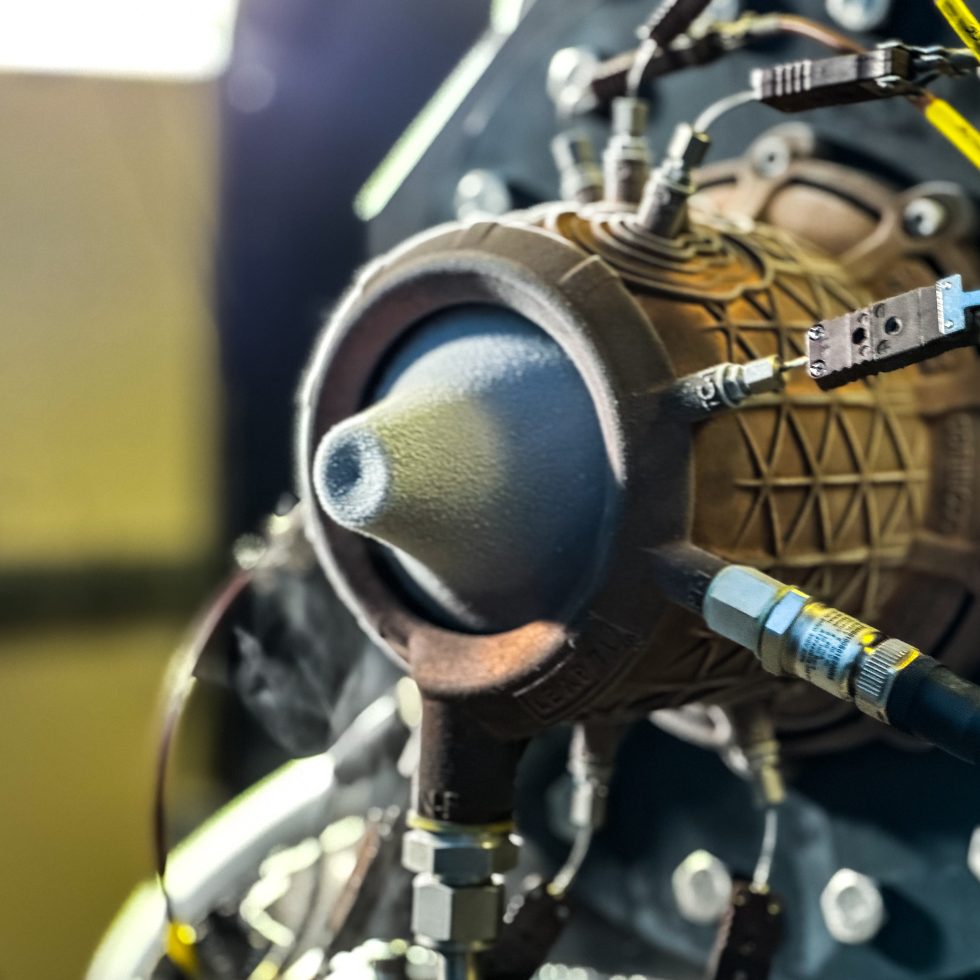
GE Aerospace and Lockheed Martin completed a series of engine tests demonstrating the viability of a liquid-fueled rotating detonation ramjet for use in hypersonic missiles, the first initiative between the companies under a broader joint technology development arrangement.

This fuel-efficient rotating detonation ramjet promises to fly missiles faster—including at hypersonic speeds—and farther while decreasing costs compared to other ramjet options. … The rotating detonation ramjet combusts fuel and air through detonation waves instead of the traditional combustion methods used in ramjet engines today. This propulsion system generates high thrust for super- and hypersonic speeds to engage high-value, time-sensitive targets, with a smaller engine size and weight that boosts range.

In October Lockheed Martin’s venture capital division announced it was investing in a startup, Venus Aerospace, that was developing its own rotating detonation engines. One now wonders, based on today’s story, if that investment might have been a purchase of the technology itself.

Either way, the Pentagon’s program to develop hypersonic missile capability has blossomed in the past two years, since it stopped trying to build the technology itself and has instead been hiring private aerospace companies to do the research for it. Ain’t capitalism wonderful?

3 comments

Indian startup raises seed money to build robotic satellite servicing “jetpacks”

An Indian startup, Aule Space, has now raised $2 million in seed money to begin development of a robot servicing spacecraft it intends to call “jetpacks”, designed to attach to satellites and provide them fuel and power.

The seed funding will allow Aule Space to being work on a demonstration mission planned for launch next year to test its docking capabilities. That will involve two satellites, each weighing about 30 kilograms, but Panchal said one option is to instead use an orbital transfer vehicle as the client for the docking demonstration.

The 11-person company, which plans to grow to 20 people by the end of the quarter, is working on ground tests of its rendezvous and docking technology. It has access to facilities used by the Indian space agency ISRO for testing SPADEX, a docking demonstration mission flown a year ago.

This “jetpack” concept is very similar to Northrop Grumman’s Mission Extension Vehicles (MEV), several of which have already flown and extended the life of several satellites.

Aule is exactly the type of Indian satellite startup that India’s rocket startups, Agnikul and Skyroot, are being built to serve. The problem is that all of these startups, both satellite and rocket, are literally all startups. None has flown. India’s private space sector won’t really take off until its private rocket companies get off the ground, as its government space agency, ISRO, has done a very poor job launching its PSLV and SSLV rockets (both designed for smallsats). The PSLV has failed on its last two launches, and the SSLV has been in limbo now for years.

0 comments

Endeavour undocks from ISS, carrying the Expedition-11 crew

SpaceX’s Endeavour Dragon capsule undocked from ISS late this afternoon, carrying its four Expedition-11 crew who are coming home a few weeks early because of a medical issue with one crew person.

Live return coverage will resume at 2:15 a.m. Thursday, Jan. 15 on NASA+, Amazon Prime, and the agency’s YouTube channel until Dragon splashes down at approximately 3:41 a.m. off the coast of California and crew members are safely recovered.

It has been speculated by several sources, based on several NASA updates, that the crewman with the medical issues is Mike Finke, 58, who had flown in space three times previously.

Note that the only reason most major news sources are covering this crew return is because of the medical emergency. Normally, SpaceX has made this process so routine few pay attention any longer.

0 comments

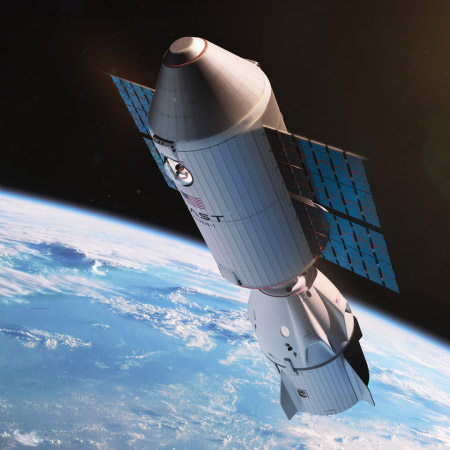
Axiom has delayed the launch of its first space station module to ’28

Axiom's module assembly sequence
Axiom’s module assembly sequence

When Axiom announced in September 2025 that Redwire would be building the solar panels for the first module of its space station, dubbed the PPTM, it also said that module would launch in late 2027, which was a delay of one year from the original launch date of 2026.

That schedule has now apparently been delayed again. In an interview yesterday, the company’s vice president of human spaceflight, former NASA astronaut Peggy Whitson, indicated the launch was now targeting 2028.

Plans call for the initial Axiom Station to be comprised of two modules, the PPTM — short for Payload Power Thermal Module — and a habitat module. The PPTM, which is to be shipped shortly to Houston for final assembly and integration, is slated to be launched in early 2028, with the second module following just months later. From there, Axiom aims to swiftly begin welcoming crew, Peggy Whitson, the company’s vice president of human spaceflight, told me in an interview.

This schedule almost guarantees that the Axiom station will not detach from ISS as quickly as originally intended. PPTM has a large hatch opening connecting it to ISS, allowing for the easy transfer of much of the research racks held on ISS. Before Axiom can become a free-flying station that ISS equipment must be moved, a process that will take time, likely months. To get it done the company will probably have to also attach its second habitation module so that crews can arrive and begin this transfer process.

In other words, Axiom’s schedule margins for getting its station launched, docked to ISS, loaded with ISS equipment, and then separated before ISS retires in 2030 are shrinking. It can ill afford further delays.

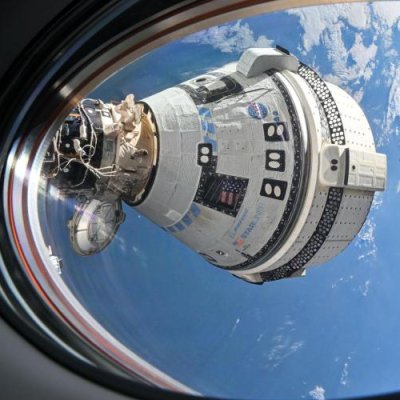
Below are my rankings of the five American space stations presently under development. Note that I now consider Axiom and Starlab tied for second.
» Read more

12 comments

A small European prototype re-entry capsule survived PSLV launch failure

A small prototype re-entry demonstration capsule, built by the Spanish startup Orbital Paradigm and dubbed the Kestrel Initial Demonstrator (KID), apparently survived for a short period the failure of the third stage of India’s PSLV rocket early this week.

According to an Orbital Paradigm press release, the survival of its little demonstrator came as a surprise. “When we understood that the launch was non-nominal it was a bit of a hit for us,” explained Orbital Paradigm CEO Francesco Cacciatore. … “I think the launch livestream was still ongoing when the team saw that we had 190 seconds of flight data transmitted and received. We needed a few minutes to realize it was real data and not a glitch.”

…“KID was tested beyond its design envelope, and it worked. Separation, power-on, and data transmission, even after reentry, all performed well despite degraded conditions,” explained the company in a 13 January update. “Based on initial analysis, it seems that we achieved 4 out of 5 launch milestones, albeit through an off-nominal profile. The failure to deliver customers’ data prevents us from declaring the mission a success.”

The company considers the mission a failure because it did not get the re-entry data back that it really needed. It says however it is moving forward on a more advanced demonstrator it hopes to launch in 2027. I suspect it will not hire India’s space agency ISRO to launch it.

1 comment
1 24 25 26 27 28 684