Ispace signs deals with companies in India and Japan

The Japanese lunar lander startup Ispace today announced it has signed partnership deals with two different companies, OrbitAid in India and Toyota in Japan.

The startup OrbitAid is India’s first “on-orbit refueling company”. It will provide Ispace’s landers with standardized docking ports as well as refueling capabilities.

The two companies aim to demonstrate the critical capabilities required for mission extension in the cislunar environment, enabling long-duration lunar operations and paving the way for a sustainable lunar economy. The integration of OrbitAID’s SIDRP interface is expected to not only optimize refueling, recharging, and data transmission capabilities but also support ispace’s efforts to enhance the performance and reliability of its landers. By enabling lunar refueling, both companies plan to facilitate deep-space exploration beyond Earth’s orbit.

Toyota meanwhile will provide technical support to Ispace as it develops its own second generation lunar rover, dubbed Lunar Cruiser. Ispace is already prepping a smaller rover that will fly on its next lunar landing mission.

Ispace has been signing on a range of customers and commercial partners in recent months, even though its only two attempts to land on the Moon both failed just before touch down. It has contracts with NASA, ESA, and JAXA for future missions. These new deals appear designed to strengthen and extend its capabilities beyond simply landing on the Moon, but also to provide interplanetary spacecraft as well.

0 comments

Two more launches, by China and SpaceX respectively

The global launch industry added two more launches to its 2025 launch totals since yesterday. First, China launched what its state-run press described as a Earth imaging satellite, its Long March 3B rocket lifting off from its Xichang spaceport in southwest China. No information was released as to where the rocket’s lower stages — using very toxic hypergolic fuels — crashed inside China.

Then early today SpaceX placed another 29 Starlink satellites into orbit, its Falcon 9 rocket lifting off from Cape Canaveral in Florida. The first stage completed its 24th flight, landing on a drone ship in the Atlantic.

With this launch, the U.S. set a new annual record for successful launches, 158, beating the record set in 2024. In both years, the record was almost entirely due to SpaceX and its Falcon 9. Rocket Lab’s numbers continue to rise, suggesting the company is about to finally begin launching more than once a month. All the other American rocket companies, especially ULA, have in the past two years failed to deliver the number of launches promised. All continue to promise big numbers in 2026. We shall see.

The leaders in the 2025 launch race:

139 SpaceX
65 China
13 Russia
13 Rocket Lab

SpaceX now leads the rest of the world in successful launches, 139 to 107.

6 comments

Nova Scotia spaceport wins $10 million credit line from Canadian government

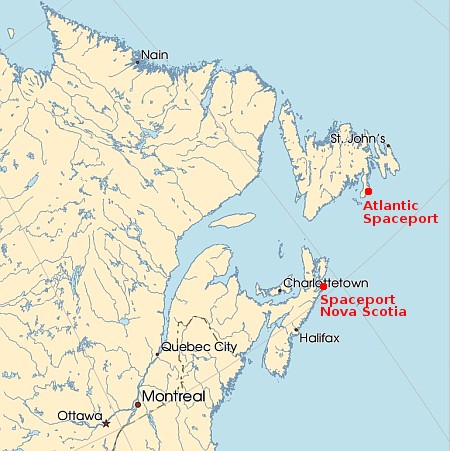
Proposed Canadian spaceports

Maritime Launch Services, the startup that has been trying to establish a spaceport in Nova Scotia since 2016, without any success, was this week awarded a $10 million credit line from Canadian government’s Export Development agency (EDC).

EDC is Canada’s export credit agency, established in 1944 to help Canadian businesses of all sizes grow globally through trade financing, insurance, and market expertise. As part of its corporate strategy, EDC is committed to allocating strategic risk capital to developing trade-enabling infrastructure to help Canada become a more resilient, competitive, and secure global trading nation. EDC’s support of Maritime Launch as it develops Spaceport Nova Scotia will significantly strengthen Canada’s position in the defence and security sector, where space is an increasingly vital domain.

….The terms of the agreement provide development funding for Spaceport Nova Scotia’s next phase of construction, including launch pad and infrastructure development required to support future orbital missions.

This award is a bit puzzling, as Maritime has done nothing in the past decade to instill any confidence it is going to fulfill any of its promises. Its original plan, to offer satellite companies a launchpad and a rocket (made by a Ukrainian company) failed in 2022 when Russian invaded the Ukraine. Since the Maritime has struggled to get any other rocket companies interested in launching from Spaceport Nova Scotia.

Meanwhile, a second Canadian commercial spaceport, the Atlantic Spaceport in Newfoundland, was proposed only three years ago. It is developing its own rocket, and has already signed contracts with other companies for its mission control center and tracking stations. In addition, it twice attempted a suborbital test launch of a smaller rocket, though both attempts were scrubbed due to fuel leaks in ground systems.

Whether this grant can jump start Maritime’s spaceport remains an open question. Very clearly, the Canadian government hopes so.

4 comments

SpaceX launches 28 Starlink satellites, sets new annual launch record

SpaceX this morning successfully launched another 28 Starlink satellites, its Falcon 9 rocket lifting off from Vandenberg Space Force Base in California. The first stage completed its 19th flight, landing on a drone ship in the Pacific.

With this launch SpaceX set a new record by a private company for the most successful launches in a single year, beating the record it set last year. In fact, this is the sixth year in a row that SpaceX has reset this particular record. Where once it was difficult for the world’s entire launch industry to complete 100 launches in a year — using government controlled rockets — SpaceX has shown that much greater things can happen if private enterprise, pursing profit, is given its head and allowed to run freely.

This launch also brought the U.S. launch total to 157, which matches the country’s record from last year. Expect a new record to be set before the week is out.

The leaders in the 2025 launch race:

138 SpaceX
64 China
13 Russia
13 Rocket Lab

SpaceX now leads the rest of the world in successful launches, 138 to 105. Japan has a launch scheduled for later today, its H3 rocket carrying Japan’s upgraded HTV-X1 cargo freighter on a mission to ISS.

3 comments

Two lawsuits filed against NASA at its Marshall Space Flight Center

Two lawsuits against NASA’s Marshall Space Flight Center were announced yesterday, one by several employees citing discrimination and the second by the government union representing Marshall employees protesting the Trump executive order that strips it of its collective bargaining rights.

The timing of both announcements strongly suggests the lawsuits are a coordinated effort. The discrimination suit protests the demand of the Trump administration that government employees come back to the office to work. The suit says the agency has not made reasonable accommodation for the suing employees to work at home. It also appears that the lead employee in the suit has made it a habit of doing so, having already won $30K in a settlement of a 2024 lawsuit.

The second suit is of course more significant, as it challenges the president’s power.

The complaint, filed in the U.S. District Court for the District of Columbia, seeks to invalidate Executive Order 14343, issued by President Trump on Aug. 28. The order excludes NASA and five other agencies from coverage under the Federal Service Labor-Management Relations Statute (FSLMRS), effectively terminating their union representation rights on the grounds of “national security”.

According to the complaint, the Trump Administration justified the exclusion by claiming these agencies have a primary function of national security work and that collective bargaining is inconsistent with those requirements. A White House Fact Sheet accompanying the order stated that collective bargaining “can delay the implementation of time-sensitive national security measures”.

IFPTE vehemently disputes this characterization. The union argues that NASA’s primary mission is “not national security,” but rather scientific exploration for the “benefit of all humanity”. The complaint cites the National Aeronautics and Space Act, which states that “activities in space should be devoted to peaceful purposes for the benefit of all humankind”.

The existence of all these government unions comes originally from an executive order by President John Kennedy. It seems Trump should have the right to cancel that order. The lawsuit also argues no, that Trump is acting beyond his legal authority.

Isn’t it interesting how presidents who are Democrats always have the power to issue executive orders n matter how outrageous (such as was done frequently by Obama and Biden), but Republican presidents like Trump do not.

10 comments

SpaceX launches communications satellite for the Spanish government

SpaceX tonight successfully placed a Spanish communications satellite into orbit, its Falcon 9 rocket lifting off from Cape Canaveral in Florida.

The satellite will provide communications for Spain’s military and government. The first stage completed its 22nd flight, but because of the needs of the payload, there was not enough fuel left for it to land on a drone ship. This was its last flight, the stage falling into the Atlantic. The two fairings completed their 16th and 28th flights respectively.

The leaders in the 2025 launch race:

137 SpaceX
64 China
13 Russia
13 Rocket Lab

SpaceX now leads the rest of the world in successful launches, 137 to 105.

SpaceX has now matched the annual launch record it set last year, and done it with more than two months left to go in 2025. Whether it can reach its goal of about 180 launches this year seems doubtful, but it will definitely come close. It is averaging about 14 launches per month, which means it could complete about 28 to 30 before the end of December.

7 comments

European companies Airbus, Leonardo, and Thales merge their satellite divisions

The three European aerospace companies Airbus, Leonardo, and Thales today confirmed previous rumors and announced they are merging their satellite divisions into a new company, dubbed Project Bromo, in order to better compete with the giant satellite constellations in the U.S. and China.

The preliminary deal wraps up months of three-way talks and clears the path to create a single company with annual revenue of about €6.5 billion ($7.5 billion). Airbus will own 35% of the group, with the other two partners each holding 32.5% stakes, according to a joint release.

The alliance, dubbed Project Bromo, is seen as a key litmus test for Europe to consolidate its fragmented defense and space industries to better compete with US and Chinese competitors. It aims to unify Europe’s satellite efforts and provide more autonomy in a segment that has become commercially and geopolitically vital.

These companies are coming to this competition very late in the game. SpaceX already has more than 8,000 satellites in orbit, and new constellations by Amazon and several Chinese pseudo-companies have already begun launching satellites. Moreover, this smacks more of a consolidation resulting from these three companies inability to compete, rather than an effort to establish a new company capable of doing so.

1 comment

Lockheed Martin invests in rotating detonation rocket engine startup Venus Aerospace

The venture capital division at Lockheed Martin, which has previously invested in a number of aerospace startups, has now invested in the rocket engine startup Venus Aerospace, which is developing a new radical design called a rotating detonation rocket.

Venus Aerospace, based in Houston, Texas, has developed a rotating detonation rocket engine (RDRE) — a propulsion system that uses a continuously rotating detonation shockwave to generate thrust, promising more efficiency than conventional rocket engines. The company completed the first U.S. flight test of a 2,000-pound-thrust RDRE in May, launching the engine on a small rocket at Spaceport America in New Mexico. This engine could be used to replace solid rocket motors to power munitions and rockets, Sassie Duggleby, co-founder and chief executive of Venus Aerospace, said at Axios “Future of Defense” conference.

The amount of Lockheed Martin Ventures’ investment was not disclosed. Duggleby said the funding will “advance our capabilities to deliver at scale and deploy the engine.”

Venus Aerospace has already raised more than $100 million in private investment capital. This new influx from an established big space player will certainly strengthen its financial position.

Lockheed Martin has previously invested in rocket startups Rocket Lab, ABL, Orbex, and X-Bow. It has also invested in the orbital tug startup Orbit Fab, the orbital capsule company Inversion Space, and the satellite startup Terran Orbital, which it ended up buying entirely.

1 comment

Hungary becomes the 57th nation to sign the Artemis Accords

NASA’s acting administrator, Sean Duffy, announced yesterday in a tweet that Hungary has now signed the Artemis Accords.

There was no NASA press release because of the government shutdown.

Hungary is now the 57th nation to sign the accords. The full list of nations now part of this American space alliance: Angola, Argentina, Armenia, Australia, Austria, Bahrain, Bangladesh, Belgium, Brazil, Bulgaria, Canada, Chile, Colombia, Cyprus, Czech Republic, Denmark, Dominican Republic, Ecuador, Estonia, Finland, France, Germany, Greece, Hungary, Iceland, India, Israel, Italy, Japan, Liechtenstein, Lithuania, Luxembourg, Mexico, the Netherlands, New Zealand, Nigeria, Norway, Panama, Peru, Poland, Romania, Rwanda, Saudi Arabia, Senegal, Singapore, Slovakia, Slovenia, South Korea, Spain, Sweden, Switzerland, Thailand, the United Kingdom, the United Arab Emirates, the Ukraine, the United States and Uruguay.

The addition of Hungary means that almost the entire European portion of the former Soviet bloc has now joined the alliance. I suspect the desire of these nations to ally with the U.S. and the west is a reflection of their fear of Russia, which has not been kind to its neighbors, both during the Cold War as well as recently.

It still remains to be seen if this alliance will be used by the American government to encourage property rights in space, something that the Outer Space Treaty presently outlaws. That appeared to be its original goal when the accords were created during the first Trump administration. That goal however was abandoned during the Biden administration, making the accords alliance more of a globalist collective in support of the Outer Space Treaty’s restrictions.

So far during Trump’s second administration no action has been taken to reassert those original goals.

1 comment

SpaceX launches 28 Starlink satellites

SpaceX this morning successfully placed another 28 Starlink satellites into orbit, its Falcon 9 rocket lifting off from Vandenberg Space Force Base in California.

The first stage completed its 21st flight, landing on a drone ship in the Pacific.

The leaders in the 2025 launch race:

136 SpaceX
63 China
13 Russia
13 Rocket Lab

SpaceX now leads the rest of the world in successful launches, 136 to 104.

4 comments

Fake blather from NASA administrator Sean Duffy to hide more Artemis delays

Sean Duffy
Sean Duffy: “Look at the shiny object!”

During a press interview yesterday, interim NASA administrator Sean Duffy revealed almost as an aside that NASA’s mid-2027 launch for the first Artemis manned lunar landing is no longer realistic, and that NASA is now targeting a 2028 launch date instead.

Duffy managed to hide this revelation by also announcing that he is re-opening the bidding for the manned lunar lander NASA will use on that third Artemis mission. To quote Duffy:

Now, SpaceX had the contract for Artemis III. By the way, I love SpaceX and it’s an amazing company, but the problem is, they are behind. They pushed their timelines out and we are in a race against China. The president and I want to get to the moon in this president’s term. So, I’m going to open up the contract and I’m going let other space companies compete with SpaceX, like Blue Origin. Whatever one gets us there first to the moon, we are going to take. If SpaceX is behind and Blue Origin can do it before them, good on Blue Origin.

By the way we might have two companies that can get us back to the Moon in 2028.

The propaganda press of course is going wild about this SpaceX announcement, making believe it signifies something of importance. “SpaceX is behind! Elon Musk can’t do it! Duffy is giving Jeff Bezos the job!” And as I think Duffy intended, everyone is ignoring the fact that NASA has now admitted it won’t meet that 2027 launch target.

The irony is that Duffy’s decision to re-open bidding on that manned mission is utterly meaningless. » Read more

34 comments

The “No Kings” demonstrations this past weekend showed the future belongs to the right

Contrasting the protesters from the left and the right
Click here and here for sources.

This past weekend hundreds of thousands of leftist protesters gathered in numerous cities nationwide to protest Donald Trump under the strange banner of “No Kings” that somehow portrayed Trump as a new king attempting to subvert democracy. Numerous commenters on the webpage have documented the protest’s emptiness, noting that it offered no real policy options except a desire to have Donald Trump removed from office (violently in many cases), even though he was properly elected by law.

Many others, including an NBC anchor, also could not help noticing the aged nature of the protesters.

So from what we can see from our viewpoint here in the studio and talking to our crew on the ground and some people I know who are there, this is an older crowd. There’s not a lot of folks, and granted, it’s a big crowd here, I’m not good at estimating, but it’s definitely over 2000, maybe close to 3000. We can’t see everyone, but it’s an older crowd, a lot of white hair you see out there, Q-tips, as we used to call them in the business. They are out protesting, and not a lot of young people.

None of this is a surprise. The strongest base of the Democratic Party is the 1960s baby boom crowd that protested the Vietnam War in the 1960s, celebrated sex, drugs, and rock & roll, and has never found a Democrat they did not love blindly. For the past decade this aging Baby Boom generation has been repeatedly told to hate Trump, and this past weekend’s demonstration allowed these old hippies the chance to show off how well they have been indoctrinated by the left.

What was far more striking about this event to me however was the contrast between the old, white-haired “No Kings” protesters and the very youthful attendees at every single conservative demonstration or event. » Read more

21 comments

South Korea issues launch license to Korean rocket startup Innospace

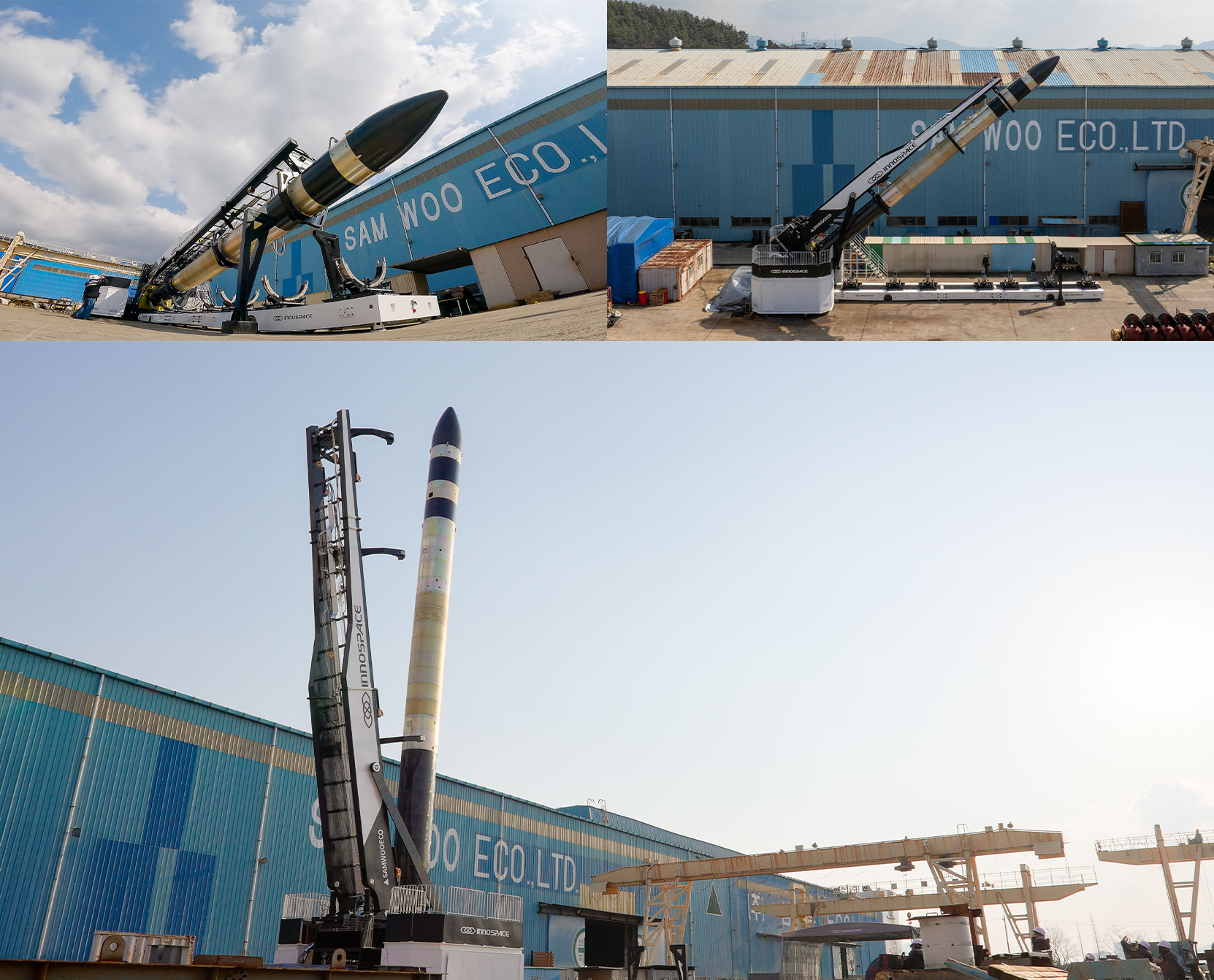
Engineering test prototype during tests
Engineering prototype of Hanbit-Nano testing portable
launchpad. Click for original image.

The South Korea Aerospace Administration (KASA) today issued its first launch license for a private South Korean rocket company, clearing the way for the first launch Innospace’s Hanbit-Nano rocket in the next few weeks from Brazil’s Alcantera spaceport.

For the launch, Innospace has set a launch window from Oct. 28 to Nov. 28. The launch window refers to the period during which the actual launch can take place. Initially, it was set for Oct. 28 to Nov. 7, but was extended to Nov. 28 after coordinating launch inspection procedures, mission stability and joint operation schedules with the Brazilian Air Force.

Innospace said the upcoming launch will also mark the first commercial vehicle launch from a Brazilian space center, adding that Brazilian authorities have provided active support to ensure optimal conditions and a stable launch. While the launch site is operated by the Brazilian Air Force, Innospace will use its own independently built launch platform for the mission.

The rocket will carry five smallsats and three other payloads, one of which is from a South Korean beer company.

If successful, Innospace will become the first commercial rocket startup outside the U.S. to get to orbit, excluding the pseudo-companies in China. The launch will also re-open Brazil’s long abandoned Alcantera spaceport, off of its northeast coast. Used only a few times in the 1990s and then shut down when the Brazilian government abandoned its rocket program, Brazil has been trying to get commercial rocket companies to come there now for about five years, with little success.

0 comments

The three launches completed today including two major new achievements

The beat goes on: There were three launches globally today, repeating a pattern we’ve seen several times in the past few weeks, with China completing one launch and SpaceX completing two.

First, China’s solid-fueled Kinetica-1 (Lijian-1) rocket placed three Pakistani satellites into orbit, one of which is what Pakistan’s state-run press claimed was its first multi-spectral environmental satellite. China’s press also provided no information about where Kinetica-1’s lower stages crashed inside China, having launched from its Jiuquan spaceport in the country’s northwest. The rocket itself is supposedly commercial, but it is built by a government agency, the Chinese Academy of Sciences, and the government state-run press illustrated this by making no mention of this agency in reporting the launch.

Next, SpaceX set a new record for the reuse of a Falcon 9 first stage in placing 28 Starlink satellites into orbit, the rocket lifting off from Cape Canaveral in Florida. The first stage, B1067, completed its 31st flight, a new record for a Falcon 9 first stage, landing on a drone ship in the Atlantic. The updated rankings for the most reflights of a rocket:

39 Discovery space shuttle
33 Atlantis space shuttle
31 Falcon 9 booster B1067
29 Falcon 9 booster B1071
28 Columbia space shuttle
28 Falcon 9 booster B1063
27 Falcon 9 booster B1069

Sources here and here.

Finally, less than two hours later, SpaceX launched another 28 Starlink satellites, its Falcon 9 rocket lifting off from Vandenberg Space Force Base in California. The first stage completed its 11th flight, landing on a drone ship in the Pacific.

With these two launches, SpaceX has now placed more than 10,000 Starlink satellites into orbit, though a large percentage have been de-orbited over the years as the company has upgraded the satellites. Nonetheless, the number of Starlink satellites presently in orbit far exceeds all the satellites now in orbit for every other planned constellation, combined.

The leaders in the 2025 launch race:

135 SpaceX
63 China
13 Russia
13 Rocket Lab

SpaceX now leads the rest of the world in successful launches, 135 to 104.

In the coming days the global rocket industry will also achieve a number of additional milestones. SpaceX is just two launches short of its record of 137 launches achieved last year, while the U.S. is just three launches short of its own record of 157 launches, also set last year. Similarly, China is just three launches short of its own record of 66 set in 2023.

Globally, the world has presently completed 239 successful launches in 2025, a number only exceeded by the 2024 record of 256. Expect this record also to fall before the end of the year.

11 comments

ESA awards contract to Italian company to provide an ocean landing platform

Avio's proposed reusable upper stage
Click for original.

The European Space Agency (ESA) has awarded the Italian company Ingegneria Dei Sistemi (IDS) a contract to build an ocean vessel for recovering the planned reusable test upper stage being built by the Italian rocket company Avio, as shown in the graphic to the right.

In late September, ESA awarded a €40 million contract to Avio for the design of a reusable rocket upper stage. The project scope encompasses preliminary design work, including system requirements and technological solutions, for both the launch system and the ground segment. According to the agency, the project has a number of potential applications, including as an evolution of Avio’s Vega family of rockets.

On 15 October, IDS announced that it had been awarded the contract to design the project’s recovery vessel, which falls under the systems ground segment. The company has subcontracted Italian naval systems consultancy Cetena and Norwegian shipbuilder Vard to assist with the project.

ESA very clearly is trying to encourage the development of reusable rockets by Europe’s private sector, but the nature of this particular program seems badly thought out. Rather than have Avio design the system in its entirety, in order to make it as efficient and profitable as possible, it appears ESA is micromanaging the design process, and thus bringing other subcontractors in who are outside Avio’s control. As a result, the final demo might work, but it is not likely it will be competitive with the private reusable rockets being built in the U.S. and elsewhere. Too many cooks in the kitchen.

1 comment

Thailand studying feasibility of establishing its own commercial spaceport

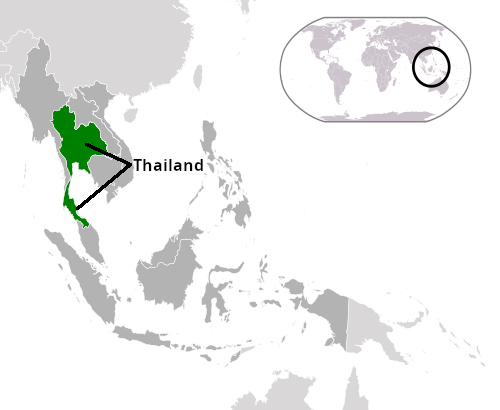
Thailand
Click for source.

Thailand’s government has begun a study to find out whether it makes financial and technical sense to establish its own commercial spaceport in that country.

The Geo-Informatics and Space Technology Development Agency (Public Organisation), or GISTDA, organised a seminar titled “Thailand’s Future Opportunities for Spaceport Development” on October 15 at iConsiam. The seminar aimed to establish a platform for exchanging views and gathering suggestions from all sectors regarding the future of a “Spaceport” in Thailand, underscoring a critical juncture for the country to elevate its presence on the global space stage fully.

Pakorn Apaphant, GISTDA Director, revealed that GISTDA is currently conducting a feasibility study for establishing a Spaceport in Thailand, in collaboration with the business consulting firm KPMG Phoomchai Business Advisory Ltd. The comprehensive study covers economic aspects, business strategy, environmental and social impacts, as well as a nationwide survey of potential sites to evaluate the most suitable location for future development.

As the map to the right shows, Thailand’s geography is not perfect. It has plenty of coast, in the country’s south, but at any location the trajectory of most launches would almost have to cross land of Thailand or other countries. Nonetheless, with the advent of reusable lower stages, such considerations will eventually become less of a concern.

1 comment

Three launches since yesterday

The beat goes on. Since yesterday there were three launches, one by China and two by SpaceX.

First, China’s Long March 8A rocket placed the twelfth set of satellites in the Guowang internet constellation, eventually aiming to be 13,000 satellites strong. China’s state-run press did not specify the exact number of satellites. Based on previous launches using the Long March 8A, the number was likely nine, bringing the number of this constellation’s satellites now in orbit to 96.

The launch was from China’s coastal Wenchang spaceport, and had a flight path that dumped the lower stages of the rocket near islands in the Philippines.

Next, SpaceX placed 21 satellites into orbit for the Pentagon, its Falcon 9 rocket lifting off from Vandenberg in California. This was the second launched by SpaceX for this military communication constellation, dubbed Tranche-1, intended to be 158 satellites total. The first stage completed its seventh flight, landing on a drone ship in the Pacific. The fairing halves completed their third and fourth flights respectively.

Finally, SpaceX launched another 28 Starlink satellites, its Falcon 9 rocket lifting off from Cape Canaveral in Florida. The first stage completed its third flight, landing on a drone ship in the Atlantic.

The leaders in the 2025 launch race:

133 SpaceX
61 China
13 Russia
13 Rocket Lab

SpaceX now leads the rest of the world in successful launches, 133 to 102.

0 comments

New Morgan Stanley report reflects Wall Street’s generally optimistic view of Rocket Lab

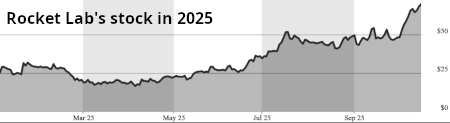
Rocket Lab's stock in 2025
Click for source.

Though Rocket Lab is still not in the black, a new positive analysis of the company this week from Morgan Stanley reflects Wall Street’s generally optimistic view of Rocket Lab during the past year.

Rocket Lab (NASDAQ:RKLB) had its price target raised by equities researchers at Morgan Stanley from $20.00 to $68.00 in a research report issued on Monday, Benzinga reports. The brokerage presently has an “equal weight” rating on the rocket manufacturer’s stock. Morgan Stanley’s price target would suggest a potential upside of 1.63% from the company’s current price.

The article at the link also notes that Morgan Stanley is not alone in giving Rocket Lab a positive report, and in fact in the past year it shows that the recommendations from many analysts to buy its stock have risen considerably. These positive reviews have been reflected in a steady rise in the company’s stock price in 2025, as shown by the graph on the right.

Nor are these reports written in a vacuum. In recent weeks Rocket Lab has signed a bunch of new launch contracts, some extending deals with old customers, some with new customers of some note.

Buying the stock of a startup like Rocket Lab always carries risk, but it appears Wall Street is beginning to see the future of this particular startup as very promising.

3 comments

Orbital tug startup Impulse Space to develop its own unmanned lunar lander

Impulse's tug and proposed lunar lander
Click for original image.

The orbital tug startup Impulse Space, founded by Tom Mueller (one of SpaceX’s first engineers), is now proposing to build its own unmanned lunar lander, with a target for delivering six tons of cargo on two missions, starting in 2028.

Our proposed architecture combines our existing Helios kick stage and a new lunar lander, to be developed by our team in-house. Helios would launch on a standard medium- or heavy-lift rocket. Our lunar lander would ride as a payload on Helios. Once Helios and the lander are deployed in Low Earth Orbit (LEO), Helios serves as a cruise stage, transporting the lander to low lunar orbit within one week. The lunar lander then separates from Helios and descends to the surface of the Moon. By taking advantage of Helios’s high delta-v capabilities, this mission architecture doesn’t require in-space refueling.

This solution can bridge the existing cargo delivery gap by offering direct transportation of the necessary mass to kickstart infrastructure, resource utilization, and economic activities on the Moon. We’ve already begun engine development for our lunar lander solution, and we stand ready to execute as dictated by industry demand and interest.

With this Helios and Impulse-made lander combination, we estimate delivering up to 6 tons of payload mass to the Moon (across two missions) per year starting in 2028 at a cost-effective price point. Each Helios + lander combo would take approximately 3 tons of cargo to the Moon.

It appears the company has identified a need (transporting cargo to the Moon cheaply and quickly) that no one (including NASA) is presently considering. SpaceX will be able to do it with Starship. Blue Origin is also proposing to do it with various versions of its Blue Moon manned lander. Impulse has decided however that both of those spacecraft are too large and tied to SLS and Lunar Gateway, with Starship requiring refueling, that makes their cargo missions more costly than a direct mission. Impulse proposes a simpler option.

This decision is also another indication that the demand for low orbital tugs is not developing as expected. It appears satellite companies and the available rocket companies have worked out ways to get most of their satellites to the orbits they require without tugs.

It will be interesting to watch if this proposal gains traction. If it does, than it will likely encourage other orbital tug as well as the other lunar lander companies to propose their own alternatives.

0 comments
1 28 29 30 31 32 415