Canadian rocket startup Nordspace signs deal for its mission control center

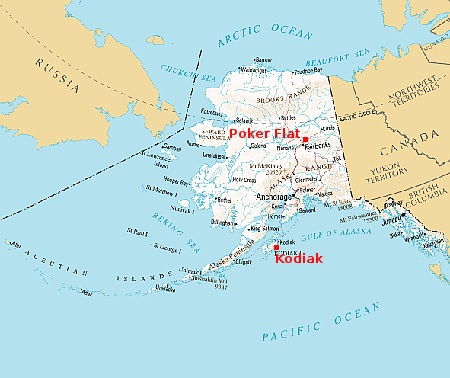
Proposed Canadian spaceports

The Canadian rocket startup Nordspace, which earlier this week signed a deal for another company to establish ground stations for its proposed Atlantic Spaceport, today signed an agreement with the company Kongsberg Geospatial to provide software for running its mission control center.

According to the news release TerraLens “will ingest data from multiple sensors to deliver real-time three-dimensional (3D) visualization of launch operations, range safety, decision support, and vehicle tracking. This will help streamline launch operations and enable deployment of critical space missions to orbit in under 48 hours.” Kongsberg said TerraLens builds on their “experience supporting range safety and mission-critical visualization for the Andøya Space and Defence project in Norway.”

Andøya is Norway’s new commercial spaceport that has been launching suborbital government rockets for decades.

Nordspace continues to move forward quickly, having been established only three years ago. It is putting the pieces together for its spaceport, and is testing both a small suborbital rocket and the engines for its proposed orbital Tundra rocket. Though the race is certainly not over, it does appear Nordspace will get to orbit ahead of the Nova Scotia spaceport that was first proposed in 2016.

0 comments

Dominion Voting Systems purchased by American company run by Republican election reform activist

Maricopa County election audit
The issues discovered in an audit of Maricopa County in Arizona
of 2020 election results. Note the problems found related to voting
machines, Dominion’s responsibility. The reason the “Ballots
Impacted” column is marked “N/A” (not available) is because
Dominion refused to cooperate. Click for full graph.

In what could be a major move towards election reform, the electronic voting system company Dominion — that many have suspected or have accused of either doing a bad job tabulating computer ballots or purposely manipulating them — has now been purchased by an American company dubbed Liberty Vote that is owned by Republican election reform activist Scott Leiendecker.

Leiendecker, former GOP election reform advocate, has officially become the sole owner of Dominion after making the deal contingent on dropping several remaining lawsuits against prominent conservatives and One America News Network (OANN).

Leiendecker further disclosed to the Caller that remaining litigation with MyPillow CEO Mike Lindell, former New York City Mayor Rudy Giuliani and former Trump campaign attorney Sidney Powell will be dropped by Dominion Voting Systems as part of the acquisition agreement. Dominion also filed a lawsuit against Herring Networks, which owns OANN, in August 2021. The lawsuit remained unresolved, though Leinendecker further confirmed that future litigation will be discontinued following the acquisition.

None of the charges against Dominion have ever been proven, and many have become impossible to investigate because the company’s very successful lawfare campaign, suing anyone who said anything against it, including news organizations such as Fox and Newsmax, both of which settled with Dominion, paying it $787 million and $67 million respectively. Nonetheless, the allegations have been numerous, substantial, and alarming (see also here, here, here, and here). Audits found errors, fraud, and the ability for outsiders to hack Dominion’s machines.

Leiendecker, in announcing the purchase, said that the new company will move all operations to the U.S. and will make third-party audits standard. It will also make paper ballots a fundamental component of its electronic tabulating system, something that Dominion did poorly or not at all.

Even if Dominion had been completely honest in its work, its resistance to investigation or even any criticism helped fuel the growing belief that the 2020 election of Biden was tampered with and might even have been fraudulent. That much of the company’s operations were foreign-based further fueled those suspicions. This purchase should help ease those concerns, though the proof will be in the pudding.

10 comments

AST SpaceMobile signs up Verizon to use its constellation for phone-to-satellite service

The startup AST SpaceMobile, which is building a constellation of satellites able to act as cell towers for smart phones, has now signed an agreement with Verizon to give its subscribers access to the service.

AST SpaceMobile’s shares closed up more than 8% Oct. 8 after Verizon joined AT&T in signing a definitive agreement to use its planned space-based cellular network, easing investor concerns about SpaceX’s aggressive push into the fledgling direct-to-device (D2D) market.

The deal enables Verizon to provide D2D connectivity to its customers from some point in 2026, building on a strategic partnership announced in May 2024 that included plans for a $100 million investment in AST.

As noted above, AST has now signed both Verizon and AT&T, two of the largest cellphone companies, strengthening its position considerably in its competition with SpaceX’s Starlink cell-to-satellite alternative. Both deals appear to allow these companies the ability to sign contracts with both AST and Starlink, so it is possible the competition won’t be as fierce initially as it appears. It is also possible that eventually they will pick one or the other, so neither company should be complacent.

AST presently has five of its BlueBird satellites in orbit out of its planned 45-60 satellite constellation, and hopes to have at least half the constellation in orbit by the end of ’26. So even if it wins its cellphone competition with SpaceX that rocket company will still likely make some money launching AST’s satellites.

0 comments

Canadian rocket startup Nordspace obtains expanded ground station contract

Proposed Canadian spaceports

The Canadian rocket startup Nordspace has signed an agreement with the ground station company C-Core to establish more tracking and communication facilities in conjunction with Nordspace’s launch plans at its Atlantic spaceport in Newfoundland.

NordSpace and C-CORE have signed a Memorandum of Understanding (MOU) that will see the companies work together in developing new ground stations across Canada with initial locations planned for the Atlantic Spaceport Complex (ASX) in St. Lawrence, Newfoundland and Labrador, and Inuvik, Northwest Territories.

With C-CORE being based in St. John’s, Newfoundland, and already established in providing ground station services, it seems like a natural collaboration that could benefit both companies. For NordSpace, which owns and is developing the Atlantic Spaceport Complex, this collaboration provides the potential for another type of revenue source as the company tries to diversify.

Nordspace has not yet launched, though its first suborbital test launch several weeks ago was scrubbed twice due to ground equipment fuel leaks. It has not yet announced another date for that suborbital test, but plans a static fire test in October of the engine it is building for its orbital Tundra rocket.

This company is only three years old, and appears to have leap-frogged past Canada’s other spaceport operation in Nova Scotia, which has been trying to get off the ground for almost a decade.

0 comments

Stoke Space said to be raising as much as $500 million in private investment capital

Stoke's Nova rocket
Stoke’s Nova rocket, designed to be
completely reusable.

UPDATE: Stoke Space confirms the story, announcing today that it has raised $510 million in new capital.

According to anonymous sources, the rocket startup Stoke Space is in the process of raising as much as $500 million in private investment capital, with new $2 billion valuation for the company.

Stoke Space, one of the Seattle area’s up-and-coming space startups, is said to be raising hundreds of millions of dollars in a funding round that it hasn’t yet publicly acknowledged. A report about the round, based on two unidentified sources, was published today by The Information.

The Information quoted its sources as saying that the funding round could total as much as $500 million, and would value Stoke at nearly $2 billion. That figure would be roughly twice as much as the $944 million valuation that was cited by Pitchbook as of January. The round’s lead investor is said to be Thomas Tull’s United States Innovative Technology Fund.

Earlier this year Stoke raised $260 million, bringing its available capital to almost a half billion. If this story is confirmed, it means the company will have almost a billion in available cash on hand.

The design of Stoke’s Nova rocket is unique in that both the lower and upper stages will be reusable. The first stage will land vertically, like SpaceX’s Falcon 9. The upper stage meanwhile uses a radical nozzle design, a ring of tiny nozzles around the perimeter of a heat shield, to protect it during re-entry.

The company has said it plans the first launch in 2026, but has not been more specific as to when. If successful, this rocket will certainly become a major player, as it will be able to offer even lower prices than SpaceX because none of the rocket will be expendable.

11 comments

Japanese satellite company extends its launch contract with Rocket Lab

The Japanese satellite company Q-shu Pioneers of Space, Inc. (iQPS) has purchased three more launches from Rocket Lab, for a total of seven planned.

The multi-launch contract includes three dedicated Electron missions that will launch no earlier than 2026 from Rocket Lab Launch Complex 1 in New Zealand. With four dedicated missions already booked by iQPS on Electron, these three additional missions bring the total number of upcoming launches for iQPS to seven.

Each dedicated launch will deploy a single synthetic aperture radar (SAR) satellite from a Rocket Lab Motorized Lightband separation system – demonstrating Rocket Lab’s vertical integration across launch and space systems that improves reliability and streamlines the launch process for its customers.

Rocket Lab has already completed four successful launches for iOPS, so with this deal means that it will complete eleven launches total for the satellite company. Essentially iQPS has made Rocket Lab its prime launch provider.

This is also the second major launch contract for Rocket Lab in the past week. On September 30, 2025 Synspective purchased its second multi-launch contract with the company, buying ten more launches. Its first contract was for eleven launches, with six already completed. Synspective hopes to have its entire radar constellation of 30 satellites in orbit by the late 2020s.

Both contracts tell us that Rocket Lab’s Electron rocket is going to have a very busy launch schedule for the next few years, even as the company initiates its larger Neutron rocket.

0 comments

Is the fate of the independent live streams in Boca Chica uncertain?

My headline paraphrases this interesting, very detailed, and largely accurate article today from Texas Monthly. It outlines how the newly formed town of Starbase there has the power to block the many independent lives streams and tourist operations that have sprung up since SpaceX opened its facility in Boca Chica.

This proxy government also has the power to create zoning rules and enforce them. In July the city adopted a plan that leaves those with the closest views of the launchpads in violation of new zoning designations. The mainstay launch-day ticket sellers here—Rocket Ranch and a few others—operate in what’s now officially a residential area, near newly built homes for SpaceX executives. The same violation applies to the spots where the streamers have mounted their video cameras.

These cottage industries aren’t doomed. Texas law has grandfathering provisions that allow existing businesses to remain open after zoning changes. But Starbase city attorney Andy Messer raised eyebrows during a recent city commission meeting by saying that the grandfathering would be considered on a “case-by-case basis.” Hearing this, some property owners expressed hesitation to approach the city to ask if their status was in question. “I don’t want to poke the bear,” as one put it.

Will SpaceX force the town of Starbase to shut these independent operations down? The article describes the possibilities in great detail. The very nature of SpaceX and its founder, Elon Musk, suggests it won’t happen. The company thrives on openness and straight talk. Musk himself is a proven supporter of free speech and competition. It would be shocking if his company suddenly took a different position. Moreover, SpaceX, Starbase, or its residents (almost all of which are SpaceX employees) generally benefit from the good publicity of these independent operations, publicity that the company’s own employees enjoy.

Yet, Starbase is a company town, and the long history of such places is that with time, the company takes over and rules everything, allowing nothing that it does not control.

Stay tuned. Above all things won’t be dull in Boca Chica.

Hat tip Robert Pratt of Pratt on Texas.

6 comments

The left only has a short window remaining to stop its violence before the hammer strikes it hard

Cry havoc!

So there is no confusion, my headline is not something I advocate. It is merely what seems inevitable when a law abiding society — America — has within it a subculture (the modern left led by the very corrupt and power-hungry Democratic Party) that thinks it is not only above the law, but its ideology justifies all kinds of violence. To wit, there’s this post today by Guy Benson, nicely summarizing only a small selection of recent leftist violence. I quote it in full, because this is necessary to get the feel of reality:

I’d like to ask my non-conservative followers to pay attention here for a moment. I don’t need a response or a rebuttal or a ‘whatabout.’ Just read on and consider what I’m saying. Please.

We are only a few weeks removed from a leading conservative figure being shot in the throat and killed by a leftist, for and during his speech, at a public speaking event. Stunning, jarring numbers of leftist Americans justified or celebrated this assassination, aligning with multiple public polls showing that a sizable minority of leftists in this country think political violence can be acceptable.

Today — just today — many conservatives are thinking about:

(1) a major leftist statewide candidate being exposed for sending texts to a political opponent (R) explicitly hoping for the death of another conservative political opponent…along with the deaths of that opponents’ young children. He WROTE DOWN that the pain of those deaths might promote his own agenda, which would be worth it, in his estimation. This candidate is now condemning his current conservative opponent for noticing this information.
» Read more

35 comments

Firefly Aerospace buys defense contractor SciTec

Firefly Aerospace yesterday announced that it is buying the defense contractor SciTec for $300 million in cash plus $555 million in Firefly shares.

The shares go to SciTec’s owners at an agreed-to value of $50 per share, essentially making those individuals part owners of Firefly.

The acquisition will advance Firefly’s comprehensive space services by adding mission-proven defense software analytics, remote sensing, and multi-phenomenology data expertise. SciTec’s core capabilities – which include missile warning, tracking and defense, intelligence, surveillance and reconnaissance, space domain awareness, and autonomous command and control – will supplement Firefly’s launch, lunar, and in-space services. SciTec further adds ground and onboard data processing as well as AI-enabled systems designed for low latency operations to support advanced threat tracking and response across multiple domains.

In other words, this acquisition is aimed at improving Firefly’s ability to win defense contracts, thus diversifying its business beyond outer space. This suggests its managers believe there isn’t enough business in outer space to put the company in the black. It needs defense contracts, and adding SciTech increases the odds it will win those contracts.

The stock price in this sale, $50, I think tells us something of the motives of SciTec’s owners. At present Firefly’s stock is selling at about $30 on Wall Street, and the price has not changed much today after this announcement. It appears the stock obtained by SciTec’s owners is thus not as valuable as listed in the intended sale price. This in turn suggests that those owners also needed this deal to diversify the company, and were willing to take a loss in the value of their stock to get it.

Then again, my understanding of how Wall Street and stocks function is limited, and my analysis on this point could be completely wrong.

5 comments

Space Force awards SpaceX and ULA seven launches worth more than a billion dollars

The U.S. Space Force (USSF) yesterday awarded multi-launch contracts to both SpaceX and ULA for seven launches beginning in 2027 worth more than a billion dollars.

SpaceX received $714 million for five launches and ULA was awarded $428 million for two launches, USSF said in an Oct. 3 news release.

The awards are part of the Space Force’s National Security Space Launch Program, which it uses to launch services for military space missions. In April, it chose SpaceX, ULA, and Blue Origin to launch a total of 54 missions scheduled between fiscal 2027 and 2032, with SpaceX responsible for just over half, with 28 launches. Individual missions will be awarded in batches through fiscal 2029.

Though Blue Origin was included in this program and its New Glenn rocket has finally launched once successfully, its not yet been certified to launch military satellites, and to get certified the company is going to have to launch at least one more time. That launch is expected before this month is out. Moreover, it will soon have to compete against more companies, and the Pentagon will be adding Rocket Lab and Stoke Space to its approved list as soon as both successfully launch their respective Neutron and Nova rockets by next year.

7 comments

Gilmour to attempt first launch again next year

Eris rocket launch and failure
Eris rocket falling sideways from launchpad
(indicated by red dot). Click for video, cued
to just before launch.

According to a presentation by the CEO and founder of Australian rocket startup Gilmour Space, the company now sufficiently understands what caused the failure on its first launch attempt on July 30 to plan a second attempt in 2026.

The company is still investigating the root cause of the failure. “It looks like what went wrong on the launch is something we’ve never tested close enough to the launch conditions before,” he said, but didn’t elaborate.

One factor in the launch was the long delay between shipping the rocket to the launch site, known as the Bowen Orbital Spaceport, and the launch itself. “Rockets aren’t designed to be at the launch site for 18 months,” he said. The launch site, he noted, is just a kilometer from the ocean, creating salty conditions that can be corrosive.

That extended time at the launch site stemmed from delays securing regulatory approvals for the launch. That included not just a launch license from the Australian Space Agency but also airspace, maritime and environmental permits. “We had to get 24 different permits from the Queensland government,” Gilmour said. “All of these things take a long time to do.” He acknowledged that the company had not put enough resources into those regulatory processes. “The approval processes just took way too long.”

What is ironic is that as bad as Australia appears to be in terms of red tape, it is far better that it mother country, Great Britain. At least in Australia spaceports have been approved and at least one launch has taken place. And it only took eighteen months! In Great Britain the permitting process for its two proposed rocket spaceports has taken almost a decade, and still no vertical launches have occurred at either.

2 comments
1 42 43 44 45 46 684