The Moon: a desert after all?

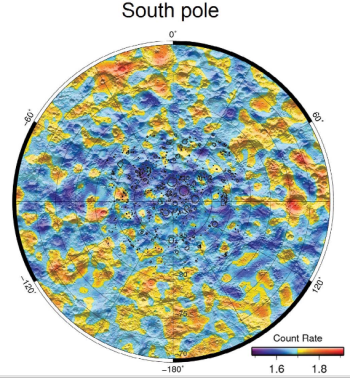
LEND data of lunar south pole

The uncertainty of science: A new science paper, published Saturday in the Journal of Geophysical Research – Planets,, has found that there is much less water ice trapped in the permanently shadowed craters of the lunar poles than previously thought. From the abstract:

This means that all [permanently shadowed regions], except those in Shoemaker, Cabeus and Rozhdestvensky U craters, do not contain any significant amount of hydrogen in comparison with sunlit areas around them at the same latitude.

And from the paper’s conclusion:

[E]ven now the data is enough for definite conclusion that [permanently shadowed regions] at both poles are not reservoirs of large deposits of water ice.
» Read more

6 comments

What is the current state of the six American flags planted on the Moon by Apollo astronauts? One NASA engineer takes a look.

What is the current state of the six American flags planted on the Moon by Apollo astronauts? One NASA engineer takes a look.

James Fincannon has been an important contributor here at Behind the Black, sending me some interesting tips from time to time that have resulted in some good posts, such as this one about caves on the Moon.

0 comments

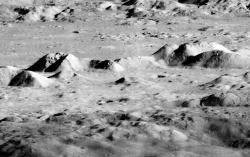
The Lunar Orbiter image of Copernicus Crater, taken forty-six years ago, has been re-released after significant refurbishing..

Oblique image of Copernicus taken in 1966

Reboot: The Lunar Orbiter image of Copernicus Crater, taken forty-six years ago, has been re-released after significant refurbishing.

By adding modern computer interfaces and data handling techniques, the LOIRP was able to scan and record the data in ways that simply could not have been accomplished in the 1960s. As a result the images that were obtained had a much higher resolution and dynamic range than had been seen to date. Indeed, in many cases, these images often rival or exceed images taken by the Lunar Reconnaissance Orbiter which is currently surveying the Moon.

You should definitely check it out, as it is a breathtaking image. Historic too, as it was the first image from the Moon that truly made the place understandable.

0 comments

At a conference in Washington DC yesterday both Russia and Japan announced the Moon as their next primary space exploration goal.

The new colonial movement: At a conference in Washington DC yesterday both Russia and Japan announced the Moon as their next primary space exploration goal.

If the U.S. gets a competitive private aerospace industry going — which seems increasingly likely — I’m willing to bet those companies will get to the Moon before either of these governments.

5 comments

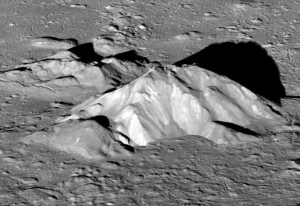
Lunar Reconnaissance Orbiter has published another spectacular oblique image of Tycho crater.

Tycho Oblique image thumbnail

Lunar Reconnaissance Orbiter has published another spectacular oblique image of Tycho crater.

If you look closely at the slope of the mountain, you can see an avalanche trail at its center and the debris piled up at the mountain’s base.

See the first oblique image, released in June 2011, here. The two images look at the crater from opposite directions.

0 comments
1 82 83 84 85 86 94