Rocket Lab gets two-launch contract from Japan’s space agency JAXA

In what appears to be a significant slap at its own rockets (especially its delayed Epsilon-S rocket), Japan’s space agency JAXA this week signed a two-launch deal with the American rocket company Rocket Lab.

Launching from Rocket Lab Launch Complex 1 in New Zealand, the two Electron missions will deploy satellites for JAXA’s Innovative Satellite Technology Demonstration Program. The first launch, scheduled from December 2025, will deploy the agency’s RApid Innovative payload demonstration SatellitE-4 (RAISE-4) spacecraft, a single satellite that will demonstrate eight technologies developed by private companies, universities, and research institutions throughout Japan.

The second launch, scheduled for 2026, is a JAXA-manifested rideshare of eight separate spacecraft that includes educational small sats, an ocean monitoring satellite, a demonstration satellite for ultra-small multispectral cameras, and a deployable antenna that can be packed tightly using origami folding techniques and unfurled to 25 times its size.

Rocket Lab has previously won contracts from several private Japanese satellite companies (Q-Shu, Astroscale, ALE), but this I think is the first JAXA contract it has won. What makes it significant is that JAXA has always focused on using its own rockets, the large retired H2A and the new H3 as well as the smaller Epsilon-S. To go to an American company is somewhat unprecedented.

Though larger than Rocket Lab’s Electron rocket, Epsilon-S was being developed to compete for the same market. That development however has been plagued by failure, including explosions of engines during tests of both its upper and first stages in ’23 and ’24 respectively. After the second explosion JAXA announced in December 2024 the rocket’s first launch would not occur in the spring of 2025 as planned, but provided no additional information. Since then there have been no updates.

This Rocket Lab deal suggests the Epsilon program is in big trouble. In the long run however this might be a very good thing for both JAXA and Japan’s own nascent rocket industry. JAXA might finally be recognizing that building and owning its own rockets is not the best plan, that it would be better to use the capitalism model and simply be a customer buying the services from the private sector. At the moment Japan doesn’t yet have a viable commercial rocket sector, with only Mitsubishi having an operational commercial rocket, the H3 (mostly controlled by JAXA). There are a number of new startups however, including Interstellar, Honda, Space One, and Tispace, all of which have done tests of one kind or another. If JAXA is ready to abandon its own government rockets and buy the service from the private sector, those Japanese startups will start to prosper.

6 comments

China launches three satellites from ocean platform

The Chinese pseudo-company Orienspace yesterday successfully placed three satellites into orbit, its solid-fueled Gravity-1 rocket lifting off from an ocean platform off the country’s northeast coast.

This was Orienspace’s second launch, both using its Gravity-1 rocket from the ocean. Of the three satellites, one was an Earth observation satellite, and the other two were part of the pseudo-company Geespace’s Geely constellation of satellites, though it is not clear if these are for its Internet-of-Things (IoT) constellation or for general communications. The IoT constellation already has 64 satellites in orbit out of a planned 240.

Another launch of China’s Long March 8A rocket was supposed to happen yesterday, but there is no indication in China’s state-run that it took place, nor any information about a rescheduled launch date. That state-run press also illustrated the pseudo nature of these Chinese companies by only mentioning Orienspace as an afterthought at the end of the article.

The leaders in the 2025 launch race:

129 SpaceX
59 China
13 Russia
12 Rocket Lab

SpaceX still leads the rest of the world in successful launches, 129 to 99. The company will try again this evening to launch its third mission for Amazon, placing a set of Kuiper satellites into orbit. Weather has scrubbed the past two attempts in the previous few days.

0 comments

Orbital tug company Momentus gets two NASA contracts

The orbital tug startup Momentus yesterday announced that NASA has awarded it two contracts worth $7.6 million total to fly two experimental NASA payloads on its Vigoride tug.

One payload will test “test the ability to make semiconductor crystals in microgravity”, while the second will “test a rotating detonation rocket engine, a propulsion system designed to provide higher efficiency than traditional engines.” In this case the propellants used will be nitrous oxide and ethane.

Both will fly on the same Vigoride tug on a mission to be launched no earlier than October 2026. Momentus also says there is room for additional payloads on that mission.

It appears the increase in the number and launches of rockets has actually hurt the orbital tug business:

Momentus is among several companies that developed orbital transfer vehicles, or OTVs, like Vigoride to ferry spacecraft between orbits. They are designed to provide last-mile delivery to specific orbits for spacecraft launched on rideshare missions such as [SpaceX’s] Transporter [launches]. However, demand for such services has been slower to materialize than expected. “Candidly, that part of the market has not developed as much as people thought, say, five years ago,” [said John Rood, Momentus’ chief executive] during a panel at World Space Business Week in September. “The reason is many small manufacturers are multi-manifesting satellites to deploy a single plane with a single launcher.”

As a result, Momentus has focused on getting technology demonstration contracts such as the two above, with the tug acting more like a service module.

0 comments

Canadian rocket startup Nordspace signs deal for its mission control center

Proposed Canadian spaceports

The Canadian rocket startup Nordspace, which earlier this week signed a deal for another company to establish ground stations for its proposed Atlantic Spaceport, today signed an agreement with the company Kongsberg Geospatial to provide software for running its mission control center.

According to the news release TerraLens “will ingest data from multiple sensors to deliver real-time three-dimensional (3D) visualization of launch operations, range safety, decision support, and vehicle tracking. This will help streamline launch operations and enable deployment of critical space missions to orbit in under 48 hours.” Kongsberg said TerraLens builds on their “experience supporting range safety and mission-critical visualization for the Andøya Space and Defence project in Norway.”

Andøya is Norway’s new commercial spaceport that has been launching suborbital government rockets for decades.

Nordspace continues to move forward quickly, having been established only three years ago. It is putting the pieces together for its spaceport, and is testing both a small suborbital rocket and the engines for its proposed orbital Tundra rocket. Though the race is certainly not over, it does appear Nordspace will get to orbit ahead of the Nova Scotia spaceport that was first proposed in 2016.

0 comments

Is Trump considering re-nominating Jared Isaacman for NASA administrator?

Jared Isaacman
Billionaire Jared Isaacman

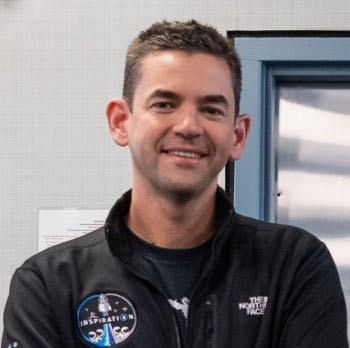
According to a report late today (based on anonymous sources), President Trump has held several face-to-face meetings in the past few weeks with billionaire Jared Isaacman, and those meetings have raised the possibility of Trump re-nominating him for NASA administrator.

According to Bloomberg News, President Trump has reportedly met with Isaacman several times in recent weeks to discuss NASA’s operational plans and future plans. Isaacman is the founder of fintech company Shift4 Payments and a private astronaut at SpaceX who has had a longstanding relationship with Elon Musk.

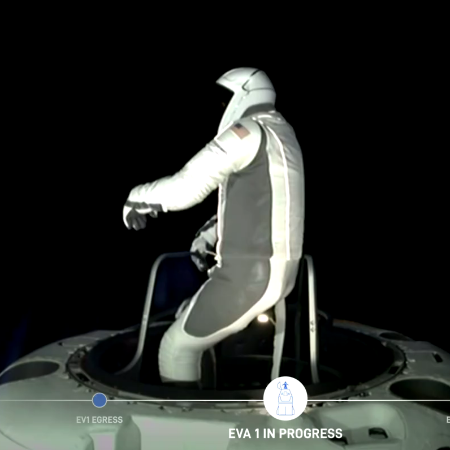
Isaacman, who has flown two private missions in space (and done one spacewalk), had been nominated by Trump for NASA administrator in December 2024, and was only days away from a Senate confirmation vote when Trump suddenly withdrew the nomination on May 31, 2025. Though it has never been clear why Trump withdrew the nomination, Isaacman’s past support of Democrats and his close links to Musk have been raised as issues, especially because of the Trump-Musk kerfuffle in the spring. Isaacman has also expressed some opinions since then about NASA and what it should do that might not have fit with Trump’s plans.

At the same time, NASA is presently without its own administrator, with Transportation Secretary Sean Duffy holding down the job as an interim head. It appears Trump might be reconsidering his earlier decision in order to get someone in charge of NASA who isn’t distracted by other responsibilities.

Note however that this report is solely from anonymous sources, and we all know how unreliable those are. The whole story could be fantasy cooked up by someone in DC for any number of devious political purposes.

12 comments

Dominion Voting Systems purchased by American company run by Republican election reform activist

Maricopa County election audit
The issues discovered in an audit of Maricopa County in Arizona
of 2020 election results. Note the problems found related to voting
machines, Dominion’s responsibility. The reason the “Ballots
Impacted” column is marked “N/A” (not available) is because
Dominion refused to cooperate. Click for full graph.

In what could be a major move towards election reform, the electronic voting system company Dominion — that many have suspected or have accused of either doing a bad job tabulating computer ballots or purposely manipulating them — has now been purchased by an American company dubbed Liberty Vote that is owned by Republican election reform activist Scott Leiendecker.

Leiendecker, former GOP election reform advocate, has officially become the sole owner of Dominion after making the deal contingent on dropping several remaining lawsuits against prominent conservatives and One America News Network (OANN).

Leiendecker further disclosed to the Caller that remaining litigation with MyPillow CEO Mike Lindell, former New York City Mayor Rudy Giuliani and former Trump campaign attorney Sidney Powell will be dropped by Dominion Voting Systems as part of the acquisition agreement. Dominion also filed a lawsuit against Herring Networks, which owns OANN, in August 2021. The lawsuit remained unresolved, though Leinendecker further confirmed that future litigation will be discontinued following the acquisition.

None of the charges against Dominion have ever been proven, and many have become impossible to investigate because the company’s very successful lawfare campaign, suing anyone who said anything against it, including news organizations such as Fox and Newsmax, both of which settled with Dominion, paying it $787 million and $67 million respectively. Nonetheless, the allegations have been numerous, substantial, and alarming (see also here, here, here, and here). Audits found errors, fraud, and the ability for outsiders to hack Dominion’s machines.

Leiendecker, in announcing the purchase, said that the new company will move all operations to the U.S. and will make third-party audits standard. It will also make paper ballots a fundamental component of its electronic tabulating system, something that Dominion did poorly or not at all.

Even if Dominion had been completely honest in its work, its resistance to investigation or even any criticism helped fuel the growing belief that the 2020 election of Biden was tampered with and might even have been fraudulent. That much of the company’s operations were foreign-based further fueled those suspicions. This purchase should help ease those concerns, though the proof will be in the pudding.

10 comments

Congressional budget action appears to just save two of seventeen on-going NASA missions

Though no final budget has yet been approved, based on the language in the budget the House has approved and sent to the Senate, only two of the seventeen on-going missions presently in space are specifically allocated money, thus allowing the Trump administration to zero out funding for the remaining fifteen.

The two missions saved are Osiris-Apex, on its way to the potentially dangerous asteroid Apophis, and the Magnetospheric Multiscale Mission (MMS), four satellites in orbit that observe the Earth’s magnetosphere.

The article at the link is typical of our propaganda press. It clearly opposes any cuts to NASA, and lobbies repeatedly for all funding to be reinstated. This pattern has gotten quite boring and tedious. It would be so refreshing to see a more objective take, at least one in a while.

However, its reporting confirms my own reporting from mid-September, where I noted that the vague language in the House budget bill would allow Trump to cut these missions. Congress wants to preen itself as supporting all funding for NASA, while carefully allowing Trump to go ahead with large cuts.

It is a good thing these two missions have been saved, though it does appear their funding has been trimmed. Of the fifteen missions in limbo, the only two that seem worth keeping is the Chandra X-Ray Observatory and New Horizons, though the second should likely be set up similar to the two Voyager spacecraft, with a very small crew aimed mainly at keeping the spacecraft functioning and able to send back data periodically.

We are in great debt. It is time that the federal government make some real choices. We can no longer afford to buy all the candy in the store.

14 comments

Is the fate of the independent live streams in Boca Chica uncertain?

My headline paraphrases this interesting, very detailed, and largely accurate article today from Texas Monthly. It outlines how the newly formed town of Starbase there has the power to block the many independent lives streams and tourist operations that have sprung up since SpaceX opened its facility in Boca Chica.

This proxy government also has the power to create zoning rules and enforce them. In July the city adopted a plan that leaves those with the closest views of the launchpads in violation of new zoning designations. The mainstay launch-day ticket sellers here—Rocket Ranch and a few others—operate in what’s now officially a residential area, near newly built homes for SpaceX executives. The same violation applies to the spots where the streamers have mounted their video cameras.

These cottage industries aren’t doomed. Texas law has grandfathering provisions that allow existing businesses to remain open after zoning changes. But Starbase city attorney Andy Messer raised eyebrows during a recent city commission meeting by saying that the grandfathering would be considered on a “case-by-case basis.” Hearing this, some property owners expressed hesitation to approach the city to ask if their status was in question. “I don’t want to poke the bear,” as one put it.

Will SpaceX force the town of Starbase to shut these independent operations down? The article describes the possibilities in great detail. The very nature of SpaceX and its founder, Elon Musk, suggests it won’t happen. The company thrives on openness and straight talk. Musk himself is a proven supporter of free speech and competition. It would be shocking if his company suddenly took a different position. Moreover, SpaceX, Starbase, or its residents (almost all of which are SpaceX employees) generally benefit from the good publicity of these independent operations, publicity that the company’s own employees enjoy.

Yet, Starbase is a company town, and the long history of such places is that with time, the company takes over and rules everything, allowing nothing that it does not control.

Stay tuned. Above all things won’t be dull in Boca Chica.

Hat tip Robert Pratt of Pratt on Texas.

6 comments

The Juno mission at Jupiter is almost certainly over

An article yesterday at Space.com speculated that the Juno mission to Jupiter is likely over, but added that we cannot yet be sure because the government shutdown has prevented NASA from making any definitive announcement.

NASA’s management had previously extended the orbiter’s mission several times, with the last extension going until the end of the 2025 fiscal year, that ended on September 30, 2025. No new budget has yet been approved, and the proposed Trump budget had included no money for extending the mission farther.

Due to the government shutdown, NASA is currently unable to say whether Juno is still operating or already powered down. At the time of publication, responses from agency officials state that “NASA is currently closed due to a lapse in government funding … Please reach back out after an appropriation or continuing resolution is approved.”

Under shutdown rules, only missions that fall under “excepted activities” — those required to protect life, property, or national security — can continue operations or communications. NASA’s continuity plans also specify that carryover funding may only be applied to “presidential priorities,” which limits what science programs can proceed during a lapse.

Juno does not fall into those protected categories, and was also zeroed-out on the President’s fiscal year 2026 budget request — making the mission, presumably, not a priority. So, until normal government operations resume, the spacecraft’s future is uncertain.

I think Juno’s future at this point is not uncertain in the least. While other active missions that the Trump proposed shutting down might get revived, Juno is unlikely to be one of them. I suspect the science team has put it in hibernation, and is already beginning to move on to other projects and work. They are being coy about this in the faint hope Congress will save Juno, but this should not be a priority. At this point I think NASA would be wiser to spend its resources elsewhere.

2 comments

The left only has a short window remaining to stop its violence before the hammer strikes it hard

Cry havoc!

So there is no confusion, my headline is not something I advocate. It is merely what seems inevitable when a law abiding society — America — has within it a subculture (the modern left led by the very corrupt and power-hungry Democratic Party) that thinks it is not only above the law, but its ideology justifies all kinds of violence. To wit, there’s this post today by Guy Benson, nicely summarizing only a small selection of recent leftist violence. I quote it in full, because this is necessary to get the feel of reality:

I’d like to ask my non-conservative followers to pay attention here for a moment. I don’t need a response or a rebuttal or a ‘whatabout.’ Just read on and consider what I’m saying. Please.

We are only a few weeks removed from a leading conservative figure being shot in the throat and killed by a leftist, for and during his speech, at a public speaking event. Stunning, jarring numbers of leftist Americans justified or celebrated this assassination, aligning with multiple public polls showing that a sizable minority of leftists in this country think political violence can be acceptable.

Today — just today — many conservatives are thinking about:

(1) a major leftist statewide candidate being exposed for sending texts to a political opponent (R) explicitly hoping for the death of another conservative political opponent…along with the deaths of that opponents’ young children. He WROTE DOWN that the pain of those deaths might promote his own agenda, which would be worth it, in his estimation. This candidate is now condemning his current conservative opponent for noticing this information.
» Read more

35 comments

ESA looks to global private sector for its next ISS cargo mission

ESA logo

The European Space Agency (ESA) has issued a request for bids to launch a cargo mission to ISS by the fourth quarter of 2028, and its request will allow companies other than those in Europe to bid.

Published on 3 October, the call for the CSOC Cargo Commercially Procured Offset initiative outlines a single mission to transport 4,900 to 5,000 kilograms of pressurised cargo to the ISS.

… In the call’s “Letter of Invitation”, the agency stated that, due to regulatory requirements that include certifications provided by NASA, the competition would be open to economic operators from the United States. ESA did, however, add that preference would be given, to the “fullest extent possible”, to bids from its Member States.

While the call is set to close on 31 October, the execution of the mission’s procurement will only move forward if the necessary funding is approved by Member States at ESA’s Ministerial Council meeting in November. It will then need to be approved by the relevant Programme Board and the Industrial Policy Committee.

Though there are several European startups (The Exploration Company, Thales Alena, Atmos, PLD) now developing unmanned returnable capsules that will eventually be able to bring cargo to and from ISS, none appear likely to be able to meet the 2028 deadline. Thus, the most likely winner of this contract will be SpaceX.

More significant is the nature of ESA’s request. In the past the agency simply built and owned its own cargo capsule, the ATV. Rather than build another, it is adopting the capitalism model, asking its private sector to make it happen.

4 comments

Firefly Aerospace buys defense contractor SciTec

Firefly Aerospace yesterday announced that it is buying the defense contractor SciTec for $300 million in cash plus $555 million in Firefly shares.

The shares go to SciTec’s owners at an agreed-to value of $50 per share, essentially making those individuals part owners of Firefly.

The acquisition will advance Firefly’s comprehensive space services by adding mission-proven defense software analytics, remote sensing, and multi-phenomenology data expertise. SciTec’s core capabilities – which include missile warning, tracking and defense, intelligence, surveillance and reconnaissance, space domain awareness, and autonomous command and control – will supplement Firefly’s launch, lunar, and in-space services. SciTec further adds ground and onboard data processing as well as AI-enabled systems designed for low latency operations to support advanced threat tracking and response across multiple domains.

In other words, this acquisition is aimed at improving Firefly’s ability to win defense contracts, thus diversifying its business beyond outer space. This suggests its managers believe there isn’t enough business in outer space to put the company in the black. It needs defense contracts, and adding SciTech increases the odds it will win those contracts.

The stock price in this sale, $50, I think tells us something of the motives of SciTec’s owners. At present Firefly’s stock is selling at about $30 on Wall Street, and the price has not changed much today after this announcement. It appears the stock obtained by SciTec’s owners is thus not as valuable as listed in the intended sale price. This in turn suggests that those owners also needed this deal to diversify the company, and were willing to take a loss in the value of their stock to get it.

Then again, my understanding of how Wall Street and stocks function is limited, and my analysis on this point could be completely wrong.

5 comments
1 37 38 39 40 41 838