Two spaceports in Alaska sign partnership agreement

Alaska spaceports

The Alaska Aerospace Corporation, which runs the Kodiak spaceport in Alaska, has now signed a five year partnership agreement with University of Alaska’s Geophysical Institute in Fairbanks, which runs the Poker Flat suborbital spaceport, to upgrade the latter for commercial orbital launches.

Though the terms of that agreement are highly technical, Gov. Mike Dunleavy’s draft budget for the corporation indicates that the university plans to seek a FAA spaceport license for the university’s Poker Flat Research Range, which has been flying sounding rockets — smaller rockets used for research — into the upper atmosphere since March 1969, including some earlier this spring.

An FAA license could allow Poker Flat to launch larger rockets, and for commercial purposes, not just scientific ones. Making Poker Flat a “licensed vertical orbital spaceport” could take up to two years, the budget documents state.

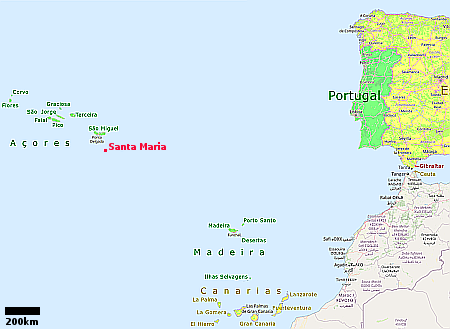
The map to the right shows the location of each spaceport. You can read the text of the agreement here [pdf].

Kodiak has been used recently by several orbital rocket startups, most often by Astra. Poker Flat in turn has only done suborbital launches (mostly for universities), and its interior location suggests it would have a very limited capability to do orbital launches. The lower stages of any orbital rocket would crash either in Alaska or Canada, something that neither the U.S. or Canada has previously allowed.

The deal however allows both spaceports to coordinate their effort, which might bring more business to both, for different purposes.

3 comments

Europe approves SES purchase of Intelsat

The European Commission has now approved the purchase of the long established satellite communications company Intelsat by the long established Luxembourg satellite communications company SES for about $4 billion.

This decision follows an approval by the government of the United Kingdom. It now appears the only remaining regulatory hurdle is approvals by the FCC and the Department of Justice in the U.S.

This buy-out follows similar mergers by other old established satellite companies, such as the merger of Viasat with Imarsat and OneWeb with Eutelsat. All are occurring because these older companies, which mostly launched large geosynchronous satellites, have been under heavy competitive pressure from the low orbit constellations like Starlink and OneWeb.

Whether these older companies can compete following these mergers however remains uncertain. To succeed they need to have a product customers want, and at the moment it isn’t clear they have one.

0 comments

Mexican officials demand investigation into Starship/Superheavy debris on its beaches

Mexican officials of the border state adjacent to Texas are now demanding an investigation into Starship/Superheavy debris that has been found recent on its coast, claiming SpaceX is “polluting Mexican beaches.”

Karina Lizeth Saldivar, the head of the Tamaulipas Secretariat for Urban Development and Environment, recently announced that they would be requesting that federal authorities in Mexico investigate the damages and potential damages that rocket fragments could cause.

According to Saldivar, the rocket pieces could pose a potential danger to locals and claimed that her agency would request a formal investigation by Mexican federal environmental agencies. It remains unclear if Mexico’s government could do anything about the issue.

Saldivar is a typical government apparachik. Rather than try to develop the beach area in Mexico that is close to Boca Chica and thus provides a great tourist spot for viewing launches, she instead can only whine and demand the government shut things down.

Meanwhile, the article notes that ordinary Mexicans aren’t complaining. Instead, they have been collecting the rocket pieces enthusiastically, with some making money by selling them as collector’s iten on social media.

4 comments

Trump eliminates restrictions against supersonic flights over the U.S.

In an executive order released on June 6, 2024, President Trump eliminated the half-century-old regulations that forbid supersonic airplanes to fly over the land mass of the United States.

The Administrator of the Federal Aviation Administration (FAA) shall take the necessary steps, including through rulemaking, to repeal the prohibition on overland supersonic flight in 14 CFR 91.817 within 180 days of the date of this order and establish an interim noise-based certification standard, making any modifications to 14 CFR 91.818 as necessary, as consistent with applicable law. The Administrator of the FAA shall also take immediate steps to repeal 14 CFR 91.819 and 91.821, which will remove additional regulatory barriers that hinder the advancement of supersonic aviation technology in the United States.

This order makes sense for several reasons. First, the restrictions were always absurd. The sonic boom concern was always over-rated. Second, the concern increasingly doesn’t exist due to improvements in technology. In a flight test in January, the commercial supersonic airplane startup Boom Aerospace confirmed that its test plane broke the sound barrier three times and each time with “no audible sonic boom.”

Though Boom isn’t the only supersonic startup, it is far ahead of the others. It already has orders from United and Japan airlines for its Overture 80-passenger supersonic jet. This new Trump order will certainly help it attract investment capital, as well as more airlines willing to buy its planes.

4 comments

Axiom charges $70 million per ticket to fly to ISS

Axiom's new module assembly sequence
Axiom’s assembly sequence for its planned station, initially attached to ISS but subsequently detached

According to this article today about Axiom’s tourist flights to ISS, the company now charges $70 million per ticket, which means that for the AX-4 flight scheduled for launch tomorrow, the revenues from India, Poland, and Hungary total about $210 million.

That money of course doesn’t all end up in Axiom’s pockets. It has to pay SpaceX for the launch and use of the Dragon capsule. It also has to pay NASA some recently imposed high fees to use its astronaut training facilities as well as lease time on ISS.

All told, I suspect Axiom’s profits for these flights is relatively small. The company however has other reasons to fly these missions. It is attempting to win NASA’s big space station construction contract, and these flights to ISS demonstrate the company’s ability to manage such operations while working with NASA. Of the other three space station projects competing for that contract, only Vast is planning to do the same.

This effort by these two companies is part of the reason I rank them first and second for winning that contract.

  • Haven-1, being built by Vast, with no NASA funds. The company is moving fast, with Haven-1 to launch and be occupied in 2026 for an estimated 30 days total. It hopes this actual hardware and manned mission will put it in the lead to win NASA’s phase 2 contract, from which it will build its much larger mult-module Haven-2 station..
  • Axiom, being built by Axiom, has launched three tourist flights to ISS, with a fourth scheduled for tomorrow, carrying passengers from India, Hungary, and Poland. Though there have been rumors it has cash flow issues, development of its first module has been proceeding more or less as planned.
  • Orbital Reef, being built by a consortium led by Blue Origin and Sierra Space. Overall, Blue Origin has built almost nothing, while Sierra Space has successfully tested its inflatable modules, including a full scale version, and appears ready to start building its module for launch.
  • Starlab, being built by a consortium led by Voyager Space, Airbus, and Northrop Grumman, with an extensive partnership agreement with the European Space Agency. It recently had its station design approved by NASA, but it has built nothing. This might change once it obtains several hundred million dollars from its initial public offering of stock.
3 comments

White House issues new orders to streamline federal broadband regulations

As part of its effort to eliminate the red tape imposed by Biden during his term as president, the White House last week issued new orders to streamline the federal broadband regulations as well as cancel those Biden restrictions.

This Trump executive order cancels a number of Biden executive orders that imposed net neutrality, DEI, climate change, and other requirements that added paperwork and cost money and time. Most important of all for rocket companies, this new order aims to streamline the environmental review process on new projects, a process that was expanded exponentially during Biden but had been growing out-of-control for decades, and appeared during Biden to destroy many rocket startups.

Of course, because this executive order was issued by Trump, it will likely be blocked by a federal judge, because only Democratic Party presidential executive orders are allowed in America now.

1 comment

Starlink approved for India

After several regulatory issues that blocked the company during the past few years, SpaceX has finally gotten approval to sell Starlink to customers in India.

The company hopes to initiate service within the next year. There still remain some required license approvals:

Although the licence from the Ministry of Telecommunications clears a major hurdle, the service’s final launch in India will depend on further regulatory clearances, including the Telecom Regulatory Authority of India’s (TRAI) recommendations on spectrum allocation, which are still pending approval from the Department of Telecommunications (DoT).

These should be pro forma at this point, since it was the ministry of telecommunications that issued this most recent license. Why would it issue one permit but then block another?

2 comments

Air Force issues impact statement for SpaceX’s proposed Cape Canaveral Starship/Superheavy launch site

Map of proposed Cape Canaveral Starship/Superheavy launch facilities
Click for higher resolution version.

The Air Force today released its environmental impact statement for SpaceX’s proposed Starship/Superheavy launch site at Cape Canaveral, generally approving a launch rate of 76 launches per year, noting that this would cause “no significant impact” on the environment while providing “beneficial impact” on the local economy.

You can read the impact statement here [pdf]. It lists 69 areas where these new operations could impact something, and found in almost all no significant impact. The beneficial impact was found in the areas where the operations would boost the local economy.

The single area where these additional launches might have an impact is the issue of noise, noting that “community annoyance may increase” due to the launches. Considering the wealth that the local community will gain from jobs, industry, and tourism due to those launches, I suspect the only whining about this noise will come from fake environmental groups opposed to anyone doing anything.

None of this is any surprise. Launches have been occurring at Cape Canaveral and the Kennedy Space Center for more than three quarters of a century, and the only significant impact to the ecology has been beneficial, reserving large areas from development where wildlife has prospered. If anything, the obviousness of this proves the utter waste of money we now spend on such reports.

The statement notes that it still will require FAA input on coordinating the closure of air space during launches, but it also appears to consider this part of normal routine actions, not a requirement the FAA can use to block operations or approval.

The number of proposed launches however is quite impressive. SpaceX’s plan would close to match the annual number of global launches by everyone for most of the space era. Nor is it impossible considering the design of the rocket and the plans the company has for getting to Mars. The site plan includes two launch mounts for Starship/Superheavy (as shown in the map above). This is in addition to the two Starship/Superheavy launch facilities the company wants to build at Kennedy.

The statement is now open to public comment through July 28, 2025. The Air Force also plans three public meetings in the Cape Canaveral area on July 8, 9, and 10. It will also make a fourth virtual public meeting available from July 15 to July 28.

4 comments

The Senate, led by Ted Cruz, endorses NASA’s failed SLS, Orion, and Lunar Gateway

Let’s all go bankrupt! A bill introduced today by Ted Cruz (R-Texas), chairman of the Senate Commerce Committee, rejects the Trump budget plan to phase out NASA’s failed SLS, Orion, and Lunar Gateway programs that have cost so far tens of billions for decades without accomplishing anything, and instead expands funding over the next decade to these and many other projects and agencies at NASA.

The bill would allocate $2.6 billion to Lunar Gateway, $4.1 billion to build two more SLS rockets, $20 million to build one more Orion capsule, $1.25 billion more for ISS to continue its operations as is, and $1 billion to upgrade or expand facilities at five NASA centers in Florida, Texas, Mississippi, Alabama, and Louisiana.

This pork-laden bill would also fund a Mars Telecommunications Orbiter for $700 million and add $325 million to the $843 million contract NASA has with SpaceX to build the de-orbit vehicle for bringing ISS down in a controlled manner once it is retired.

What this bill tells us is that these Senators, led by “lying” Ted Cruz (to use the nickname Trump pinned on him during the 2016 presidential election campaign), are still unwilling to face the realities of the national debt, and want to spend money we don’t have in order to make believe they are grand explorers sending Americans into space. Instead, these idiots are simply funneling cash to their states in order to bribe voters to vote for them.

As Elon Musk so correctly noted, there is an election coming in 2026. Maybe it is time to throw them all out.

What this bill also tells us is that Trump is going to find it very difficult to get the budget under control. The Senate doesn’t care if the country goes bankrupt. They intend to spend our money like it grows on trees, to hell with the future. Shame on them.

Sadly, these senators know they have the backing of almost the entire press corp, which is why they are doing this. They figure they will get great press for “saving” NASA, even if it bankrupts the country. Worse, it appears the press is all for helping them do so.

R.I.P. America.

40 comments

Long delayed ESA project to build a reusable first stage delayed again

The long delayed European Space Agency (ESA) project dubbed Themis to develop and test a reusable first stage for use in European rockets has been delayed again, with the first test hop now expected to occur next year instead of the fourth quarter of 2025.

Themis was first proposed by ESA in 2019, with the first hops expected in 2022. Three years later little has happened in the project. Instead, it appears the nations in the ESA as well as the new rocket startups on that continent have grown very disinterested in government-run projects like this. The closing paragraph at the article at the link illustrates this starkly:

While another delay to the start of the first Themis launch campaign is frustrating, the downstream consequences are likely to be minimal. The only direct application of the technology developed under the Themis programme is the first stage of the two-stage MaiaSpace rocket. However, the company appears to be continuing the development of its first stage largely independently of Themis, meaning the latest delay is unlikely to affect its progress.

In other words, this whole program is divorced entirely from any commercial application. We should therefore expect that once these test flights finally occur, the entire thing will vanish, like so many other similar government-run test programs by NASA and ESA.

1 comment

China launches another set of satellites for one of its giant internet constellations

China earlier today successfully launched the sixth set of satellites for the Thousand Sails internet constellation, its Long March 6A rocket lifting off from its Taiyuan spaceport in northern China.

Very little information appears available about this specific payload. No word also was released about where the rocket’s lower stages and four strap-on boosters crashed inside China.

The leaders in the 2025 launch race:

69 SpaceX
33 China
7 Rocket Lab
6 Russia

SpaceX still leads the rest of the world in successful launches, 69 to 53.

0 comments

Landing of Ispace’s Resilience lander uncertain

Resilence landing

The landing of Ispace’s Resilience lander on the Moon at present appears uncertain, and could be a failure. Though the announcers of the live stream had warned beforehand that it might take awhile after the planned touchdown time to confirm a successful landing, the circumstances just before landing did not appear to go as expected.

At T-1:45 minutes, with the spacecraft at an altitude of 32 feet and still moving at a speed of 116 miles per minute, all telemetry disappeared from the broadcast. Mission controllers did then indicate the spacecraft was “pitching up”, which means it was re-orienting itself for landing. At that point however no further updates were provided. Moments later we could see the engineer in mission control in the lower left of the screen capture to the right, obviously disturbed by something.

In ending the live stream a few minutes later, with no further information, the announcers added that a full report will be made during a press conference later today.

4 comments

Understanding Trump’s proposed NASA cuts, in the larger context of the overall federal budget

U.S. debt as of June 4, 2025
U.S. debt as of June 4, 2025. Click for original.

For my entire life it has always been the same: Whenever any politician or elected official proposes any cuts to the federal budget, and most especially when those cuts are aimed at a popular government agency like NASA, the news reports in the mainstream press are uniformly hostile.

Trump’s proposal to cut NASA’s budget by 24% in 2026 has been no different. Here are just a few headlines:

This list is only a sampling, but they are typical of almost all the reporting now and that always happens when big cuts are proposed in any government program. The spin is always the same: “These cuts are horrible, their acceptance would be the act of a barbarian, and by doing so will certainly cause the fall of civilization!”

Above all, the focus is always on the cuts themselves, and never on the larger picture.

I am not going to do that. I have reviewed in detail the proposed cuts to NASA, and am now going to take a detailed look, but will do so by considering the larger context of the overall federal budget and the need to get its spending under control.

And out of control that budget is, as indicated by the screen capture above of today’s US Debt Clock. The United States is bankrupt. If we don’t gain some control over federal spending in a very near future some very bad things are going to happen, and soon. And those bad things will likely shut down luxury items like NASA entirely, not just impose some cuts to its overall budget.

All Trump is doing is attempting a first stab at this problem. The real question is whether he has made a rational and reasonable attempt, or whether it should be revised in some manner.

This is the perspective I bring to this issue. I just wish others would do the same.
» Read more

41 comments

Japanese lunar lander startup Ispace signs deal to build lander for ESA

Map of lunar landing sites
Landing sites for both Firefly’s Blue Ghost and
Ispace’s Resilience

The Japanese lunar lander startup Ispace — about to attempt its second unmanned lunar landing — has now signed a $3 millionj contract with the European Space Agency (ESA) to begin design and construction of its proposed Magpie lander.

The agreement comes in the context of the Small Missions for Exploration initiative launched by ESA. This initiative called for innovative and short-term mission ideas for lunar exploration. ispace’s MAGPIE concept was selected and awarded a pre-phase A contract on Dec. 12, 2024. Under the Phase 1 extension agreement, ispace-EUROPE will collaborate with ESA on the implementation of the lunar exploration mission. In aggregate, the value of the contracts for the two phases is €2,695,000 (approximately ¥437 million JPY).

The company already has contracts for future landers with both NASA and Japan’s space agency JAXA. It appears these space agencies consider the company’s engineering to be acceptable, even though its only attempt to land on the Moon, Hakuto-R1, crashed in 2023 when its software shut the engines down prematurely, three kilometers above the surface.

Ispace’s second lander, Resilience, is presently in lunar orbit and is now targeting a landing attempt tomorrow, June 5, 2025, at 3:17 pm (Eastern). The map to the right shows the landing zone, in Mare Frigoris in the high northern latitudes of the near side of the Moon.

This contract by ESA also illustrates Europea’s increasing shift to the capitalism model. Rather than design and build the lander itself, ESA is buying this product from the private sector. It will likely get what wants sooner and for far less money.

0 comments

Voyager announces first public stock offering, valued at $1.6 billion

Starlab design in 2025
The Starlab design in 2025. Click
for original image.

The space station startup Voyager Technologies yesterday announced its first public stock offering, with the hope of raising almost $400 million in investment capital.

Underwriters have a 30-day option to purchase up to 1.65 million additional Class A shares, on top of the 11 million initially offered, which are expected to be priced between $26 and $29 each. If fully subscribed at the top end of the range, the IPO could raise as much as $367 million in gross proceeds.

Voyager plans to build the Starlab space station, launched as a single large module by SpaceX’s Starship/Superheavy rocket, but so far has cut no metal, focusing its work entirely on designs. It has also signed deals with several foreign companies in Europe and Japan as well as the European Space Agency, positioning itself as providing the international community a station to replace ISS when it is gone.

At the moment however I rank Starlab fourth among the four commercial space stations under development, mostly because it has built nothing. Hopefully the funds raised by this stock offering will allow it to start some construction work.

  • Haven-1, being built by Vast, with no NASA funds. The company is moving fast, with Haven-1 to launch and be occupied in 2026 for an estimated 30 days total. It hopes this actual hardware and manned mission will put it in the lead to win NASA’s phase 2 contract, from which it will build its much larger mult-module Haven-2 station..
  • Axiom, being built by Axiom, has launched three tourist flights to ISS, with a fourth scheduled for early June, carrying passengers from India, Hungary, and Poland. Though there have been rumors it has cash flow issues, development of its first module has been proceeding more or less as planned.
  • Orbital Reef, being built by a consortium led by Blue Origin and Sierra Space. Overall, Blue Origin has built almost nothing, while Sierra Space has successfully tested its inflatable modules, including a full scale version, and appears ready to start building its module for launch.
  • Starlab, being built by a consortium led by Voyager Space, Airbus, and Northrop Grumman, with an extensive partnership agreement with the European Space Agency. It recently had its station design approved by NASA, but it has built nothing. This might change once it obtains several hundred million dollars from its initial public offering of stock.
0 comments

Proposed commercial spaceport in Nova Scotia gets launch customer

The proposed commercial spaceport in Nova Scotia, operated by Maritime Launch Services, announced this week that it has signed a contract with a Netherlands rocket startup, T-Minus, whereby the latter will do two suborbital launches of its new Barracuda sounding rocket.

On 3 June 2023, Maritime Launch Services, a Canadian commercial launch facility operator, announced that it had signed an agreement with T-Minus Engineering for the launch of two Barracuda rockets. According to the press release, the two launches will carry various scientific and educational payloads for several customers, whose names were not disclosed. The launches are expected to take place from Spaceport Nova Scotia in October 2025.

The viability of both the rocket startup and spaceport are open to question. T-Minus was founded in 2011, and has apparently done little in that time period. It claims it is flown this rocket many times, but if so there is little solid information confirming this fact. Most of its business appears to have been flying very small sounding rockets for European defense agencies.

Maritime Launch Services first proposed this spaceport in 2017, but has seen only one student suborbital launch in that time. Its original plan was to offer both the launchpad and rocket to satellite manufacturers. The rocket however was Ukrainian-built, and when Russia invaded the Ukraine that rocket was no longer available. Furthermore, red tape in Canada stalled launch approvals for years.

Recently the spaceport has been marketing itself to multiple rocket companies, announced a number of deals with unnamed startups or named startups that haven’t flown anything yet. It has also signed a partnership deal with the space station company (Voyager), apparently to bring some real technical expertise to the operation.

Nothing real at this spaceport however has actually yet occurred. Whether this new deal is real will have to wait for something to happen.

0 comments

Texas legislature gives Starbase power to close Boca Chica beaches

The Texas legislature this week approved language that now gives the new government of Starbase the power to close the road to Boca Chica’s beaches, taking that power from the local county.

House Bill 5246 revises the power and duties of the Texas Space Commission and the Texas Aerospace Research and Space Economy Consortium. A conference committee report of the bill added a section that allows the Space Commission to coordinate with a city to temporarily close a highway or venue for public safety purposes.

In South Texas, that will give the Starbase city commissioners the authority to approve those closures which would affect State Highway 4, a road that runs through Starbase and leads to the beach, as well as the beach itself.

As is usual for the particular news outlet at the link, it magnifies the opposition to SpaceX, amplifying the size of the several tiny leftist activist organizations that have been trying to shut down SpaceX at Boca Chica since the day Elon Musk announced he was now voting Republican. In reality, that opposition is nil. The region is thrilled by the wealth and jobs that SpaceX is bringing to the area, and is willing do help it grow in all ways. This action by the state legislature only reflects that support.

I must also note that the opposition in the legislature came entirely from the Democratic Party, once again taking the 20% side of an 80-20 issue.

Hat tip to radio host Robert Pratt of Pratt on Texas.

5 comments

Trump’s NASA budget cuts and rejection of Jared Isaacman for NASA administrator signal a very bright future for American space

To most Americans interested in space exploration, my headline above must seem extremely counter-intuitive. For decades Americans have seen NASA as our space program, with any cuts at NASA seen as hindering that effort. Similarly, Isaacman, a businessman and private astronaut who has personally paid for two flights in space, had initially been nominated by Trump to become NASA administrator expressly because of that commercial space background. For Trump to reject such a person now seems at the surface incredibly damaging to NASA’s recent effort to work with the private sector.

All of that seems true, but it really is not. Both of these actions by Trump are simply what may be the last acts in the major change that has been engulfing the American space industry now for the past decade.

Jared Isaacman

Jared Isaacman during his spacewalk
Jared Isaacman during his spacewalk in September 2024

First, let’s consider Isaacman. Before Trump had nominated him for NASA administrator, he had been a free American doing exactly what he wanted to do. As a very wealthy and successful businessman, he had decided to use that wealth to not only fly in space — fulfilling a personal dream — but to also use those flights to raise money for St. Jude’s Children’s hospital, whose work he considered priceless and wanted supported. He ended up flying two space missions, becoming the first private citizen to do a spacewalk, while also raising more than $200 million for St. Jude’s.

Isaacman’s second flight was also the first in what he hoped would be his own long term manned space program, which he dubbed Polaris. The first mission did this spacewalk from a SpaceX capsule. The second would hopefully do a repair mission to Hubble, or if rejected by NASA some other work in orbit. And the third would fly in SpaceX’s Starship around the Moon.

As this program was funded entirely by Isaacman and used no government funds, it was generally free from criticism. If anything, Americans hailed it as ambitious and courageous. He was following his own American dream, and doing it on his own dime.

This history however made him appear on the surface to be a perfect choice for NASA administrator under Trump, especially in a time where America’s space effort is shifting more and more to the private sector.

Everything changed however once Trump nominated him. He had to suspend his private Polaris program. He had to kow-tow to politicians, telling them what they wanted to hear. And he was no longer his own boss.
» Read more

21 comments

Proposed Australian spaceport changes name

Proposed Australian spaceports
Proposed Australian spaceports.
Click for original image.

A proposed Australian spaceport company that was previously called Equatorial Launch Australia and was forced to shift its location because of red tape has apparently changed its name to Space Centre Australia and named its proposed spaceport the Atakani Space Centre.

It is also possible there was a major shake-up in management, but this is unclear from available sources.

The map to the right shows the location where Atakani is planned, on Cape York in Queensland. Previously this company hoped to build the spaceport to the west in the Northern Territory, but local bureaucracy made that impossible.

Right now the company hopes to open for launches by 2029.

5 comments

Trump is withdrawing Jared Isaacman’s nomination for NASA administrator

Jared Isaacman
Jared Isaacman

According to numerous reports in various news outlets today and first revealed at Semafor, President Trump has informed Jared Isaacman that he is withdrawing his nomination for NASA administrator.

The White House is pulling the nomination of Jared Isaacman to be the next NASA administrator, just days before he was set to receive a confirmation vote in the Senate, according to three people familiar with the matter and confirmed by the administration.

It must be emphasized that many of these stories speculate absurdly about the reasons for this decision, such as the Washington Post suggestion, underlined by conservative reporter Laura Loomer, that it was Isaacman’s links with Elon Musk that caused this decision, implying that Trump as problems with Musk, something that seems blatantly wrong based on Trump’s positive and many public expressions of support for Musk.

The Semafor story however indicated the most likely reason for this decision, by quoting one White House spokeswoman:

“It’s essential that the next leader of NASA is in complete alignment with President Trump’s America First agenda and a replacement will be announced directly by President Trump soon,” said Liz Huston, a spokesperson for the White House.

This statement confirms something I sensed in March, before anyone else. I noted Isaacman’s past support for Democratic Party candidates and his apparent support in his companies for DEI, and wondered if the delay in getting him confirmed was due to headwinds in the White House and Republican Party over these issues. As I noted then:

These facts suggest to me that within both the Trump administration and among Republican in the Senate there are now second thoughts about Isaacman. Trump’s experience in his first administration, with federal appointees constantly sabotaging his efforts behind his back, has made him very determined to only bring people into his second administration he is certain to trust. Isaacman’s long support for the Democratic Party as well as DEI could be the reason the administration is delaying his confirmation.

More recently Isaacman has publicly expressed some concerns about the budget cuts at NASA proposed by the White House. Those tweets could have been the final blow to his nomination.

For Isaacman, this simply means that he can resume his own private Polaris space program, and align it with Musk’s parallel private Starship program to send humans to Mars, with both entirely without any government funding.

49 comments
1 33 34 35 36 37 593