South Korean rocket startup Innospace signs up another American satellite launch manager

Less than five seconds after launch
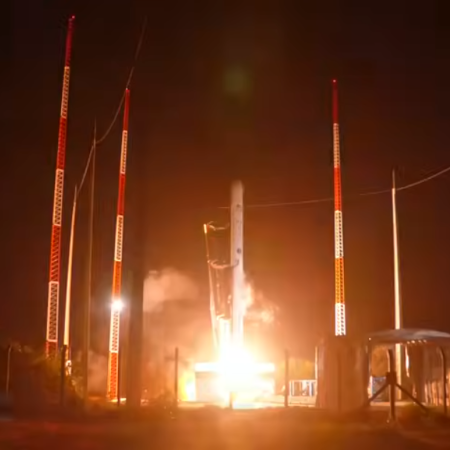
Hanbit-Nano less than five seconds after launch and
just prior to its failure in December 2025.

The South Korean rocket startup Innospace has signed a deal with the American company Ensemble Commercial Services to help obtain satellite contracts and manage the integration and deployment of these payloads.

This marks INNOSPACE’s second launch service distribution agreement in the U.S., following its agreement signed in August last year with Texas-based Arrow Science and Technology, LLC. By securing multiple local partners in the U.S., INNOSPACE plans to enhance customer accessibility in the North American market and accelerate its efforts to identify satellite launch demand and expand sales activities.

Under the agreement, Ensemble will identify potential customers in the U.S., including satellite companies, space startups and research institutions, and connect them with launch service opportunities offered by INNOSPACE for small satellites. Ensemble will also provide regular market updates on the U.S. satellite industry, launch demand trends and potential customer activities, supporting INNOSPACE’s sales activities in the U.S. market.

…With this agreement, INNOSPACE has now secured launch service distribution partners across nine companies in seven countries, including Taiwan, Japan, Italy, the Netherlands, the U.S., Germany and the United Kingdom.

Innospace has made one failed attempt in December 2025 to launch its Hanbit-Nano rocket. It hopes to try again in the third quarter of this year.

Hat tip to BtB’s stringer Jay.

2 comments

SpaceX launches South Korean Earth imaging satellite plus 44 other smallsats

SpaceX at about midnight tonight successfully launched a South Korean Earth imaging satellite as well as 44 other smallsats, its Falcon 9 rocket lifting off from Vandenberg Space Force Base in California. As of posting the satellites had not yet been deployed.

The first stage (B1071) completed its 33rd flight, landing back at Vandenberg, 50 days after its previous flight. With this flight, the booster moves into a third place tie with the Atlantis shuttle shuttle in the rankings of the most reused launch vehicles:

39 Discovery space shuttle
34 Falcon 9 booster B1067
33 Atlantis space shuttle
33 Falcon 9 booster B1071
32 Falcon 9 booster B1063
31 Falcon 9 booster B1069
28 Columbia space shuttle
27 Falcon 9 booster B1077
27 Falcon 9 booster B1078

Sources here and here.

The leaders in the 2026 launch race:

54 SpaceX
23 China
8 Russia
6 Rocket Lab

For the third straight year SpaceX leads the entire world combined in total launches, 54 to 44.

0 comments

Japan’s lunar lander startup Ispace wins contract with Korean rover startup

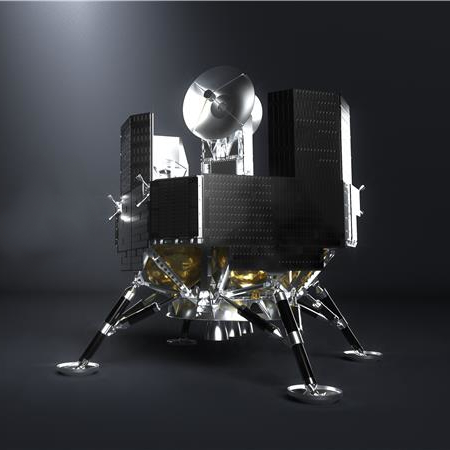
Artist rendering of Ispace's Ultra lunar lander
Artist rendering of Ispace’s Ultra lunar lander

The Japanese lunar lander startup Ispace has won a new customer for its next attempt to soft-land on the Moon, with the South Korean startup Unmanned Exploration Laboratory (UEL) signing a contract to put its proposed two-wheeled rover on that mission.

Under the terms of the agreement, the UEL rover will be integrated as a commercial payload on ispace’s ULTRA lunar lander for Mission 3, currently scheduled to launch in 2028. The mission would mark the first Korean rover to explore the Moon’s surface and underscores the growing commercial collaboration between Japan and Korea in the aerospace industry.

Mission 3 will serve as the inaugural flight for ispace’s ULTRA lunar lander.

Ispace so far has a very mixed record. It has successfully gotten two landers to the Moon, but both failed just before landing. It has also recently had to delay its lander mission for NASA because it had to replace the lander’s engine, the previous engine found to be inadequate.

Ultra is Ispace’s new larger lander design, intended to fly on all future missions. It remains untested in flight. The company presently has lander contracts for the following missions:

  • 2028: a Japanese mission funded by Japan’s Ministry of Economy, Trade and Industry
  • 2029: a Japanese mission funded by Japan’s Space Strategy Fund (designed at encouraging the private space sector
  • 2030: NASA’s mission, being built in partnership with the American company Draper

At the moment, everything about Ispace remains tentative. It needs to finally land something on the Moon to truly establish itself.

2 comments

South Korean rocket startup Innospace pinpoints the cause of its first launch failure

Less than five seconds after launch
Hanbit-Nano less than five seconds after launch,
prior to its failure in December 2025.

The South Korean rocket startup Innospace today released the results of its investigation into the launch failure of its Hanbit-Nano rocket on its maiden flight on December 22, 2025, pinpointing the failure 33 seconds after liftoff to a rupture in the first stage combustion chamber assembly

The launch vehicle was confirmed to have flown nominally during the initial phase of flight, with flight data transmitted normally following liftoff. Thirty-three seconds into flight, combustion gas leakage occurred at the forward section of the first-stage hybrid rocket combustion chamber assembly, resulting in a rupture of the combustion chamber and the subsequent separation of the launch vehicle into multiple parts.

The investigation further determined that the leakage was caused by insufficient compression and uneven sealing performance resulting from plastic deformation of sealing components during the reassembly process following the replacement of the forward chamber plug during launch preparation activities in Brazil.

Based on these findings, INNOSPACE plans to strengthen assembly processes and quality management procedures. The company will also implement certain design improvements and upgrades to related components and conduct additional functional verification procedures.

The company hopes to attempt a second launch in the third quarter of 2026, once again lifting off from Brazil’s Alcantera spaceport.

4 comments

Two American launches this evening

Two American companies, Rocket Lab and SpaceX, successfully completed launches during the evening of January 29-30.

First, Rocket Lab today (January 30th in New Zealand) placed a South Korean test smallsat, its Electron rocket lifting off from one of its two launchpads in New Zealand. The satellite is the first of a planned mass-produced constellation to provide precise observations of the Korean peninsula.

Next, SpaceX placed another 29 Starlink satellites into orbit, its Falcon 9 rocket lifting off from Cape Canaveral in the early morning hours. The first stage completed fifth flight, landing on a drone ship in the Atlantic.

The 2026 launch race:

13 SpaceX
5 China
2 Rocket Lab

1 comment

South Korean rocket startup Innospace signs deal with Portugal’s Santa Maria spaceport

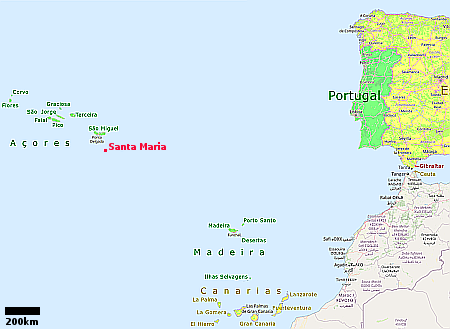
Santa Maria spaceport

The South Korean rocket startup Innospace, which just last month attempted its first launch out of Brazil, has now signed a deal to launch its rocket from Portugal’s proposed Santa Maria spaceport in the Azores, located about 900 miles west of the European mainland.

Through this agreement, INNOSPACE has secured priority and long-term access to the Malbusca Launch Center, located on Santa Maria Island in the Azores, Portugal, for a five-year period starting in 2026. The company plans to gradually establish key launch infrastructure required for initial operations, including launch pads, operations and control systems, and testing facilities, with the goal of conducting its first commercial launch in the fourth quarter of 2026.

Despite the launch failure last month, Innospace has been aggressive about obtaining agreements for launching its rockets from multiple locations. That first launch occurred at Brazil’s long unused Alcantera spaceport on its eastern coast, and the company will use it for its second launch attempt later this year. It has also signed agreements with two spaceports in Australia (Southern Launch and Equatorial Launch), though the latter spaceport is not yet operational and might never exist.

0 comments

The first launch by South Korean rocket startup Innospace fails shortly after liftoff

Less than five seconds after launch

Though details are not yet available, the first launch by South Korean rocket startup Innospace of its Hanbit-Nano rocket failed less than 2 minutes after liftoff from Brazil’s long unused Alcantera spaceport. The failure occurred sometime after the rocket passed through max-q, the moment when the aerodynamic pressure of the atmosphere and the speed of the rocket stresses the rocket the most.

The live stream provided no details, other than to say “we experienced an anomaly during the flight.” No other details have yet been released.

The image to the right is a screen capture of the rocket lifting off the pad, less than a few seconds after T-0. Though the rocket appeared to move upward in a smooth controlled flight, soon thereafter it became impossible to see anything but the bright engine flame at its base. Either the flames were so bright it overexposed the live stream, or the fire was spreading beyond the nozzles. At the moment however we know nothing about what happened.

9 comments

South Korean rocket startup Innospace signs deal to launch from Australia

Proposed Australian spaceports
Australian spaceports: operating (red dot) and proposed (red “X”)
Click for original image.

The South Korean rocket startup Innospace — about to attempt its first orbital launch from Brazil on December 19, 2025, earlier this week signed an agreement with Australia’s Southern Launch spaceport to launch its rockets from there.

Leading space mission service provider Southern Launch has signed South Korean launch service provider Innospace to conduct space missions from the Whalers Way Orbital Launch Complex and the Koonibba Test Range. This strategic partnership enables Innospce to conduct a diverse range of missions from Southern Launch sites, including orbital satellite launches and suborbital technology demonstrations.

Beginning in 2026 and continuing for at least the next decade, this agreement strengthens South Australia’s position as an emerging global hub for space innovation.

Whether or not its launch from Brazil’s long unused Alcantera spaceport is a success, it appears Innospace was looking for another spaceport option closer to South Korea. Moreover, Southern Launch has been an on-going active launch site for suborbital launches as well as a landing zone for spacecraft, unlike Alcantera which has sat unused for decades. That activity probably makes it a more viable place to operate.

Hat tip to BtB’s stringer Jay.

0 comments

Korean Air and Hyundai Rotem sign deal to develop methane-fueled rocket engine

Two South Korean companies, the airline company Korean Air and the railroad company Hyundai Rotem, have signed a partnership agreement to develop a methane-fueled rocket engine by 2030, funded by the government’s Korea Research Institute for Defense Technology Planning and Advancement (KRIT).

Korean Air will lead the development of the engine’s turbopump, a core component often described as the heart of the propulsion system. The turbopump compresses liquid methane and oxidizer at extremely high pressures and speeds. Its development requires advanced engineering capable of handling cryogenic temperatures of -180°C to several hundred degrees, while rotating tens of thousands of times per minute.

Hyundai Rotem is a division of the automobile company Hyundai, but its focus is building railroads. The press release does not say what it will do as part of this partnership.

It is also unclear from the press release whether these companies will be own this engine for sale to others, or are developing it for the government. If the latter, the project will have a much more limited potential.

1 comment

South Korean rocket startup Innospace announces date for inaugural launch

The South Korean rocket startup Innospace late last week announced that it has delayed the date for the first launch of its Hanbit-Nano rocket a few days in order to correct a “minor anomaly” during testing in Brazil.

During the avionics integration test, INNOSPACE performed a detailed analysis of a minor signal anomaly observed in a specific segment of the test and confirmed the tolerance range of the integration profile affected by flight-environment variations. To further validate the findings, the company carried out a second test using a Brazilian Air Force aircraft under conditions closely replicating the actual flight environment, allowing for a comprehensive review of response characteristics and signal stability across all integration items.

The launch was previously scheduled for a launch window from November 22nd to December 17th, taking place from Brazil’s long unused Alcantara spaceport on its northeast coast. The new window now runs from
December 16th to December 22nd. The launch itself is now scheduled for December 17th.

If this launch is successful, South Korea will have leapfrogged past India, Japan, and Australia to be the first Asian country to have a private company successfully launch a rocket.

2 comments

South Korea successfully launches its Nuri rocket for the third time

South Korea today successfully launched its government-built Nuri rocket for the third time, placing in orbit one large satellite to study the Earth’s aurora and a dozen cubesats.

This was the first Nuri launch since 2023. In the interim the government has made some moves suggesting it was transferring control of the rocket from its space agency KARI to one of its larger aerospace companies, Hanwah Aerospace. That transfer so far appears mostly superficial, as KARI appears to still control ownership.

As this was South Korea’s first launch in 2025, there is no change to the 2025 launch race leader board:

154 SpaceX
73 China
15 Rocket Lab
14 Russia

SpaceX still leads the rest of the world in successful launches, 154 to 123.

0 comments

Two overnight launches

The beat goes on: Since yesterday there were two more successful rocket launches, from India and SpaceX.

First, SpaceX last night launched its fourth Bandwagon mission carrying 18 mid-sized smallsat payloads, its Falcon 9 rocket lifting off from Cape Canaveral in Florida. The first stage completed its third flight, landing back at Cape Canaveral. The fairings completed their 11th and 13th flights respectively.

Bandwagon rideshare missions are dedicated missions by SpaceX. SpaceX’s SmallSat Rideshare Program provides small satellite operators with regularly scheduled, dedicated Falcon 9 rideshare missions to mid-inclination orbits for ESPA-class payloads, starting at $300,000 per mission and including up to 50kg of payload mass.

Among these payloads two were most notable, a South Korean military surveillance satellite and a demo module for the space station startup Vast. With the latter, the company will use this unmanned orbiting prototype to test operations to prepare for the launch in the spring of its full-sized manned demo station, Haven-1.

Next India’s space agency ISRO today launched its largest rocket, LVM3, lifted off from its Sriharikota spaceport, carrying the heaviest payload India had yet launched, a government communications satellite.

It appears the LVM-M3 has finally be given a real name. Previously ISRO called it the Geosynchronous Launch Vehicle (GSLV). When it was upgraded to a more powerful version intended for India’s manned program, the name was revised to LVM3 (Launch Vehicle Mark 3). News reports today referred to the rocket now as Bahubali, calling it a “nickname.”

In all of ISRO’s missions the agency routinely uses very generic official names, but appears to eventually accept nicknames that the press uses, such as Chandrayaan for its moon missions, Mangalyaan for its Mars orbiter, Gaganyaan for its manned missions, and now Bahubali for this rocket. Increasingly however the Modi government seems to be pushing to use these names instead of those generic titles.

This was India’s third launch in 2025. The leaders in the 2025 launch race:

143 SpaceX (a new annual record)
66 China
13 Russia
13 Rocket Lab

SpaceX now leads the rest of the world in successful launches, 143 to 109.

4 comments

South Korea issues launch license to Korean rocket startup Innospace

Engineering test prototype during tests
Engineering prototype of Hanbit-Nano testing portable
launchpad. Click for original image.

The South Korea Aerospace Administration (KASA) today issued its first launch license for a private South Korean rocket company, clearing the way for the first launch Innospace’s Hanbit-Nano rocket in the next few weeks from Brazil’s Alcantera spaceport.

For the launch, Innospace has set a launch window from Oct. 28 to Nov. 28. The launch window refers to the period during which the actual launch can take place. Initially, it was set for Oct. 28 to Nov. 7, but was extended to Nov. 28 after coordinating launch inspection procedures, mission stability and joint operation schedules with the Brazilian Air Force.

Innospace said the upcoming launch will also mark the first commercial vehicle launch from a Brazilian space center, adding that Brazilian authorities have provided active support to ensure optimal conditions and a stable launch. While the launch site is operated by the Brazilian Air Force, Innospace will use its own independently built launch platform for the mission.

The rocket will carry five smallsats and three other payloads, one of which is from a South Korean beer company.

If successful, Innospace will become the first commercial rocket startup outside the U.S. to get to orbit, excluding the pseudo-companies in China. The launch will also re-open Brazil’s long abandoned Alcantera spaceport, off of its northeast coast. Used only a few times in the 1990s and then shut down when the Brazilian government abandoned its rocket program, Brazil has been trying to get commercial rocket companies to come there now for about five years, with little success.

0 comments

South Korean rocket startup Innospace wins launch and marketing contract with German broadcast company

The South Korean rocket startup Innospace announced last week that it has signed a $5.8 million launch with the German broadcast company Media Broadcast Satellites (MBS) to not only launch two MBS satellites in 2026 and 2028 using its Hanbit rocket, but to have MBS market the rocket in Germany.

Under the agreement, INNOSPACE will carry out two HANBIT launch missions to deploy MBS satellites into Low Earth orbit (LEO), with one launch in 2026 and the other planned by 2028. In both launch missions, MBS satellites will serve as the primary payloads, with priority in launch scheduling and orbit determination.

INNOSPACE also signed a separate contract on the same day, officially appointing MBS as its exclusive agent for launch service sales and marketing within Germany, marking the company’s entry into the European space launch market. Following the contract, MBS will exclusively distribute launch services based on the HANBIT series to satellite customers in Germany.

Innospace has not yet launched Hanbit. It had hoped to attempt the first launch in July, but in May it delayed it to the end of 2025 due to issues found in a first stage pump. The launch itself will take place at Brazil’s long abandoned Alcântara spaceport on that nation’s northeast coast.

4 comments

South Korea military begins project to develop a methane-fueled rocket engine

The South Korean defense department has awarded a consortium of Korean aerospace companies a contract to develop a methane-fueled engine that can be used in reusable rockets.

According to the space industry, a consortium led by Hyundai Rotem and Korean Air was selected on the 9th as the preferred negotiator for a 35-ton methane engine technology development project overseen by the Agency for Defense Development (ADD) under the Defense Acquisition Program Administration (DAPA). A formal agreement will be signed in November, initiating full-scale research and development (R&D). The project, budgeted at approximately 49.1 billion Korean won [$35 million], will run until 2030.

It appears there has been a turf war between the military and South Korea’s newly formed space agency, KASA. Originally KASA had planned to develop this engine, but apparently the military’s proposal won out. KASA now says it will collaborate with the ADD, but the project’s budget now goes to the military.

0 comments

South Korea’s space agency requests big 15% budget increase

South Korea’s space agency KASA today submitted its proposed budget for 2026 that included a 15% budget increase which would bring its funding to just under $8 billion.

According to the national space agency, the proposed funds will be concentrated in six major areas, which include the strengthening of space transportation capacity and new technology acquisition, advancing satellite-based communications, navigation and observation, as well as fostering future space industries through exploration.

The largest requested increases would be for developing new satellite constellations and rockets.

When the South Korean government established this agency in in 2024, it said its goal was to foster private enterprise. The agency itself repeated that assertion in January 2025 when it announced its long term plans. In both cases, however, I sensed a lack of sincerity in these assertions. The government wanted wanted to help build a prosperous aerospace industry, but it clearly wanted to do so with it in control.

Today’s budget request again reinforces my suspicions. KASA might want to encourage a commercial space industry, but it remains unclear whether it will let the private sector develop the satellites and rockets independently, or pay for the development while insisting it owns and controls everything.

Based on past history at NASA, my instincts say KASA will use this big budget to build an empire for its managers. Stay tuned to see if my instincts are correct.

0 comments

South Korea transfers its government-built Nuri rocket to private company

Capitalism in space: South Korea’s space agency KARI has now completed the transfer of its government-built Nuri rocket to the private South Korea company Hanwha Aerospace.

The transfer includes a total of 16,050 technical documents. While some 2 trillion won ($1.45 billion) in public funds was invested in developing the Nuri rocket, the two sides agreed on a technology transfer fee of 24 billion won, based on direct research and development costs. The agreement comes nearly two years and 10 months after Hanwha Aerospace was selected as the preferred negotiator.

Under the contract, Hanwha Aerospace has secured exclusive rights to lead Nuri production until 2032, which coincides with the government’s target for the next-generation Korean launch vehicle. [emphasis mine]

The highlighted phrase is important, as it shows that this transfer is not completely shifting space development and ownership from the government to the private sector. Hanwha is going to operate the rocket, but it does not appear to own it, nor is it clear it will be allowed to market it to others for profit. Furthermore, it is not Hanwha but KARI that will be developing the next-generation rocket, using government funds.

The dominance of the South Korean government is also reflected in the cost, as the article notes that the Nuri rocket costs “per kilogram … about 10 times that of SpaceX’s reusable Falcon 9.” Like all governments, KARI was not focused on profit in developing Nuri, so it built a rocket uncompetitive in the present launch market.

Still, this deal indicates the South Korean government’s recognition that it must foster a robust private sector aerospace industry if it truly wishes to enter the space age. This deal is thus just a first step.

6 comments

South Korea to push for a lunar base and Mars missions by 2045

South Korea’s new space agency today announced a long term space exploration road map that hopes to have the nation establish by 2045 a small base on the Moon as well as a Mars orbiter and lander.

The Korea Aerospace Administration (KASA) categorizes the exploration areas into Earth, the Moon, the heliosphere, and deep space, dividing them into five major programs: low orbit and microgravity exploration, lunar exploration, solar and space science exploration, planetary system exploration, and astrophysical exploration. The roadmap presents scientific missions for each program and engineering tasks to realize them.

When South Korea established this space agency in 2024, its chief emphasized the need to encourage private enterprise. I however had doubts, noting:

If KASA maintains this approach, then South Korea’s future as a space power is bright. If instead KASA moves to control all space development, including the design and ownership of its rockets and spacecraft, then that program will be stifled, as America’s was by NASA for forty years after the 1960s space race.

In January 2025 that space agency announced policies that it said would encourage the private sector, but in reviewing the language of those policies I concluded it sounded more like a power-play by that agency to run everything.

KASA’s new road map today unfortunately confirms that analysis. Over the next two decades South Korea will have a government-controlled “space program,” not a competitive space industry.

0 comments

Spanish high altitude balloon company to fly tourist flights from South Korea

The Spanish high altitude balloon startup Zero-2-Infinity has now established an office in South Korea with the intention of flying tourist flights from there for a ticket price of about $60k per flight.

Zero 2 Infinity plans to begin its Korean operations with a project called “Byul” — the Korean word for star — which offers a symbolic farewell for pet lovers. The initiative will invite volunteers to send the ashes of their deceased furry companions into the stratosphere, carried in star-shaped, biodegradable capsules. The company aims to begin collecting participants this September, with the first near-space release scheduled for December in Korea.

Byul will apparently be a smaller balloon with no human passengers. The company claims it has already test flown a larger helium balloon with humans aboard to an altitude of 6 miles, and again unmanned to 20 miles. If so it has done so with no publicity at all. This announcement today appears more a push to raise the $70 million the company says it needs to develop this manned balloon capsule.

3 comments

South Korea rocket startup launches small prototype rocket

Unastella rocket at launch

A South Korea rocket startup dubbed Unastella on May 28, 2025 successfully launched a small prototype suborbital rocket from its own launch site near the country’s southern coast.

UNA EXPRESS-I is 9.45 meters long and has a total weight of 2 tons. It is a small launch vehicle that uses kerosene (jet fuel) and liquid oxygen as fuel, with a thrust of 5 tons. The vehicle successfully completed its flight to the target distance of 10 kilometers and fell into the maritime safety zone set by Goheung County, the company stated. Park Jae-hong, the CEO of Unastella, noted, “For the first launch, we lowered the altitude for safety and extended the reach.”

This is South Korea’s second rocket startup that has launched a small test prototype, the first being Innospace which launched its test rocket from Brazil in 2023 and hopes to do an orbital launch before the end of the year.

It appears that South Korea is shifting successfully to the capitalism model. Back in 2023 it was trying to develop its government-built Nuri rocket, but that development seems to have stalled. Since then its newly formed space agency has established policies encouraging private space commercialization, which has apparently resulted in these two new rocket companies.

0 comments
1 2 3 5