NASA: Europa Clipper’s cost rise; Mars sample return delayed

At a meeting this week NASA officials admitted that the cost of its Europa Clipper mission has risen by three quarters of a billion dollars, and that the sample return mission to bring back Perseverance’s core samples will be delayed, as well as now require two landers, not one.

NASA revealed significant changes to two of its flagship planetary science missions at today’s Space Science Week meeting at the National Academies of Sciences, Engineering and Medicine. The cost for Europa Clipper, which will gather data as it makes multiple swingbys of Jupiter’s moon Europa, has grown from $4.25 billion to $5 billion. Separately, NASA and ESA are replanning the Mars Sample Return mission. Two landers are needed instead of one to retrieve samples from the surface of Mars and boost them into orbit for their trip back to Earth. The launches will be in 2028 instead of 2026.

The sample return mission itself is also growing in complexity:

A Sample Fetch Rover will be sent to collect them and take them to a Mars Ascent Vehicle — a rocket — that will shoot them into Martian orbit where they will be transferred to an Earth Return Orbiter for the trip back to Earth.

Initially the plan was for the fetch rover and ascent vehicle to be launched together in 2026, and the Earth Return Orbiter in 2027. But Zurbuchen decided to convene an Independent Review Board in 2020 to get an impartial assessment of the plan by outside experts. The Board cautioned that 2026 was “not achieveable” with 2028 a more realistic date, and that the “program’s schedule and cost are not aligned with its scope.”

Consequently, NASA now has replanned the mission with two landers — one each for the fetch rover and ascent vehicle — instead of one. Both landers will launch in 2028. The Earth Return Orbiter will still launch in 2027. The samples will get back to Earth in 2033.

Prediction: The launch of this fleet of sample return spacecraft will be further delayed, and its overall cost will rise, by a lot. In fact, it is very possible that SpaceX’s Starship will have already returned samples from Mars before NASA’s mission gets off the ground.

1 comment

Scientists: Enceladus’ tiger stripes come from underground ocean

The uncertainty of science: Using a new computer model, scientists now think they have shown how on the Saturn moon Enceladus pressure from an underground ocean can push through cracks to produce geysers on the surface.

Rudolph and his colleagues ran a physics-based model to map the conditions that could allow the cracks from the surface to reach the ocean and cause the eruptions. The model accounts for cycles of warming and cooling that last on the scale of a hundred million years, associated with changes in Enceladus’ orbit around Saturn. During each cycle, the ice shell undergoes a period of thinning and a period of thickening. The thickening happens through freezing at the base of the ice shell, which grows downward like the ice on a lake, Rudolph said.

The pressure exerted by this downward-expanding ice on the ocean below is one possible mechanism researchers have proposed to explain Enceladus’ geysers. As the outer ice shell cools and thickens, pressure increases on the ocean underneath because ice has more volume than water. The increasing pressure also generates stress in the ice, which could become pathways for fluid to reach the surface 20-30 kilometers away.

You can read the paper here.

Be warned: This is only a model. Moreover, its conclusions suggest that this mechanism will not work on Jupiter’s moon Europa, which has many planet-wide crack-like features that suggest (as yet unconfirmed) a bubbling up from below.

0 comments

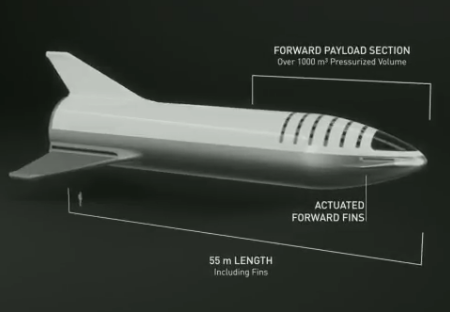
Musk says Starship will be ready for first orbital launch in May

Capitalism in space: In a tweet yesterday Elon Musk said that Starship will be ready for first orbital launch in May, a delay of two months from his previous announcements.

“We’ll have 39 flightworthy engines built by next month, then another month to integrate, so hopefully May for orbital flight test,” Musk tweeted in response to CNBC.

While the delay could certainly be because the company needed to prepare enough Superheavy engines, I also suspect it is also because Musk now expects the FAA to not approve the environmental reassessment of Starship’s Boca Chica launch site by the end of March, as has been promised. I predict that sometime in the next few days the FAA will announce another one-month delay in that process, the fourth such delay by that federal agency.

In late-December, when the FAA announced the first delay, I predicted that the first orbital launch of Starship would not happen until the latter half of ’22. I now think that prediction was optimistic. I firmly believe the federal government, controlled by Democrats, will delay that launch until after the mid-term elections in November. It appears to me that the Biden administration wants to reject the environmental reassessment, which would block Starship flights from Boca Chica for years. It just doesn’t want to do it before November, because of the negative election consequences.

I truly hope my cynical and pessimistic analysis is utterly wrong. So far, however, my prediction has proven to be more right than wrong.

9 comments

South Korea to build its own unmanned lunar lander

The new colonial movement: The government of South Korea has begun a project to build its own unmanned lunar lander, scheduled for launch sometime in the 2030s.

South Korea presented an action plan to develop a lunar lander weighing more than 1.5 tons that would carry out scientific research on the surface of the moon in the 2030s. The project is to begin in 2024 after a preliminary feasibility study.

The Ministry of Science and ICT would form a working group of industry-academic experts to conduct research on a lunar lander and draw up strategies and detailed plans by August 2022. It is a follow-up project to launch a lunar orbiter in August 2022. The lunar lander will be lifted by a next-generation homemade rocket.

The goal is to encourage the country’s own aerospace industry. The working group will spend the next month recruiting South Korean companies to join the project.

South Korea however has to first get its own homemade rocket, Nuri, to successfully launch. The first launch attempt in October 2021 failed, and the second has been delayed to fix the cause.

0 comments

SpaceX ends future business with launch services company Spaceflight

Capitalism in space: For reasons not explained, SpaceX has ended all further business with the launch services company Spaceflight, which acts to find and integrate smallsats from many different companies into a package for launch.

Spaceflight also provides many of those smallsats with a small tug, dubbed Sherpa-LTC, to move them into their preferred orbit once deployed from the Falcon 9 upper stage. It looks like there have recently been problems with this tug that Spaceflight has not been able to resolve to SpaceX’s satisfaction.

The propulsion leak on Spaceflight’s Sherpa-LTC vehicle was discovered about three weeks before the Jan. 13 SpaceX Falcon 9 Transporter-3 launch. Root-cause analysis of the leak traced the problem to an oxidizer circuit in the propulsion system, which worked as designed but vented some trapped liquid due to a design flaw.

…Regarding the upcoming launch, Spaceflight began working with SpaceX to address concerns about “the analysis and test results of Sherpa and its customer payloads” as soon as it became aware of them.

Despite Spaceflight’s “best efforts, SpaceX chose not to fly the Sherpa vehicle until the analysis and test approaches could be better understood,” Sorensen said. “We continue to work with SpaceX to understand their decision and address any concerns for future missions.”

It appears, though not confirmed, that SpaceX is not just worried about Sherpa, but is also concerned about Spaceflight’s quality control efforts, and that might be the reason it has reject Spaceflight from future launches.

1 comment

Sharpest radio image ever taken of newly discovered space object

The first known Odd Radio Circle (ORC)
Click for full image.

The uncertainty of science: Astronomers, using the MeerKat radio telescope in South Africa, have taken the best radio image yet of a newly discovered type of astronomical object, dubbed whimsically as an odd radio circle (ORC).

The photo to the right is that image. While it is reminiscent of the many planetary nebulae seen in visible light that astronomers have been studying since the 1800s, this weird shape is only seen in radio frequencies, and it is much much larger.

Odd radio circles are so named because they’re large, circular objects which are bright around the edges at radio wavelengths, but which can’t be seen with optical, infrared or X-ray telescopes – and at this stage, astronomers don’t really know what they are.

And they’re massive – about a million light years across, making them sixteen times larger than our own galaxy. But despite their gargantuan size, the objects are difficult to spot, hiding in plain sight.

Planetary nebulae are generally the size of solar systems.

3 comments

Russia launches military communications satellite with Soyuz-2 rocket

Russia today successfully launched its tenth Meridian military communications satellite from its Plesetsk spaceport in the Russian interior, using a Soyuz-2 rocket.

Like China, Russian launches drop the expendable first stages and boosters on land. From the article:

On March 17, 2022, the Russian Ministry of Defense announced danger zones in three areas of the Komi Republic: the “Vashka” site in the Udorsky District, and “Zheleznodorozhny” site in the Knyazhpogostsky and Kortkerossky districts. According to the warning, the launch of the Soyuz-2 rocket was planned for March 22, 2022, between 15:00 and 17:00 Moscow Time (8:00 – 10:00 a.m. EDT). Backup launch opportunities were reserved for March 23, 24 and 25.

The announced impact sites matched the ground track required for the mission to access an orbit with an inclination 62.8 degrees toward the Equator, which is used by Meridian military communications satellites.

Such danger zones in Russia are the routine for every launch since Sputnik in 1957. And unlike China Russia never made any effort to develop methods for controlling the crash landing of its first stages.

The leaders in the 2022 launch race:

11 SpaceX
6 China
4 Russia

The U.S. still leads China 17 to 6 in the national rankings.

2 comments

OneWeb signs deal with SpaceX to launch its remaining satellites, replacing Russia

Capitalism in space: Just 18 days after its contract with Arianespace was suspended because of Russia invasion of the Ukraine, OneWeb has now signed a deal with SpaceX to use its Falcon 9 rocket to launch the remaining 200+ satellites in its satellite constellation.

Few details about the agreement were released Monday morning. “Terms of the agreement with SpaceX are confidential,” OneWeb said in a statement.

OneWeb said the “first launch” with SpaceX is expected before the end of this year, suggesting the company anticipates multiple flights on SpaceX rockets.

It appears that launches could start before the end of this year

There are two big losers in this story. The obvious one is Russia, as it has lost OneWeb as a satellite customer. The second, less obvious, is Arianespace, as it appears it has also lost OneWeb as a customer. It will also have to refund OneWeb any payments the satellite company made for launches that have not occurred, even those that Arianespace had paid Russia for which Russia is refusing to refund.

Though no details have been released about the deal, I would not be surprised if OneWeb got a better price than what it was paying Arianespace. I also suspect that Elon Musk was willing to make this deal with OneWeb, the prime competitor to his Starlink satellite constellation, because he favors the Ukraine in this war.

Finally, this deal will not only make Russia look bad, it will make SpaceX look magnificent. Its PR value cannot be measured for the company.

26 comments

Rogozin: Lift sanctions by end of March or else!

Dmitry Rogozin, the head of Russia’s Roscosmos space corporation that runs all of that nations aerospace industry, yesterday demanded that Europe and the U.S. lift its sanctions against Russia by end of March or he would take further action against them.

“We will wait until the end of March. The lack of response or a negative response would be a basis for our decision,” he said, without specifying what kind of decision it would be.

According to the official, the space corporation was not going to yield to the sanctions.

One immediately asks, what happens at the end of March? Why time further space-related actions then?

Well, the only area in which Russia is still cooperating with the west in space is on ISS. At the end of March, Russia will bring home American astronaut Mark Vande Hei using its Soyuz capsule. This suggests that once Vande Hei comes home, Rogozin will announce that Russia will no longer fly any western astronauts to ISS on its rockets or capsules. He might also further announce actions that will accelerate the end of the ISS partnership, including laying out Russia’s schedule for adding modules to its half of ISS and then detaching it from the station.

If so, good. Such an action will bring clarity to the station’s remaining days, forcing NASA to make sure the station can function after the Russian half is gone. It will probably quicken the development of Axiom’s modules to the station, and might encourage the private construction of other modules to pick up the slack left by the Russian exit.

16 comments

SpaceX launches another 53 Starlink satellites

Capitalism in space: SpaceX tonight successfully used its Falcon 9 rocket to launch another 53 Starlink satellites into orbit.

The first stage completed its 12th flight, a new record. The fairings were also reused, one half for the fourth time and the other for the second time. SpaceX continues to maintain a one launch per week schedule in 2022.

At posting the upper stage still had one more engine burn to insert itself into the final orbit, followed by satellite deployment.

The leaders in the 2022 launch race:

11 SpaceX
6 China
3 Russia
2 ULA

The U.S. now leads China 17 to 6 in the national rankings.

11 comments

The journey so far of China’s Zhurong Mars rover

Zhurong's journey on Mars, as seen by MRO
Click for full image.

Elevation map and wider overview
Click for full image.

Cool image time! The science team for the high resolution camera on Mars Reconnaissance Orbiter (MRO) today released a new orbital photo that shows the entire journey on Mars of China’s Zhurong rover, since it landed in May 2021. That image, reduced to post here, is to the right. From the caption, written by Alfred McEwen of the Lunar & Planetary Laboratory in Arizona:

This HiRISE image, acquired on 11 March 2022, shows how far the rover has traveled in the 10 months since it landed.

In fact, its exact path can be traced from the wheel tracks left on the surface. It has traveled south for roughly 1.5 kilometers (about 1 mile). This cutout highlights the rover and the rover’s path (with contrast enhanced to better reveal the tracks).

The white curves that the rover has apparently been inspecting as it moved south are called megaripples, mid-size sand dunes from three to six feet in height that are generally found to be inactive, though not always. From a recent report about Zhurong’s findings:

“The examples Zhurong has visited appear very bright-toned in satellite images taken from orbit, and the team thinks that this is because the megaripples are covered with a layer of very fine dust,” says Matt Balme at the Open University, UK, who wasn’t involved in the analysis. “This means these features are probably currently inactive, as any present-day windblown sand would tend to remove the dust.”

That report used data from the rover’s first sixty days on Mars, after it had passed its first megaripple and had just reached the parachute and backshell. It does not include any later data in the past eight months, as Zhurong rolled past another nine megaripples and several small craters.

It also doesn’t include any data obtained as the rover skirted the wide apron that surrounds the large depression in the lower left. That depression looks like a crater at first glance, but because it appears to be on top of a mound it could instead by an old pitted cone. There are a lot of these cones in this region of the northern lowland plains of Mars, and planetary scientists really want to know whether they were formed from erupting ice, lava, or mud.

The Chinese have so far not released any data on what they have found in these later travels. We shall have to wait for further published papers.

The wider elevation overview map to the right, first published on August 24, 2021 and cropped and annotated to post here, shows Zhurong’s future potential geological targets to the south. The cone to the southwest as well as the nearest scarp to the south are probably the rover’s primary goals.

Though the released results have hinted that the geology here was shaped by both wind and water, direct evidence for water has not been found, or revealed by the Chinese. Zhurong has a radar sensor that could detect evidence of near surface underground ice, if it was there. As far as I know at this point, no results from that instrument have as yet been published.

2 comments

ESA makes official the split with Russia

At a press conference yesterday officials from the European Space Agency (ESA) officially announced that the partnership with Russia to launch its Franklin rover to Mars has ended, and the launch will not happen in ’22.

The program is not cancelled, but “suspended.” ESA is looking for alternatives to get its Rosalind Franklin rover to the Red Planet. Earth and Mars are correctly aligned for launches only every 26 months, so the next opportunities are in 2024, 2026, and 2028. Aschbacher said it is not feasible to be ready by 2024, so it will be one of the later dates.

Since Russia had been providing both the launch rocket and Mars lander, ESA cannot simply find a different rocket. It needs to come up with its own lander, or find someone else to build it. For example, one of many new private American companies building lunar landers for NASA might be able do it, though ESA would likely prefer a European company. If it did decide to go with an American company, it would certainly not hire one until it succeeds in completing successfully at least one planetary landing.

The officials also outlined ESA’s need to find new launch rockets for many other missions it had planned to launch on Russia’s Soyuz-2 rocket. That need will also be an opportunity for American rocket companies, but more significantly it could be a blessing for Arianespace’s Ariane 6 rocket. The Ariane 6 has struggled to find customers because of its high cost. The loss of Russia as a launch option will likely drive some ESA business to it.

Roscosmos’ head Dmitry Rogozin in turn announced that it will go ahead with its own Mars mission, using the lander on an Angara rocket

“True, we will lose several years, but we will replicate our landing module, make an Angara rocket for it and carry out this research mission from the newly-built Vostochny spaceport on our own. Without inviting any ‘European friends’, who prefer to keep their tails between their legs the moment they hear their American master’s angry voice,” Rogozin said on his Telegram channel.

Whether Russia will actually do this is questionable. For the last two decades Roscosmos has promised all kinds of numerous planetary missions and new rockets and new manned capsules, none of which has ever seen the light of day. To make such a thing happen now seems even more doubtful.

4 comments
1 498 499 500 501 502 1,327