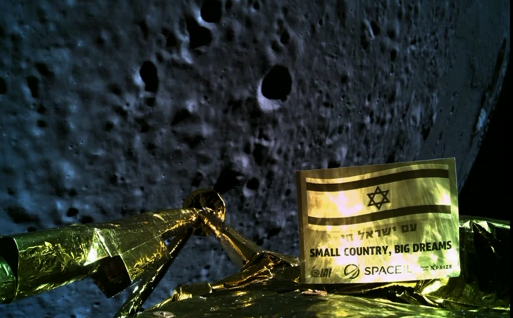
Chandayaan-2 completes first orbit burn

India’s lunar orbiter/lander/rover Chandrayaan-2 yesterday completed its first orbital engine burn, raising its apogee, the high point in its orbit, 6,000 kilometers to about 51,000.

This boost meant that Isro scientists have to perform one less manoeuvre in the Earth orbit than what was planned earlier. According to the path chalked out for Chandrayaan-2 before the launch, the on-board propulsion systems were to be fired six times in Earth orbit – five times to raise the apogee and once to raise the perigee. Now, only four more “burns”, or firing of the propulsion system, will be needed on July 26 and 29, and August 2 and 6, to reach the final orbit of 233.2 x 143,953km.

…With a final boost on On August 14, Chandrayaan-2 will escape Earth’s orbit and begin its seven-day journey towards the moon. The spacecraft is scheduled to reach the moon orbit on August 20.

Once in lunar orbit they plan four more burns to lower the spacecraft to a 100 kilometer circular orbit, where the lander/rover will release and begin their own lowering process aimed for a September 7 landing.

0 comments

End coming for twin Van Allen spacecraft

Engineers at the Applied Physics Lab in Maryland on July 19 turned off one of the two Van Allen probes, with the second probe expected to receive a similar command later this year.

As expected, following final de-orbit maneuvers in February of this year, the spacecraft has used its remaining propellant to keep its solar panels pointed at the Sun and is now out of fuel. Since it depends on the Sun to provide power to the instruments, and can no longer orient itself to acquire power, the spacecraft has been turned off. The spacecraft is in a stable, circular orbit around Earth and, in about 15 years, will re-enter the atmosphere and burn up safely. The de-orbit maneuvers in February were designed to ensure this would happen and prevent the spacecraft from becoming “space junk” in orbit.

The other Van Allen Probes spacecraft, spacecraft A, is expected to operate normally until early September.

Both spacecraft functioned five years longer than expected, and during that time discovered that there are three Van Allen belts, not two as previously thought.

0 comments

China smallsat company succeeds in orbital launch

A Chinese semi-private company, iSpace, successfully launched two smallsats into orbit today.

iSpace’s Hyperbola-1 rocket blasted off from the Jiuquan Satellite Launch Centre at 1 p.m. (0500 GMT) Thursday, sending two satellites and payloads into a predetermined orbit, the company said in a statement on its official Wechat account.

The successful orbital launch was preceded by two failures since late last year by other startups.

More here.

I am very reluctant to call this company, along with the other Chinese smallsat companies OneSpace and LandSpace, a private commercial firm. While it might get investment capital within China, it is very clearly supervised closely by the government. Moreover, its use of solid rocket motors, as noted in the second link, strongly suggests it is taking advantage of Chinese military technology, something that could only happen under government control. From the second link:

It’s unclear how much it cost for iSpace to build the rocket. Chinese state-owned automaker Changan’s passenger car brand Oushang said it would sponsor the launch, but didn’t specify the amount. In OneSpace’s case, the firm’s nine-meter-tall, solid-propellent rocket cost the company $78 million to design, build, and launch. iSpace’s main private backers (link in Chinese) include domestic private-equity firms CDH Investments and Matrix Partners.

iSpace didn’t immediately respond to requests for comment.

But private space companies are also getting state support in China. All of the private launches so far, for example, have taken place at Jiuquan—Elon Musk’s SpaceX recently launched a rocket at NASA’s Kennedy Space Center, while its main customer is the US Air Force. What’s different in China is the constraints that come with having state backing. In June, China rolled out a set of rules that restrict what private companies can develop and manufacture. It’s unclear if that may restrict private companies’ capabilities in building larger rockets that could rival state rocket builders. [emphasis mine]

The money for this comes from state-owned companies. The technology comes from military hardware. The goals are almost all military in nature. I would also bet, because of the lack of information released, that the satellites launched today were military payloads. This is hardly an independent private company competing on the open market.

Nonetheless, this success gives China a new capability and raises its status as a world space power.

The leaders in the 2019 launch race:

10 China
9 Russia
8 SpaceX
5 Europe (Arianespace)
4 India

The U.S. still leads China 14 to 10 in the national rankings.

0 comments

Starhopper’s 1st test hop aborts

Capitalism in space: SpaceX’s first attempt to fly Starhopper untethered in a short vertical flight was aborted only a few seconds after engine ignition.

Video of the test is below the fold. The vehicle never leaves the ground, and there are flames visible near its top, something one should not see. Obviously this is a development program, so failures like this are to be expected. More significant is the speed in which the company is moving. It is only a week since their last StarHopper test, which also had issues. Rather than take years to move forward (like NASA), they are pushing forward aggressively.
» Read more

8 comments

Mueller’s testimony today proves witch hunt failed

There have been numerous stories today in all the press, both left and right, about Robert Mueller’s testimony today in Congress, mostly concluding that Mueller came off very badly, thereby bursting the balloon of the continuing empty and largely disproved accusations by the Democrats that Trump colluded with Russia during the 2016 election. If anything Mueller proved by his stumbling answers plus his refusal to answer more than 150 questions that his effort was at best incompetent, and at worst a partisan witch hunt.

This conclusion is not a surprise however to anyone who has paid even the slightest close attention Mueller’s work, both now and in the past.

However, the short clip below the fold, taken from Mueller’s testimony today, best represents how corrupt and incompetent Mueller really is. It took place during questioning by a friendly Democratic congressman as he was attempting to demonstrate how honorable and fair-minded Mueller is. Instead, it proved why almost everything attempted by our so-called elites in Washington fails. They don’t have to be corrupt because they are also incompetent.

The clip comes from a story at PJ Media. For Mueller and the Democrats, it is embarrassing. For Trump and the Republicans it is laughable. For the American people it is distressing, because we all know that Mueller is very stereotypical of most of those running Washington.
» Read more

8 comments

Possibility of meteorites from bright fireball in Ontario

Astronomers were successfully able to track and photograph a bright fireball over Canada early today, and think it is strongly possible that pieces of it might have hit the ground.

Preliminary results indicate that the fireball first became visible just south of Oshawa over Lake Ontario at an altitude of 93 km. It traveled over Clarington and passed just west of Peterborough before extinguishing just west of Bancroft. The fireball rivaled the full moon in brightness and had a number of bright flares near the end of its flight. The meteoroid was roughly the size of a small beachball (approx. 30cm in diameter) and likely dropped a small number of meteorite fragments in the tens to hundreds of grams size-range on the ground.

Brown and his collaborators at Western and the Royal Ontario Museum are interested in connecting with people from the area of the potential fall, who may have heard anything unusual, or who may have found possible meteorites.

…Meteorites can be recognized by their dark, often scalloped exterior. Usually they will be denser than a ‘normal’ rock and will often be attracted to a magnet due to their metal content. Meteorites are not dangerous, but if recovered, it is best to place them in a clean plastic bag or wrap them in aluminum foil. They should also be handled as little as possible to help preserve their scientific value. In Canada, meteorites belong to the owner of the land upon which they are found. If individuals plan to search, they should always obtain permission of the land-owner before venturing onto private land.

If you live up in that neck of the woods, take a look around. You might find something.

2 comments

Off to Huntsville, Alabama

I am about to leave for Huntsville, Alabama to give a lecture: tomorrow, July 25, 2019, at 6 pm (Eastern), at the National Geographic Theater located at the US Space and Rocket Center.

This event is part of their “Pass the Torch” lecture series. My subject: How Apollo 8, not Apollo 11, won the 1960s space race and changed the world

If you are Huntsville or nearby please consider coming by. It will be a great event.

6 comments

Images confirm LightSail-2 deployment success

LightSail-2 sail deployed
Click for full resolution image.

Capitalism in space: The LightSail-2 engineering team has now confirmed, based on images from the cubesat, that its light sail has successfully deployed.

Flight controllers at Cal Poly San Luis Obispo in California commanded the spacecraft to deploy its solar sails yesterday at about 11:47 PDT (18:47 UTC). Images captured during the deployment sequence and downloaded today show the 32-square-meter sail, which is about the size of a boxing ring, deploying as the spacecraft flew south of the continental United States.

Image caption: This image was taken during the LightSail 2 sail deployment sequence on 23 July 2019 at 11:48 PDT (18:48 UTC). Baja California and Mexico are visible in the background. LightSail 2’s dual 185-degree fisheye camera lenses can each capture more than half of the sail. This image has been de-distorted and color corrected.

To the right is a reduced version of this image. As they note, the sail is distorted because of the fisheye nature of the camera lens. Nonetheless, it looks like the sail is deployed, and will be able to do its job, testing how one maneuvers in space using only sunlight.

UPDATE: Rex Ridenoure from Ecliptic Enterprises emailed me to explain that the distortion is only seen in the image above, that the image at the link has been corrected for this (as noted in the caption above). If you compare the two, you will see that the Earth is round in the corrected image.

Since the sail is much closer to the lens, I remain unsure how much of what we see of its shape is real, or a function of the fisheye lens. Later thumbnails show the sail more flat and tightly stretched, suggesting that this image was taken during deployment.

11 comments

The glaciers of Mars

The glaciers on Mars

For the future colonists of Mars, the question of finding water will not be that much of a problem. Not only have planetary geologists mapped out the existence of extensive water-ice in the Martian poles, they have found that the planet apparently has widespread glacier deposits in two mid-latitude belts from 30 to 60 degrees latitude.

The question will be whether those Martian settlers will be able to easily access this water. The data so far suggests that much of the Martian underground water at high latitudes is likely mixed with dust and debris. Extracting it might not be straightforward. There are hints that the ice table at latitudes about 55 degrees might be more pure, but could be somewhat deep below ground, requiring the settlers to become miners to obtain their water. Moreover, all these high latitude locations are in environments that are more hostile, and therefore more difficult to establish a colony.

What about the glaciers? The global map of Mars above, reduced and annotated to post here, shows what are believed to be extensive glacial deposits at lower latitudes, and comes from a recently published paper on the subject. The different colors indicate the different types of glacial deposits the scientists have identified.

Green and yellow indicate what scientists call lineated valley fill (LVF) and lobate debris aprons (LDA) respectively, glacial deposits found in the transition zone between the southern highlands and either the northern lowland plains or the basins of the southern hemisphere, Hellas and Argyre. These glaciers are in many ways most similar to glaciers found on Earth, flows heading downhill along natural geographic features.

Magenta represents concentric crater fill (CCF), glacier features which seem very evenly distributed across both the northern and southern lower mid-latitude belts. Here scientists appear to have detected buried ice within the floors of craters.

The paper which included this map focused on describing a new glacial feature, something they dubbed valley fill deposits (VFD), that they had found so far in only one place, as indicated by the black square on the map.

The photograph below and on the right, reduced and cropped to post here, is from figure two of the linked paper.
» Read more

3 comments
1 64 65 66 67 68 156