The devastating epidemic that simply wasn’t devastating

It is now more than a year since the arrival of the coronavirus in the United States and the panicky wave of fear it brought to our governments and many of our citizens, shutting down whole states, bankrupting millions of businesses, and shuttering schools for practically a whole year. In the process our governments have demanded we change how we live in fundamental ways, from no longer gathering together in any social setting to wearing masks wherever we go, inside or out.

Was that reaction correct? Readers of my website know that I never believed it rational, and that it was an entirely out-of-proportion response to what was really nothing more than a new variation of the flu.

Well, we now have some data that reveals the actual scale of the COVID-19 epidemic, as shown by the CDC graph below:
» Read more
52 comments

Bill Nelson: now an advocate of private commercial space?

Though this is certainly not a firm rule, I rarely pay much attention to the nomination hearings in the Senate that take place whenever a new administration from another party takes over and nominates a new set of Washington apparatchiks to run various government agencies. Almost always, you can glean most of what you need to know by reading the nominee’s opening statement as well as later news reports. Saves a lot of time.

Last week came the nomination hearing of former senator Bill Nelson as NASA’s new administrator. As I had expected, based on all reports the hearing was a lovefest, with almost all questions friendly and enthusiastic. This is generally what happens when a Democrat gets nominated, as the Democrats have no reason to oppose the nominee and the Republicans generally don’t play “we oppose all Democrats, no matter what.” It also always happens when the nominee is a former member of that exclusive senatorial club, as Bill Nelson was.

The first news reports also mentioned that Nelson seemed surprisingly enthusiastic towards commercial space, given his past hostility towards it. This report by Mark Whittington today at The Hill provides a much deeper look, and notes that, as his report’s headline states, Nelson is now “a born-again” believer in the idea of capitalism in space, with NASA now merely being the customer. This is a major change from his position when he was a senator, when he tried repeatedly to strangle commercial space and give its money to SLS.

Nelson also announced that he was totally committed to continuing the Artemis program and timetable as laid out by the Trump administration:
» Read more

8 comments

Ingenuity completes third flight!

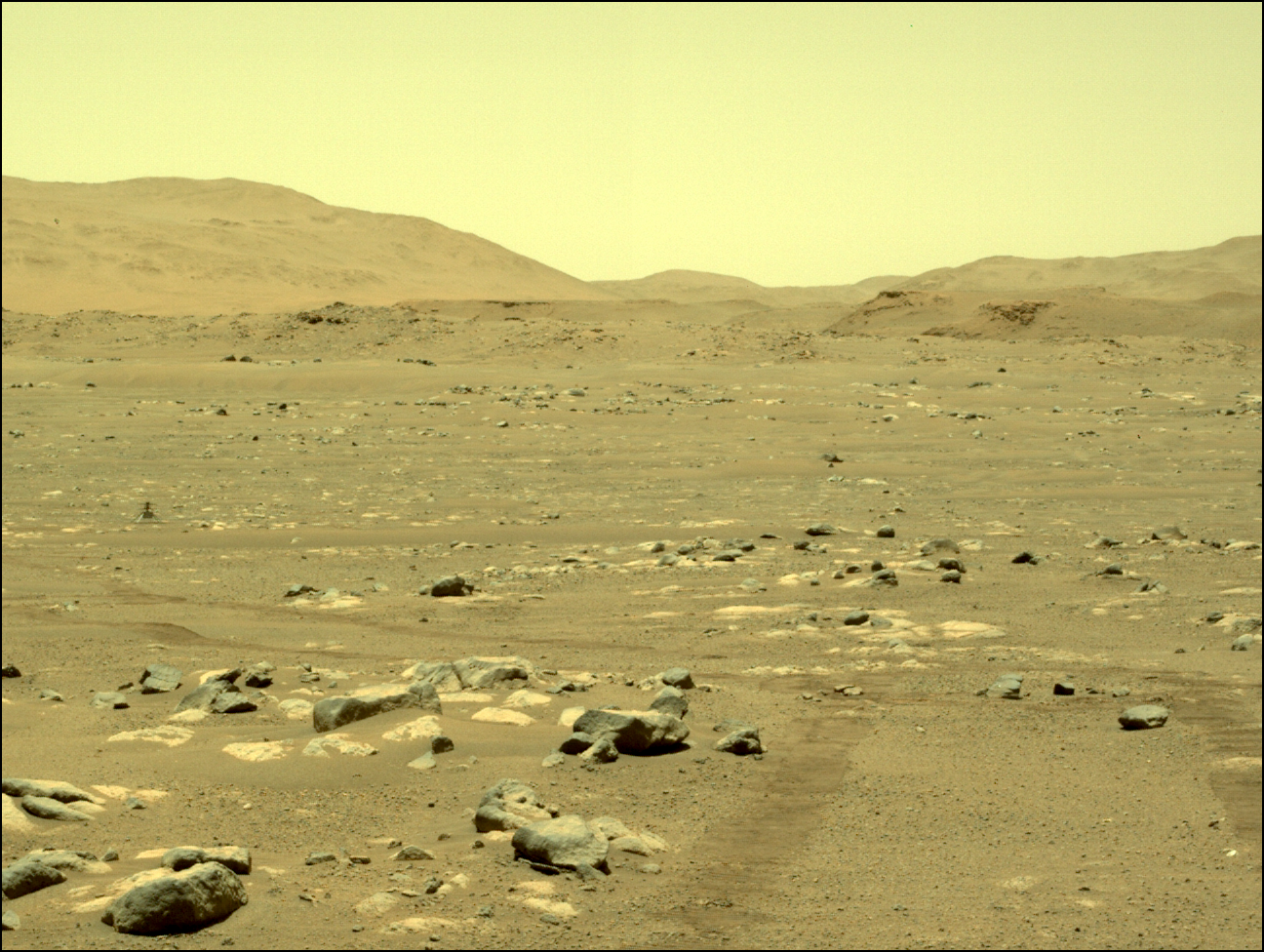
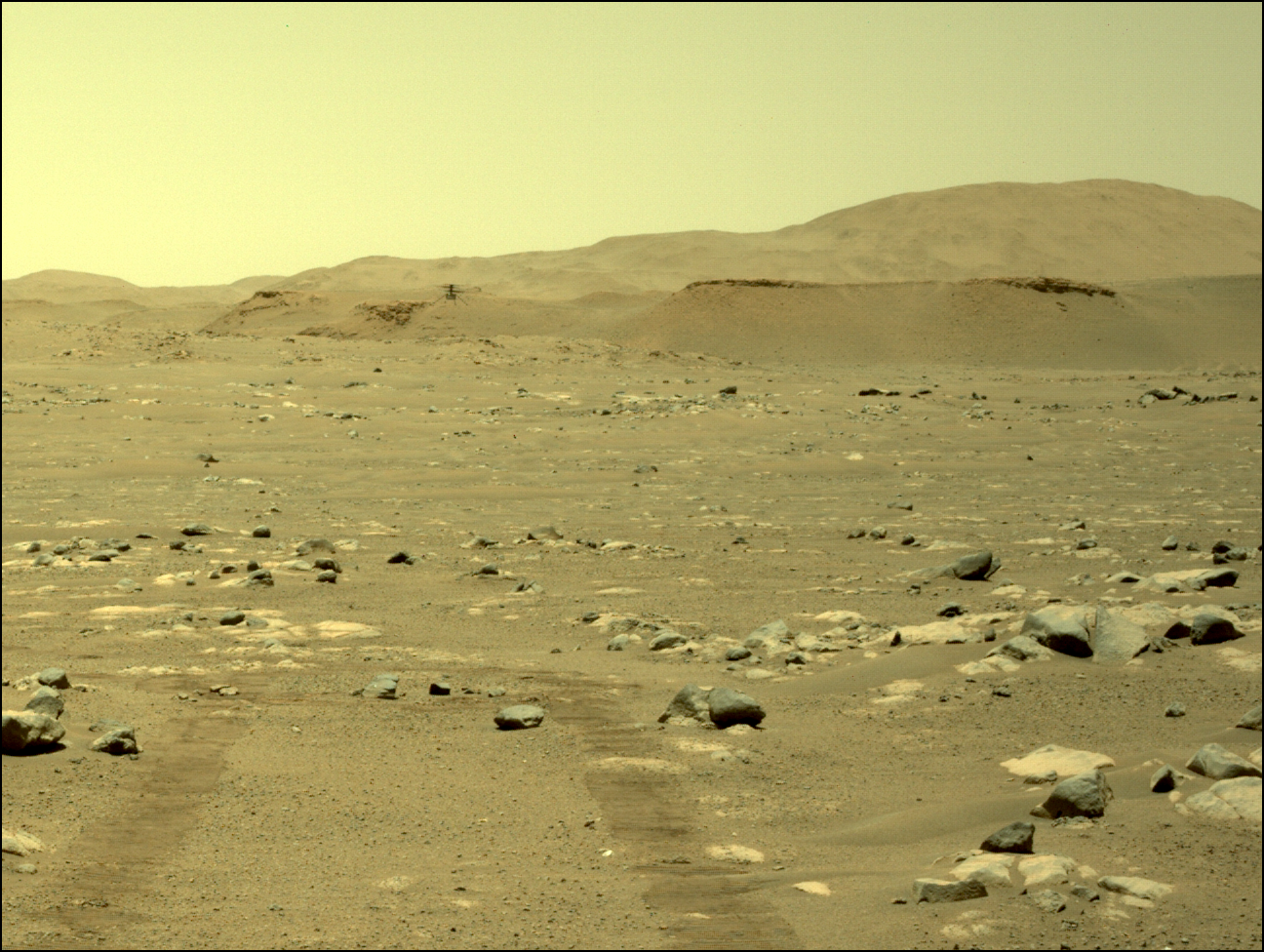
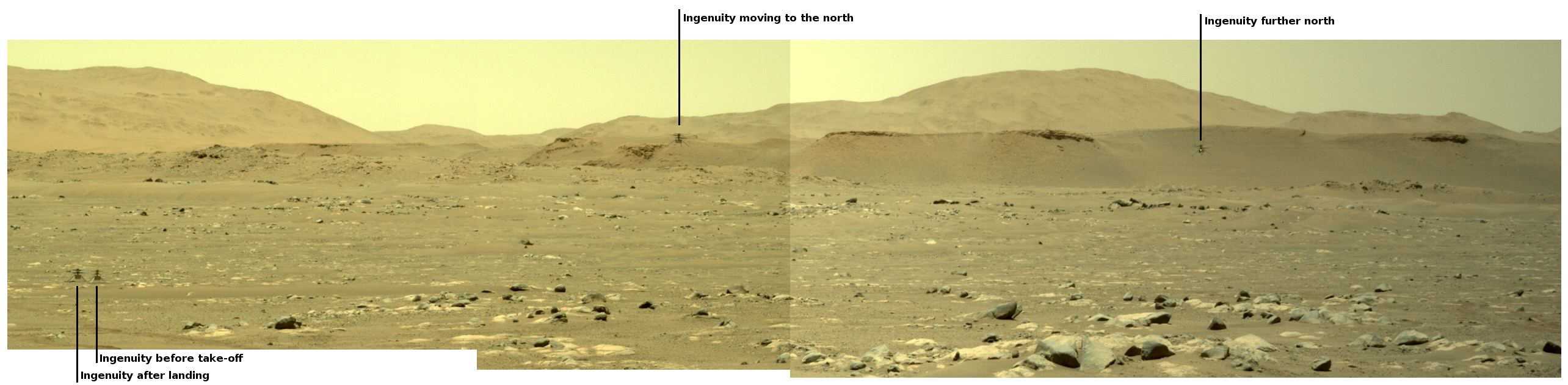
Low resolution montage showing Ingenuity's third flight on Mars, April 25, 2021
Click for full resolution. Individual images can be found, in sequence, here, here, here, and here.

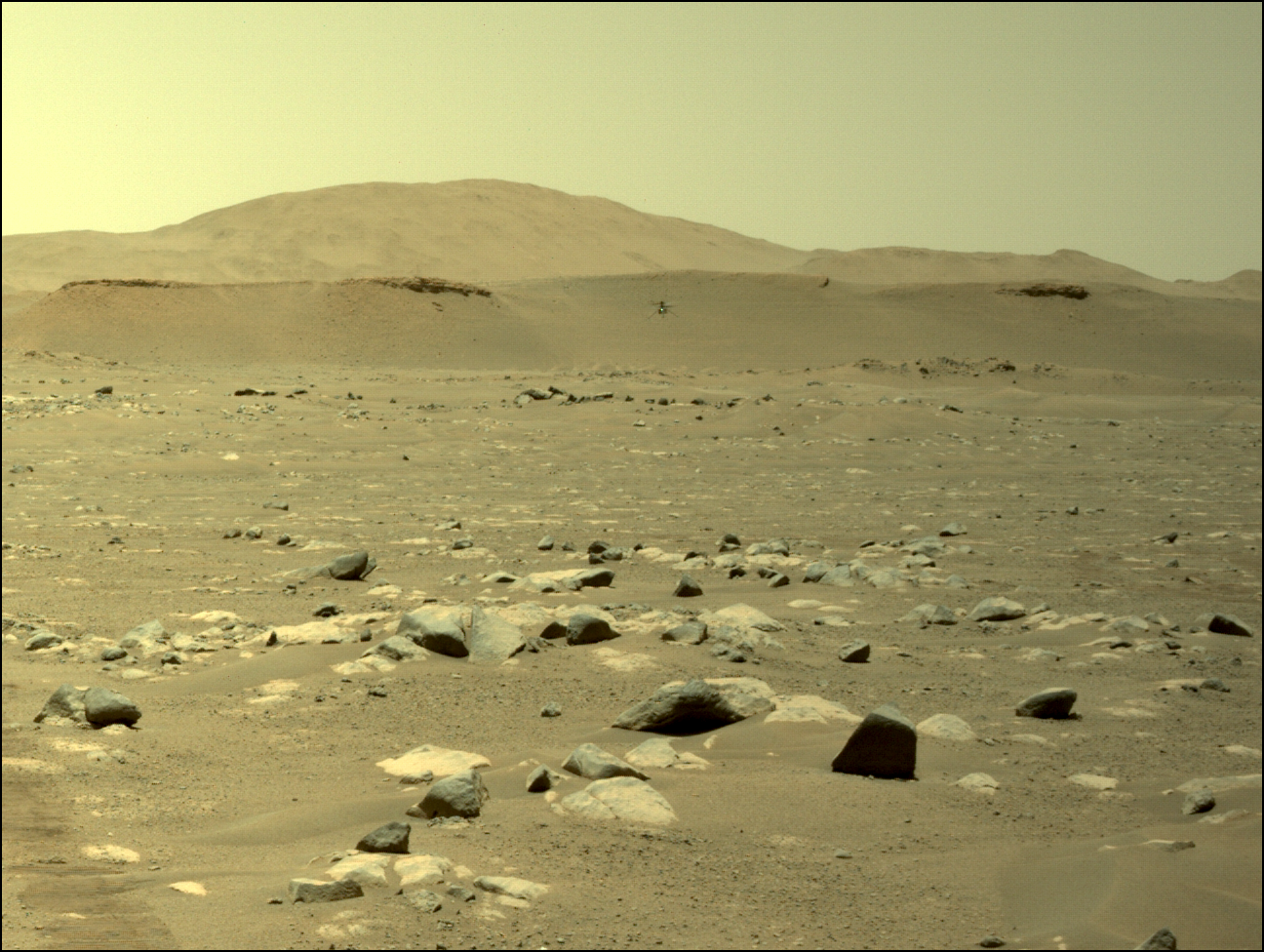
Early today Ingenuity successfully completed its third flight on Mars, traveling a considerable distance north from its taken-off point and then returning almost exactly to that point, as shown by the montage of four Perseverance navigation images above.

You will want to look at the high resolution montage, as the details are much clearer. The large mountains in the background are the rim of Jezero Crater. The smaller plateau in front of these mountains and much closer is the edge of the delta that Perseverance will explore.

According to this NASA press release:

The helicopter took off at 4:31 a.m. EDT (1:31 a.m. PDT), or 12:33 p.m. local Mars time, rising 16 feet (5 meters) – the same altitude as its second flight. Then it zipped downrange 164 feet (50 meters), just over half the length of a football field, reaching a top speed of 6.6 feet per second (2 meters per second).

I have embedded below the fold video of the helicopter’s take off, flight to the north, and then return and landing, created from Perseverance images. Because the camera did not pan the helicopter moves off frame for the middle part of its flight. In the coming days I expect they will assemble a video showing the entire flight.

The fourth flight is now only days away.
» Read more

2 comments

Soyuz-2 rocket launches 36 more OneWeb satellites

Capitalism in space: Russia’s Soyuz-2 rocket today successfully launched from its Vostochny spaceport another 36 more OneWeb satellites, raising that internet constellation to 182 satellites of a planned 650 satellites.

The constellation will take 20 Soyuz launches to finish, and like other competitor services such as Starlink, is designed to provide high speed, low latency broadband services to areas where such service is unavailable now. Whereas Starlink is being marketed to individuals, OneWeb’s services are designed for enterprise customers, including broadband providers. User terminals can enable 3G, LTE, 5G, and Wi-Fi service over land, sea, and air.

The leaders in the 2021 launch race:

11 SpaceX
8 China
7 Russia
2 Rocket Lab

The U.S. still leads China 15 to 8 in the national rankings. And these numbers will likely see some change as there are four launches scheduled in the next four days. First ULA’s Delta 4 Heavy will launch a spy satellite tomorrow, then the next day Arianespace will do its first launch this year, launching a commercial Airbus Earth observation satellite with a Vega rocket.

On April 28 SpaceX plans to launch another 60 Starlink satellites, followed on April 29th by the launch by China of the first module of its space station, using their Long March 5B rocket.

Things are heating up, and this is only the beginning.

0 comments

Curiosity’s mesa-top view of Gale Crater

The view of Gale Crater from on top of Mont Mercou
Click for full image.

Cool image time! The photo above, reduced slightly to post here, was taken on April 14, 2021 by one of the navigation cameras on Curiosity. The rover was then and is still sitting on top of the twenty foot high outcrop dubbed Mont Mercou.

Last week I had posted a panorama made from images at this viewpoint looking south towards Mount Sharp. Today’s image is from the same place, but now looks north across the floor of Gale Crater at the areas that Curiosity had previously traveled. I think the smallest mesas on the left of this image are the Murray Buttes which Curiosity was traveling through back in 2016, but am not certain.

The mountains in the far distance are the rim of the crater, about 30 miles away.

4 comments

China and Russia sign agreement to build moon base

The new colonial movement: Yesterday China and Russia announced that they have signed an agreement to jointly work together to build a base on the Moon.

The link above is from the Chinese state-run press, stating:

In a joint statement issued at the conference, the CNSA and Roscosmos said the moon station will be open to all interested countries, international organizations and partners in terms of planning, design, research, development, implementation and operation at all stages and levels of the project.

The Russian state-run press made a similar announcement.

The new Cold War in space is beginning to shape up. On one side will be free enterprise, led by the United States and the many private companies working independently to make their own profits in space, and on the other side will be the former communist nations whose cultures require all such efforts be controlled from the top by the government.

And like the Cold War of the 20th century, the big question will be the actions of third parties, like Europe, India, Japan, the UAE, and other new space-faring nations. Will they join with the U.S., or join China and Russia to gang up on private enterprise? Right now I will not be surprised if all these countries eventually join the Chinese/Russian effort. Worse, I have great doubts about the U.S. government’s commitment to the capitalist path it is presently taking. If enough pressure was applied by these authoritarian regimes we should not be surprised if our generally authoritarian present government decides to join them as well, using their combined power to squelch freedom and private enterprise in space.

The battle is drawn, but the forces for liberty and freedom are sadly outnumbered.

50 comments

China names its Mars rover Zhurong, after traditional fire god

The new colonial movement: The Chinese state-run press today announced that it has chosen Zhurong, a traditional Chinese fire god, as the name of the rover that is presently orbiting Mars on its Tianwen-1 orbiter and is targeting a landing sometime in mid-May.

They note that this name matches well with the Chinese name for Mars, “Huo Xing,” or fire star.

The announcement provided little additional information, other than stating that the prime landing site is in the previously announced Utopia Planitia region, which suggests the high resolutions images being taken by Tianwen-1 (unreleased by China) continue to show no reason to change that target.

0 comments

Ingenuity’s third flight late tonight

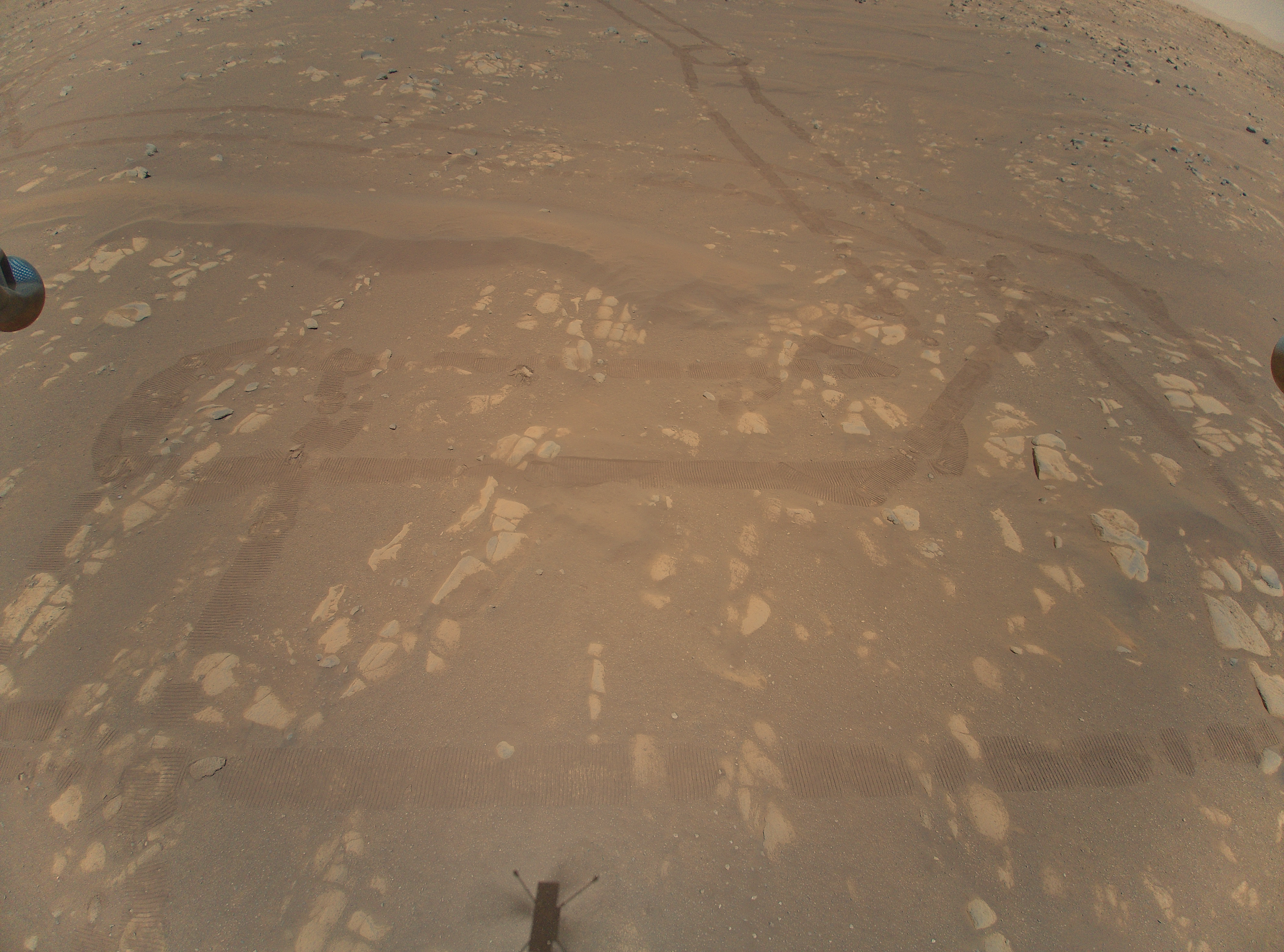
First color image from Ingenuity
Click for full image.

According to Håvard Grip, Ingenuity’s Mars Helicopter Chief, the helicopter’s team is now targeting very early Sunday morning for its third test flight.

For the third flight, we’re targeting the same altitude [as flight two], but we are going to open things up a bit too, increasing our max airspeed from 0.5 meters per second to 2 meters per second (about 4.5 mph) as we head 50 meters (164 feet) north and return to land at Wright Brothers Field. We’re planning for a total flight time of about 80 seconds and a total distance of 100 meters (330 feet).

While that number may not seem like a lot, consider that we never moved laterally more than about two-pencil lengths when we flight-tested in the vacuum chamber here on Earth. And while the 4 meters of lateral movement in Flight Two (2 meters out and then 2 meters back) was great, providing lots of terrific data, it was still only 4 meters. As such, Flight Three is a big step, one in which Ingenuity will begin to experience freedom in the sky.

The picture above was the first color image sent down by Ingenuity, taken during the second test flight when the helicopter was seventeen feet in the air and pitched slightly so that it could look east, toward Perseverance. From the caption:

The winding parallel discolorations in the surface reveal the tread of the six-wheeled rover. Perseverance itself is located top center, just out frame. “Wright Brothers Field” is in the vicinity of the helicopter’s shadow, bottom center, with the actual point of takeoff of the helicopter just below the image. A portion of the landing pads on two of the helicopter’s four landing legs can be seen in on the left and right sides of the image, and a small portion of the horizon can be seen at the upper right and left corners.

The data from tonight’s flight will arrive on Earth at around 7:16 am (Pacific) tomorrow.

2 comments

April 21, 2021 Zimmerman/Pratt podcast

On April 21st, I recorded another 35 minute podcast with Robert Pratt. That podcast is now available at his website at this link. From his description:

An update with author and historian Robert Zimmerman of behindtheblack.com on the current cancel culture we are experiencing, or as Bob put it: Blacklisting Americans.

Trust me, even though we were reviewing the many blacklist stories I have posted in the past few weeks that you might have read, you want to listen. I expand on those posts, outlining why I am doing them, and what they illustrate about our larger society. Free-thinking and liberty-loving Americans are no longer the majority in this country. We face a terrible battle to make “life, liberty, and the pursuit of happiness” the central principle of America once again.

On a positive note, Pratt has begun re-establishing his radio network in Texas. The corporate blacklisters have tried to silence him, but he’s thumbing his nose at those petty tyrants. Go Robert!

5 comments

Polygons and an inexplicable depression in ancient Martian crater floor

Polygons and an inexplicable depression in ancient Martian crater
Click for full image.

Cool image time! The photo to the right, cropped to post here, was taken on February 26, 2021 by the high resolution camera on Mars Reconnaissance Orbiter (MRO) of a small section of the floor of 85-mile-wide Galilaei Crater.

The main focus of the image is the polygonal cracks that cover the flat low areas of the crater floor, interspersed randomly by small mesas and shallow irregular depressions. The depression in this particular image is especially intriguing. It to me falls into my “What the heck?!” category, for I can’t imagine why among this terrain of polygons and pointed mesas there should suddenly be an irregularly shaped flat depression with a completely smooth floor that has no cracks at all.

The polygons are less puzzling. Galilaei Crater is very old, its impact thought to have occurred about 4 billion years ago. Though it sits at 5 degrees north latitude, practically on the Martian equator and thus in what is now Mars’ most arid region, scientists believe that once there was a lot of liquid surface water here. The overview map below illustrates this.
» Read more

8 comments
1 114 115 116 117 118 167