South Korea’s Danuri orbiter enters lunar orbit

South Korea’s first lunar orbiter, dubbed Danuri, has successfully entered lunar orbit after a four-month journey designed to save fuel and weight.

The Danuri spacecraft was expected to begin entering lunar orbit at on Friday (Dec. 17) at 2:45 p.m. EST (1945 GMT, 2:45 a.m. Dec. 17 in South Korea), according to a statement (opens in new tab) from the Korea Aerospace Research Institute (KARI). The maneuver, the first of five planned engine burns through Dec. 28 to refine Danuri’s orbit around the moon, will clear the way for the probe to get started on its lunar science objectives.

Danuri, also known as the Korea Pathfinder Lunar Orbiter (KPLO), began its long and circuitous journey to the moon on Aug. 4, launching on a SpaceX Falcon 9 rocket from Florida’s Cape Canaveral Space Force Station. The moon probe has traveled over 3.3 million miles (5.4 million kilometers) on its journey so far, KARI officials have said.

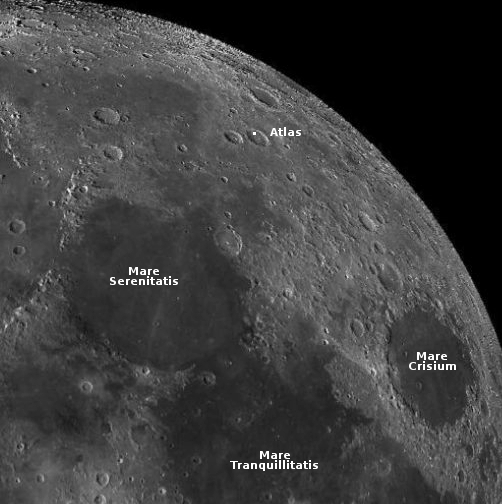
Its six instruments, including one American camera designed to look into the permanently shadowed craters on the Moon, will study the Moon from a polar orbit.

0 comments

SpaceX completes third launch in less than two days

SpaceX successfully launched another 54 Starlink satellites today, completing the company’s third launch in less than two days.

The Falcon 9 first stage completed its 15th flight, a record, landing on a drone ship in the Atlantic.

The leaders in the 2022 launch race:

60 China
59 SpaceX
21 Russia
9 Rocket Lab
8 ULA

The U.S. now leads China 83 to 60 in the national rankings, but trails the entire world combined 92 to 83.

10 comments

Russians test thrusters on leaking Soyuz

In the continuing investigation into the leak of coolant from a Soyuz capsule docked to ISS, Russian engineers yesterday tested the capsule’s thrusters, finding they functioned as normal.

As part of the ongoing evaluation and investigation, Roscosmos flight controllers conducted a successful test of the Soyuz MS-22 thrusters at 3:08 a.m. EST Friday, Dec. 16. The systems that were tested were nominal, and Roscosmos assessments of additional Soyuz systems continue. Temperatures and humidity within the Soyuz spacecraft, which remains docked to the Rassvet module, are within acceptable limits.

The highlighted words have been the Russians’ way of downplaying a serious concern. According to their own data, the temperatures in the capsule have now risen to 86 degrees Fahrenheit, which though entirely safe is higher than normal for within habitable spacecraft. Should those temperatures continue to rise, it will start to become a problem.

One solution would be circulate cooler air from the rest of the station. I suspect this is possible with equipment on board, but do not know for sure.

Right now however it surely appears that it would likely not be wise to return its crew to Earth in this capsule, and that a replacement will be required.

3 comments

SpaceX launches two communications satellites

SpaceX today successfully launched two communications satellites for the satellite company SES, beginning SpaceX’s contract to launch more satellites in its constellation of medium-Earth orbit satellites, replacing the Russians.

The first stage successfully flew its eighth flight, and landed successfully on a drone ship in the Atlantic.

This was also the company’s second launch today, with another launch scheduled for tomorrow.

The leaders in the 2022 launch race:

60 China
58 SpaceX
21 Russia
9 Rocket Lab
8 ULA

The U.S. now leads China 82 to 60 in the national rankings, but trails the entire world combined 92 to 82.

9 comments

December 16, 2022 Quick space links

Courtesy of Jay, BtB’s stringer.


1 comment

The edge of the Martian south pole ice cap

The edge of the Martian south pole ice cap
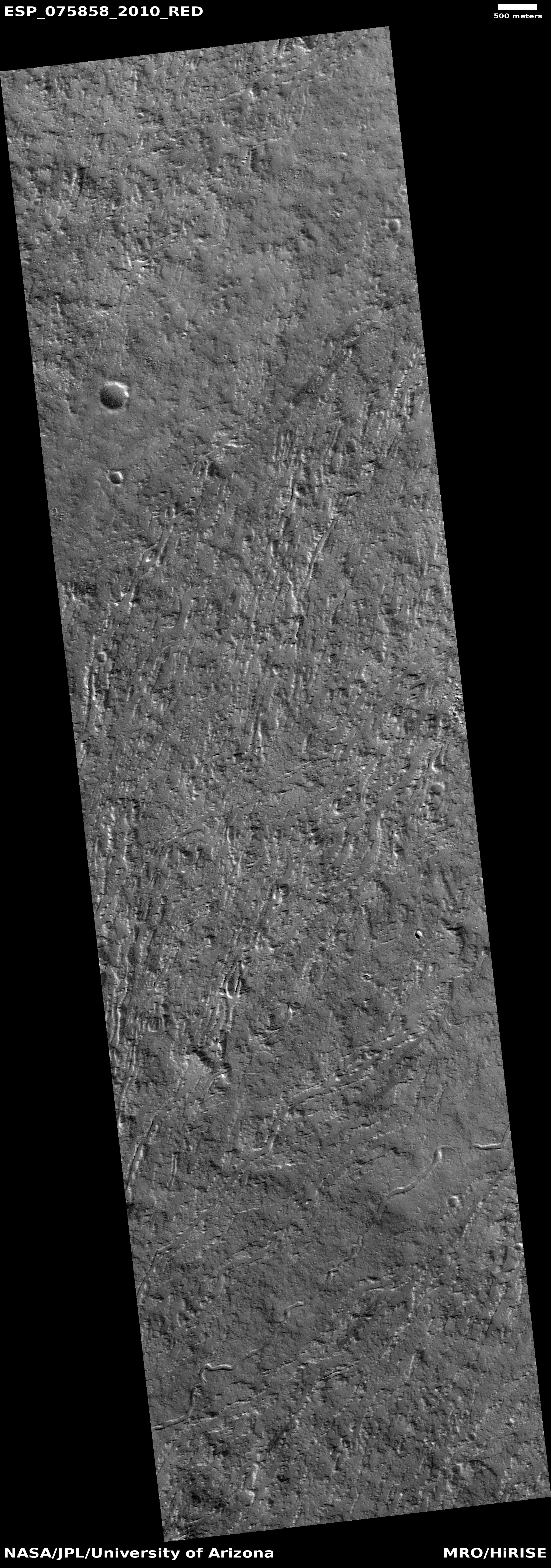
Click for full image.

Cool image time! The photo to the right, rotated, cropped, reduced, and sharpened to post here, was taken on September 4, 2022 by the high resolution camera on Mars Reconnaissance Orbiter (MRO). The MRO science team labeled this simply “Diverse Terrain,” an apt description but woefully incomplete.

Though the grade here goes uphill to the south, there are ups and downs along the way. The flat areas near the top as well that band near the bottom appear to be the oldest terrain, with the rough hollows appearing to be places where that flat material has sublimated or eroded away.

This terrain is in the very high southern latitudes. South is to the bottom of this picture, with the south pole of Mars about 380 miles away. Thus, that eroding top layer is likely disappearing because it has either water ice or dry ice within it, and over time it sublimates away.

The picture itself was taken in winter, when the entire surface is likely covered with a thin mantle of dry ice that fell as snow with the coming of colder temperatures. A wider view of this region in the spring, taken by MRO’s context camera, shows that this mantle, now appearing like white frost, appears largely confined to the higher terrain. Apparently, the annual sublimation of this dry ice mantle is linked somehow to the erosion of this flat terrain.

The additional location information provided by overview map below helps explain why this terrain is so diverse.
» Read more

0 comments

A barred spiral galaxy with distorted galaxy

A barred spiral galaxy
Click for full image.

Cool image time! The photo to the right, reduced and cropped to post here, was taken by the Hubble Space Telescope and shows a barred spiral galaxy about 214 million light years away.

Scientists used NASA’s Hubble Space Telescope to image NGC 6956 to study its Cepheid variable stars, which are stars that brighten and dim at regular periods. Since the period of Cepheid variable stars is a function of their brightness, scientists can measure how bright these stars appear from Earth and compare it to their actual brightness to calculate their distance. As a result, these stars are extremely useful in determining the distance of cosmic objects, which is one of the hardest pieces of information to measure for extragalactic objects.

The press release of course focuses on this magnificent barred spiral. I however want to draw your attention to the smaller galaxy in the white box.

background distorted galaxy

Since we do not know the distance to this distorted galaxy, we do not know if its distortion is caused by the barred spiral. It could be the bigger galaxy’s gravity is pulling material away.

More likely, based on the shape of this smaller galaxy, is that it is many light years farther away — which is why it looks so much smaller — and has been distorted because it is actually a collusion of two galaxies. The two bright nuclei with the red dust between strongly suggests such a collusion.

I highlight this background galaxy because it illustrates the importance when looking at any Hubble image to look at everything. To coin a phrase, there is gold in them thar hills, if you make the effort to look.

3 comments

NASA loses contact with one hurricane satellite in constellation of eight

NASA has lost contact with one of the eight CYGNSS satellites it uses to track and measure hurricanes worldwide.

The remaining seven satellites that comprise the CYGNSS constellation remain operational and have continued collecting scientific data since FM06 went incommunicado last month, according to NASA’s primary statement about the incident. The constellation’s science work can continue without FM06, but if the team can’t reconnect with the spacecraft, the loss will reduce the spatial coverage of CYGNSS, which until November provided nearly gap-free coverage of Earth.

At the moment engineers do not know why contact was lost, or if they can regain it.

2 comments

Astronomers determine that two super-Earths are not as rocky as previously believed

Using observations from both the Hubble Space Telescope and the now retired Spitzer infrared space telescope, astronomers now think that two super-Earth-sized explanets are not as rocky as previously believed, and are in fact liquid worlds with as much as half their make-up comprised of water. From the press release:

Water wasn’t directly detected at Kepler-138 c and d, but by comparing the sizes and masses of the planets to models, astronomers conclude that a significant fraction of their volume – up to half of it – should be made of materials that are lighter than rock but heavier than hydrogen or helium (which constitute the bulk of gas giant planets like Jupiter). The most common of these candidate materials is water.

“We previously thought that planets that were a bit larger than Earth were big balls of metal and rock, like scaled-up versions of Earth, and that’s why we called them super-Earths,” explained BjΓΆrn Benneke, study co-author and professor of astrophysics at the University of Montreal. “However, we have now shown that these two planets, Kepler-138 c and d, are quite different in nature and that a big fraction of their entire volume is likely composed of water. It is the best evidence yet for water worlds, a type of planet that was theorized by astronomers to exist for a long time.”

With volumes more than three times that of Earth and masses twice as big, planets c and d have much lower densities than Earth. This is surprising because most of the planets just slightly bigger than Earth that have been studied in detail so far all seemed to be rocky worlds like ours. The closest comparison, say researchers, would be some of the icy moons in the outer solar system that are also largely composed of water surrounding a rocky core.

This data simply underlines a basic point: The information we have of all exoplanets is sparse, practically nil. Any conclusions about their make-up is an educated guess, at best. Even now the conclusion that these are water worlds should be treated with great skepticism.

8 comments

Ingenuity completes 36th flight; preps for its 37th

Overview map
Click for interactive map.

Ingenuity on December 10, 2022 successfully completed 36th flight, flying about 180 feet to the northwest and then returning the same distance to land at its take-off point.

This was the third flight in a row to land at this point, and was also the third flight since the Mars helicopter’s software was upgraded to allow it to fly higher and over rougher terrain.

The green dot on the map to the right shows Ingenuity’s present position. The blue dot shows where Perseverance presently sits. The rover has been moving eastward, away from the cliff face to the west where it had gathered more core samples, including the first to contain surface regolith (that is, the dirt of Mars).

Engineers are already planning Ingenuity’s 37th flight, which is scheduled for tomorrow and will reposition the helicopter to a new landing spot.

0 comments
1 6 7 8 9 10 192