SpaceX’s Falcon Heavy launches NOAA weather satellite

SpaceX’s Falcon Heavy rocket today successfully launched a NOAA weather satellite, completing its first flight in 2024 and its tenth flight overall.

The two side boosters completed their first flight, with both landing back at Cape Canaveral. The core stage was allowed to fall into the ocean.

The leaders in the 2024 launch race:

67 SpaceX
28 China
8 Russia
8 Rocket Lab

American private enterprise now leads the world combined in successful launches, 78 to 42, while SpaceX by itself still leads the entire world, including other American companies, 67 to 53.

7 comments

More garbage science about wildfires and global warming from Nature

Nature: the science journal that no longer does real science
The science journal which no longer
understands how real science is done

The once highly respected science journal Nature continues its descent into propaganda and bad science, all because it bows unskeptically before the altar of global warming and leftist science fantasies.

Today’s example is an article this week entitled “You’re not imagining it: extreme wildfires are now more common,” describing a new Nature paper that attempted to use satellite data to prove that the intensity of wildfires has increased in the past two decades.

For the current study, published in Nature Ecology and Evolution on 24 June, Cunningham and his colleagues scoured global satellite data for fire activity. They used infrared records to measure the energy intensity of nearly 31 million daily fire events over two decades, focusing on the most extreme ones — roughly 2,900 events. The researchers calculated that there was a 2.2-fold increase in the frequency of extreme events globally in 2003–23, and a 2.3-fold boost in the average intensity of the top 20 most intense fires each year.

We’re all gonna die! As is usual for these crap climate-related studies, the entire goal is to drum up some manufactured new crisis that justifies the claim that the climate is warming. This study is no different, as the article eagerly notes:

Although the study doesn’t directly connect the fire trend to global warming, Cunningham [the study’s lead author] says “there’s almost certainly a significant signal of climate change”. Research has shown that rising temperatures are drying out ecosystems — such as coniferous forests — that are naturally prone to fire. This provides fuel that can boost the fires’ size and longevity. The latest study also found that the energy intensity of the fires increased faster during the night-time over the past two decades than during the daytime, which aligns with evidence4 that rising night-time temperatures are contributing to fire risk.

Not surprisingly, the New York Times immediately jumped on the bandwagon with its own article that accepts the conclusions of this research with utter naivety.

What junk. First, Cunningham fails to note this minor fact mentioned in the abstract of his own paper:
» Read more

11 comments

Airbus forced to write off almost a billion dollars

Even though the problems that Boeing has been driving its customers to Airbus, Airbus yesterday revealed that its own business outlook is presently suffering, forcing it to write off $965 million.

Yielding to growing scepticism among suppliers over its plans for jet output, Airbus lowered its widely watched forecast for deliveries this year to around 770 jets from around 800. It also tempered plans to raise output of its best-selling A320neo family, by delaying the date at which it expects to reach a record production speed of 75 jets a month to 2027 from 2026. That compares with an estimated 50 jets a month now.

As a result of the lower delivery forecasts, which imply annual growth of 5% instead of 9%, Airbus lowered its main financial targets for 2024. It now expects underlying operating income of around 5.5 billion euros, instead of a range of 6.5 billion to 7.0 billion, and free cashflow of 3.5 billion instead of 4.0 billion.

The article focuses on Airbus’s engine supply issues that are restricting its ability to build jets. It makes no mention of the company’s joint partnership with Safran to build the Ariane-6 rocket, which has failed to garner the business predicted, even as it is about to make its inaugural launch on July 9th. Though peripheral to the airplane issues described, it is certainly a factor in these financial issues.

1 comment

Scientists surprised by new Webb data of the upper layers of Jupiter’s Great Red Spot

Jupiter's Great Red Spot, as seen in infrared
Click for original image.

The uncertainty of science: Using the Webb Space Telescope, scientists have obtained infrared data of the upper layers of Jupiter’s Great Red Spot, revealing that it is far more complicated that predicted by researchers.

The upper atmosphere of Jupiter is the interface between the planet’s magnetic field and the underlying atmosphere. Here, the bright and vibrant displays of northern and southern lights can be seen, which are fuelled by the volcanic material ejected from Jupiter’s moon Io. However, closer to the equator, the structure of the planet’s upper atmosphere is influenced by incoming sunlight. Because Jupiter receives only 4% of the sunlight that is received on Earth, astronomers predicted this region to be homogeneous in nature.

The Great Red Spot of Jupiter was observed by Webb’s Near-InfraRed Spectrograph (NIRSpec) in July 2022, using the instrument’s Integral Field Unit capabilities. The team’s Early Release Science observations sought to investigate if this region was in fact dull, and the region above the iconic Great Red Spot was targeted for Webb’s observations. The team was surprised to discover that the upper atmosphere hosts a variety of intricate structures, including dark arcs and bright spots, across the entire field of view.

You can read the published research paper here. The image to the right is figure 4 from that paper, with each panel showing different infrared wavelengths indicated by the different colors, and thus the complex structures and physical properties.

1 comment

Firefly to launch from Wallops instead of Cape Canaveral

The rocket startup Firefly announced yesterday that it has decided to change its east coast launch site for its Alpha rocket from Cape Canaveral in Florida to Wallops Island in Virginia, using the same pad there that Northrop Grumman’s Antares rocket uses.

The company said that it would use Pad 0A at the Mid-Atlantic Regional Spaceport (MARS) on Wallops Island for Alpha launches, starting as soon as 2025. The launch pad, built for the Antares rocket, will continue to be used for the revised Antares 330 Northrop Grumman is developing in collaboration with Firefly as well as the larger Medium Launch Vehicle (MLV) the companies are building.

The company says launching from Wallops, in addition to its existing pad at Vandenberg Space Force Base in California, will allow it to serve more customers. Wallops can support launches to lower inclination orbits than feasible from Vandenberg, which is best suited for sun-synchronous and other high-inclination orbits.

Because the revised Antares rocket will use a first stage built by Firefly (replacing a Ukrainian first stage no longer available due to Russia’s invasion), this change appears to make a great deal of sense. The revised pad will likely use comparable systems between both Antares and Alpha.

0 comments

Chang’e-6 brings back the first lunar samples from Moon’s far side

Engineers inspecting and opening Chang'e-6 return capsule
Engineers inspecting and opening Chang’e-6’s
sample return capsule after landing today.
Click for original image.

According to China’s state-run press, the sample return capsule of its Chang’e-6 lunar mission successfully landed today in the inner Mongolia region of China, bringing back the first lunar samples from Moon’s far side.

Under ground control, the returner separated from the orbiter approximately 5,000 km above the South Atlantic. The capsule entered the Earth’s atmosphere at about 1:41 p.m. at an altitude of about 120 km and a speed of nearly 11.2 km per second. After aerodynamic deceleration, it skipped out of the atmosphere and then began to glide downwards, before re-entering the atmosphere and decelerating for a second time.
At around 10 km above the ground, a parachute opened, and the returner later landed precisely and smoothly in the predetermined area, where it was recovered by a search team.

The returner is set to be airlifted to Beijing for opening, and the lunar samples will be transferred to a team of scientists for subsequent storage, analysis and study, said the CNSA. [emphasis mine]

The highlighted sentence is important. China has now successfully flown this atmospheric skip maneuver twice on returning from the Moon. Though both missions were unmanned, the technical knowledge gained from these flights is critical for their plans to send astronauts to the Moon in the next few years.

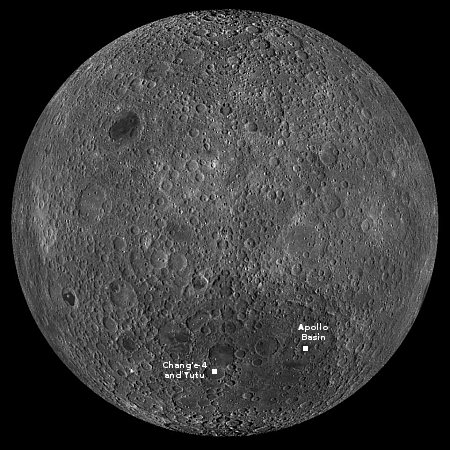
I have embedded China’s broadcast of the landing below. The sample capsule will now be carefully opened and the samples distributed first to Chinese scientists and later to China’s various partners in its lunar base project. The samples themselves came from a small mare region on the edge of Apollo Crater inside South Aitken Basin, one of the largest impact basins on the Moon. It is thus hoped that the samples were excavated from deep within the Moon during the impact, and will provide new data on the Moon’s make-up and history.
» Read more

6 comments

Reparations: Taking money from people who never owned slaves and giving it to people who never were slaves

Harvard: where you get can get a shoddy education centered on hate and bigotry
Harvard: where you can spend a lot of money
getting a shoddy education teaching hate and bigotry

The effort to justify the new fad of forcing all Americans today to pay blacks reparations for the evil of slavery that was eliminated a century and a half ago at the cost of more than 600K lives continues. A recent published study by two “Didn’t Earn It” (DEI) academic elites at the Harvard Kennedy School attempts to justify the distribution of reparations now by claiming that the U.S. has a long history of paying out money to harmed individuals. From the paper’s abstract:

[T]he United States has a long-standing social norm that if an individual or community has suffered a harm, it is considered right for the federal government to provide some measure of what we term “reparatory compensation.” In discussing this norm and its implications for Black American reparations, we first describe the scale, categories, and interlocking and compounding effects of discriminatory harms by introducing a taxonomy of illustrative racial harms from slavery to the present. We then reveal how the social norm, precedent, and federal programs operate to provide victims with reparatory compensation, reviewing federal programs that offer compensation, such as environmental disasters, market failures, and vaccine injuries. We conclude that the government already has the norm, precedent, expertise, and resources to provide reparations to Black Americans. [emphasis mine]

The highlighted word is key to understanding the fundamental intellectual dishonesty of these incompetent Harvard academics. In their paper they use numerous examples of cases where the government has provided compensation to actual individuals — such as veterans, individuals harmed by radiation from nuclear tests, and those who lost their pensions due to bankruptcy or mismanagement of their pension funds — and then claim this proves paying reparations to the community of blacks, based merely on their race and the past existence of slavery, is within traditional American jurisprudence.

This is all a lie. » Read more

45 comments

Are Chang’e-6’s lunar samples on the way back to Earth?

In Friday’s June 21, 2024 quick links, changes to lunar orbit of China’s Chang’e-6 sample return spacecraft were detected by ham operators. As I noted, “It isn’t clear whether this was the previous orbit adjustment, a new one, or the burn that would send the sample return capsule back to Earth.”

According to Space News today, the spacecraft with the samples is on its way back to Earth, based on additional information detected by amateurs. China however has released no information on the status of the spacecraft.

Upon return to Earth, the reentry capsule is expected to touch down at Siziwang Banner, Inner Mongolia during an half-an-hour long window opening at 1:41 a.m. Eastern (0541 UTC) June 25. The information is according to airspace closure notices. CNSA has not openly published timings of mission events in advance.

Earlier reports (which I can’t find now) had said the return was tentatively scheduled for June 25, 2024, so this Space News report makes sense. The lack of information from China is par for the course.

7 comments

France’s CNES space agency begins work adapting commercial launchpad at French Guiana for specific startup rocket companies

Capitalism in space: France’s CNES space agency, which has taken back ownership of its French Guiana spaceport from Arianespace, has now begun adapting its new commercial launchpad there for a number of specific startup rocket companies.

In early 2021, the French space agency CNES announced plans to open up the Guiana Space Centre to commercial micro and mini-launch operators. The agency explained that it would be developing a multi-user launch pad on the grounds of the old Diamant launch complex. In July 2022, CNES announced that it had pre-selected Avio, HyImpulse, Isar Aerospace, MaiaSpace, PLD Space, Rocket Factory Augsburg, and Latitude to utilize the new launch complex.

During a media briefing following ESA’s 327th council meeting, Tolker-Nielsen explained that “general work” on the complex had already started and that work on “specific adaptations” was about to begin. These specific adaptations will be completed by the companies that will utilize the launch complex to ensure it fulfills the specific needs of their launch systems.

Of the seven rocket startups listed above, Tolker-Nielson said PLD was the ahead of the others in adapting the pad for its use, though no launch date is set. Avio meanwhile will likely not have to use this pad, as it owns the Vega family of rockets, which have already launched from French Guiana using another launchpad.
» Read more

7 comments

China’s successfully completes full 10K hop of 3-engine launch test rocket

China’s yesterday successfully completed a 10K hop lasting six minutes of 3-engine launch test small-scale rocket, lifting off from its Jiuquan spaceport in northwest China.

Developed by the Shanghai Academy of Spaceflight Technology, the carrier rocket features a 3.8-meter diameter rocket body, powered by three 70-tonne LOX/Methane engines and equipped with a full-size landing buffer system.

The rocket achieved vertical soft landing at a fixed point through take-off, ascent and variable-thrust descent. The test fully verified the rocket’s VTOL configuration, heavy-load landing buffer technology, reusable propulsion technology with high and strong variable thrust, and high-precision landing navigation and control technology.

I have embedded below a video that shows the take-off, parts of the flight, and landing. China hopes to fly a full scale orbital version, with a 4-meter diameter, in 2025.
» Read more

2 comments
1 98 99 100 101 102 191