NASA provides update on Artemis-2 repairs for future dress rehearsal countdown

NASA late last night posted an update describing the fuel leak repair work taking place in advance of a second dress rehearsal countdown prior to the launch of the manned ten-day Artemis-2 mission around the Moon.

While teams continue evaluating the cause of the leak, reconnecting the interfaces is expected to be complete on Monday, Feb. 9. Testing is planned to occur at NASA’s Stennis Space Center in Bay St. Louis, Mississippi, to evaluate additional dynamics of the plates. Engineers are reviewing options to test the repair work prior to the next wet dress rehearsal to ensure the seals are performing as expected.

NASA also will update several operations for the next wet dress rehearsal to focus on fueling activities. The Orion crew module hatch will be closed prior to the test, and the closeout crew responsible on launch day for assisting the Artemis II crew into their seats and closing Orion’s two hatches will not be deployed to the launch pad. The crew access arm will not be retracted during the next rehearsal, after engineers successfully demonstrated the ground launch sequencer can retract it during the final phase of the countdown.

Additionally, NASA has added 30 minutes of extra time during each of two planned holds in the countdown before and after tanking operations to allow more time for troubleshooting, increasing the total time of the countdown by one hour. The additional time will not affect the crew’s timeline on launch day.

In other words, the next rehearsal will focus almost entirely on fueling to make sure these issues are resolved.

The agency however has not set a date for that countdown rehearsal. To launch in March, as presently planned, it must occur sometime in the next three weeks, and go perfectly. Otherwise that launch will slip again, and begin to bump up against the end of the launch window on April 6th.

Right now I am betting that second rehearsal will not go perfectly, as this was SLS’s track record leading up to November 2022 first launch. It took five countdowns before the agency was able to get the rocket off the ground without issues.

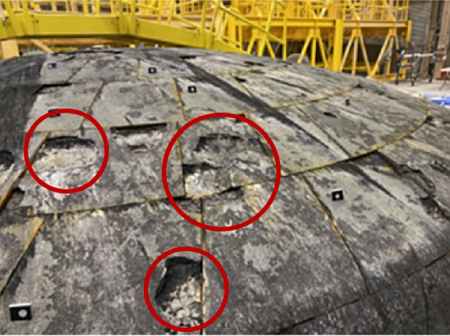
And if it does go perfectly and Artemis-2 is launched manned, it is essential to note again that it will be flying a manned capsule with a questionable heat shield and an untested life support system.

0 comments

China and SpaceX complete launches

The pause in launches in the past week has now ceased, completely for SpaceX and partly for China.

Yesterday China completed its first launch in more than a week and only its second since it had two launch failures on January 17, 2026. It successfully launched its Shenlong X-37B copycat mini-reusable shuttle on its fourth mission, its Long March 2F rocket lifting off from its Jiuquan spaceport in northwest China.

No word on how long Shenlong will remain in orbit. All China’s state-run press would reveal is that it is performing “technological verification” in orbit. That state-run press also said nothing about where the rocket’s lower stages, using very toxic hypergolic fuels, crashed inside China.

SpaceX today resumed launches after its own weeklong pause, caused as the company investigated why the upper stage on the February 2nd launch did not complete its de-orbit burn as planned. The company has released no information on the results of that investigation, but apparently it was satisfied with the results to resume launches. It successfully placed 25 more Starlink satellites in orbit today, its Falcon 9 rocket lifting off from Vandenberg Space Force Base in California.

The first stage completed its 13th flight, landing on a drone ship in the Pacific.

The 2026 launch race:

15 SpaceX
7 China
2 Rocket Lab
1 Russia

1 comment

Isaacman issues directive to shift power back to NASA and away from private sector

Jared Isaacman, in announcing this directive

NASA administrator Jared Isaacman yesterday issued a major three-part directive which he claimed would save more than a billion dollars at NASA while allowing the agency to “regain its core competencies in technical, engineering, and operational excellence”.

The plan could actually backfire, however, as it appears to shift power and control back to NASA and away from private sector.

First, Isaacman wants to eliminate much of the outside contracting NASA now relies on, bringing that work back into the agency itself. Second, he wants eliminate “restrictive clauses that prevent us from doing our own work and addressing intellectual property barriers that have tied our hands.” Third, he wants to “restore in-house engineering,” having more work done by NASA engineers instead of depending on outside contractors.

To some extent, there is value in all these changes, because in many cases NASA employees use the policy of using contractors to outsource their entire work load, so they can sit and do practically nothing.

Overall however this directive could very well squelch the present renaissance in commercial space, because it will put NASA much more in control of everything. Rather than simply being a customer buying the products built and owned by the private sector (ie, the American people) — the capitalism model — the directive demands that NASA run things, the centralized Soviet-style top-down government model.

This aspect is best illustrated by the second part of his directive. Many contractors, such as SpaceX, do not wish to reveal everything about their product designs to NASA, because then it becomes public and can be stolen by their competitors. By requiring companies to release all proprietary data, those companies will no longer own that data, and thus will no longer be as easily able to benefit from its development. This will discourage private investment. It will also once again centralize development at NASA. Rather than getting multiple ideas and innovation from multiple companies, everything will funnel into the ideas NASA managers and engineers come up with.

Isaacman has come to this directive after spending his first two months as administrator delving into how the agency is operating. But he has gotten the solution entirely backwards. Rather than centralize and expand the work done inside NASA, thus justifying its large workforce that Isaacman has found isn’t doing much, wouldn’t it be better to simply eliminate those government jobs entirely? Trim NASA down to its essentials, and let the American people, not the government, come up with what they need and want in space.

Isaacman is not doing this however. Instead, he is apparently working to rebuild the NASA empire, so that it can once again design all, own all, and control all. That was how things were during the shuttle era, and the result was that for almost a half century, America went nowhere in space.

My doubts and concerns about Isaacman and his priorities, which started during his first nomination hearings, have only increased. Despite being a man who made billions in the free private sector, he increasingly appears to be someone eager to build a government empire to laud over everyone.

31 comments

India picks landing site for its Chandrayaan-4 lunar sample return mission

Landing sites at the Moon's South Pole

Scientists at India’s space agency ISRO have now picked [pdf] a preliminary landing site for its planned Chandrayaan-4 lunar sample return mission, scheduled to launch in 2028.

[Four] sites of Mons Mouton area was fully characterised with respect to terrain characteristics using high resolution OHRC multiview image datasets and it was found that 1km x 1km area around MM-4 (-84.289, 32.808) contains the less hazard percentage, mean slope of 5°, Mean height of 5334m and most number of hazard free grids of size 24m x 24m. Hence MM-4 can be considered for the potential site of Chandrayaan-4 mission.

The study area of all four sites is indicated on the map to the right by the red dot labeled “Chandrayaan-4”. This mountain, Mons Mouton, is essentially a flat plateau between the numerous craters in the south pole region (many with permanently shadowed craters). Intuitive Machines second lander, Athena, attempted a landing there last year, and tipped over, as did that company’s first lander, Odysseus, both indicated in green. Astrobotic’s Griffin lander (yellow) is targeting this mountain also, hopefully to launch later this year.

0 comments

Midnight repost: How the localized nature of Democrat vote tampering will influence the 2022 election

The news during the past few weeks revealing scads of new evidence proving the 2020 presidential election was stolen from Donald Trump in Georgia reminded me of my 2022 essay, now reposted below. What I described in that essay was the exact tactic the Democrats used in Georgia, most specifically in Fulton County that covers the heavily Democratic Party dominated city of Atlanta. In some parts of that county Democrats were so dominant that they could work under the radar, and fudge the vote aggressively.

Though a number of my election predictions in this essay turned out wrong, the essay does provide the basics of what happened in 2020, and could still happen in 2028 and beyond, if a real effort is not made to regain some control of this election tampering. And not surprising, the Democrats are now opposing any such reforms with great enthusiasm, using their slander and demagoguery tactics to rile up their base, helped enthusiastically by the propaganda press that works as their public relations arm.

————————
How the localized nature of Democrat vote tampering will influence the 2022 election

Based on the ample evidence of election fraud, corruption, and vote tampering done repeatedly by Democrats nationwide during the 2020 election, we can expect these politicians and their minions to commit similar election crimes in the upcoming 2022 mid-term elections, especially because the effort by some Republicans to reform their state election systems in the key purple states was so effectively blocked by Democrats, by many quisling Republicans, and by a willing leftist press.

It is however important to understand where that election tampering was done in 2020 in order to understand the election fraud to come, as well as creating a strategy to prevent it. As real estate agents like to say, “Location is everything!”, and it appears this applies to election fraud as well.
» Read more

2 comments

February 6, 2026 Quick space links

Courtesy of BtB’s stringer Jay. This post is also an open thread. I welcome my readers to post any comments or additional links relating to any space issues, even if unrelated to the links below.

29 comments

One of Cassini’s first close-up images of Saturn’s rings

The rings of Saturn
Click for original image.

Cool image time! My exploration of the Cassini image archive continues. The picture to the right, reduced and enhanced to post here, was taken on May 2, 2005 by Cassini soon after it moved into a close orbit of Saturn where it could get high resolution images of Saturn’s rings. This is one of the first.

This is also a raw image that has not been calibrated or validated, to use the science team’s terms. Thus, the white dots scattered across the image could be artifacts that need to be cleaned up, not examples of Saturn’s many moons.

Regardless, the image illustrates the incredible delicacy of these rings, despite the fact that they are gigantic, spanning almost 45,000 miles in width, with a thickness ranging from 30 to 1,000 feet. And yet, there are so many distinct rings they almost resemble an old-fashioned vinyl record.

0 comments

A new American satellite constellation gets FCC approval

The satellite startup Logos has won approval from the Federal Communications Commission (FCC) for its proposed 4,178 satellite internet constellation.

The Federal Communications Commission partially granted the Redwood City, California-based venture’s constellation proposal Jan. 30, clearing operations in K-, Q- and V-band spectrum under certain conditions while deferring and denying parts of its higher-frequency requests. The satellites would operate across seven orbital shells ranging from 870 kilometers to 925 kilometers above Earth, with inclinations spanning 28 to 90 degrees.

Under FCC rules, Logos must deploy and operate half of the constellation within seven years, with the remainder in place by Jan. 30, 2035.

The company last year raised $50 million in private investment capital, and hopes to launch its first satellite by 2027.

It seems this constellation is coming to the game very late.

3 comments

Has the FAA officially approved Starship launches for Kennedy Space Center in Florida?

Proposed Starship/Superheavy launchsites at Kennedy and Cape Canaveral
Proposed Starship/Superheavy launchsites at
Kennedy (LC-39A) and Cape Canaveral (SLC-37)

It appears that though the FAA’s preliminary summary that it issued on January 30, 2026 only suggested it was leaning to approve Starship/Superheavy launches at SpaceX’s LC-39A launchpad at the Kennedy Space Center in Florida, it now appears that SpaceX is treating it as an official approval, and has begun work re-configuring LC-39A from the launchpad used for manned Falcon 9 launches to a facility for launching both Falcon Heavy and Starship/Superheavy.

The launch pad has seen a pause in action due to SpaceX working to finalize the Starship tower and launch pad on the site. Then on Wednesday, Feb. 4, a crane appeared next to the Falcon 9 launch tower, attaching to the crew access arm.

“For our manifest going forward, we’re planning to launch most of our Falcon 9 launches off of Space Launch Complex 40. That will include all Dragon missions going forward,” said Lee Echerd, senior mission manager of Human Spaceflight Mission Management at SpaceX during the Crew-12 prelaunch press briefing. “That will allow our Cape team to focus 39A on Falcon Heavy launches and hopefully our first Starship launches later this year.”

This Space News article today claims the FAA has issued a final approval for Starship/Superheavy at LC-39A, but it links to that preliminary summary from January 30th, which as far as I can tell is still preliminary and does not include an official approval.

Not that it matters. The FAA appears quite prepared to okay Starship/Superheavy launches at LC-39A, and it now appears SpaceX is proceeding under that assumption.

2 comments

Russia launches classified nine satellites

Russia yesterday successfully placed nine classified military satellites into orbit, its Soyuz-2 rocket lifting off from its Plesetsk spaceport in northeast Russia.

The rocket’s flight path took it over the Arctic, where all its lower stages fell harmlessly. As for the satellites:

Based on these orbital parameters, it appeared that upon forming its initial near-circular orbit at an altitude just below 330 kilometers, the Fregat released one (main) payload (Object 2026-023A). The space tug then maneuvered to a near 500-kilometer orbit, where it released the rest of its passengers (Objects B, C, D, E, F, G, H and J).

The 2026 launch race:

14 SpaceX
6 China
2 Rocket Lab
1 Russia

Launches in the past week have dropped practically to zero, for what appear to be technical and political reasons. SpaceX has paused launches as it investigates why the upper stage on its last launch on February 2, 2025 did not correctly do its de-orbit burn. China meanwhile seems to have partly done the same after losing two rockets in launches in mid-January, a Long March 3B and the Ceres-2. There have been no launches of its workhorse Long March 3B rocket since then, while the Ceres-2 launch was that rocket’s maiden flight for the pseudo-company Galactic Energy. Since then there have been no launches by any of China’s pseudo-companies. It could be the new government agency in charge of all these fake companies has imposed its will and paused them all while the Ceres-2 failure is investigated.

1 comment
1 53 54 55 56 57 2,915