October 19, 2022 Quick space links

Courtesy of BtB’s stringer Jay.


4 comments

A pseudo-oblique view of Jupiter’s cloud-tops

A pseudo-oblique view of Jupiter's cloud-tops
Click for original image.

Cool image time! The image to the right, cropped, reduced, and annotated to post here, was created on October 18, 2022 by citizen scientist Thomas Thomopoulos from one of the photos taken by Juno during its close fly-by of Jupiter in May 2018.

He created this three dimensional relief by assigning different elevation values across the image’s greyscale, with white having the highest elevation. This relief is thus not based on actual topography, but it provides a nice way to illustrate the cloud structures of Jupiter’s cloud tops. It also, as Thomopoulos notes, provide a good way to possibly “see a representation in relief of surface movements.” Nor is his topography based on greyscale far wrong, since in many Jupiter images the lighter colored clouds are generally higher because the darker ones are in shadow.

The map below provides the context and scale of this image.
» Read more

6 comments

Twelve years of data from WISE

The Wide Field Infrared Survey Explorer (WISE) was launched in 2009 with an intended mission of two years, during which it would map the sky looking for asteroids. In 2011 NASA extended the mission, renaming the telescope for inexplicable reasons to NEOWISE (adding “Near-Earth Object” to the beginning).

In the more than a decade since, the telescope has been able to get eighteen repeated scans of the entire sky, allowing scientists to track many changes in a variety of stellar objects over time.

Yesterday NASA issued a press release celebrating this long achievement.

Every six months, NASA’s Near-Earth Object Wide Field Infrared Survey Explorer, or NEOWISE, spacecraft completes one trip halfway around the Sun, taking images in all directions. Stitched together, those images form an “all-sky” map showing the location and brightness of hundreds of millions of objects. Using 18 all-sky maps produced by the spacecraft (with the 19th and 20th to be released in March 2023), scientists have created what is essentially a time-lapse movie of the sky, revealing changes that span a decade.

There is a bit of hype in this claim. The data isn’t really useful when looked at across the entire sky. One has to zoom into particular objects to see them evolve over time. Also, many of these changes, such as with variable stars, are well known and tracked by many other telescopes.

Nonetheless, this infrared database is very valuable. It can be used for example by astronomers to identify objects that should be viewed with high resolution in the infrared, by Webb.

0 comments

Webb takes infrared image of Hubble’s Pillars of Creation

The Pillars of Creation, as seen by Hubble and Webb
Click for original image.

Not unexpectedly, astronomers have quickly begun aiming the Webb Space Telescope’s infrared eye at some of the most famous targets previously imaged in optical wavelengths by the Hubble Space Telescope.

The newest example is shown to the right and reduced and labeled to post here. It shows what NASA officials dubbed “The Pillars of Creation” when Hubble first photographed this nebula in 1995, with a later 2014 Hubble optical image at the top and the new 2022 Webb infrared image on the bottom. From this image’s caption:

A new, near-infrared-light view from NASA’s James Webb Space Telescope, at [bottom], helps us peer through more of the dust in this star-forming region. The thick, dusty brown pillars are no longer as opaque and many more red stars that are still forming come into view.

While the pillars of gas and dust seem darker and less penetrable in Hubble’s view [top], they appear more diaphanous in Webb’s. The background of this Hubble image is like a sunrise, beginning in yellows at the bottom, before transitioning to light green and deeper blues at the top. These colors highlight the thickness of the dust all around the pillars, which obscures many more stars in the overall region.

In contrast, the background light in Webb’s image appears in blue hues, which highlights the hydrogen atoms, and reveals an abundance of stars spread across the scene. By penetrating the dusty pillars, Webb also allows us to identify stars that have recently – or are about to – burst free. Near-infrared light can penetrate thick dust clouds, allowing us to learn so much more about this incredible scene.

While the Hubble colors attempt to mimic the colors seen by the human eye, the colors in the Webb image are all false colors, chosen by the scientists to distinguish the different infrared wavelengths produced by different features in the picture.

2 comments

SpaceX simplifies smallsat rideshare program, effectively slashing prices

SpaceX has reworked its smallsat rideshare program to allow smaller satellite customers to book directly with the company, effectively slashing the prices they are charged.

While it technically hasn’t reduced its prices, SpaceX will now allow satellites as small as 50 kilograms to book directly through the company at its virtually unbeatable rate of $5500 per kilogram. Before this change, customers with small satellites would either have to pay for all the extra capacity they weren’t using, boosting their relative cost per kilogram, or arrange their launch services with a third-party aggregator like Spaceflight or Exolaunch.

Part of the reason for this change is the shift by SpaceX to a new satellite deployment platform that allows for a wider variety of satellites of all sizes. Some tiny satellites will no longer have to rely on an aggregator’s own deployment platform.

7 comments

The first Greek star catalog discovered hidden in medieval parchment

Scientists have discovered part of the first Greek star catalog created by Hipparchus — thought by many to have invented the modern field of astronomy — hidden in a medieval parchment that had been reused for other puposes.

Scholars have been searching for Hipparchus’s catalogue for centuries. James Evans, a historian of astronomy at the University of Puget Sound in Tacoma, Washington, describes the find as “rare” and “remarkable”. The extract is published online this week in the Journal for the History of Astronomy. Evans says it proves that Hipparchus, often considered the greatest astronomer of ancient Greece, really did map the heavens centuries before other known attempts. It also illuminates a crucial moment in the birth of science, when astronomers shifted from simply describing the patterns they saw in the sky to measuring and predicting them.

The manuscript came from the Greek Orthodox St Catherine’s Monastery in the Sinai Peninsula, Egypt, but most of its 146 leaves, or folios, are now owned by the Museum of the Bible in Washington DC. The pages contain the Codex Climaci Rescriptus, a collection of Syriac texts written in the tenth or eleventh centuries. But the codex is a palimpsest: parchment that was scraped clean of older text by the scribe so that it could be reused.

Using modern multi-spectral imaging, the researchers were able to decipher the older text, and determined it was almost certainly written by Hipparchus and included his star measurements.

Read the whole article at the link. It is a fascinating detective story describing the origins of modern astronomy in western civilization.

2 comments

Isaacman’s next private mission to space now scheduled for March ’23

Jared Isaacman’s next private mission on a Dragon capsule, dubbed Polaris Dawn, has now been scheduled for March ’23, during which the first spacewalk by a private citizen will occur.

The mission is planned to last five days, will have a crew of four led by Isaacman, and will also attempt the highest Earth orbit flown by any manned mission. From the mission’s webpage:

At approximately 700 kilometers above the Earth (434 miles), the crew will attempt the first-ever commercial extravehicular activity (EVA) with SpaceX-designed extravehicular activity (EVA) spacesuits, upgraded from the current intravehicular (IVA) suit.

It is not clear if one or all four of the crew members will participate in that spacewalk. At a minimum, all four must be in suits that can work during a spacewalk, since their Dragon capsule does not have an airlock.

The mission will also be used as to raise funds for St. Jude Children’s Hospital, as was done during Isaacman’s first flight, Inspiration4, in the fall of 2021.

2 comments

JAXA reveals cause of Epsilon rocket failure

Japan’s space agency JAXA yesterday announced the results of its investigation into the launch failure of its Epsilon rocket on October 12, 2022, pinpointing the cause to the attitude control system in the solid-fueled second stage.

After the launch of the three-stage solid-propellant rocket, the first-stage rocket engine worked normally and was detached as scheduled. The second-stage engine showed no combustion problem, but an abnormal attitude was confirmed immediately after the engine used up its fuel, JAXA told a science ministry meeting.

The attitude was off to the lower right by some 21 degrees more than planned, according to JAXA. The space agency judged that the rocket could not enter Earth orbit and sent a self-destruction signal to the rocket 6 minutes and 28 seconds after liftoff.

Analyses of flight and other data showed that one function of a reaction control system, which uses thrusters to control attitude and other factors, did not work after the combustion of the second-stage engine, according to JAXA.

Epsilon is Japan’s attempt to produce a low cost rocket, though it has only launched a handful of times since its first launch in 2013, suggesting it has not been attracting many customers.

0 comments

SpaceX engineer injured during engine test in January

During an engine test of a Raptor engine on January 18, 2022, a SpaceX engineer suffered a fractured skull when a protective cover broke off during venting.

The final step in the pressure check operation, venting, was done for the first time using an automated program as opposed to the normal manual method that had been used in previous operations. Immediately after initiating the automated venting, the employee was struck by the fuel controller cover which broke free from the controller module. The controller cover had sheared at the vertical to horizontal beveled seam, liberating the cover face from the assembly. The employee suffered a skull fracture and head trauma and was hospitalized in a coma for months.

OSHA fined SpaceX $18,475 in July for the accident.

According to a report yesterday in the Los Angeles Times, the employee, Francisco Cabada, was placed in a coma for two months. That report however is very unclear when he was placed in a coma, or his present condition. Also unclear about his present condition is the GoFundMe site created by his wife. As the OSHA case still appears open, this suggest Cabada has not yet recovered fully.

11 comments

October 18, 2022 Quick space links

Courtesy of BtB’s stringer Jay.


  • How Russia steals Ukraine grain
  • This is actually not a tweet but an article detailing exactly how Russia is attempting to hide the export of Ukrainian grain, stolen from occupied territories.


0 comments

Inverted river on Mars

Inverted river on Mars

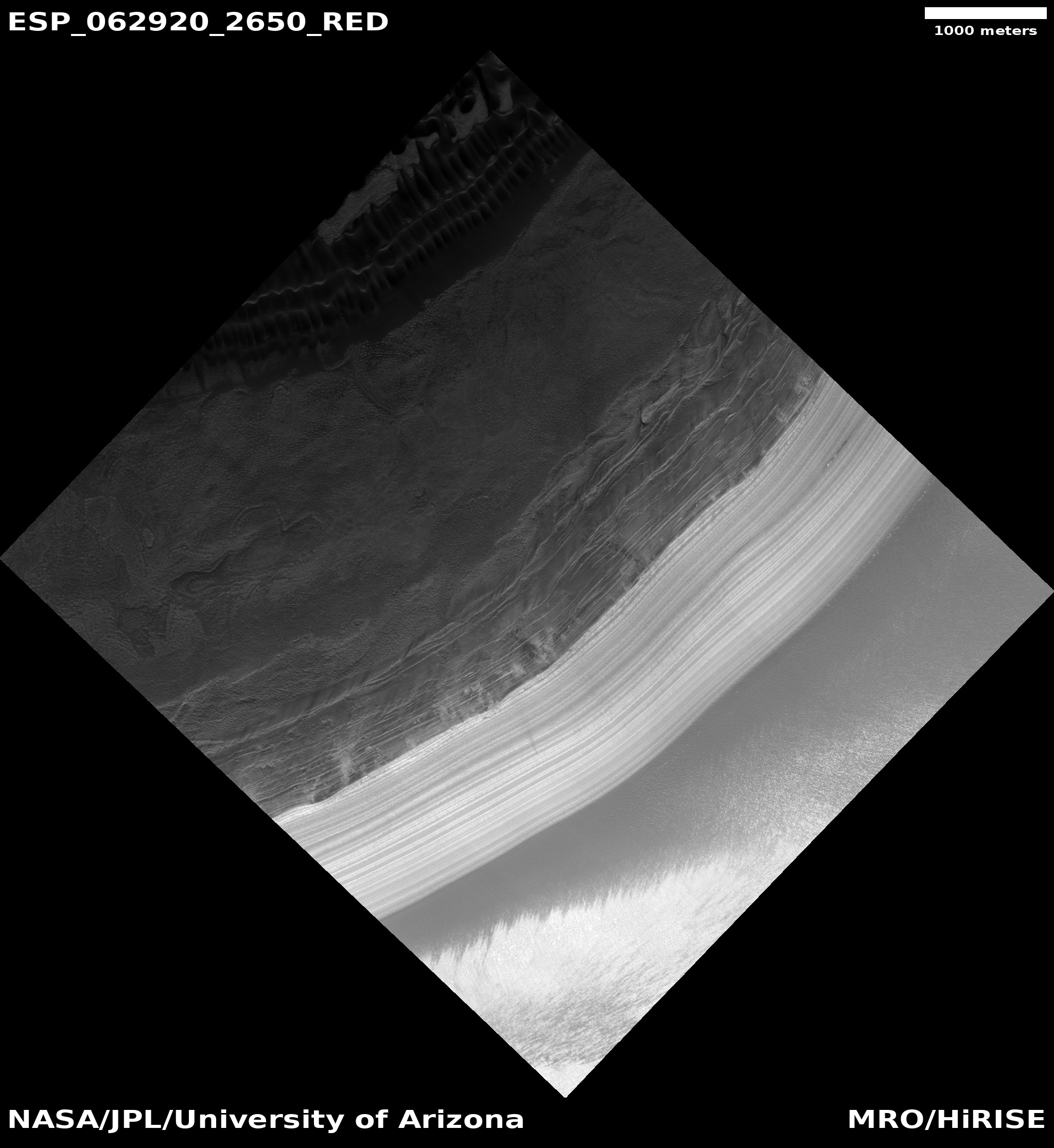
Cool image time! The photo to the right, rotated, cropped, reduced, and enhanced to post here, was taken on May 30, 2022 by the high resolution camera on Mars Reconnaissance Orbiter (MRO). It shows what the scientists label as a “inverted fluvial system”.

Such features are not unusual on Mars. The theory explaining their formation is that this was once a channel where either water or ice flowed, packing the streambed down so that it was more dense than the surrounding terrain. After the flowing material disappeared, the less dense surrounding terrain eroded away, leaving the channel as a meandering ridge.

The location of this inverted channel, as shown in the overview map below, lends some weight to the flowing material being water or ice.
» Read more

0 comments

Today’s blacklisted American: Students demand professor be fired for stating a fact

Professor Christy Hammer: targeted for blacklisting
Professor Christy Hammer: targeted for blacklisting by students

Persecution is now cool! After decades of quiet effort by leftists to eliminate all conservative teachers from the halls of education, we are now seeing the results: Students at the University of Southern Maine are boycotting the classes of one education professor, Christy Hammer, while also insisting she should be fired, simply because she stated in class this basic fact of biology: that there are only two sexes.

Almost the entire class of 22 students walked out, all except one, demanding a meeting to be held with the university’s School of Education and Human Development.

Elizabeth Leibiger, who is non-binary, said she felt ‘under personal attack’ after Professor Hammer said there were only two sexes. “I let her know I didn’t think she was qualified to teach a class about positive learning environments. It’s the ultimate irony,” Leibiger said to Fox News.

A restorative justice meeting was held, but Professor Hammer’s position didn’t change. Two dozen graduate students in the class continued to demand that the university replace Hammer, believing her to be transphobic. Students are now refusing to return to the classroom in which she teaches and will only attend class if a new educator be appointed.

The class is a requirement to complete the graduate-level Extended Teacher Education Program and become a certified teacher in Maine. [emphasis mine]

The university has refused to comply with the students’ demand that Hammer be fired. At the same time, its administrators are also pandering to these thuggish students. First of all, what the heck is “a restorative justice meeting” other than a typical Orwellian 2-minute hate session for these childish students to throw a tantrum. For the college to play that game is shameful. Nor did the college’s pandering end there:
» Read more

25 comments
1 557 558 559 560 561 2,413