
Third stage separation focus of Progress failure investigation
The circumstances behind the failure of Russia’s Progress freighter this week are now pointing to the moment when the freighter separated from the Soyuz rocket’s third stage.
Very brief descriptions, with appropriate links, of current or recent news items.
The circumstances behind the failure of Russia’s Progress freighter this week are now pointing to the moment when the freighter separated from the Soyuz rocket’s third stage.
Images taken between April 12 and April 18 by New Horizons of Pluto not only show one complete rotation of the planet as well as its moon Charon, the images also show a bright spot at Pluto’s pole that could be a polar cap.
The article calls it an “ice cap” but that is premature. At Pluto that cap could be made of a number of materials, not just water. We will not know until New Horizons gets closer.
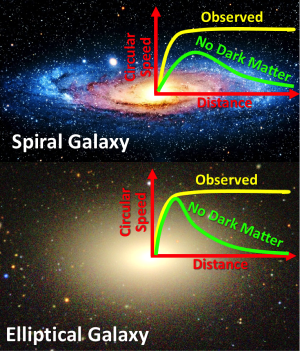
The uncertainty of science: Using new data gathered by the 10-meter Keck telescope in Hawaii, astronomers have found that the outer stars of elliptical galaxies exhibit the same behavior as the outer stars of spirals, suggesting once again the existence of dark matter.
One of the most important scientific discoveries of the 20th century was that the spectacular spiral galaxies, such as our own Milky Way, rotate much faster than expected, powered by [the] extra gravitational force of invisible “dark matter” as it is now called. Since this discovery 40 years ago, we have learned that this mysterious substance, which is probably an exotic elementary particle, makes up about 85 percent of the mass in the Universe, leaving only 15 percent to be the ordinary stuff encountered in our everyday lives. Dark matter is central to our understanding of how galaxies form and evolve – and is ultimately one of the reasons for the existence of life on Earth – yet we know almost nothing about it.
“The surprising finding of our study was that elliptical galaxies maintain a remarkably constant circular speed out to large distances from their centers, in the same way that spiral galaxies are already known to do,” said Cappellari. “This means that in these very different types of galaxies, stars and dark matter conspire to redistribute themselves to produce this effect, with stars dominating in the inner regions of the galaxies, and a gradual shift in the outer regions to dark matter dominance.”
What is most fascinating about this press release, however, is that it also noted that dark matter is only one explanation for the data, and that the failure of Newtonian physics at large distances, instead of dark matter, might also provide an explanation.
However, the [solution] does not come out naturally from models of dark matter, and some disturbing fine-tuning is required to explain the observations. For this reason, the [problem] even led some authors to suggest that, rather than being due to dark matter, it may be due to Newton’s law of gravity becoming progressively less accurate at large distances. Remarkably, decades after it was proposed, this alternative theory (without dark matter) still cannot be conclusively ruled out.
Physicists call this other theory MOND, for modified Newtonian dynamics. It is not a very popular theory, however, and is almost always ignored, even though it appears to work as well as dark matter to explain the motion of stars in galaxies. Instead, most scientists favor dark matter.
For this press release to mention it as suggests the new data favors it over dark matter, which would make this a significant discovery.
The Russians have declared lost the Progress freighter that had been launched to ISS yesterday.
They never could regain control of the craft, plus it was in an incorrect orbit. Moreover, the U.S. Air Force has detected debris nearby, suggesting a significant failure of some kind.
The Russians are now considering delaying the next manned launch, scheduled for May 26, while they investigate this failure. Both Soyuz and Progress use some of the same systems, including the radar system that failed on Progress, and they want to make sure the problem won’t pop up on the manned mission.
At the same time, they are also considering advancing the launch date of the next Progress to ISS from August 6.
Based on these reports, I think they might swap the launch dates for the two flights. A Dragon is scheduled to go to ISS in between these missions, though that schedule could be changed as well to accommodate the Russian plans.
The science team for Rosetta’s navigation camera have released to the public 1297 images taken of Comet 67P/C-G as the spacecraft began its approach on August 1, 2014 through September 23, 2014.
The release also included a video assembled from these images, showing the comet nucleus as Rosetta approached from August 1 to August 22. I have embedded that video below. As you watch, you will think, “How does this thing stay together?” Though the video shows the nucleus’ rotation at a highly accelerated rate, which exaggerates the stresses on the object, the question is a good one, and in fact, is actually predicting the future. Eventually, this nucleus will break up.
Link here. As the author bluntly notes, in referencing Baltimore in particular,
Yes, Baltimore seems to have some police problems. But let us be clear about whose fecklessness and dishonesty we are talking about here: No Republican, and certainly no conservative, has left so much as a thumbprint on the public institutions of Baltimore in a generation. Baltimore’s police department is, like Detroit’s economy and Atlanta’s schools, the product of the progressive wing of the Democratic party enabled in no small part by black identity politics. This is entirely a left-wing project, and a Democratic-party project.
When will the Left be held to account for the brutality in Baltimore — brutality for which it bears a measure of responsibility on both sides? There aren’t any Republicans out there cheering on the looters, and there aren’t any Republicans exercising real political power over the police or other municipal institutions in Baltimore. Community-organizer — a wretched term — Adam Jackson declared that in Baltimore “the Democrats and the Republicans have both failed.” Really? Which Republicans? Ulysses S. Grant? Unless I’m reading the charts wrong, the Baltimore city council is 100 percent Democratic. [emphasis mine]
Like Detroit, Atlanta, St. Louis, Chicago, and a host of other major metropolitan cities that are disasters for the middle class and the poor, Baltimore has been run by Democrats as a one-party monopoly for literally generations. The disasters we are seeing there have nothing to do with Republican policies, and everything to do with the terrible and failed policies of the progressive left. They are to blame, but they keep trying to spread that blame around.
It is time for Americans to see them for what they are — failures — and to stop voting for them. Republicans certainly don’t have all the answers, and should certainly be fired quickly if they fail to serve the public, but Republicans also have had nothing to do with the failures of the inner cities.
The most important thing a free person has is the freedom to choose. I pray that inner city Americans, both black and white, finally realize that it is time to choose differently.
Working for the Democratic Party: Emails by Lois Lerner that IRS head John Koskinen has sworn were lost forever and could never be recovered have miraculously been rediscovered by the IRS’s inspector general and will be turned over to Senate investigators.
Or as one of the leaders of one of the conservative groups that the IRS (and Lerner) had deliberately targeted for harassment noted, “I wouldn’t believe John Koskinen or Lois Lerner if they told me the sky was blue.”
Though there is no danger of the crew starving or suffocating, the supply lines to ISS have been strained by today’s problems with Russia’s Progress freighter.
Finding out what’s in it: Two thirds of taxpayers have had to repay a significant portion of the subsidies they received through Obamacare this year when it came time to do their taxes.
And it ain’t gonna get better, only worse.
But don’t worry, it is really the Republicans’ fault for not writing or voting or even conceiving of this Democratic Party law. The Democrats are perfectly innocent of any blame at all for writing it, forcing it through (against the wishes of a majority of the population), and doing so without even reading the damn bill in the first place. If we vote for more Democrats and more laws like this, things have just got to get better!
A Progress freighter launched by Russia to ISS on Tuesday was placed in the wrong orbit, has not deployed its radar antennas needed for rendezvous, and is not responding properly to commands on the ground.
Whether it is in the wrong orbit might be an incorrect report, but other sources demonstrate clearly that the spacecraft is tumbling out of control. Based on all these reports, it does not look good for this vehicle. The crew on ISS, including the two astronauts on a year-long mission there, might have to do without these supplies.
Meanwhile Russia is proceeding with its plans to consolidate control of all aspects of its aerospace industry under the banner of a single government “super-corporation” run by Roscosmos. Considering the number of technical failures they have had with spacecraft and rockets in the past five years, it seems to me that this is the worst approach for solving these problems. Then again, Russian culture strongly favors a top-down authoritarian approach, so it might work better under this Soviet-style approach.
I don’t believe it, but we are going to find out in the coming decades.
For those willing to stay up a bit late, I will be appearing on Coast to Coast tonight from midnight to 2 am (Pacific), talking about my book, The Universe in a Mirror, and history of the Hubble Space Telescope as it celebrates its 25th anniversary in orbit.
The competition heats up: SpaceX has successfully completed its fifth Falcon 9 launch of the year, putting a Turkmenistan’s first communications satellite into orbit.
This was the 18th consecutive successful launch for the Falcon 9, and the 13th in a row for its upgraded design. Not bad for a company that did not even exist a little more than a decade ago.
Having firmed up the May 20 launch date for the next X-37B mission, the Air Force has also revealed one of the experiments the reusable mini-shuttle will carry.
They will be testing in orbit an advanced ion engine. I suspect however that this is not the only experiment on board.
The law is such an inconvenient thing: The Supreme Court has thrown out another lower court decision that had favored the Obama administrations’ Obamacare contraceptive mandate imposed on Catholic businesses.
What is telling about this is that the Obama administration keeps fighting these cases, even though it is very clear from all its rulings that the Supreme Court has rejected the mandate as hostile to religious freedom. What they should do is sue the court for dismissal and stop trying to impose the mandate in all cases. But they don’t. This is not only a waste of resources, it indicates that Obama and his administration really don’t wish to follow the court rulings, and instead want to impose their will regardless. By fighting this case by case, they are hoping to wear down the religious.
In essence, the Obama administration is thus reveals itself hostile to the law itself.
Under pressure from many circles to open up its processes for naming objects in space, the International Astronomical Union (IAU) has started a contest to allow non-profits and “registered clubs” to compete to name 20 exoplanets.
Each organisation can submit one naming proposal, for one ExoWorld only. The number of names that need to be submitted depends on which system is selected. For single- and multiple-planet systems, a name for each planet must be submitted, as well as one for the host star. In the 20 ExoWorlds list, five stars already have common names. Consequently, these five stars cannot be considered for public naming. There are 15 stars and 32 planets (47 objects in total) available for naming. The name of the 20 host stars are explained and personal messages from some discoverers are also available here.
To participate in the contest, clubs and non-profit organisations must first register with the IAU Directory of World Astronomy. The deadline for registrations has been extended to 23:59 UTC on 1 June 2015.
You will note that this contest is not open to the public, but to clubs and organizations that the IAU approves. This is typical of the IAU, which wants to retain its power to name everything in space. They are thus keeping this whole process close to the vest and tightly controlled.
In the end it won’t matter, as the names will eventually be chosen by those who go there, or by those who make the discoveries. It would be nice, however, if the IAU would simply recognize this fact.
The competition heats up: The next commercial Falcon 9 launch is now set for tonight, Monday, less than two weeks after the last Falcon 9 launch.
The next two weeks will be especially busy for SpaceX, as they also have scheduled the first launch abort test of Dragon on May 5. The launch will also be the fifth for Falcon 9 this year, putting it in the lead as the busiest rocket in the world for 2015, ahead of the Russian Soyuz.
The heat of competition? In order to meet a government deadline to launch humans from their new spaceport at Vostochny, the Russians had planned, though now cancelled, a single manned launch there in 2019, using a new rocket.
Their cancelled plans had included two prior test flights of the rocket with Progress freighters.
If cargo missions were successful, the one brave crew would ride into orbit from the new spaceport, knowing that in case of a serious problem with the rocket, the descent module of the spacecraft would parachute into deep forest of the Russian Far East or somewhere in the Pacific.
After “satisfying” this political goal with a single crew, all manned Soyuz and cargo Progress missions would then revert back to Baikonur for a safe ascent trajectory. The Soyuz spacecraft would continue flying two missions annually from Baikonur, until the veteran spacecraft’s final launch in 2025. In 2021, Soyuz spacecraft missions originating from Baikonur would switch from Soyuz-FG to Soyuz-2-1a rocket.
The Russians have now decided, rather than rush this first flight on the new rocket, to hold to the slower schedule.
This story is important to the United States. I think we must definitely end our dependence on the Russians before they make the switch to the new rocket. Based on the levels of poor quality control and corruption seen recently in Russia, I have grave doubts the new rocket will fly reliably at first. It would be a mistake to buy its use to put Americans in space.
After a brief delay when the spacecraft went into safe mode due to a communications issue, Dawn has now begun its research phase around Ceres.
The uncertainty of science? A panel of five scientists has been formed to review the adjustments to the global temperature data at NOAA and the Goddard Institute of Space Studies (GISS) that have consistently cooled the past but warmed the present, thus creating the illusion of more warming than the raw data suggests.
Careful analysts have come up with hundreds of examples of how the original data recorded by 3,000-odd weather stations has been “adjusted”, to exaggerate the degree to which the Earth has actually been warming. Figures from earlier decades have repeatedly been adjusted downwards and more recent data adjusted upwards, to show the Earth having warmed much more dramatically than the original data justified.
So strong is the evidence that all this calls for proper investigation that my articles have now brought a heavyweight response. The Global Warming Policy Foundation (GWPF) has enlisted an international team of five distinguished scientists to carry out a full inquiry into just how far these manipulations of the data may have distorted our picture of what is really happening to global temperatures.
The global warming scientists at NOAA and GISS are finally going to challenged to explain their adjustments, something they have so far refused to do. For my part, I will be very surprised if they can come up with a scientifically justified explanation.
Link here.
Like the author, I remember every single one of these doomsday predictions. I also remember how every single one of these predictions was wildly wrong. Until these fear-mongers can reliably predict things, I see no reason to believe them.
His article however does provide one entertaining tidbit:
You know how old I am? I’m so positively ancient that I remember when one of Jimmy Carter’s big answers to the impending shortage of oil was to increase federal funding for research on how to extract oil from shale. It ended the way you would expect: it went nowhere. But some decades later, private oil companies did find a way to more economically extract oil from shale—and environmentalists promptly made it public enemy #1.
All true. And just one more example of how the government fails at something while private enterprise, fueled by the profit motive, finds a way to make that exact same thing happen.