Former Virgin Galactic employee battles company in court

A former employee of Virgin Galactic, in a arbitration dispute, has accused the company of lying about its spacecraft’s safety and performance.

Virgin Galactic’s former vice president of propulsion, Thomas Markusic, has accused Richard Branson’s space company of lying about the safety and performance of its SpaceShipTwo suborbital tourism vehicle. “Dr. Markusic was forced to separate from VG [Virgin Galactic] because the company was defrauding the public about the ability of the vehicles to reach space and was utilizing rocket engine technologies that have a high probability of causing catastrophic failure and loss of life,” according to the document. “VG directed Dr. Markusic to lie to customers about the performance and safety of the company’s hybrid rocket technology,” the document continues. “VG asserts that Dr. Markusic secretly plotted to start his own rocket company and exploited his position at VG; whereas, in reality, Dr. Markusic’s conscience forced him to to leave.”

Read the whole thing. It appears Markusic left Virgin Galactic to form his own company, and in doing so might have violated an anti-competition clause in his contract, resulting in the arbitration dispute. At the same time, his accusations ring true, considering these rumors had been flying about at the time and have since been more or less confirmed.

1 comment

Crater close-ups from Dawn

Kupalo Crater on Ceres

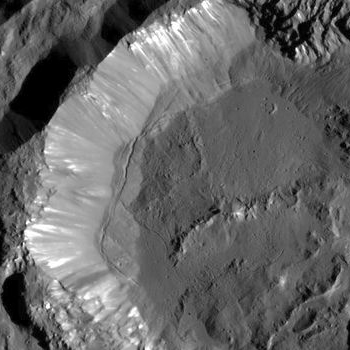
The Dawn science team today released a set of close-up images of several craters on Ceres, showing a number of geological features similar but different than features seen in lunar craters.

The image on the right, of Kupalo Crater, shows the same kind of bright material on the rim that is seen on the floor of Occator Crater as two bright areas. The bright material is now believed to be a salt deposit leeched from beneath the surface. Other craters showed extensive fractures in their floor as well as lobes and scarps.

0 comments

Genesis cover

On Christmas Eve 1968 three Americans became the first humans to visit another world. What they did to celebrate was unexpected and profound, and will be remembered throughout all human history. Genesis: the Story of Apollo 8, Robert Zimmerman's classic history of humanity's first journey to another world, tells that story, and it is now available as both an ebook and an audiobook, both with a foreword by Valerie Anders and a new introduction by Robert Zimmerman.

The print edition can be purchased at Amazon or any other book seller. If you want an autographed copy the price is $60 for the hardback and $45 for the paperback, plus $8 shipping for each. Go here for purchasing details. The ebook is available everywhere for $5.99 (before discount) at amazon, or direct from my ebook publisher, ebookit. If you buy it from ebookit you don't support the big tech companies and the author gets a bigger cut much sooner.


The audiobook is also available at all these vendors, and is also free with a 30-day trial membership to Audible.
 

"Not simply about one mission, [Genesis] is also the history of America's quest for the moon... Zimmerman has done a masterful job of tying disparate events together into a solid account of one of America's greatest human triumphs."--San Antonio Express-News

Was the Wow! signal from two comets?

One of the most baffling radio astronomical detections, dubbed the “Wow! signal” and that some believe could have been caused by an extraterrestrial transmission, is now theorized to have been caused by two comets, not an alien civilization.

Antonio Paris, a professor of astronomy at St Petersburg College in Florida, thinks the signal might have come from one or more passing comets. He points the finger at two suspects, called 266P/Christensen and P/2008 Y2 (Gibbs). “I came across the idea when I was in my car driving and wondered if a planetary body, moving fast enough, could be the source,” he says.

Comets release a lot of hydrogen as they swing around the sun. This happens because ultraviolet light breaks up their frozen water, creating a cloud of the gas extending millions of kilometres out from the comet itself. If the comets were passing in front of the Big Ear in 1977, they would have generated an apparently short-lived signal, as the telescope (now dismantled) had a fixed field of view. Searching that same area – as subsequent radio telescopes did – wouldn’t show anything. Tracing the comets’ positions back in time, Paris says that the possible origin for the Wow! signal falls right between where they would have been.

Neither comet was known in 1977; they were both discovered in the last decade, which would mean nobody would have thought to search for them.

6 comments

Conscious Choice cover

Now available in hardback and paperback as well as ebook!

From the press release: In this ground-breaking new history of early America, historian Robert Zimmerman not only exposes the lie behind The New York Times 1619 Project that falsely claims slavery is central to the history of the United States, he also provides profound lessons about the nature of human societies, lessons important for Americans today as well as for all future settlers on Mars and elsewhere in space.

 
Conscious Choice: The origins of slavery in America and why it matters today and for our future in outer space, is a riveting page-turning story that documents how slavery slowly became pervasive in the southern British colonies of North America, colonies founded by a people and culture that not only did not allow slavery but in every way were hostile to the practice.  
Conscious Choice does more however. In telling the tragic history of the Virginia colony and the rise of slavery there, Zimmerman lays out the proper path for creating healthy societies in places like the Moon and Mars.


“Zimmerman’s ground-breaking history provides every future generation the basic framework for establishing new societies on other worlds. We would be wise to heed what he says.” —Robert Zubrin, founder of the Mars Society.


All editions are available at Amazon, Barnes & Noble, and all book vendors, with the ebook priced at $5.99 before discount. All editions can also be purchased direct from the ebook publisher, ebookit, in which case you don't support the big tech companies and the author gets a bigger cut much sooner.


Autographed printed copies are also available at discount directly from the author (hardback $29.95; paperback $14.95; Shipping cost for either: $6.00). Just send an email to zimmerman @ nasw dot org.

Philae officially dead

After another attempt to contact Rosetta’s lander Philae ended with no response, engineers now consider the spacecraft dead

“We did not hear anything,” says lander manager Stephan Ulamec. In the best-case scenario, Philae may have received the command and moved, but be unable to respond due to a damaged transmitter. It is more likely that the signal was not received. The team will try a few more commands, but it looks like Philae has officially gone. “We have to face reality, and chances get less and less every day as we are getting farther and farther away from the sun,” says Ulamec. “At some point we have to accept we will not get signals from Philae anymore.”

.

0 comments

Leaving Earth cover

Leaving Earth: Space Stations, Rival Superpowers, and the Quest for Interplanetary Travel, can be purchased as an ebook everywhere for only $3.99 (before discount) at amazon, Barnes & Noble, all ebook vendors, or direct from my ebook publisher, ebookit.

If you buy it from ebookit you don't support the big oppressive tech companies and I get a bigger cut much sooner.


Winner of the 2003 Eugene M. Emme Award of the American Astronautical Society.

 
"Leaving Earth is one of the best and certainly the most comprehensive summary of our drive into space that I have ever read. It will be invaluable to future scholars because it will tell them how the next chapter of human history opened." -- Arthur C. Clarke

Mighty Saturn

Saturn

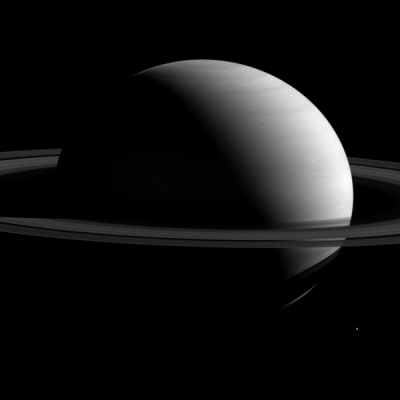
Cool image time! Be sure to click on this link to see the full resolution Cassini version of the image on the right. Its resolution is 10 miles per pixel, and even so the giant planet cannot be fit in the frame.

One moon, Tethys, is visible, though to make it so required its brightness to be increased by 2. Also, if you look close at the bands at the north pole you can see their strange still-not-understood pentagon shape.

0 comments

Russians to develop Falcon 9-like rocket

The competition heats up: The Russian government has apparently given the go-ahead to the development of a Falcon 9-like modular rocket, original dubbed Soyuz 5 but now called Fenix (Phoenix).

The images at the link show it to be similar in concept to Falcon 9, with its first stage used as a component to produce multiple configurations. With one first stage it would resemble Falcon 9. In its Falcon Heavy configuration it would use three first stages strapped together. Moreover, the article notes that development would begin as expendable, but shift towards re-usability during operation, like Falcon 9. And it does appear that reducing cost is its main driver, since it will involve the development of only one engine and the reuse of it in every stage, like Falcon 9,

If all goes as outlined in the plan (don’t bet on it), the rocket would be operational by 2025, which is the one difference with Falcon 9. SpaceX got its rocket designed and launched in about five years. The Russian governmental system is going to take ten years to do the same..

The article is a detailed explanation of the rocket mentioned by Deputy Prime Minister Dmitri Rogozin during his confusing television briefing on December 30. The irony here is that, while this rocket might be able to compete with the Falcon 9 of 2016, when it becomes operational in 2025 who knows what will be considered competitive.

2 comments

“If they can’t, turn into nonpaper w no identifying heading and send nonsecure.”

A new set of Hillary Clinton emails just released by the State Department includes one in which she is clearly ordering a subordinate to violate the law on how classified material should be transmitted.

Has the State Department released a smoking gun in the Hillary Clinton e-mail scandal? In a thread from June 2011, Hillary exchanges e-mails with Jake Sullivan, then her deputy chief of staff and now her campaign foreign-policy adviser, in which she impatiently waits for a set of talking points. When Sullivan tells her that the source is having trouble with the secure fax, Hillary then orders Sullivan to have the data stripped of its markings and sent through a non-secure channel.

Her exact written words are the title of this post.

More here. To me, it really doesn’t matter whether Hillary Clinton is ever indicted for what are clear violations of the law in how she handled classified material while she was Secretary of State. What matters is that we, as voters, have clear evidence now that she has contempt for the law, that she willingly and nonchalantly lies about it to the public, and that she is simply not a trustworthy individual. And this story is only one of many others about Hillary Clinton that all demonstrate the same things about her.

8 comments

Lay-offs at Bigelow

The competition cools down? Bigelow Aerospace has laid off somewhere between 30 and 50 employees out of approximately 150 total employees.

In a Jan. 6 statement provided to SpaceNews, Bigelow Aerospace President Robert Bigelow said that the company determined that many areas of the company were “overstaffed” and decided to lay off employees to reduce the company’s expenses. “In December of 2015, we analyzed the amount of staff that we employed throughout all of our departments at Bigelow Aerospace, and discovered that numerous departments were overstaffed,” Bigelow said in the statement. “Regrettably, we had to make the choice that, beginning with the New Year, we need to follow standard business protocols, which sensibly requires an attempt to achieve balance in how much staff is necessary.”

The lay-offs do not necessarily indicate the company is failing, only that it is adjusting its payroll to the specific conditions of the moment. They have completed construction of their inflatable module for ISS and now only await its launch. Time to save money until they win their next contract.

7 comments

Next Falcon 9 first stage will try to land on barge

The competition heats up: With its January 17 launch from Vandenberg, SpaceX will attempt to land the first stage on a barge in the Pacific.

This will also be the first attempt from the California launch site. If successful, it will give SpaceX greater flexibility on future first stage recoveries, as some launches won’t have the fuel to get the stage back to land but could bring it down on a barge at sea.

0 comments

Mold on ISS plants

In December four of seven zinnia plants in a greenhouse on ISS became sickly or died because they were receiving too much water and developed mold.

The story doesn’t really tell us much, but this paragraph reveals I think some fundamental management problems in the way NASA is running the station:

ISS commander and NASA astronaut Scott Kelly reported the mold to Mission Control Dec. 22 just as Veggie principal investigator Trent Smith was trying to manage the water problem. In pictures, Smith saw water on the plants a few days before. He told Discovery News he was trying to relay a command from NASA’s station operations team to increase fan speed in Veggie, but the mold developed before the command could be put through. One solution was, on Christmas Eve, to designate Kelly “commander” of Veggie. Kelly now has more autonomy to make changes to Veggie’s conditions if he feels the plants need it.

The scientist noticed a problem but was unable to cut through the communications bureaucracy to talk to the astronauts so that changes could be made quickly. Meanwhile, the astronauts on board ISS had not been given the freedom to make common sense changes themselves. The result is that some of the plants died.

The solution, to give an astronaut more “autonomy”, is one that the Russians learned a long time ago on their Mir space station. It was also a lesson NASA learned even longer ago on Skylab. Moreover, when astronauts are finally flying interplanetary spaceships to the planets with greenhouses just like this, they will have to have that autonomy, no matter what rules NASA establishes. It seems amazing to me that NASA is still learning this lesson now.

One more thought: It is not really a problem that the scientist had trouble reaching the astronauts quickly. In fact, it probably indicates an area of management that NASA is handling well. Communications from the ground up to ISS can be a major problem, as everyone wants to talk to the astronauts and if NASA didn’t control that communications the astronauts would never have time to do anything. Thus, placing limits on that communications makes sense, though once again it also requires that the astronauts be given a great deal of freedom to make their own decisions, as they might not be able to talk to the right experts whenever necessary.

4 comments

Betelgeuse baffles astronomers

The uncertainty of science: New data of the red giant star Betelgeuse says that the star simply doesn’t have the energy to eject the large amount of gas it routinely blows into space.

“[W]e now have a problem”, says Graham Harper, an astrophysicist at the University of Colorado Boulder. “If you’re going to eject matter you have to put energy in, and we’re not seeing that.” Harper and his colleagues used the US–German Stratospheric Observatory for Infrared Astronomy (SOFIA), a 2.5-metre telescope that flies in a modified Boeing 747 aeroplane, to take Betelgeuse’s temperature. They found that the star’s upper atmosphere was much cooler than expected — so cool, in fact, that it doesn’t seem to have enough energy to kick gas out of its gravitational pull and into space.

“This challenges all our theoretical models,” Harper said on 7 January at a meeting of the American Astronomical Society in Kissimmee, Florida. [emphasis mine]

The data suggests the temperature of the ejected gas to be only about 512 degrees Fahrenheit. This is far too cool to fit any theory for explaining the vast amounts of gas that the star routinely puffs into space. It also suggests, not surprisingly, that scientists do not yet have a enough information to develop a clear understanding of stellar evolution. They have enough information to form rough theories, but there is still much too much they do not know.

1 comment

One last chance for Philae

With time running out as Comet 67P/C-G moves away from the Sun, the Rosetta engineering team is going to try one more time to contact the lander Philae.

The lander team are going to try another method to trigger a reponse from Philae: on 10 January they will send a command, via Rosetta, to attempt to make Philae’s momentum wheel switch on. “Time is running out, so we want to explore all possibilities,” says Stephan Ulamec, Philae lander manager at DLR. Philae’s momentum wheel ensured that it was stable during its descent from the orbiter on 12 November, 2014.

If the command is successfully received and executed, the hope is that it might shift the lander’s position.”At best, the spacecraft might shake dust from its solar panels and better align itself with the Sun,” explains Philae technical manager Koen Geurts at DLR’s lander control centre.

They also believe that one of the lander’s two transmitters and one of its two receivers are broken, which makes communications difficult at best.

0 comments

Sunspot decline continues

NOAA’s monthly update of the solar cycle, showing the Sun’s sunspot activity in December, was posted earlier this week, and I am posting it here, as I do every month, with annotations to give it context.

The decline in sunspots continues, tracking closely the rate of decline predicted by the 2007 and 2009 predictions (the lower green curve and the red curve) but the overall solar maximum has been far shorter and less powerful than predicted.
» Read more

0 comments
1 1,093 1,094 1,095 1,096 1,097 1,765