NASA engineers end second super pressure balloon flight early

Flight path of second super pressure balloon test

Due to an issue with its power system, NASA engineers today decided to end its second super pressure balloon flight this year after only nine days, when the balloon crossed over South America and thus allowing them to recover it safely.

Although the balloon performed well and the mission successfully met its minimum requirements toward qualification of the balloon system, an issue with the power system aboard the balloon gondola prompted the team to terminate the mission early as a precaution. The team had been monitoring a power failure in one of the redundant charging systems since May 8.  “Despite the loss of one of the redundant charging systems, the remaining power system was performing very well and still able to sustain the batteries and electrical equipment over the course of the mission,” said Hamilton. “However, to be cautious, the team opted to end the flight early to get the equipment back, so we can do a full failure analysis.” 

After identifying a safe area and coordinating with Argentinian officials, the flight was safely terminated. Recovery of the balloon and payload is in progress. 

The first flight flew for seventeen days, circling the globe at the high southern latitudes. In that case issues with the balloon caused the flight to be terminated while it was over the ocean, preventing recovery. As the goal with both flights was to fly for 100 days, neither came close to that target.

0 comments

NASA releases thermal image of Mars taken by Europa Clipper

Mars as seen by Europa Clipper in thermal
Click for original image.

NASA yesterday released a thermal image of Mars taken by during Europa Clipper’s March 1, 2025 fly-by of the red planet on its way to Jupiter. From the caption:

This picture of Mars is a composite of several images captured by Europa Clipper’s thermal imager on March 1. Bright regions are relatively warm, with temperatures of about 32 degrees Fahrenheit (0 degrees Celsius). Darker areas are colder. The darkest region at the top is the northern polar cap and is about minus 190 F (minus 125 C).

The press release doesn’t identify the bullseye feature on the left. I think the bright area inside the bullseye might be the shield volcano Syrtis Major, with the dark area to the right Isidis Basin, which means this is also a snapshot of Perseverance, sitting on the basin’s western perimeter. The dark feature on the right edge of the image might be the giant volcano Elysium Mons. These however are total guesses and likely wrong.

The mission team used this fly-by to test the spacecraft’s science instruments, and have so far found all to be working as expected.

Europa Clipper will do one more fly-by of Earth in December 2026, allowing it to reach Jupiter in April 2030.

0 comments

Genesis cover

On Christmas Eve 1968 three Americans became the first humans to visit another world. What they did to celebrate was unexpected and profound, and will be remembered throughout all human history. Genesis: the Story of Apollo 8, Robert Zimmerman's classic history of humanity's first journey to another world, tells that story, and it is now available as both an ebook and an audiobook, both with a foreword by Valerie Anders and a new introduction by Robert Zimmerman.

The print edition can be purchased at Amazon or any other book seller. If you want an autographed copy the price is $60 for the hardback and $45 for the paperback, plus $8 shipping for each. Go here for purchasing details. The ebook is available everywhere for $5.99 (before discount) at amazon, or direct from my ebook publisher, ebookit. If you buy it from ebookit you don't support the big tech companies and the author gets a bigger cut much sooner.


The audiobook is also available at all these vendors, and is also free with a 30-day trial membership to Audible.
 

"Not simply about one mission, [Genesis] is also the history of America's quest for the moon... Zimmerman has done a masterful job of tying disparate events together into a solid account of one of America's greatest human triumphs."--San Antonio Express-News

SpaceX launches twice last night, with one launch using first stage for record 28th time

SpaceX last night successfully placed more than fifty Starlink satellites into orbit, launching Falcon 9 rockets from opposite coasts with one using first stage for record 28th time.

First the company placed 26 Starlink satellites into orbit from Vandenberg Space Force Base in California, the first stage completing its sixth flight by landing softly on a drone ship in the Pacific.

Four hours later the company placed 28 Starlink satellites into orbit from the Kennedy Space Center in Florida, the first stage completing its 28th flight by landing safely on a drone ship in the Atlantic. Not only did this set a new record for reflights by a Falcon 9 first stage, it matched the number of flights of the space shuttle Columbia (the last of which ended in its destruction). Columbia took 22 years to complete those flights. This booster took less than four years to do the same. And it is still viable and has the chance (along with several other Falcon 9 first stages) of eventually beating the flight records of the shuttles Discover (39 flights) and Atlantis (33).

The leaders in the 2025 launch race:

57 SpaceX
24 China
5 Rocket Lab
5 Russia

SpaceX now leads the rest of the world in successful launches, 57 to 41.

0 comments

Conscious Choice cover

Now available in hardback and paperback as well as ebook!

From the press release: In this ground-breaking new history of early America, historian Robert Zimmerman not only exposes the lie behind The New York Times 1619 Project that falsely claims slavery is central to the history of the United States, he also provides profound lessons about the nature of human societies, lessons important for Americans today as well as for all future settlers on Mars and elsewhere in space.

 
Conscious Choice: The origins of slavery in America and why it matters today and for our future in outer space, is a riveting page-turning story that documents how slavery slowly became pervasive in the southern British colonies of North America, colonies founded by a people and culture that not only did not allow slavery but in every way were hostile to the practice.  
Conscious Choice does more however. In telling the tragic history of the Virginia colony and the rise of slavery there, Zimmerman lays out the proper path for creating healthy societies in places like the Moon and Mars.


“Zimmerman’s ground-breaking history provides every future generation the basic framework for establishing new societies on other worlds. We would be wise to heed what he says.” —Robert Zubrin, founder of the Mars Society.


All editions are available at Amazon, Barnes & Noble, and all book vendors, with the ebook priced at $5.99 before discount. All editions can also be purchased direct from the ebook publisher, ebookit, in which case you don't support the big tech companies and the author gets a bigger cut much sooner.


Autographed printed copies are also available at discount directly from the author (hardback $29.95; paperback $14.95; Shipping cost for either: $6.00). Just send an email to zimmerman @ nasw dot org.

May 12, 2025 Quick space links

Courtesy of BtB’s stringer Jay. This post is also an open thread. I welcome my readers to post any comments or additional links relating to any space issues, even if unrelated to the links below.

0 comments

Poland completes suborbital test launch

A consortium of Polish private and public institutions announced on May 9, 2025 that it had successfully completed a suborbital rocket launch on April 15, 2025, testing the first stage of a planned three-stage suborbital rocket.

According to a separate release from ZPS Gamrat [one of the consortium partners], the rocket exceeded an altitude of 10 kilometres before being destroyed by its onboard flight termination system, as planned. The goal of the test was to validate the rocket’s navigation and control systems, engine performance under flight conditions, flight termination system, telemetry systems, and aerodynamic characteristics. According to the WITU release, teams are currently analysing the data collected during the flight.

The next flight will add the second stage, and is targeting a launch this summer. If successful, the third launch using all three stages will take place before the end of the year.

This solid-fueled rocket is essentially a re-invention of the Scout suborbital rockets that NASA (and its predecessor the N.A.C.A) tested and flew many times out of Wallops Island in the 1950s and 1960s. Those test flights tested many basic components used in orbital rockets today, while also doing short suborbital science research each flight. It appears Poland aims to do the same thing now.

2 comments

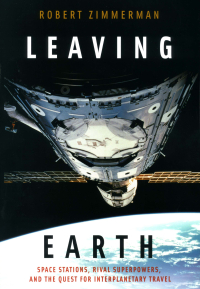
Leaving Earth cover

Leaving Earth: Space Stations, Rival Superpowers, and the Quest for Interplanetary Travel, can be purchased as an ebook everywhere for only $3.99 (before discount) at amazon, Barnes & Noble, all ebook vendors, or direct from my ebook publisher, ebookit.

If you buy it from ebookit you don't support the big oppressive tech companies and I get a bigger cut much sooner.


Winner of the 2003 Eugene M. Emme Award of the American Astronautical Society.

 
"Leaving Earth is one of the best and certainly the most comprehensive summary of our drive into space that I have ever read. It will be invaluable to future scholars because it will tell them how the next chapter of human history opened." -- Arthur C. Clarke

China launches classified satellites for military remote sensing

China today successfully launched a set of classified satellites (number classified) for doing military remote sensing, its Long March 6 rocket lifting off from its Taiyuan spaceport in north China.

As usual, China’s state-run press released little information about the satellites, the launch, or where the rocket’s core stage and four strap-on boosters crashed inside China. The report did state the Long March 6 was “modified,” but did not detail how. One wonders if China has done something to improve the rocket’s upper stage, which reaches orbit and has had a tendency to break up shortly thereafter, creating large clouds of space junk.

The leaders in the 2025 launch race:

55 SpaceX
24 China
5 Rocket Lab
5 Russia

SpaceX still leads the rest of the world in successful launches, 55 to 41.

0 comments

Crash prediction for Venera failed lander now reduced to four hours

Venera reentry prediction
Click for original image.

UPDATE: According to several reports today such as this one, the spacecraft ended up burning up over the Indian Ocean west of Indonesia at 2:24 am (Eastern) on May 10, 2025. It remains unclear whether it can be salvaged in any way.
————————-

The Aerospace Corporation’s prediction for the final uncontrolled re-entry of the Soviet Union’s 1972 failed Venus lander Venera has now been reduced to four hours, centered above the Indian Ocean near Indonesia, as shown on the map to the right, at around 1:29 pm Eastern.

This prediction however has great uncertainty, and will change in the next few hours. However, based on the orbits depicted, there is a good chance the lander will come down over either Europe or Asia.

As it was designed to survive the very thick and very hot atmosphere of Venus, there is also a good chance it will survive its uncontrolled re-entry through Earth’s atmosphere. Since Russia inherited all the assets of the Soviet Union, it will be responsible for any damage the lander does, as per the Outer Space Treaty.

4 comments

SpaceX completes two launches today

SpaceX successfully completed two Starlink launches today.

First, it placed 26 Starlink satellites into orbit, its Falcon 9 rocket lifting off from Vandenberg in California. The first stage completed its fourteenth flight, landing on a drone ship in the Pacific.

Next, it launched another 28 Starlink satellites from Cape Canaveral in Florida. The Falcon 9 first stage completed its eleventh flight, landing on a drone ship in the Atlantic.

The leaders in the 2025 launch race:

55 SpaceX
23 China
5 Rocket Lab
5 Russia

SpaceX now leads the rest of the world in successful launches, 55 to 40.

4 comments

May 9, 2025 Quick space links

Courtesy of BtB’s stringer Jay. This post is also an open thread. I welcome my readers to post any comments or additional links relating to any space issues, even if unrelated to the links below.

11 comments
1 191 192 193 194 195 2,929