Final ground testing begins of Katalyst’s Swift rescue spacecraft

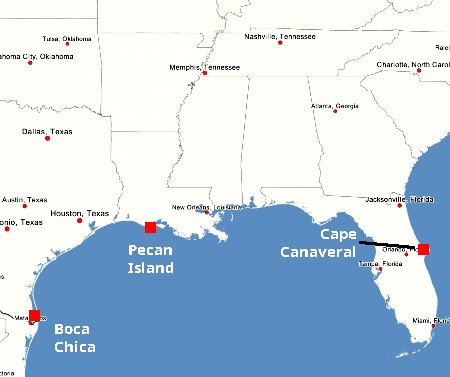
Katalyst's proposed Swift rescue mission
Katalyst’s proposed Swift rescue mission.
Click for original image.

Only seven months after NASA awarded the satellite repair startup Katalyst the contract to save the Gehrels-Swift space telescope, the company has delivered the completed LINK spacecraft to the Goddard Space Flight Center in Maryland for final ground testing.

Katalyst will move forward with LINK’s vibration and thermal tests using NASA Goddard’s in-house facilities in the coming weeks before installation into Northrop Grumman’s Pegasus rocket at the agency’s Wallops Flight Facility in Virginia.

Gehrels-Swift has been one of NASA’s most productive space telescopes. Unfortunately its orbit is decaying and if nothing is done to raise that orbit it will burn up in the atmosphere in 2029 or so. To extend this timeline engineers have stopped almost all science work in February.

Katalyst hopes to launch LINK as soon as later this year. It was able to get it built so quickly because it was already under construction as the company’s first demo of its repair technology. When NASA put out a bid for boosting Swift, the company shifted gears and reconfigured LINK for this mission.

If successfully, the achievement will be a major coup for this startup.

1 comment

Engineers shut down another instrument on Voyager-1

The Voyager missions
The routes the Voyager spacecraft have
taken since launch. Not to scale.

Due to the continuing and expected decline in power, engineers have now shut down another instrument on Voyager-1 in the hope of keeping the spacecraft operating for just a few more years.

On April 17, engineers at NASA’s Jet Propulsion Laboratory (JPL) in Southern California sent commands to shut down an instrument aboard Voyager 1 called the Low-energy Charged Particles experiment, or LECP. The nuclear-powered spacecraft is running low on power, and turning off the LECP is considered the best way to keep humanity’s first interstellar explorer going.

The LECP has been operating almost without interruption since Voyager 1 launched in 1977 — almost 49 years. It measures low-energy charged particles, including ions, electrons, and cosmic rays originating from our solar system and galaxy.

…The choice of which instrument to turn off next wasn’t made in the heat of the moment. Years ago, the Voyager science and engineering teams sat down together and agreed on the order in which they would shut off parts of the spacecraft while ensuring the mission can continue to conduct its unique science. Of the 10 identical sets of instruments that each spacecraft carries, seven have been shut off so far. For Voyager 1, the LECP was next on that list. The team shut off the LECP on Voyager 2 in March 2025.

Both spacecraft now have only three operating science instruments. Engineers hope a major reboot on both spacecraft planned later this year might make each operate more efficiently, allowing both to survive maybe until 2030. At a minimum the hope is to make them last until 2027, which would the fiftieth anniversary of their launch.

The bottom line remains: the nuclear power source on board both is running down. The goal now is less gathering science data and more engineering: How long can we keep these spacecraft alive, at the very outskirts of our solar system?

7 comments

Genesis cover

On Christmas Eve 1968 three Americans became the first humans to visit another world. What they did to celebrate was unexpected and profound, and will be remembered throughout all human history. Genesis: the Story of Apollo 8, Robert Zimmerman's classic history of humanity's first journey to another world, tells that story, and it is now available as both an ebook and an audiobook, both with a foreword by Valerie Anders and a new introduction by Robert Zimmerman.

The print edition can be purchased at Amazon or any other book seller. If you want an autographed copy the price is $60 for the hardback and $45 for the paperback, plus $8 shipping for each. Go here for purchasing details. The ebook is available everywhere for $5.99 (before discount) at amazon, or direct from my ebook publisher, ebookit. If you buy it from ebookit you don't support the big tech companies and the author gets a bigger cut much sooner.


The audiobook is also available at all these vendors, and is also free with a 30-day trial membership to Audible.
 

"Not simply about one mission, [Genesis] is also the history of America's quest for the moon... Zimmerman has done a masterful job of tying disparate events together into a solid account of one of America's greatest human triumphs."--San Antonio Express-News

April 17, 2026 Quick space links

Courtesy of BtB’s stringer Jay. This post is also an open thread. I welcome my readers to post any comments or additional links relating to any space issues, even if unrelated to the links below.

25 comments

Conscious Choice cover

Now available in hardback and paperback as well as ebook!

From the press release: In this ground-breaking new history of early America, historian Robert Zimmerman not only exposes the lie behind The New York Times 1619 Project that falsely claims slavery is central to the history of the United States, he also provides profound lessons about the nature of human societies, lessons important for Americans today as well as for all future settlers on Mars and elsewhere in space.

 
Conscious Choice: The origins of slavery in America and why it matters today and for our future in outer space, is a riveting page-turning story that documents how slavery slowly became pervasive in the southern British colonies of North America, colonies founded by a people and culture that not only did not allow slavery but in every way were hostile to the practice.  
Conscious Choice does more however. In telling the tragic history of the Virginia colony and the rise of slavery there, Zimmerman lays out the proper path for creating healthy societies in places like the Moon and Mars.


“Zimmerman’s ground-breaking history provides every future generation the basic framework for establishing new societies on other worlds. We would be wise to heed what he says.” —Robert Zubrin, founder of the Mars Society.


All editions are available at Amazon, Barnes & Noble, and all book vendors, with the ebook priced at $5.99 before discount. All editions can also be purchased direct from the ebook publisher, ebookit, in which case you don't support the big tech companies and the author gets a bigger cut much sooner.


Autographed printed copies are also available at discount directly from the author (hardback $29.95; paperback $14.95; Shipping cost for either: $6.00). Just send an email to zimmerman @ nasw dot org.

The space agencies of Canada and Europe agree to exchange classified information

Canada:
Canada: “We let our government do it all!”

In what appears to be the increasing policy of the Canadian Liberal government to align its space program with Europe, the Canadian Space Agency this week signed an agreement with the European Space Agency that will make it possible for them to freely exchange classified information.

The European Space Agency (ESA) and Canada have signed a General Security of Information Agreement (GSOIA), which will establish a legally binding framework for the exchange of classified information. The agreement was signed on 14 April at the 41st Space Symposium in Colorado Springs, USA, by ESA Director General Josef Aschbacher and President of the Canadian Space Agency Lisa Campbell, on behalf of the Government of Canada.

The GSOIA will ensure that both parties uphold the highest standards of security while enabling the secure exchange of sensitive information entrusted to authorised institutions and industrial partners. It provides a robust foundation for cooperation in areas where the protection of classified information is essential. In particular, the agreement will facilitate closer collaboration in strategic domains such as space-based surveillance, disaster response and security-related technologies. It will also support the development of dual-use capabilities, including advanced sensing systems, secure communications and emerging space technologies.

Canada is the only country not in Europe that is a partner in ESA. This deal, plus Canada’s recent commitment to provide a half billion dollars of funding to ESA projects, illustrates the Liberal government’s policy to look to Europe more for its space effort, rather than the United States.

This appears also to be part of the Liberal government’s shift away from capitalism and towards a government-based space effort, a decision that is certain to produce few results while wasting a lot of money.

20 comments

The space station startups: NASA’s new space station plan is mistaken

The American space stations under development

At a conference event this week officials from three of the five American space station startups expressed strong disagreement with NASA’s new space station plan.

The new plan would have NASA build and launch its own new core module, dock it with ISS, and have the new stations attach their first modules to it prior to flying freely. NASA proposed this plan because it does not believe there is enough market to sustain the stations independently and NASA doesn’t have the budget to fully fund them.

The officials repeatedly disagreed about the market issue.

“We believe not only we can be ready by 2030” when the International Space Station is slated to be retired, “but we also believe that we can be profitable on the current market, not waiting for the future market we all will develop and will be successful at,” said Max Haot, CEO of Vast [building the Haven-1 and Haven-2 stations].

…Haot and executives from Axiom Space and Starlab Space said their responses to NASA’s request for information — which were due April 8 — show otherwise. “We put in 390 pages of independent analysis, research studies, datas, contracts, those types of things,” said Marshall Smith, CEO of Starlab Space, which is targeting 2029 for its station to be on orbit. “We’re being very clear and what we can do and how that works.”

One prominent revenue stream the panelists pointed to is other space agencies and nations eager to send their astronauts and payloads to space. “We’ve flown 12 people to space that paid us money to do that,” said Jonathan Cirtain, CEO of Axiom Space, referring to the four private astronaut missions it’s conducted to ISS. “We’ve flown 166 payloads today. All of those are paying payloads that generate revenue for the company.” The Texas company plans to begin operating in 2028 when its first two station modules are slated to be in orbit, then gradually grow the station to five modules.

The officials also said the core module idea would actually slow things down. NASA would have to first build and launch it, and would be starting from scratch to do so. It takes years to build such a thing, and it will certainly not be ready by 2030, when ISS is presently supposed to be retired. Moreover, forcing them to dock to this module would force them all to completely change their own plans, something they all find counter-productive.

In announcing NASA’s core module plan, NASA administrator Jared Isaacman also stated that he was open to industry feedback. I suspect that his core module proposal is going to die, and be replaced with the more direct transition from ISS to these private stations, the approach these companies favor.

I should add that the three startups that spoke up at this conference are also the three that are in the lead to build their stations, according to my rankings below. As far as I can tell, they are all tied for first place, with their station development very robust and well financed.
» Read more

26 comments

Leaving Earth cover

Leaving Earth: Space Stations, Rival Superpowers, and the Quest for Interplanetary Travel, can be purchased as an ebook everywhere for only $3.99 (before discount) at amazon, Barnes & Noble, all ebook vendors, or direct from my ebook publisher, ebookit.

If you buy it from ebookit you don't support the big oppressive tech companies and I get a bigger cut much sooner.


Winner of the 2003 Eugene M. Emme Award of the American Astronautical Society.

 
"Leaving Earth is one of the best and certainly the most comprehensive summary of our drive into space that I have ever read. It will be invaluable to future scholars because it will tell them how the next chapter of human history opened." -- Arthur C. Clarke

Two launches since yesterday, by Russia and China

The launch beat goes on! Russia and China each completed launches since yesterday, with Russia first placing a classified military payload involving “multiple spacecraft”, its Soyuz-2 rocket lifting off from its Plesetsk spaceport in northeast Russia. The rocket’s flight path took it over the Arctic, so the core stage and four strap-on boosters fell harmlessly in the ocean.

Next, China placed what it claimed was a “high-precision greenhouse gas detection” satellite into orbit, its Long March 4C rocket lifting off from its Jiuquan spaceport in northwest China. China’s state-run press provided no other information. Nor did it indicate where the rocket’s lower stages, using very toxic hypergolic fuels, crashed inside China.

The leaders in the 2026 launch race:

46 SpaceX
21 China
6 Russia
5 Rocket Lab

For the third straight year SpaceX continues to lead the entire world combined in total launches, 46 to 37.

0 comments

Latvia to sign Artemis Accords

NASA announced today that Latvia will be signing on to the Artemis Accords on April 20, 2026, becoming the 62nd nation to join this American alliance in space.

The Republic of Latvia will sign the Artemis Accords during a ceremony at 9 a.m. EDT Monday, April 20, at NASA Headquarters in Washington. NASA Administrator Jared Isaacman will host Dace Melbārde, Latvia’s minister for education and science; Jānis Beķeris, chargé d’affaires at the Embassy of the Republic of Latvia to the United States; and Jacob Helberg, under secretary of state for economic affairs at the U.S. Department of State.

With this signing, all three of the Baltic states that were once occupied and part of the Soviet Union have now joined this American alliance. So have the former Soviet provinces of the Ukraine and Armenia, as well as the nations of Bulgaria, Czech Republic, Slovakia, Hungary, Poland, Romania, and Slovenia, all of which were once part of the Soviet Bloc, behind the Iron Curtain. In fact, almost all of Russia’s neighbors in Europe have allied themselves with the U.S. Artemis space alliance. It does appear that Putin’s stupid effort to recapture the Ukraine has backfired badly, encouraging these nations to come to us out of fear of the aggressive tyrant on their borders. These nations also probably recognize that Russia’s space effort is a Potemkin Village, hollow and of little worth. If they want to go to space, they need to align themselves with American technology.

The full list of all signatories to this American space alliance:

Angola, Argentina, Armenia, Australia, Austria, Bahrain, Bangladesh, Belgium, Brazil, Bulgaria, Canada, Chile, Colombia, Cyprus, Czech Republic, Denmark, Dominican Republic, Ecuador, Estonia, Finland, France, Germany, Greece, Hungary, Iceland, India, Israel, Italy, Japan, Latvia, Liechtenstein, Lithuania, Luxembourg, Malaysia, Mexico, the Netherlands, New Zealand, Nigeria, Norway, Oman, Panama, Peru, Poland, Portugal, Romania, Rwanda, Saudi Arabia, Senegal, Singapore, Slovakia, Slovenia, South Korea, Spain, Sweden, Switzerland, Thailand, the Philippines, the United Kingdom, the United Arab Emirates, the Ukraine, the United States and Uruguay.

2 comments

April 16, 2026 Quick space links

Courtesy of BtB’s stringer Jay. This post is also an open thread. I welcome my readers to post any comments or additional links relating to any space issues, even if unrelated to the links below.

10 comments

The movement of surface ash on Mars over a half century

Viking and Mars Express images side-by-side for comparison
Go here and here for original images.

Overview map

Cool image time! In comparing images of one location on Mars taken a half century apart, scientists using Europe’s Mars Express orbiter have discovered that the dark ash covering this region has shifted south by about 200 miles.

The two images above show the change, with a Viking orbiter image taken sometime in 1976 on the left and the Mars Express image taken in 2026 on the right. Both images have been enhanced to match each other, with the white box marking an area seen in close-up by Mars Express.

The overview map to the right provides the context. This region is inside Utopia Basin, one of the largest ancient impact basins on Mars, thought to have been formed by an impact that occurred a little more than four billion years ago. Much of Mars’ dark volcanic dust is thought to come from the Medusae Fossae Formation, a gigantic volcanic ash field the size of India and located on the other side of the planet, in between all of the red planet’s largest volcanoes. Over the eons that ash has gotten distributed across the globe.

In this case, it not only covers large areas of Utopia Basin, but over a half century the prevailing winds in the thin Martian atmosphere has been enough to shift the edge of this particular ash field south by 200 miles.

1 comment

New data from Webb suggests two of Uranus’ outer rings are starkly different

The outer two rings of Uranus as seen by Webb in the infrared
Click for original image.

Using new infrared data obtained by the Webb Space Telescope in February 2025 and combined with optical data previously obtained by the ground-based Keck Observatory in 2007 and the Hubble Space Telescope in 2003 and 2013, astronomers now think that two adjacent outer rings of Uranus are completely different from each other, with one ring largely created by icy material thrown off the moon Mab.

The infrared image to the right was taken by Webb, and shows the two subject rings, dubbed v and μ.

Though they orbit the same planet, Uranus’s μ and ν rings are fundamentally different. Prior observations with the combined Keck Observatory and HST showed that the μ ring appeared blue, a signature of extremely small particles, while the ν ring’s reddish hue points to a more typical dusty ring. Why the rings were so different remained a mystery, though.

When JWST came on-line and observed Uranus, the research team used all its data, taken at different infrared wavelengths, in combination with Keck Observatory and HST observations to construct a complete spectrum from the visible through to infrared. By analyzing how sunlight reflects off the rings, the team identified a strong absorption feature near a wavelength of 3 microns (3 millionths of a meter) visible in the infrared for both rings. Beyond that shared feature, the differences become clear when simulating the detailed spectra: the μ ring closely matches the spectral signature of water ice, while the ν ring is clearly composed of rocky material, mixed with approximately 10–15% carbon-rich organic compounds commonly found in the outer solar system.

The μ ring seems to be made up of tiny icy grains knocked off the planet’s small (12-km sized) moon, Mab, by micrometeorite impacts. Interestingly, the icy composition of the μ ring also confirms that the moon Mab is composed mostly of water-ice.

According to the paper’s abstract, the v ring is dusty and, “like typical dusty rings, is sourced from collisions between, and micrometeoroid impacts on, larger but as yet unseen parent bodies orbiting within this ring. These bodies must be composed in part of organic materials [molecules with carbon as one component].”

This data really only raises more questions than it answers. For one, what are those larger objects within the v ring? Without a nearby orbiter there is no way to find them. For another, this new data really doesn’t explain why these two adjacent rings are so different. What processes force such a distinct distribution of materials?

0 comments
1 20 21 22 23 24 2,929