A large Kuiper Belt object discovered

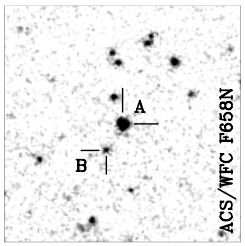
Astronomers have detected a new but very distant Kuiper Belt object.

For now, his team knows little more about their distant discovery other than its orbit and apparent brightness. Given its distance, however, the object should be sizable — anywhere from 400 km across (if its surface is bright and 50% reflective) to 1,200 km (if very dark and 5% reflective). If its true size edges toward the larger end of this range, then 2014 UZ224 would likely qualify for dwarf-planet status.

Fortunately, we should have a much better estimate of the object’s size very soon. Gerdes has used the ALMA radio-telescope array to measure the heat radiating from 2014 UZ224, which can be combined with the optical measurements to yield its size and albedo.

The object has a very eccentric 1,140 year orbit, coming as close to the sun as Pluto at its closest and almost five times farther away at its furthest.

Note: I have changed the article title because this new object is almost certainly not bigger the Pluto, as one of my readers pointed out.

3 comments

Green Bank goes private

The competition heats up: The Green Bank radio telescope in West Virginia, having lost most of its government funding, has switched to a private model where they compete for customers on the open market.

[T]hey petitioned to retain a fraction of NSF funding and make up the difference with private contracts—a model then unheard of. Eventually, the NSF agreed to fund about 60 percent of Green Bank’s operations in 2017, tapering to 30 percent in 2018.

To add cash flow to that federal tributary, Green Bankers had to nail down private contracts. The 140-foot telescope, home to the biggest ball bearing in the world, will download data from the Russian Space Agency’s on-orbit radio telescope, RadioAstron, which will also hook up with the newer telescope to form a high-resolution array. The North American Nanohertz Observatory for Gravitational Waves has commissioned the flagship Green Bank Telescope to watch their network of pulsars for fingerprints of gravitational waves.

And Breakthrough Listen—a search for extraterrestrial intelligence—will look for the technological fingerprints of aliens. The project, funded by rich-guy Yuri Milner, will watch the sky 1,300 hours a year, debiting $2 million from Milner annually and depositing it into Green Bank’s coffers.

In other words, they are marketing the telescope to the open market, selling time to use it to whoever has a need. And apparently, there is a need, though I suspect operations at the telescope will have to become leaner and meaner and more efficient to stay in the black. Which is to the good.

11 comments

Hawaii Supreme Court approves solar telescope construction

Even as the Thirty Meter Telescope (TMT) on Mauna Kea remains in legal limbo, the Hawaii Supreme Court today ruled that the permits for the Daniel K. Inouye Solar Telescope on Haleakala were correct and that construction can go forward.

Not surprisingly, the protesters who have lost this case immediately indicated that they will fight it with continued protests, not unlike a 3-year-old who doesn’t get his way and starts to scream and yell and pound the floor.

Meanwhile, the TMT court case is supposed to resume later this month.

0 comments

The mystery of Tabby’s star deepens

Astronomers looking at the light variations of the star dubbed by some Tabby’s star have become even more baffled.

Spurred by a controversial claim that the star’s brightness gradually decreased by 14 percent from 1890 to 1989, Montet and Simon decided to investigate its behavior in a series of Kepler calibration images that had not previously been used for scientific measurements. “We thought that these data could confirm or refute the star’s long-term fading, and hopefully clarify what was causing the extraordinary dimming events observed in KIC 8462852,” explained Simon.

Simon and Montet found that, over the first three years of the Kepler mission, KIC 8462852 dimmed by almost 1 percent. Its brightness then dropped by an extraordinary 2 percent over just six months, remaining at about that level for the final six months of the mission. The pair then compared this with more than 500 similar stars observed by Kepler and found thata small fraction of them showed fading similar to that seen in KIC 8462852 over the first three years of Kepler images. However, none exhibited such a dramatic dimming in just six months, or a total change in brightness of 3 percent.

“The steady brightness change in KIC 8462852 is pretty astounding,” said Montet. “Our highly accurate measurements over four years demonstrate that the star really is getting fainter with time.  It is unprecedented for this type of star to slowly fade for years, and we don’t see anything else like it in the Kepler data.” 

At the moment, there is no good theory based on what astronomers know of stellar evolution to explain this star’s behavior. This does not mean the only explanation left is that aliens are building a Dyson sphere around the star, but it also leaves everyone at a loss to explain what is happening.

14 comments

Dark matter unnecessary?

The uncertainty of science: A new analysis of the infrared data from 153 galaxies using the Spitzer Space Telescope suggests that dark matter might not be necessary to explain the rotation of galaxies.

First, this concise and nicely written explanation from the link of why dark matter has been proposed:

Newton’s laws of motion predict that planets that revolve closer to a star move faster than those that are farther away. In principle this should also hold true for stars circling the cores of galaxies, but for nearly a century, astronomers have seen that stars near the outskirts of galaxies orbit at nearly the same velocities as ones near galactic centers.

To explain why these outlying stars travel as quickly as they do without flying out into the void beyond, researchers came up with the idea of dark matter, a substance whose gravitational pull is thought to keep whirling stars in check. Scientists have largely ruled out all known particles as possible explanations for dark matter, and the consensus is that dark matter must be a kind of invisible, intangible material that is only detectable via its gravitational influence.

However, despite decades of trying, researchers have failed to capture a single mote of dark matter, even though it is supposed to make up roughly five-sixths of all matter in the universe. This raises the possibility that dark matter might not be real.

The new research, which I must admit I do not really understand, supposedly suggests that dark matter is unnecessary to explain the motions of stars.

Previous analyses of the orbital velocities of the stars in galaxies often depended on visible wavelengths of light. However, the stars that produce the most visible light are relatively short-lived and prone to fluctuations, and so may not provide the best picture of how matter is scattered overall throughout a galaxy. Instead, McGaugh and his colleagues analyzed near-infrared images collected by NASA’s Spitzer Space Telescope over the past five years. “The stars that generate the most near-infrared light are red giants, that are pretty stable in their output, and so are much better representative of a galaxy’s total mass of stars,” McGaugh said.

The researchers found an extraordinarily close association between the location of normal matter and the way it accelerates around the centers of galaxies. “We were surprised at how tight that relationship was,” McGaugh said. “It looks tantamount to a law of nature.”

Neither the article nor the scientists who did this research however explain clearly how this tight association negates the need for dark matter.

57 comments

Hubble captures on-going comet break-up

animation of comet debris

Cool image time! The animation to the right, taken over three days by the Hubble Space Telescope, cropped and reduced to fit here, shows the debris flying away from Comet 332P/Ikeya-Murakami. It also shows a new piece of debris close to the comet on the lower left.

The research team calculated that the comet probably shed material over several months, between October and December 2015. Jewitt suggests that even some of the ejected pieces have themselves fallen to bits in a kind of cascading fragmentation. “Our analysis shows that the smaller fragments are not as abundant as one might expect based on the number of bigger chunks,” he said. “This is suggestive that they’re being depleted even in the few months since they were launched from the primary body. We think these little guys have a short lifetime.”

Hubble’s sharp vision also spied a chunk of material close to the comet, which may be the first salvo of another outburst. The remnant from still another flare-up, which may have occurred in 2012, is also visible. The fragment may be as large as Comet 332P, suggesting the comet split in two. But the icy remnant wasn’t spotted until Dec. 31, 2015, by the Pan-STARRS (Panoramic Survey Telescope and Rapid Response System) telescope in Hawaii, in work supported by the Near-Earth Object Observations program in NASA’s Planetary Defense Coordination Office. That discovery prompted Jewitt and colleagues to request Hubble time to look at the comet in detail. Around the same time, astronomers around the world began to notice a cloudy patch of material near the comet – which Hubble later resolved into the 25 pieces.

The scientists think they actually “may be seeing a comet fragmenting itself into oblivion.”

0 comments

NASA extends Hubble contract through 2021

NASA has extended its contract with Lockheed Martin for the operation of the Hubble Space Telescope until June 2021.

This contract is for non-science operations. Science operations are controlled by the Space Telescope Science Institute in Baltimore.

Note that when the last repair mission to Hubble took place in 2009, they expected it to add five years to the telescope’s life. This contract says they now expect it to last at least until 2021, which will also be 31 years after its launch and almost forty years since its actual construction. Not a bad track record when you think about it, especially since its original mission was set at 15 years, ending in 2005.

6 comments

Scientists discover exoplanets orbiting both stars of binary system

Worlds without end: Scientists have discovered a stellar binary system which has giant exoplanets orbiting each of the system’s stars.

The twin stars studied by the group are called HD 133131A and HD 133131B. The former hosts two moderately eccentric planets, one of which is, at a minimum, about 1 and a half times Jupiter’s mass and the other of which is, at a minimum, just over half Jupiter’s mass. The latter hosts one moderately eccentric planet with a mass at least 2.5 times Jupiter’s.

The two stars themselves are separated by only 360 astronomical units (AU). One AU is the distance between the Earth and the Sun. This is extremely close for twin stars with detected planets orbiting the individual stars. The next-closest binary system that hosts planets is comprised of two stars that are about 1,000 AU apart.

0 comments

New and very distance outer solar system objects beyond Neptune

Astronomers have discovered several new objects orbiting the Sun at extremely great distances beyond the orbit of Neptune.

The most interesting new discovery is 2014 FE72:

Another discovery, 2014 FE72, is the first distant Oort Cloud object found with an orbit entirely beyond Neptune. It has an orbit that takes the object so far away from the Sun (some 3000 times farther than Earth) that it is likely being influenced by forces of gravity from beyond our Solar System such as other stars and the galactic tide. It is the first object observed at such a large distance.

This research is being done as part of an effort to discover a very large planet, possibly as much as 15 times the mass of Earth, that the scientists have proposed that exists out there.

8 comments

More details about Proxima Centauri’s Earthlike exoplanet

Link here. Lots of background into the discovery itself, but I think these paragraphs really sum things up:

“The search for life starts now,” says Guillem Anglada-Escudé, an astronomer at Queen Mary University of London and leader of the team that made the discovery.

Humanity’s first chance to explore this nearby world may come from the recently announced Breakthrough Starshot initiative, which plans to build fleets of tiny laser-propelled interstellar probes in the coming decades. Travelling at 20% of the speed of light, they would take about 20 years to cover the 1.3 parsecs from Earth to Proxima Centauri.

Proxima’s planet is at least 1.3 times the mass of Earth. The planet orbits its red-dwarf star — much smaller and dimmer than the Sun — every 11.2 days. “If you tried to pick the type of planet you’d most want around the type of star you’d most want, it would be this,” says David Kipping, an astronomer at Columbia University in New York City. “It’s thrilling.”

The human race now has a real interstellar target to aim for. Don’t be surprised if we get there sooner than anyone predicts.

8 comments
1 101 102 103 104 105 188