Does zero gravity cause intestinal issues?

The uncertainties of science: New research simulating microgravity on Earth now suggests that zero gravity might weaken the walls of the intestines.

The barrier function of the intestinal epithelium, he added, is critical for maintaining a healthy intestine; when disrupted, it can lead to increased permeability or leakiness. This, in turn, can greatly increase the risk of infections and chronic inflammatory conditions such as inflammatory bowel disease, celiac disease, Type 1 diabetes, and liver disease.

McCole’s team used a rotating wall vessel — a bioreactor that maintains cells in a controlled rotation environment that simulates near weightlessness — to examine the impact of simulated microgravity on cultured intestinal epithelial cells.

Following culture for 18 days in the vessel, the team discovered intestinal epithelial cells showed delayed formation of “tight junctions,” which are junctions that connect individual epithelial cells and are necessary for maintaining impermeability. The rotating wall vessel also produces an altered pattern of tight junction assembly that is retained up to 14 days after the intestinal epithelial cells were removed from the vessel.

This is good research, but it has not proved anything, merely indicated an area of research that needs a follow-up in space. I also wonder if there has been any evidence of this phenomenon from astronauts returning from long missions. As far as I know, intestinal issues have never been mentioned as a problem post flight.

2 comments

Charles Walker: the first commercial astronaut

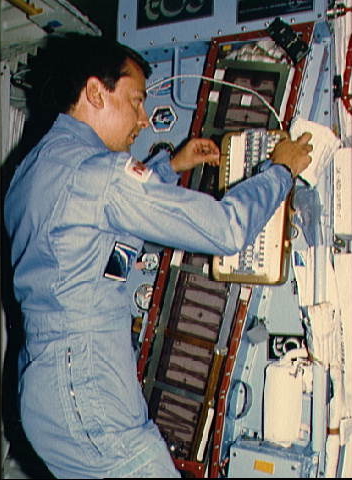
Charles Walker on the Space Shuttle in November 1985

Last night I attended another one of the monthly Arizona Space Business Roundtable events held here in Tucson to bring together the business-oriented space community of this city.

The speaker was Charles Walker, who had flown three shuttle missions in 1984 and 1985, but not as a NASA-employed astronaut but as an employee of McDonnell-Douglas, making him the first astronaut to fly in space under the employ of a private commercial company.

Walker’s job then was to monitor and maintain a drug-processing unit designed to produce large quantities of pure biological hormones that on Earth were simply not possible. Gravity polluted the process, while weightlessness acted to purify things. If successful the hormone produced could be sold to fight anemia, especially in individuals taking radiation treatments. The image on the right shows him on his third and last shuttle mission, launched November 26, 1985. He is working with a handheld protein crystal growth experiment, with the larger hormone purifying experiment on the wall behind this.

According to Walker’s presentation yesterday, this third flight in November 1985 demonstrated the process worked and could produce as much as one liter of hormone, enough to easily make back the cost of the project and leave room for an acceptable profit. They were thus ready for fullscale production on future shuttle flights, only to have the entire project die when the Challenger shuttle was lost on January 28, 1986. With that failure President Reagan declared that the shuttle would no longer be used for commercial flights.

Their business plan had been dependent on the artificially low launch prices NASA had been charging them for shuttle flights. Without the shuttle there was then no affordable alternative for getting into orbit.

The process is still viable, and the need for these drugs still exists. Whether they could now be flown on the new cheaper private rockets, on board future private space stations like Bigelow’s B330, remains unknown. A new company would have to pick up the pieces, as McDonnell-Douglas no longer exists, having been absorbed into Boeing.

I personally suspect there is real money to be made here, should someone decide to go for it.

What struck me most while watching Walker speak was the same thing that has struck me whenever I have seen or interviewed any astronaut: He appeared to be such an ordinary down-to-earth human being. He could have been anyone you meet anywhere.

What made him stand out, as he described his upbringing and how he became an astronaut, was not his intelligence or any physical attribute, but his clear willingness to stay focused on his goals, to work has hard as possible to make them come true. What made him succeed was an unwavering commitment. He wanted to get to space, and by gum he was going to do it!
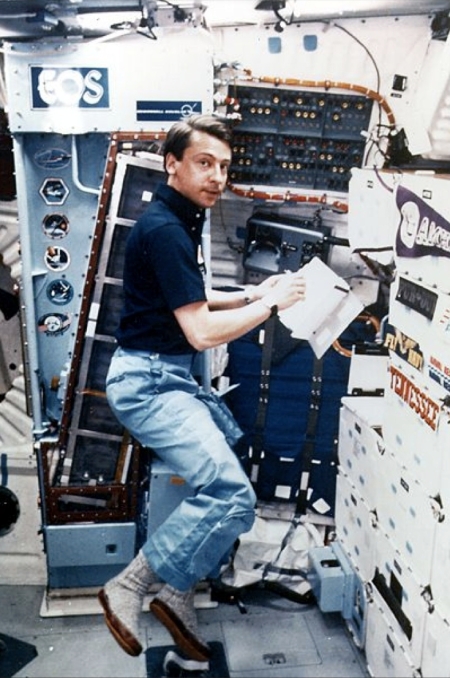
Charles Walker on first flight, August 1984
Walker on his first flight in 1984.

For example, he was too young to fly in the initial space race in the 1960s. When he finally was old enough and ready in the 1970s, NASA’s space program was being shut down. That option seemed dead. So instead, he began looking for another route into space, and found it with private industry and possibility of making money by using weightlessness to produce medicines in space that could not be produced on Earth.

Obviously, luck is always a factor. Had his project been a little delayed, only a year, it would have never flown, and he would never have gone into space. Similarly, he needed to be in the right place at the right time to get this particularly job in the first place.

At the same time, “Luck is a residue of design,” as said by Branch Rickey, general manager of the Brooklyn Dodges in the 1950s. Walker didn’t give up when the Apollo program died in the 1970s, and thus he put himself in the right place at McDonnell-Douglas when this opportunity arose.

We should all pay close attention. If you have a dream, you need to follow it, with a fearless wholehearted commitment. If you do, you still might not get it as you dreamed, but you will increase your chances, and regardless, you will end up doing far better for yourself and everyone around you.

And you still might end up like Walker, bouncing around in weightlessness out in the vast reaches of outer space.


2 comments

Study says space radiation less of a risk

A newly released study now claims that, based on a long term review of astronauts who have spent a considerable time in space, it appears that space radiation does not cause an increase in cancer later in life.

The new study analyzed information from 418 space travelers, including 301 NASA astronauts who had traveled to space at least once since 1959, and 117 Russian or Soviet cosmonauts who had traveled to space at least once since 1961. These participants were followed for about 25 years, on average.

During this time, 89 of the participants died. Among the 53 NASA astronauts who died, 30% died from cancer and 15% from heart disease; while among the 36 Russian or Soviet cosmonauts who died, 50% died from heart disease and 28% from cancer.

The researchers used a special statistical technique to determine whether deaths from cancer and heart disease likely had a common cause — in this case, the common cause would be space radiation. But their results did not point to a common cause of death. “If ionizing radiation is impacting the risk of death due to cancer and cardiovascular disease, the effect is not dramatic,” the authors wrote in their study, published July 4 in the journal Scientific Reports.

This story first appeared about two weeks ago, but I didn’t think it significant, and still don’t. The sample is just not large enough to draw any solid conclusions. Moreover, this is exposure in low Earth orbit, not on interplanetary missions where the radiation risk is higher. It would be a big mistake for future space engineering to accept these findings blindly.

Still, news reports keep popping up about it, and I decided I should at least note it here on Behind the Black.

4 comments

Mold in space can tolerate very high doses of radiation

New research has discovered that the mold found on the International Space Station is able to tolerate very high doses of radiation.

Spores of the two most common types of mold on the ISS, Aspergillus and Pennicillium, survive X-ray exposure at 200 times the dose that would kill a human, according to Marta Cortesão, a microbiologist at the German Aerospace Center (DLR) in Cologne, who will present the new research Friday at the 2019 Astrobiology Science Conference (AbSciCon 2019).

Pennicillium and Aspergillus species are not usually harmful, but inhaling their spores in large amounts can sicken people with weakened immune systems. Mold spores can withstand extreme temperatures, ultraviolet light, chemicals and dry conditions. This resiliency makes them hard to kill.

“We now know that [fungal spores] resist radiation much more than we thought they would, to the point where we need to take them into consideration when we are cleaning spacecraft, inside and outside,” Cortesao said. “If we’re planning a long duration mission, we can plan on having these mold spores with us because probably they will survive the space travel.”

While these findings likely mean an increase in the cost for sterilizing future planetary probes, they also mean that fungi will be available for future space travelers for the production of antibiotics, food, and other useful items.

2 comments

Nearly 400 medical procedures found to be ineffective

The uncertainty of science: A new review of the science literature has found almost 400 studies showing the ineffectiveness of the medical procedure or device they were studying.

The findings are based on more than 15 years of randomised controlled trials, a type of research that aims to reduce bias when testing new treatments. Across 3,000 articles in three leading medical journals from the UK and the US, the authors found 396 reversals.

While these were found in every medical discipline, cardiovascular disease was by far the most commonly represented category, at 20 percent; it was followed by preventative medicine and critical care. Taken together, it appears that medication was the most common reversal at 33 percent; procedures came in second at 20 percent, and vitamins and supplements came in third at 13 percent.

A reversal means that the study found the procedure, device, or medicine to be ineffective.

If you have medical issues it is worth reviewing the research itself. You might find that some of the medical treatment you are getting is irrelevant, and could be discontinued.

3 comments

Possible cure for AIDS?

In the past week researchers have revealed that two different patients have apparently had the AIDS HIV virus eliminated from their bodies.

The virus infects cells of the immune system, which are made in the bone marrow. A man known as the “Berlin patient” was the first person to become HIV-free after cancer treatment, back in 2007. To treat his leukaemia – a cancer of the immune system – he was given a treatment that involved killing nearly all his immune cells with radiotherapy or drugs, and then replacing them with cells from a donor. This donor was naturally resistant to HIV, thanks to a rare but natural mutation in a gene called CCR5.

Since then, no one else had had HIV eliminated from their body in the same way, until a second case was announced on Monday. This person, known as the London patient, was given bone marrow from a donor with the CCR5 mutation as a treatment for Hodgkin’s lymphoma, another immune cell cancer. He was advised to stop taking the antiviral drugs that keep the virus in check about a year afterwards. Eighteen months later, the virus hasn’t returned.

A possible third case was then announced today, at the Conference on Retroviruses and Opportunistic Infections in Seattle.

The more than dozen year gap between the first cure and the two this week is partly because it takes so long to perform the treatment and then confirm the virus is gone. Moreover, this treatment can only be given to a limited number of patients, because of the risks involved.

Nonetheless, if this cure is proven viable, it will be a great triumph for modern science.

5 comments

Potentially dangerous bacteria found on ISS

Researchers have found five strains of bacteria on ISS that, while not dangerous now, has the potential to mutate into forms that could be a threat.

When Bezdan and colleagues ran the numbers on the space station microbes, however, they found that they were similar to only three – and rare ones, at that. They report similarities with strains found to date only once – one recovered from neonatal blood in a Tanzanian patient, another from a neonatal urine sample in the US, and the third from a 72-year-old woman with multiple health problems. In total, the researchers report, the eight strains thus “formed a unique ecotype”.

The ISS strains all contained genes associated with drug-resistance. They did not, however, contain combinations associated with high infection rates. Nevertheless, the results are enough for the researchers to sound a warning.

There are a lot of uncertainties here, including a lack of understanding of the effect of weighlessness on these bacteria. Nonetheless, this research highlights an important problem for future interplanetary spacecraft that has generally been ignored: Their small and limited ecology is very vulnerable to this kind of threat.

9 comments

Scientists identify molecule linked to anti-aging effects

Scientists have identified a molecule produced by the body during fasting that then acts to delay aging.

In this study, the research team explores the link between calorie restriction (eating less or fasting) and delaying aging, which is unknown and has been poorly studied. The findings are published in the journal Molecular Cell.

The researchers identified an important, small molecule that is produced during fasting or calorie restriction conditions. The molecule, β-Hydroxybutyrate, is one type of a ketone body, or a water-soluble molecule that contains a ketone group and is produced by the liver from fatty acids during periods of low food intake, carbohydrate restrictive diets, starvation and prolonged intense exercise.

“We found this compound, β-Hydroxybutyrate, can delay vascular aging,” Zou said. “That’s actually providing a chemical link between calorie restriction and fasting and the anti-aging effect. This compound can delay vascular aging through endothelial cells, which line the interior surface of blood vessels and lymphatic vessels. It can prevent one type of cell aging called senescence, or cellular aging.”

Senescent cells can no longer multiple and divide. The researchers found β-Hydroxybutyrate can promote cell division and prevent these cells from becoming old. Because this molecule is produced during calorie restriction or fasting, when people overeat or become obese this molecule is possibly suppressed, which would accelerate aging.

It appears that there is still a lot of work to create an artificially produced version of this molecule, but to know it exists is a significant discovery. For the body to produce it requires you to fast for at least 24 hours.

6 comments

Two roundworms return to life after being frozen for almost 42,000 years

Russian scientists have successfully brought two roundworms back to life after being frozen for almost 42,000 years.

Russian scientists said the two prehistoric worms, out of a group of about 300, are moving and eating after they came back to life in a lab at the Institute of Physico-Chemical and Biological Problems of Soil Science in Moscow, the Siberian Times reported. “After being defrosted, the nematodes showed signs of life,” a report from the Russian scientists said, according to the Siberian Times.

One of the worms was found near the Alazeya River in 2015 and is believed to be about 41,700 years old, according to the study published in the Doklady Biological Sciences. They were found about 11.5 feet underground.

The other worm was found in 2002 in a fossil rodent burrow near the Kolyma River. These samples were taken from about 100 feet underground.

If confirmed, this result is not only astonishing, it has significant implications, as it suggests that the science fiction idea of freezing people for long interstellar flights might actually be possible, eventually.

8 comments

Complex carbon molecules from within Enceladus

Scientists have determined, using Cassini data, that there are complex carbon molecules spewing from the tiger stripes on Saturn’s moon Enceladus.

Putting it all together, the scientists concluded that the Cassini spacecraft was encountering dust particles rich in carbon in large, complex “macromolecular structures”. The only place this material could have come from was the interior of Enceladus, from which ice, dust and gas is jetting out in geyser-like plumes. These plumes are fed by vapours escaping from a sub-surface ocean.

“So this is a direct sample of the Enceladus ocean,” Khawaja says.

What exactly the newly discovered organic materials are is open for debate, although Khawaja believes they most likely are made of large numbers of ring-like structures cross-linked by hydrocarbon chains. An important hint comes from the fact that the organic-rich grains don’t contain much water, implying that the materials in them don’t easily mix with water. Khawaja hypothesises that they formed deep inside Enceladus, then rose to the top of its underwater ocean, where they formed a thin film akin to an earthly oil slick.

Just to be very clear, they have not discovered life. What they have found however increases the chances that there is life within Enceladus’s underground ocean.

1 comment

Curiosity finds methane fluctuates seasonally in Gale Crater

Seasonal methane on Mars

In its second significant science release yesterday (the first relating to the discovery of organics), the Curiosity science team revealed that they have found over almost three Martian years the amount of methane in the atmosphere appears to fluctuate seasonally. The graph on the right illustrates this change.

[The data] show methane rises from just above 0.2ppb in the northern hemisphere winter to a fraction over 0.6ppb in the summer. The team’s best explanation is that methane is seeping up from underground, perhaps from stored ices, and is then being released when surface soils are warmed.

The team cannot positively identify the origin of the methane, but the researchers think they can close down one particular mechanism for its production. This involves sunlight breaking up carbon-rich (organic) molecules that have fallen to the planet’s surface in meteorites.

The variation in ultraviolet light over the course of the seasons is not big enough to drive the scale of the change seen in the methane concentration, says Dr Webster. “We know the intensity of the Sun and this mechanism should produce only a 20% increase in methane during the summer, but we’re seeing it increase by a factor of three,” he explained.

The change could be caused by either a chemical or a biological process. At this time there is no way to determine which.

18 comments

Certain microbes survive in clean rooms by eating the cleaning fluids

Researchers have found that the reason certain microbes seem to survive in all spacecraft clean rooms is that those microbes actually live off the very cleaning fluids used to scrub the rooms.

Despite extensive cleaning procedures, however, molecular genetic analyses show that the clean rooms harbor a diverse collection of microorganisms, or a spacecraft microbiome, that includes bacteria, archaea and fungi, explained Mogul. The Acinetobacter, a genus of bacteria, are among the dominant members of the spacecraft microbiome.

To figure out how the spacecraft microbiome survives in the cleanroom facilities, the research team analyzed several Acinetobacter strains that were originally isolated from the Mars Odyssey and Phoenix spacecraft facilities.

They found that under very nutrient-restricted conditions, most of the tested strains grew on and biodegraded the cleaning agents used during spacecraft assembly. The work showed that cultures grew on ethyl alcohol as a sole carbon source while displaying reasonable tolerances towards oxidative stress. This is important since oxidative stress is associated with desiccating and high radiation environments similar to Mars.

The tested strains were also able to biodegrade isopropyl alcohol and Kleenol 30, two other cleaning agents commonly used, with these products potentially serving as energy sources for the microbiome.

With this information, the space engineering community will be able to refine their clean room operations to eliminate these microbes so as to better sterilize spacecraft heading on life-seeking missions.

7 comments

Methane detected on Enceladus could come from microbes

The uncertainty of science: New research has found that the methane that Cassini detected being released from Enceladus’s interior could conceivably come from at least one Earth-type microbe.

Using various mixtures of gases held at a range of temperatures and pressures in enclosed chambers called “bioreactors,” Rittmann and his co-authors cultivated three microorganisms belonging to the oldest branch of Earth’s tree of life, known as Archaea. In particular, they focused on Archaean microbes that are also methanogens, which are able to live without oxygen and produce methane from that anaerobic metabolism. The team examined the simplest types of microbes, which could be the primary producers of methane at the base of a possibly more complex ecological food chain within the moon.

They tried to simulate the conditions that could exist within and around Enceladus’s hydrothermal vents, which are thought to resemble those found at a few deep-sea sites on Earth, often near volcanically active mid-oceanic ridges. According to their tests, only one candidate, the deep-sea microbe Methanothermococcus okinawensis, could grow there—even in the presence of compounds such as ammonia and carbon monoxide, which hinder the growth of other similar organisms.

There are a lot of fake news stories today trumpeting this result as proof that alien microbes can exist on Enceladus. The data does no such thing. All it shows that one methane producing microbe could possibly live in an environment that researchers guess might somewhat resemble the situation on Enceladus. However, as the article admits,

Scientists do not really know the precise conditions on Enceladus yet, of course. And in any case it is possible any life there, if it exists, is nothing like any DNA-based organism on our planet, rendering our Earth-based extrapolations moot. What’s more, these findings only show microbial life might exist in one particular subset of possible environments within the moon’s dark ocean.

This result is interesting, but it really proves nothing about Enceladus itself.

1 comment

Microbes found that survive in the driest desert on Earth

Scientists have found that certain microbes can remain dormant for years in the Atacama Desert and then come to life during the rare times water is available.

The Atacama Desert stretches inland 1000 kilometers from the Pacific coast of Chile, and rainfall can be as low as 8 millimeters per year. There’s so little precipitation that there’s very little weathering, so over time the surface has built up a crusty layer of salts, further discouraging life there. “You can drive for 100 kilometers and not see anything like a blade of grass,” Neilson says. Although she and others have found some bacteria there, many biologists have argued that those microbes are not full-time residents, but were blown in, where they die a slow death.

But that didn’t deter Dirk Schulze-Makuch, an astrobiologist at the Technical University of Berlin. “I like to go to places where people say nothing is alive,” he says. “We decided to take a shotgun approach and throw all the new [analytical] approaches at everything—fungi, bacteria, viruses”—that might be there. He and his team collected samples from eight places in the Atacama—from the coast eastward to the driest places—over 3 years. They first gathered material a month after a record-setting rain in 2015, and then followed up with yearly collections in some of the same places in 2016 and 2017. They sequenced all the copies of a gene known to distinguish microbial species to determine what was in those samples and even recovered some full genomes. The researchers also did a test to determine the proportion of DNA that came from intact, living cells. Finally, they assessed the amount of cellular activity; of adenosine triphosphate (ATP), a molecule the fuels this activity; and of byproducts—including fatty acids and protein building blocks—that resulted from that activity to look for additional evidence of life.

The coastal samples contained the most number and diversity of microbes, but in 2015, there were signs of life even in the driest spots, Schulze-Makuch and his colleagues report today in the Proceedings of the National Academy of Sciences. “Following a rainfall event, there is a flush of activity and [cells] are replicating,” Neilson says.

The researchers, as well as the article, push the idea that this result makes life on Mars more possible, but I think that is pushing things quite a bit. The Earth is so filled with life that to find a spot that doesn’t have life on it is almost impossible. The odds work in the favor of hardy life in difficult places. Mars however appears generally lifeless, which makes the odds of there being life more unlikely. Moreover, while the Atacama has many similarities to Mars, the differences are quite profound. To extrapolate any possibilities to Mars from this research is a big overstatement.

0 comments

Curiosity images small tubelike rock features on Vera Rubin Ridge

tubes on Mars

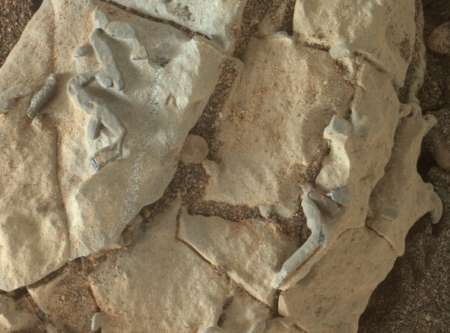
During Curiosity’s extended science observations in the past month on Vera Rubin Ridge the rover has found a number of rocks with strange tubelike features that remind some scientists of fossils. The image on the right, taken by the rover’s Mars Hand Lens Imager (MAHLI) and cropped and reduced to post here, shows some of these weird tubes.

The origin of these odd features — geological or biological processes — is in TBD limbo at the moment. Regarding trace fossils on Mars, “we don’t rule it out,” Vasavada said, “but we certainly won’t jump to that as our first interpretation.”

Close-up looks at these features show them to be angular in multiple dimensions. That could mean that they are related to crystals in the rock, perhaps “crystal molds” that are also found here on Earth, Vasavada added. Crystals in rock that are dissolved away leave crystal molds, he said.

Still, that’s just one of a few possibilities, Vasavada explained. “If we see more of them … then we begin to say that this is an important process that’s going on at Vera Rubin Ridge,” he said.

The article outlines a number of other possible explanations, including fossil remains. None are convincing at this time, based on the limited data. Nor does Curiosity have the equipment to clarify things much.

7 comments

A short dose of ultraviolet light might save North America’s bats

Researchers have found that the fungus that has been decimating bat populations in the eastern United States for the past decade is easily killed by a short dose of ultraviolet light.

Upon being compared to six non-pathogenic Pseudogymnoascus species, it was found that P. destructans lacks a key enzyme that allows it to repair DNA damage caused by ultraviolet light. When samples of the fungus were exposed to a low dose of UV-C light from a handheld source, the survival rate was only about 15 percent – this dropped to less than 1 percent when the dose was moderate. In both cases, the duration of exposure was a matter of no more than a few seconds.

Next comes a control group experiment. If this proves true, than it might be possible to safely sterilize both bat populations and caves of the fungus. To work, however, the task will likely require repeated yearly visits to bat hibernation sites to kill the fungus before it causes the bats to wake up in the winter. Such visits have their own problems, and would be difficult to pay for. However, I am sure the caving community across the U.S. would be glad to volunteer for this effort, and could handle it.

36 comments

Worms on Mars!

Scientists growing plants on Earth using a simulated Martian soil have found that earthworms like it.

These slimy invertebrates play a key role in making Earth soil healthy by digesting dead organic matter and excreting a potent fertilizer that helps release nutrients like nitrogen and phosphorus. Their constant burrowing also helps lighten up the soil, allowing air and water to seep through better.

That’s an important improvement for the simulated Mars soil, which water struggled to soak through in previous tests. Altogether, the tests showed that the combination of worms and pig slurry helped the plants grow in Martin soil, and the worms not only thrived but reproduced. “Clearly the manure stimulated growth, especially in the Mars soil simulant, and we saw that the worms were active,” says Wamelink. “However, the best surprise came at the end of the experiment when we found two young worms in the Mars soil simulant.”

Obviously, we do not know yet how the worms would respond to the lower Martian gravity, but it sure would be a significant experiment to see them reproduce there.

15 comments

Russia astronauts have found bacteria living on the outside of ISS

Russia astronauts have found bacteria that was not intentionally brought into space living on the outside of ISS.

They are being studied on Earth but most likely they don’t pose any sort of danger, Russian cosmonaut Anton Shkaplerov told TASS on Monday. According to him, during spacewalks from the International Space Station under the Russian program, the cosmonauts took samples with cotton swabs from the station’s external surface. In particular, they took probes from places where the accumulation of fuel wastes were discharged during the engines’ operation or at places where the station’s surface is more obscure. After that, the samples were sent back to Earth.

“And now it turns out that somehow these swabs reveal bacteria that were absent during the launch of the ISS module. That is, they have come from outer space and settled along the external surface.”

I suspect it is a bit of hyperbole to say the bacteria came from outer space. It more likely came from either the station itself, or later spacecraft docking with the station. At the same time, the article is vague about what has been discovered. For example, it says nothing about the bacteria itself.

6 comments

A simple and inexpensive skin cancer detector wins award

A simple and inexpensive skin cancer detector has won the $40,000 2017 James Dyson award.

Designed by a team from McMaster University in Canada, the sKan can make more accurate diagnoses quickly and reasonably cheaply. It’s based around the fact that cancer cells have a faster metabolic rate than healthy cells, meaning they release more heat. To check if a patch of skin has the beginnings of a melanoma, the suspected area is first cooled with an ice pack before the sKan device is placed against the skin.

Using an array of temperature sensors called thermistors, the sKan will then monitor the area as the skin warms back up. If there’s a melanoma present, it will warm up faster than the surrounding skin, revealing itself on a heat map and temperature difference time plot created through a connected computer program.

Once this device is in the hands of dermatologists, they will be able to very quickly diagnose whether a skin mole or freckle is dangerous or not.

2 comments
1 2 3 4 15