Monaco-based startup unveils its proposed European-built lunar rover

Capitalism in space: The Monaco-based startup Venturi Space, this week unveiled its own proposed European-built lunar rover, dubbed Mona Luna. and offered it to both the European Space Agency (ESA) and France’s CNES space agency.

Venturi has received some support from ESA for key technologies needed for the rover. The company is hoping to win support for a rover development project at ESA’s ministerial conference in late November, when member states will decide on funding for agency programs for the next three years. Antonio Delfino, Venturi’s director of space affairs] argued a rover like Mona Luna fit a gap in Europe’s exploration plans. Mona Lisa is designed to be delivered to the lunar surface on ESA’s Argonaut lander, which would launch on an Ariane 64.

The company has said it is willing to commit some of its own investment capital to develop the rover, should either ESA or CNES decide to buy it. Whether ESA or CNES agree to build this rover however will likely depend on whether either has a program to land on the Moon. At the moment the status of NASA’s Artemis program is unclear, and it was that program that Europe was relying on to get to the Moon.

1 comment

Starlink begins or expands service in three more countries

Starlink this week officially began service in both India and the African country of Guinea-Bissau, while expanding its service in the Ukraine to include phone-to-satellite texting.

In India the final licensing approval came through, and the service is now available to customers through two different Indian telecommunication platforms.

The deals consists of selling Starlink’s equipment through Jio and Airtel’s retail networks, while Jio will also offer customer service, installation, and activation support. It will emphasise on providing high-speed internet to businesses, healthcare centres, schools and remote communities across India, according to reports.

SpaceX also begain to offer its services in Guinea-Bissau, a former Portuguese colony located on Africa’s northwestern coast and the seventh African country to approve Starlink. Its license had been approved in April, but the service wasn’t available apparently until now.

Finally, regulators in the Ukraine have now approved the use of Starlink’s phone-to-satellite service by the Ukrainian telecommunications company Kyivstar. The program will at present be limited to texting and emergency alerts. This expands Starlink’s already extensive internet availability there.

In every case, Starlink will act to decentralize control of communications aware from the government, as its sells terminals to ordinary citizens.

3 comments

Major explosion during preparations for static fire test of Starship prototype

The moment the explosion begins on this Starship prototype<

As engineers tonight were preparing for a standard static fire engine test at Boca Chica of the next Starship prototype, expected to fly on the tenth Starship/Superheavy test flight, the spacecraft suddenly exploded.

I have embedded video of the explosion below. The event occurred prior to the actual static fire test, while Starship’s tanks were being filled. The image to the right is a screen capture just as the explosion begins. The white cloud is the initial release from the explosion (not standard venting), with the red dot indicating the location where the event began. It appears very much to have started inside this Starship spacecraft, which SpaceX was preparing for the next test flight.

Fortunately, no injuries have been reported.

Obviously, this is going to delay somewhat that tenth test flight. SpaceX has more Starship prototypes ready to go, but the company must first figure out what went wrong in this case. It also appears there might be some damage to that test stand, which will also have to be rebuilt so that future static fire tests of upcoming Starships can take place.
» Read more

40 comments

France’s space agency agrees to let Spanish rocket startup PLD establish its own launch site at French Guiana

Though France’s space agency CNES had initially attempted to place many rules and restrictions on the commercial operations of new independent private rocket companies at its spaceport in French Guiana, it has now backed off those demands in agreeing to let the Spanish rocket startup PLD establish its own launch site there at the decommissioned launchpad used by France’s Diament rocket in the 1970s.

This new contract greenlights the implementation of the infrastructure project designed by PLD Space with technical support from CNES and grants legal use of land in the ELM-Diamant area, where the MIURA 5 Preparation Zone and Launch Zone will be located. Construction will begin with the start of the dry season in French Guiana, expected in the summer months of 2025.

In September 2024 CNES said it wished to standardize the launch site for the seven different European rocket startups (Avio, HyImpulse, Isar Aerospace, MaiaSpace, PLD Space, Rocket Factory Augsburg, and Latitude) it had approved to use it. At the time I sensed there was opposition from these companies to this policy, since each rocket was different and would not function with this standardized design.

At a minimum that policy apparently delayed PLD’s plans, as it originally hoped to start its launchpad construction in October 2024 and launch in 2025. That schedule went by the wayside.

It now appears PLD will proceed with development as it wishes, for its rocket, and the others will have to figure out how fit their rockets to that design. Or maybe CNES is going to open up further sites at French Guiana to avoid this conflict.

1 comment

Another company enters the military’s hypersonic test market

UP Aerospace today announced the successful launch of its suborbital small Spyder rocket, designed expressly for hypersonic flight testing.

The maiden flight took place at 7:00 AM MST at Launch Complex 36 [at White Sands Missile Range in New Mexico], marking a new era in hypersonic mission capabilities. The mission reached the threshold of hypersonic speeds similar to the UP Aerospace SpaceLoft rocket missions that have been operational for 20 years.

In the U.S. the military now can do hypersonic flight tests using this small rocket, Stratolaunch’s giant Roc plane and Talon-A flight vehicle, Rocket Lab’s Haste reconfiguration of its Electron rocket, and Varda’s orbital capsules on their return from space. In addition there is at least one other startup, Radian, that hopes to build a space plane for hypersonic testing as well.

I also expect this testing to result in some new technologies for both commercial aircraft as well as rockets.

2 comments

Europe’s old aerospace industry struggles with the concept of competition

Made in European Union

Two stories today from Europe’s aerospace industry suggest that its older big space companies are having real difficulties dealing with the new space landscape of competition and freedom.

First, Arianespace and Avio issued a statement demanding that Europe require that all European launches occur on European rockets.

The statement warned that without “sustained support,” European rocket builders were at risk of losing out to institutionally backed competitors from the US. “Major space powers support their industries through stable and guaranteed institutional markets, enabling long-term investments, innovation, and the preservation of leadership,” explained the statement.

…The pair argue that Europe risks falling behind not due to a lack of technical capability, but because of structural market weaknesses. While Ariane 6 and Vega-C have demonstrated competitiveness and reliability, they caution that this progress is fragile in the absence of guaranteed long-term demand.

While a preference for European launch providers is clearly in the best interest of both Avio and Arianespace, the pair did reserve a slice for new entrants to the market. “Enshrining European preference as an untouchable principle would support not only Ariane and Vega, but also foster the development of emerging projects in the small launcher sector.” [emphasis mine]

The highlighted sentence reveals the true reasons behind this call against competition. » Read more

5 comments

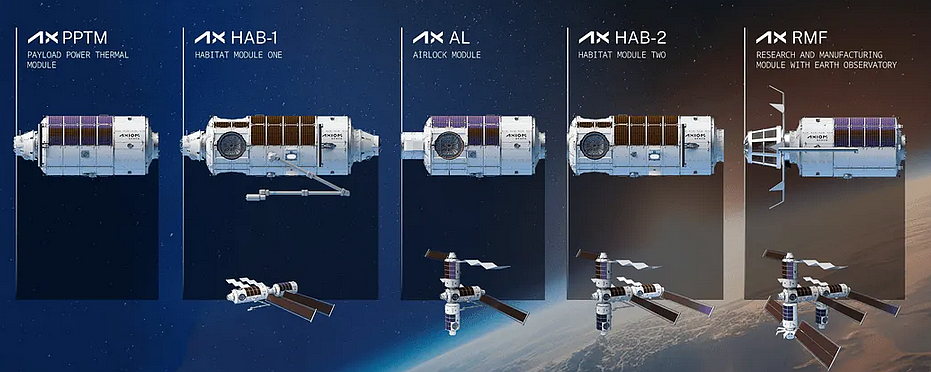
NASA/Axiom announce another four-day launch delay for Axiom’s fourth manned mission

NASA and Axiom today announced that they have rescheduled the launch of Axiom’s fourth manned mission to ISS, dubbed Ax-4, to June 22, 2025 in order to give Russian and American engineers more time to assess the leak repairs in the station’s Russian Zvezda module.

The press announcement provided little information, simply stating that:

The change in a targeted launch date provides NASA time to continue evaluating space station operations after recent repair work in the aft (back) most segment of the International Space Station’s Zvezda service module.

It would be nice if the agency would release some actual data. Earlier reports had suggested that the repairs had completely sealed the leaks and that the station was no longer losing air. The vagueness of today’s report suggests that the repairs might not have been as successful as hoped. It could also be engineers simply want more data for a longer period to prove the repairs have worked.

The lack of detailed information causes unnecessary speculation.

1 comment

SpaceX launches 28 Starlink satellites

The beat goes on! SpaceX successfully launched another 28 Starlink satellites early this morning, its Falcon 9 rocket lifting off from Cape Canaveral in Florida.

The first stage completed its fifth flight, landing on a drone ship in the Atlantic.

The leaders in the 2025 launch race:

76 SpaceX
34 China
8 Rocket Lab
6 Russia

SpaceX now leads the rest of the world in successful launches, 76 to 55.

0 comments

Honda’s grasshopper rocket successfully completes vertical take-off and landing

Honda today successfully completed the first test of its own grasshopper prototype rocket, with the rocket reaching a height of 890 feet before landing vertically 56 seconds after launch.

I have embedded the video of the flight below.

Honda had announced this project back in 2021, but since then had published no updates of note. This flight indicates that project is real and is on going.

In 2021 the company said it was targeting the first orbital flights by 2030. Today’s update says it will be doing suborbital flights in 2029, which suggests the orbital flights will not occur in 2030.
» Read more

8 comments

Under Trump FCC shifts from regulating satellite construction and de-orbit to streamlining red tape

FCC seal

According to a Space News article yesterday, the FCC’s regulatory focus since January and the advent of the Trump administration has shifted significantly from its focus during the Biden administration.

The article describes in detail the present focus to streamline regulations and speed license approvals.

One early result of this push is a reduction in the FCC’s licensing backlog. Schwarz said the space bureau has reduced pending applications by 35 percent since January, including those for new space stations and ground infrastructure.

Modernizing regulations for non-geostationary satellite systems is another priority. The FCC is considering revising so-called “power limit” rules aimed at preventing interference between low-orbit constellations and traditional geostationary satellites and earth stations. Schwarz said these reforms could help pave the way for higher-throughput services that rival terrestrial broadband.

This focus appears correctly centered on the FCC’s actual legal statutory authority to regulate the limited bandwidth of the electromagnetic spectrum to avoid conflicts in its use.

Under Biden, the FCC instead focused on expanding its power beyond that statutory authority, claiming it had the right to determine how satellites were built, when they would be de-orbited, and in what manner. None of those activities have anything to do with bandwidth and the FCC’s legal responsibilities.

There was some legislative push back from Congress during the Biden administration, but it was slow and relatively weak. Now that push back has become unnecessary, because the FCC under Trump is back to doing its actual job instead of trying to build empires of regulation.

The agency also appears, for the moment, to have ended its partisan abuse of red tape for political reasons. Under Biden it used its regulatory power against SpaceX in retaliation to Elon Musk’s decision to publicly support Biden’s political opponents. It appears the present effort to speed license approvals for everyone has ended this practice.

0 comments

Rocket Lab gets a quick launch contract from unnamed customer

Rocket Lab today announced it has been awarded a launch contract from an unnamed “confidential commercial customer” calling for two launches before the end of this year, with the first to occur only four days from today.

Launching from Rocket Lab Launch Complex 1 in New Zealand, the first dedicated mission on Electron – named “Symphony In The Stars” – will take place no earlier than June 20, 2025 to deploy a single spacecraft to a 650km circular Earth orbit. A second dedicated launch on Electron to meet those same mission requirements is scheduled for launch before the end of 2025.

That the customer name is classified suggests these are both military launches, and are designed to demonstrate Rocket Lab’s ability to launch something fast under short notice. The new contract also increases the chances that Rocket Lab will manage two dozen launches in 2025, a pace of twice a month.

0 comments

SpaceX launches 26 more Starlink satellites

SpaceX last night successfully placed 26 more Starlink satellites in orbit, its Falcon 9 rocket lifting off from Vandenberg in California.

The first stage completed its third flight, landing on a drone ship in the Pacific.

A comparison between this launch of SpaceX’s Starlink with Amazon’s scrubbed ULA launch of 27 Kuiper satellites yesterday is worth noting. This launch of 26 Starlink satellites was utterly routine, and just one of four in just the past week, all of which put 98 satellites into orbit. Thousands of such satellites have been launched since the first launch in 2018.

Amazon’s attempt to launch 27 Kuiper satellites was scrubbed, and would have only been the second launch total, separated by about six weeks. The constellation only has 27 satellites in orbit, and its launches are anything but routine, despite signing launch contracts with four different rocket companies. And yet, Amazon proposed Kuiper at almost the same time SpaceX proposed Starlink, in the mid-2010s.

I will let my readers draw their own conclusions from this comparison.

The leaders in the 2025 launch race:

75 SpaceX
34 China
8 Rocket Lab
6 Russia

SpaceX now leads the rest of the world in successful launches, 75 to 55.

2 comments
1 61 62 63 64 65 677