Italy to resume use of its San Marco spaceport off the coast of Kenya

Italy's offshore San Marco spaceport
Click for full map.

Italy has now decided to re-open its long unused San Marco spaceport facility off the coast of Kenya, resuming launches from its off-shore launch platform.

During its active life beginning in 1967 a total of eight launches occurred from this site, with the last flight occurring in 1988.

In late 2023, the Minister of Enterprise and Made in Italy, Adolfo Urso, first proposed reopening the facility for rocket launches. While unsubstantiated by other sources, local publication MalindiKenya.net reported at the time that the move would be used to create an “ideal launch base for the Italian Vega launcher, thus avoiding paying France for the use of the French Guiana base.”

In October 2024, during a presentation just before the 75th International Astronautical Congress kicked off, Minister Urso explained that the country had decided to move ahead with its plans to once again launch rockets from the Luigi Broglio Space Center.

The present plans will have the site managed by the Kenya Space Agency, established in 2017, with Italy providing the rockets and satellites, all of which are expected to be smallsats. It appears that the rocket company Avio, which builds the Vega-C rocket, might be aiming to use this site as an commercial launchpad, thus allowing it to bypass the French-run French Guiana spaceport. Located close to the equator and on the coast, this site would offer satellite companies a very wide range of orbits.

2 comments

Launches galore in the past twelve hours

The past twelve hours was quite busy at spaceports worldwide, with two American companies completing three different launches from three different spaceports, while China added one of its own.

First China launched two radar-mapping satellites, its Long March 2C rocket lifting off from its Jiuquan spaceport in northwest China. No word on where its lower stages, that use very toxic hypergolic fuels, crashed inside China. Though this launch was first, it actually took place in the early morning of November 25th, in China.

Next, Rocket Lab completed two launches, though one was not an orbital flight. First it completed its second of four planned launches of its HASTE suborbital version of its Electron rocket, lifting off from Wallops Island in Virgina. HASTE had been quickly improvised by the company when it realized there was a real market for hypersonic suborbital testing, and Electron could be refitted for that purpose. This launch actually occurred prior to the Chinese launch.

Then Rocket Lab launched five more satellites for the satellite company Kineis, the third of five, its Electron rocket lifting off from one of its two launchpads in New Zealand.

Finally, SpaceX in the early morning of November 25th launched 23 Starlink satellites, its Falcon 9 rocket lifting off from Cape Canaveral in Florida. The first stage completed its thirteenth flight, landing on a drone ship in the Atlantic.

The leaders in the 2024 launch race:

121 SpaceX
54 China
14 Russia
13 Rocket Lab

American private enterprise now leads the rest of the world combined in successful launches 140 to 81, while SpaceX by itself leads the entire world, including American companies, 121 to 100.

4 comments

SpaceX launches 20 Starlink satellites

SpaceX tonight successfully launched another 20 Starlink satellites, 13 of which had direct-to-cell capabilities, the Falcon 9 rocket lifting off from Vandenberg in California. (Note that the live stream starts late, missing the launch itself).

The first stage completed its 15th flight, landing on a drone ship in the Pacific.

The leaders in the 2024 launch race:

120 SpaceX
53 China
14 Russia
12 Rocket Lab

American private enterprise now leads the rest of the world combined in successful launches 138 to 80, while SpaceX by itself leads the entire world, including American companies, 120 to 98.

2 comments

New Glenn on the launchpad and vertical for the first time

The first completely assembled New Glenn, on the launchpad
The first completely assembled New Glenn,
on the launchpad

Blue Origin’s first New Glenn rocket to be fully stacked and ready for launch was finally placed vertical on its Cape Canaveral launchpad late November 21, 2024.

For the first time, the company placed a fully integrated, flight-capable rocket on the launch pad Thursday evening. The company rolled the rocket out of the hangar at Launch Complex 36 (LC-36) earlier. A static fire test with the full 98-meter-tall (320 ft) rocket is forthcoming, though a specific date hasn’t been announced.

…The upcoming integrated static fire test would be the first time that Blue Origin fuels a full-assembled. flight-ready New Glenn rocket. It previously conducted a static fire test of its upper stage, which saw a 15-second burn of the two BE-3U engines.

The picture to the right was released by the company that night.

No launch date has been announced. The present payload for this launch is the company’s own Blue Ring orbital tug on a Pentagon-supported test flight. The original payload, two smallsat NASA Mars orbiters built by Rocket Lab, had to be pulled when Blue Origin’s generally leisurely approach meant that it was unable to get the rocket ready in time to meet the October launch window.

That leisurely approach to business will have to end if Blue Origin really wants to compete in today’s modern aerospace industry.

4 comments

Starship gets contract to deliver Lunar Outpost’s rover to Moon

Capitalism in space: The lunar lander version of SpaceX’s Starship has won a contract from the startup Lunar Outpost to deliver its manned rover to the Moon.

The Colorado company announced Nov. 21 that it signed an agreement for SpaceX to use Starship to transport the company’s Lunar Outpost Eagle rover to the moon. The companies did not disclose a schedule for the launch or other terms of the deal.

This announcement is less a new deal for SpaceX and more an effort to convince NASA to award Lunar Outpost the full contract to build the rover. In April 2024 Lunar Outpost was one of three companies chosen by NASA to receive initial development grants to design their proposed manned lunar rovers. NASA expects to award the full contract, worth potentially up to $4.6 billion, to one of these three companies later this year, after seeing their preliminary designs. It wants to choose two, but at present says budget limitations make that impossible.

1 comment

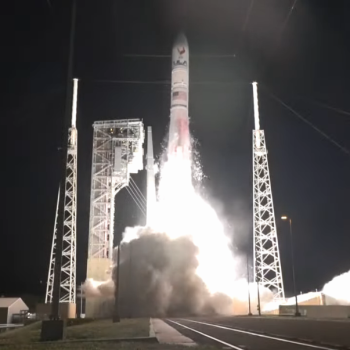
The next two Vulcan launches for the Pentagon slip to 2025

Both the Space Force and ULA have now admitted that the next two Vulcan launches, which both had hoped to launch before the end of this year, have now been delayed until 2025, and that Vulcan remains uncertified as yet by the military for its launches.

The United Launch Alliance’s Vulcan will not be able to conduct two planned national security missions on its launch manifest for this year after delays with certifying the heavy-lift rocket. The comments came hours after a Space Force official cast doubt that the missions could be completed before the end of 2024.

ULA launched its second certification flight in October, roughly a month behind schedule, following a first flight in January that was nearly four years behind schedule. The Space Force is still assessing data from the October launch in partnership with ULA.

The military had said if ULA completed two Vulcan successful launches it would approve Vulcan for these launches. Though the second launch got its payload to its correct orbit, during launch the nozzle on one of its strap-on solid-fueled boosters fell off. Though officials keep saying they expect certification anyway, that certification has not happened. It appears right now that the military won’t do so until the investigation into the problem is completed and a fix is installed.

At the moment the only rocket company that can launch large payloads for the Pentagon is SpaceX. Though that company has not gouged the military in bidding (though it it could) this is not a good situation. The military wants options and redundancy, not simply to save money, but to give it flexibility. It needs ULA and Blue Origin to finally deliver their rockets.

2 comments

If ordinary people don’t show up at those upcoming FAA Starship/Superheavy public meetings they WILL be screwed

Starship splashing down vertically
Starship splashing down vertically in the
Gulf of Mexico on November 19, 2024

Yesterday radio host Robert Pratt sent me a news story from a Texas newspaper, the Texas Tribune, which attempted quite surprisingly to capture fairly the local response to the most recent Starship/Superheavy test launch out of Boca Chica on November 19, 2024.

The reporter, Bernice Garcia, clearly made it a point to talk to a lot of people, especially those who came out to see the launch. As a result, she showed that in general, no matter what people felt about Donald Trump or Elon Musk, the local population was almost entirely in favor of SpaceX’s efforts there. For example:

Sanchez was slightly concerned about [the rocket’s sonic booms] but believed the benefits of jobs created by SpaceX was worth the risk. “They know what they’re doing,” Sanchez said.

But his favorable opinion of Musk’s company did not extend to Trump. A naturalized citizen who gained amnesty under the Reagan administration, Sanchez didn’t view Trump’s immigration policies as logistically sound. “If you throw those people out, who’s going to work?” Sanchez said. “You don’t see a white man laboring out in the sun. On the other hand, Mexicans, foreigners, people from other countries –– that’s why they come here, to work.”

While the story found locals with a whole range of opinions about Trump, both positive and negative, it only quoted one person who was hostile to SpaceX, and that quote and person tells us a great deal about the bankrupt nature of that opposition:
» Read more

7 comments

ESA gives its big space rocket company, ArianeGroup, a big subsidy

On November 19, 2024 I noted that in awarding four new rocket startups development contracts worth a total of 44 million euros, the European Space Agency (ESA) had not given any of that grant money to its biggest and most established rocket company, ArianeGroup, which not only owns and builds the Ariane-6 rocket but also has a subsidiary called MaiaSpace that is developing its own smallsat partly reusable rocket, in direct competition with those four small startups.

The exclusion of ArianeGroup in that announcement suggested to me that ESA had decided ArianeGroup’s smalsat rocket subsidary could manage without any additional aid, since its owner is a well-financed big space contractor.

I was wrong. Today the ESA awarded ArianeGroup a much big pile of cash, totaling 230 million Euros, to further finance the development of a reusable demonstration rocket, dubbed Themis, that also uses ArianeGroup’s Prometheus rocket engine. The Themis hopper project has been under development since 2018 initially under the management of Arianespace, has seen many delays in that time, and is now three years behind schedule.

Because of these delays, ESA pulled it from Arianespace in 2022 and gave full control of the project to the builder, ArianeGroup. This new contract award appears to be cementing this new arrangement, and is in addition to previous awards for this project exceeding 224 million euros.

The award also apparently includes funds for ArianeGroup’s MaiaSpace smallsat rocket startup, though the exact amount has not been specified.

The bottom line is that ESA is still dumping lots of cash to its older big space companies. Despite its clear shift to promoting independent rocket startups instead of a single government-controlled commercial entity (Arianespace), it is still favoring the big space contractors like ArianeGroup it has used for decades under that old Soviet-style system.

It will be interesting to see how this unbalanced system plays out in the coming years. Europe might get a competitive rocket industry of many companies, but then it might not, considering its space agency is putting its thumb on the scale to favor the already-established players.

3 comments

Musk: Starship will likely attempt a chopstick landing on the eighth test launch

UPDATE: The original post below is incorrect. I misread Musk’s tweet, not realizing he was refering exclusively to Starship when he wrote “ship.” He and his company now routinely use “ship” to refer to Starship and “booster” for Superheavy.

The real story behind this tweet is that SpaceX is working to attempt a chopstick catch of both Superheavy and Starship on the eighth test flight, after the as-yet unscheduled seventh flight. This means the eighth flight of Starship will be a full orbital flight, will use its Raptor engines to do a de-orbit burn to bring it back to Boca Chica, and that the company expects to have two launchpad towers ready to make the two catches.

Won’t that be an exciting event?

Original incorrect post:
———————————–
According to a tweet by Elon Musk on November 19, 2024, SpaceX will not attempt a chopstick landing of Superheavy on the seventh test orbital launch of Starship/Superheavy.

We will do one more ocean landing of the ship. If that goes well, then SpaceX will attempt to catch the ship with the tower.

According to an update on the SpaceX website, the decision to abort the chopstick landing during this week’s sixth test flight was made because of issues at the launch tower:

Following a nominal ascent and stage separation, the booster successfully transitioned to its boostback burn to begin the return to launch site. During this phase, automated health checks of critical hardware on the launch and catch tower triggered an abort of the catch attempt. The booster then executed a pre-planned divert maneuver, performing a landing burn and soft splashdown in the Gulf of Mexico.

At this moment SpaceX has not provided any additional information on what those issues at the tower were, and might never do so since this is proprietary information. Nonetheless, it could be that more work is necessary to make sure the tower is healthy after launch, which is why they won’t attempt a chopstick landing next time.

As for when that seventh test flight will occur, we as yet have no word. The timing is going to depend on many factors, including the need for upgrades, the final flight plan decision, any changes then required to SpaceX’s FAA launch license, and finally the impact the new Trump administration will have on that red tape.

14 comments

Space Perspective wants to launch its balloon from the Middle East

Space Perspective's Neptune Capsule
Space Perspective’s Neptune balloon capsule

The high altitude balloon company Space Perspective is presently in discussions with a number of Middle Eastern nations to find a location from which tourists can take tourist flights on its Neptune balloon capsule.

The Florida-based company is spending time in the Gulf to evaluate opportunities and expects to select a location in the first quarter of 2025, Michael Savage, its chief executive, told The National on Wednesday on the sidelines of the Skift Global Forum East in Dubai.

“We have interest from the UAE and entities from Abu Dhabi have come to visit mission control more than once. And we have interest from Qatar and from Saudi Arabia,” he said. “Our customer base likes to vacation in and visit this region, this has become a global hub for high-net worth vacationing … and because this is a luxury experience, it’s ideal for us to be as close as possible to that demographic.”

This the same approach that another American balloon company, World View, proposed in 2022. Since then however that company has not announced any updates of the tourist version of its high altitude balloons, which it has mostly been using to provide reconnaissance data for the Pentagon.

2 comments
1 129 130 131 132 133 897